
 A Oneindia Venture


 Click it and Unblock the Notifications
Goodluck India Ltd. के अकाउंट के लिये नोट
Mar 31, 2025
L. PROVISIONS, CONTINGENT LIABILITIES AND
CONTINGENT ASSETS
Provisions are recognized when the Company has a present
obligation (legal or constructive) as a result of a past event, it is
probable that an outflow of resources embodying economic
benefits will be required to settle the obligation and a reliable
estimate can be made of the amount of the obligation.
If the effect of the time value of money is material, provisions
are discounted using a current pre-tax rate that reflects,
when appropriate, the risks specific to the liability. When
discounting is used, the increase in the provision due to the
passage of time is recognized as a finance cost.
A contingent liability is a possible obligation that arises
from past events whose existence will be confirmed by the
occurrence or non-occurrence of one or more uncertain
future events beyond the control of the Company or a present
obligation that is not recognized because it is not probable
that an outflow of resources will be required to settle the
obligation. A contingent liability also arises in extremely rare
cases where there is a liability that cannot be recognized
because it cannot be measured reliably. The Company does
not recognize a contingent liability but discloses its existence
in the Balance Sheet.
Contingent assets are not recognized but disclosed in the
r~
O
z
m
financial statements when an inflow of economic benefit is
probable.
M. CASH AND CASH EQUIVALENT
Cash and cash equivalent in the Balance Sheet comprise cash
at banks and in hand.
N. EARNING PER SHARE
Basic earnings per share are computed by dividing the profit
/ (loss) after tax by the weighted average number of equity
shares outstanding during the year. The weighted average
number of equity shares outstanding during the year is
adjusted for treasury shares, bonus issue, bonus element in
a rights issue to existing shareholders, share split and reverse
share split (consolidation of shares).
3. CRITICAL ESTIMATION AND JUDGEMENTS
The preparation of financial statements requires the use
of accounting estimates which, by definition, will seldom
equal the actual results. Management also needs to exercise
judgement in applying the company''s accounting policies.
This note provides an overview of the areas that involved
a higher degree of judgement or complexity, and of items
which are more likely to be materially adjusted due to
estimates and assumptions turning out to be different than
those originally assessed. Detailed information about each of
these estimates and judgements is included in relevant notes
together with information about the basis of calculation for
each affected line item in the financial statements.
The areas involving critical estimates or judgements are:
- Estimation of current tax expense and payable - Note 16 (i)
- Estimation of defined benefit obligation - Note 15
- Recognition of deferred tax assets for carried forward tax
losses - Note 16 (ii)
Estimates and judgements are continually evaluated.
They are based on historical experience and other factors,
including expectations of future events that may have a
financial impact on the company and that are believed to be
* Including unbilled trade receivables of '' 99.22 Lakhs .
Before accepting any new customer, the Company uses an external credit scoring system to assess the potential customer''s credit quality
and defines credit limits by customer. Limits and scoring attributed to customers are reviewed once a year.
The Company does not hold any collateral or other credit enhancements over the balances of trade receivables.
Trade receivables hypothecated as security against borrowings.
In determining the recoverability of a trade receivable, the Company considers any change in the credit quality of the trade receivable from
the date credit was initially granted up to the end of the reporting period. The concentration of credit risk is limited due to the fact that the
customer base is large and unrelated.
(iii) Dividend :
The Board of Directors, in its meeting held on 28th May, 2024, has recommended final dividend of 50% (''1 per equity share of ''2 each) for
the year ended 31st March, 2024 and the same was approved by the shareholders at the Annual General Meeting held on 28th September
2024 , which resulted in a cash outflow of '' 327.39 Lakhs.
The Board of Directors, in its meeting held on 22nd May, 2025, has recommended final dividend of 200% (''4.00 per equity share of ''2 each)
for the year ended 31st March, 2025 subject to the approval of shareholders at the ensuing annual general meeting.
(i) General reserve
Under the erstwhile Indian Companies Act 1956, a general reserve was created through an annual transfer of net income at a specified
percentage in accordance with applicable regulations. The purpose of these transfers was to ensure that if a dividend distribution in a
given year is more than 10% of the paid-up capital of the Company for that year, then the total dividend distribution is less than the total
distributable results for that year.
Consequent to introduction of Companies Act 2013, the requirement of mandatory transfer of a specified percentage of the net profit
to general reserve has been withdrawn and the Company can optionally transfer any amount from the surplus of profit or loss account
to the General reserves.
The Company has not transferred any amount to general reserve during the year.
(ii) Retained Earnings
Retained earnings are the profits that the company has earned till date less any transfer to general reserve, dividends or other distribution
paid to shareholders.
(iii) Security Premium
The amount received in excess of face value of the equity shares is recongnised in security premium. This reserves utilised in accordance
with the specific provisions of the Companies Act 2013.
(iv) Capital Reserve
Reserve is primarily created on amalgamation as per statutory requirement. This reserve is utilised in accordance with the specific
provisions of the Companies Act, 2013
14. LONG-TERM BORROWINGS
Working capital limits from Banks and Financial Institution comprising of Cash credit Limits/ WCDL / Export credit Limits / Bills discounted/
Buyer''s Credit are secured by first charge on entire current assets of the Company including stocks of raw-materials, work-in-progress, stock
lying in godown and ports, finished goods and book debts both present & future and equitable mortgage of two immovable properties
belonging to the directors of the Company and their relatives , situated at Plot No. II -F - 166 & II - F-167 , Nehru Nagar , Ambedkar Road ,
Ghaziabad (U.P). Working capital limits from Banks and Financial Institution are further secured by way of second charge on entire fixed
assets of the Company, and personal guarantee of the directors of the Company and their relatives.
31.1. CAPITAL RISK MANAGEMENT
The Company being in a Working capital intensive industry, its objective is to maintain a strong credit rating, healthy capital ratios and
establish a capital structure that would maximise the return to stakeholders through optimum mix of debt and equity.
The Company''s capital requirement is mainly to fund its capacity expansion, repayment of principal and interest on its borrowings. The
principal source of funding of the Company has been, and is expected to continue to be, cash generated from its operations supplemented
by funding from bank borrowings and the capital markets.
The Company regularly considers other financing and refinancing opportunities to diversify its debt profile, reduce interest cost and
elongate the maturity of its debt portfolio, and closely monitors its judicious allocation amongst competing capital expansion projects to
capture market opportunities at minimum risk.
The Company monitors its capital using gearing ratio, which is net debt divided to total equity. Net debt includes, interest bearing loans and
borrowings less cash and cash equivalents,Bank balances other than cash and cash equivalents.
# including current maturities of long term debt.
31.3 Financial risk management
The risk management policies are established to ensure timely identification and evaluation of risks, setting acceptable risk thresholds,
identifying and mapping controls against these risks, monitor the risks and their limits, improve risk awareness and transparency. Risk
management policies and systems are reviewed regularly to reflect changes in the market conditions and the Company''s activities to
provide reliable information to the Management and the Board to evaluate the adequacy of the risk management framework in relation to
the risk faced by the Company.
The risk management policies aims to mitigate the following risks arising from the financial instruments:
- Market risk
- Credit risk and
- Liquidity risk
31.4 Market risk
Market risk is the risk that the fair value of future cash flows of a financial instrument will fluctuate because of changes in the market prices.
The Company is exposed in the ordinary course of its business to risks related to changes in foreign currency exchange rates, commodity
prices and interest rates.
The Company seeks to minimize the effects of these risks by using derivative financial instruments to hedge risk exposures. The use of
financial derivatives is governed by the Company''s policies approved by the Board of Directors, which provide written principles on foreign
exchange risk, interest rate risk, credit risk, the use of financial derivatives and non-derivative financial instruments, and the investment of
excess liquidity. Compliance with policies and exposure limits is reviewed by the Management and the internal auditors on a continuous
basis. The Company does not enter into or trade financial instruments, including derivatives for speculative purposes.
31.5 Foreign currency risk management
The Company''s functional currency is Indian Rupees (INR). The Company undertakes transactions denominated in foreign currencies;
consequently, exposure to exchange rate fluctuations arise. Volatility in exchange rates affects the Company''s revenue from export markets
and the costs of imports, primarily in relation to raw materials. The Company is exposed to exchange rate risk under its trade and debt
portfolio.
Adverse movements in the exchange rate between the Rupee and any relevant foreign currency result''s in increase in the Company''s
overall debt position in Rupee terms without the Company having incurred additional debt and favourable movements in the exchange
u
rates will conversely result in reduction in the Company''s receivables in foreign currency. In order to hedge exchange rate risk, the Company
has a policy to hedge cash flows up to a specific tenure using forward exchange contracts. At any point in time, the Company hedges its
¦I
^ estimated foreign currency exposure in respect of forecast sales over the following 6 months. In respect of imports and other payables, the
Company hedges its payables as when the exposure arises.
n
31.6 Commodity price risk
The Company''s revenue is exposed to the market risk of price fluctuations related to the sale of its steel products. Market forces generally
determine prices for the steel products sold by the Company. These prices may be influenced by factors such as demand and supply,
production costs (including the costs of raw material inputs) and global and regional economic conditions and growth. Adverse changes
in any of these factors may reduce the revenue that the Company earns from the sale of its steel products.
The Company primarily procured its raw materials i. e. HR Coil, Angle shape and section, Ingot, Zinc etc. in the open market from third
parties during the financial year ended 31.03.2025 and is therefore subject to fluctuations in prices.
The Company aims to sell the products at prevailing market prices. Similarly the Company procures key raw materials like HR Coil, Angle
shape and section, Ingot and Zinc based on prevailing market rates as the selling prices of steel prices and the prices of input raw materials
move in the same direction.
The Company as a matter of policy has not hedged the comodity risk.
The following table details the Company''s sensitivity to a 5% movement in the input price of HR Coil, Angle shape and section, Ingot, Zinc
etc. The sensitivity analysis includes only 5% change in commodity prices for quantity sold or consumed during the year, with all other
variables held constant. A positive number below indicates an increase in profit where the commodity prices increase by 5%. For a 5%
reduction in commodity prices, there would be a comparable impact on profit, and the balances below would be negative.
3 i./ mieresi raie risic
Interest rate risk is the risk that the fair value or future cash flows of a financial instrument will fluctuate because of changes in market
interest rates. The Company is exposed to interest rate risk because funds are borrowed at both fixed and floating interest rates. Interest
rate risk is measured by using the cash flow sensitivity for changes in variable interest rate. The borrowings of the Company are principally
denominated in rupees and US dollars with a mix of fixed and floating rates of interest. The Company has exposure to interest rate risk,
arising principally on changes in MCLR rate and LIBOR rates. The risk is managed by the Company by maintaining an appropriate mix
between fixed and floating rate borrowings.
If interest rates had been 100 basis points higher / lower and all other variables were held constant, the Company''s profit for the year
ended 31 March 2025 would decrease / increase by '' 549.65 lakhs (for the year ended 31 March 2024: decrease / increase by '' 575.73 lakhs).
This is mainly attributable to the Company''s exposure to interest rates on its variable rate borrowings.
31.8 Credit risk management:
Credit risk refers to the risk that a counterparty will default on its contractual obligations resulting in financial loss to the Company.
Credit risk encompasses of both, the direct risk of default and the risk of deterioration of creditworthiness as well as concentration risks.
The Company has adopted a policy of only dealing with creditworthy counterparties.
Customer credit risk is managed centrally by the Company and subject to established policy, procedures and control relating to customer
credit risk management. Credit quality of a customer is assessed based on an extensive credit rating scorecard and individual credit limits
defined in accordance with the assessment.
Credit risk on receivables is also mitigated by securing the same against letters of credit and guarantees of reputed nationalised and
private sector banks. Trade receivables consist of a large number of customers spread across diverse industries and geographical areas with
no significant concentration of credit risk. The outstanding trade receivables are regularly monitored and appropriate action is taken for
collection of overdue receivables.
31.9 Liquidity risk management
Liquidity risk refers to the risk of financial distress or extraordinary high financing costs arising due to shortage of liquid funds in a situation
where business conditions unexpectedly deteriorate and requiring financing. The Company requires funds both for short term operational
needs as well as for long term capital expenditure growth projects. The Company generates sufficient cash flow for operations, which
together with the available cash and cash equivalents provide liquidity in the short-term and long-term. The management of the Company
has established an appropriate liquidity risk management framework for Company''s short, medium and long-term funding and liquidity
management requirements. The Company manages liquidity risk by maintaining adequate reserves, banking facilities and reserve borrowing
facilities, by continuously monitoring forecast and actual cash flows, and by matching the maturity profiles of financial assets and liabilities.
The following tables detail the Company''s remaining contractual maturity for its non-derivative financial liabilities with agreed repayment
periods and its non-derivative financial assets. The tables have been drawn up based on the undiscounted cash flows of financial liabilities
based on the earliest date on which the Company can be required to pay.
35. SEGMENT INFORMATION
The Company is in the business of manufacturing and sale of Iron & steel products. Operating segments are reported in a manner consistent
with the internal reporting to the Chief Operating Decision Maker "CODM" of the Company. The CODM is responsible for allocating resources
and assessing performance of the operating segments. The Company has monthly review and forecasting procedure in place and CODM
reviews the operations of the Company as a whole, hence there are no reportable segments as per Ind AS 108 "Operating Segments"
a) Revenue from operations
The following information discloses revenue from external customers based on geographical areas :
38. OTHER STATUTORY INFORMATION :
a) The Company does not have any benami property, where any proceeding has been initiated or pending against the Company
for holding any benami property.
b) The Company has not traded or invested in Crypto currency or Virtual Currency during the financial year.
c) The Company has not advanced or loaned or invested funds to any other person(s) or entity(ies), including foreign entities
(Intermediaries) with the understanding that the Intermediary shall :
(i) directly or indirectly lend or invest in other persons or entities identified in any manner whatsoever by or on behalf of the
company (ultimate beneficiaries) or
(ii) provide any guarantee, security or the like to or on behalf of the ultimate beneficiaries.
d) The Company has not received any fund from any person(s) or entity(ies), including foreign entities (funding party) with the
understanding (whether recorded in writing or otherwise) that the Company shall :
(i) directly or indirectly lend or invest in other persons or entities identified in any manner whatsoever by or on behalf of the
funding party (ultimate beneficiaries) or
(ii) provide any guarantee, security or the like on behalf of the ultimate beneficiaries.
e) The Company does not have any such transaction which is not recorded in the books of accounts that has been surrendered or
disclosed as income during the year in the tax assessments under the Income Tax Act, 1961 (such as, search or survey or any other
relevant provisions of the Income Tax Act, 1961.
f) The Company is not declared wilful defaulter by any bank or financials institution or lender during the year.
g) All charges in respect of loans/credit facilities taken by the Company required are duly registered. However, the Company has
initiated process for satisfaction of certain charges pending to be satisfied as well as satisfaction of some duplicate charges
created. The Company is awaiting No Objection Certificate (NOC) from the respective lenders.
h) Quarterly returns or statements of current assets filed by the Company with banks or financial institutions are in agreement with
the books of accounts.
i) The Company has used the borrowings from banks and financial institutions for the specific purpose for which it was obtained.
j) The title deeds of all the immovable properties except leasehold & freehold land pertaining to one subsidiary company
amalgamated during fiscal year 2016-17 having gross block amounting to '' 100.55 Lakhs, disclosed in the financial statements
included in property, plant and equipment and capital work-in progress are held in the name of the Company as at the balance
sheet date.
39. The Company uses an accounting software for maintaining its books of account which has a feature of recording audit trail (edit log)
facility and the same has operated throughout the year for all relevant transactions recorded in the accounting software. Further no
instance of audit trail feature being tampered with was noted in respect of the accounting software.
Presently, the log has been activated at the application and the privileged access to SQL database continues to be restricted to limited
set of users who necessarily require this access for maintenance and administration of the database.
40. The previous year figures have been regrouped / reclassified / rearranged, wherever necessary to confirm to the current year
presentation.
As per our report of even date annexed hereto On behalf of the Board of Directors
For Sanjeev Anand & Associates For Goodluck India Limited
Chartered Accountants CIN : L74899DL1986PLC050910
Firm Registration No. 007171C
( S. AGARWAL) (M.C.GARG) (R.C.GARG)
Partner Chairman Director
M.No. 072907 DIN NO. 00292437 DIN NO. 00298129
UDIN : 25072907BMJMNV2053
Place : Ghaziabad (ABHISHEK AGRAWAL) (SANJAYBANSAL)
Date : 22nd May 2025 Company Secretary C.F.O.
Mar 31, 2024
L. PROVISIONS, CONTINGENT LIABILITIES AND CONTINGENT ASSETS
Provisions are recognized when the Company has a present obligation (legal or constructive) as a result of a past event, it is probable that an outflow of resources embodying economic benefits will be required to settle the obligation and a reliable estimate can be made of the amount of the obligation.
If the effect of the time value of money is material, provisions are discounted using a current pre-tax rate that reflects, when appropriate, the risks specific to the liability. When discounting is used, the increase in the provision due to the passage of time is recognized as a finance cost.
A contingent liability is a possible obligation that arises from past events whose existence will be confirmed by the occurrence or non-occurrence of one or more uncertain future events beyond the control of the Company or a present obligation that is not recognized because it is not probable that an outflow of resources will be required to settle the obligation. A contingent liability also arises in extremely rare cases where there is a liability that cannot be recognized because it cannot be measured reliably. The Company does not recognize a contingent liability but discloses its existence in the Balance Sheet.
Contingent assets are not recognized but disclosed in the financial statements when an inflow of economic benefit is probable.
M. CASH AND CASH EQUIVALENT
Cash and cash equivalent in the Balance Sheet comprise cash at banks and in hand.
N. EARNING PER SHARE
Basic earnings per share are computed by dividing the profit / (loss) after tax by the weighted average number of equity shares outstanding during the year. The weighted average number of equity shares outstanding during the year is adjusted for treasury shares, bonus issue, bonus element in a rights issue to existing shareholders, share split and reverse share split (consolidation of shares).
3. CRITICAL ESTIMATION AND JUDGEMENTS
The preparation of financial statements requires the use of accounting estimates which, by definition, will seldom equal the actual results. Management also needs to exercise judgement in applying the companyâs accounting policies.
This note provides an overview of the areas that involved a higher degree of judgement or complexity, and of items which are more likely to be materially adjusted due to estimates and assumptions turning out to be different than those originally assessed. Detailed information about each of these estimates and judgements is included in relevant notes together with information about the basis of calculation for each affected line item in the financial statements.
The areas involving critical estimates or judgements are:
- Estimation of current tax expense and payable - Note 16 (i)
- Estimation of defined benefit obligation - Note 15
- Recognition of deferred tax assets for carried forward tax losses - Note 16 (ii)
Estimates and judgements are continually evaluated. They are based on historical experience and other factors, including expectations of future events that may have a financial impact on the company and that are believed to be reasonable under the circumstances.
(iii) Dividend :
The Board of Directors, in its meeting held on 15th May, 2023, has recommended final dividend of 125% ('' 2.50 per equity share of '' 2 each) for the year ended 31st March, 2023 and the same was approved by the shareholders at the Annual General Meeting held on 30th September 2023, which resulted in a cash outflow of '' 681.41 Lakhs.
The Board of Directors, in its meeting held on 1st Feb, 2024, recommended Interim dividend of 150% ( '' 3.00 per equity share of '' 2 each) , which resulted in a cash outflowof '' 953.22 Lakhs.
The Board of Directors, in its meeting held on 30th March, 2024, recommended Interim dividend of 100% ( '' 2.00 per equity share of '' 2 each) , which resulted in a cash outflowof '' 635.48 Lakhs.
The Board of Directors, in its meeting held on 28th May, 2024, has recommended final dividend of 50% ('' 1.00 per equity share of '' 2 each) for the year ended 31st March, 2024 subject to the approval of shareholders at the ensuing annual general meeting.
(i) General reserve
Under the erstwhile Indian Companies Act 1956, a general reserve was created through an annual transfer of net income at a specified percentage in accordance with applicable regulations. The purpose of these transfers was to ensure that if a dividend distribution in a given year is more than 10% of the paid-up capital of the Company for that year, then the total dividend distribution is less than the total distributable results for that year.
Consequent to introduction of Companies Act 2013, the requirement of mandatory transfer of a specified percentage of the net profit to general reserve has been withdrawn and the Company can optionally transfer any amount from the surplus of profit or loss account to the General reserves.
The Company has not transferred any amount to general reserve during the year.
(ii) Retained Earnings
Retained earnings are the profits that the company has earned till date less any transfer to general reserve, dividends or other distribution paid to shareholders.
(iii) Security Premium
The amount received in excess of face value of the equity shares is recongnised in security premium. This reserves utilised in accordance with the specific provisions of the Companies Act 2013.
(iv) Capital Reserve
Reserve is primarily created on amalgamation as per statutory requirement. This reserve is utilised in accordance with the specific provisions of the Companies Act, 2013
31. Financial instruments 31.1. Capital risk management
The Company being in a Working capital intensive industry, its objective is to maintain a strong credit rating, healthy capital ratios and establish a capital structure that would maximise the return to stakeholders through optimum mix of debt and equity.
The Companyâs capital requirement is mainly to fund its capacity expansion, repayment of principal and interest on its borrowings. The principal source of funding of the Company has been, and is expected to continue to be, cash generated from its operations supplemented by funding from bank borrowings and the capital markets.
The Company regularly considers other financing and refinancing opportunities to diversify its debt profile, reduce interest cost and elongate the maturity of its debt portfolio, and closely monitors its judicious allocation amongst competing capital expansion projects to capture market opportunities at minimum risk.
The Company monitors its capital using gearing ratio, which is net debt divided to total equity. Net debt includes, interest bearing loans and borrowings less cash and cash equivalents,Bank balances other than cash and cash equivalents.
31.3 Financial risk management
The risk management policies are established to ensure timely identification and evaluation of risks, setting acceptable risk thresholds, identifying and mapping controls against these risks, monitor the risks and their limits, improve risk awareness and transparency. Risk management policies and systems are reviewed regularly to reflect changes in the market conditions and the Companyâs activities to provide reliable information to the Management and the Board to evaluate the adequacy of the risk management framework in relation to the risk faced by the Company.
The risk management policies aims to mitigate the following risks arising from the financial instruments:
- Market risk
- Credit risk and
- Liquidity risk
31.4 Market risk
Market risk is the risk that the fair value of future cash flows of a financial instrument will fluctuate because of changes in the market prices. The Company is exposed in the ordinary course of its business to risks related to changes in foreign currency exchange rates, commodity prices and interest rates.
The Company seeks to minimize the effects of these risks by using derivative financial instruments to hedge risk exposures. The use of financial derivatives is governed by the Companyâs policies approved by the Board of Directors, which provide written principles on foreign exchange risk, interest rate risk, credit risk, the use of financial derivatives and non-derivative financial instruments, and the investment of excess liquidity. Compliance with policies and exposure limits is reviewed by the Management and the internal auditors on a continuous basis. The Company does not enter into or trade financial instruments, including derivatives for speculative purposes.
31.5 Foreign currency risk management
The Companyâs functional currency is Indian Rupees (INR). The Company undertakes transactions denominated in foreign currencies; consequently, exposure to exchange rate fluctuations arise. Volatility in exchange rates affects the Companyâs revenue from export markets and the costs of imports, primarily in relation to raw materials. The Company is exposed to exchange rate risk under its trade and debt portfolio.
Adverse movements in the exchange rate between the Rupee and any relevant foreign currency resultâs in increase in the Companyâs overall debt position in Rupee terms without the Company having incurred additional debt and favourable movements in the exchange rates will conversely result in reduction in the Companyâs receivables in foreign currency. In order to hedge exchange rate risk, the Company has a policy to hedge cash flows up to a specific tenure using forward exchange contracts. At any point in time, the Company hedges its estimated foreign currency exposure in respect of forecast sales over the following 6 months. In respect of imports and other payables, the Company hedges its payables as when the exposure arises.
31.6 Commodity price risk
The Companyâs revenue is exposed to the market risk of price fluctuations related to the sale of its steel products. Market forces generally determine prices for the steel products sold by the Company. These prices may be influenced by factors such as demand and supply, production costs (including the costs of raw material inputs) and global and regional economic conditions and growth. Adverse changes in any of these factors may reduce the revenue that the Company earns from the sale of its steel products.
The Company primarily procured its raw materials i. e. HR Coil, Angle shape and section, Ingot, Zinc etc. in the open market from third parties during the financial year ended 31.03.2024 and is therefore subject to fluctuations in prices.
The Company aims to sell the products at prevailing market prices. Similarly the Company procures key raw materials like HR Coil, Angle shape and section, Ingot and Zinc based on prevailing market rates as the selling prices of steel prices and the prices of input raw materials move in the same direction.
The Company as a matter of policy has not hedged the comodity risk.
The following table details the Companyâs sensitivity to a 5% movement in the input price of HR Coil, Angle shape and section, Ingot, Zinc etc. The sensitivity analysis includes only 5% change in commodity prices for quantity sold or consumed during the year, with all other variables held constant. A positive number below indicates an increase in profit where the commodity prices increase by 5%. For a 5% reduction in commodity prices, there would be a comparable impact on profit, and the balances below would be negative.
31.7 Interest rate risk
Interest rate risk is the risk that the fair value or future cash flows of a financial instrument will fluctuate because of changes in market interest rates. The Company is exposed to interest rate risk because funds are borrowed at both fixed and floating interest rates. Interest rate risk is measured by using the cash flow sensitivity for changes in variable interest rate. The borrowings of the Company are principally denominated in rupees and US dollars with a mix of fixed and floating rates of interest. The Company has exposure to interest rate risk, arising principally on changes in MCLR rate and LIBOR rates. The risk is managed by the Company by maintaining an appropriate mix between fixed and floating rate borrowings.
If interest rates had been 100 basis points higher / lower and all other variables were held constant, the Companyâs profit for the year ended 31 March 2024 would decrease / increase by '' 575.73 lakhs (for the year ended 31 March 2023: decrease / increase by '' 527.51 lakhs). This is mainly attributable to the Companyâs exposure to interest rates on its variable rate borrowings.
31.8 Credit risk management:
Credit risk refers to the risk that a counterparty will default on its contractual obligations resulting in financial loss to the Company. Credit risk encompasses of both, the direct risk of default and the risk of deterioration of creditworthiness as well as concentration risks. The Company has adopted a policy of only dealing with creditworthy counterparties.
Customer credit risk is managed centrally by the Company and subject to established policy, procedures and control relating to customer credit risk management. Credit quality of a customer is assessed based on an extensive credit rating scorecard and individual credit limits defined in accordance with the assessment.
Credit risk on receivables is also mitigated by securing the same against letters of credit and guarantees of reputed nationalised and private sector banks. Trade receivables consist of a large number of customers spread across diverse industries and geographical areas with no significant concentration of credit risk. The outstanding trade receivables are regularly monitored and appropriate action is taken for collection of overdue receivables.
31.9 Liquidity risk management
Liquidity risk refers to the risk of financial distress or extraordinary high financing costs arising due to shortage of liquid funds in a situation where business conditions unexpectedly deteriorate and requiring financing. The Company requires funds both for short term operational needs as well as for long term capital expenditure growth projects. The Company generates sufficient cash flow for operations, which together with the available cash and cash equivalents provide liquidity in the short-term and long-term. The management of the Company has established an appropriate liquidity risk management framework for Companyâs short, medium and long-term funding and liquidity management requirements. The Company manages liquidity risk by maintaining adequate reserves, banking facilities and reserve borrowing facilities, by continuously monitoring forecast and actual cash flows, and by matching the maturity profiles of financial assets and liabilities.
The following tables detail the Companyâs remaining contractual maturity for its non-derivative financial liabilities with agreed repayment periods and its non-derivative financial assets. The tables have been drawn up based on the undiscounted cash flows of financial liabilities based on the earliest date on which the Company can be required to pay.
38. Other Statutory Information :
a) The Company does not have any benami property, where any proceeding has been initiated or pending against the Company for holding any benami property.
b) The Company has not traded or invested in Crypto currency or Virtual Currency during the financial year.
c) The Company has not advanced or loaned or invested funds to any other person(s) or entity(ies), including foreign entities (Intermediaries) with the understanding that the Intermediary shall :
(i) directly or indirectly lend or invest in other persons or entities identified in any manner whatsoever by or on behalf of the company (ultimate beneficiaries) or
(ii) provide any guarantee, security or the like to or on behalf of the ultimate beneficiaries.
d) The Company has not received any fund from any person(s) or entity(ies), including foreign entities (funding party) with the understanding (whether recorded in writing or otherwise) that the Company shall :
(i) directly or indirectly lend or invest in other persons or entities identified in any manner whatsoever by or on behalf of the funding party (ultimate beneficiaries) or
(ii) provide any guarantee, security or the like on behalf of the ultimate beneficiaries.
e) The Company does not have any such transaction which is not recorded in the books of accounts that has been surrendered or disclosed as income during the year in the tax assessments under the Income Tax Act, 1961 (such as, search or survey or any other relevant provisions of the Income Tax Act, 1961.
f) The Company is not declared wilful defaulter by any bank or financials institution or lender during the year.
g) All charges in respect of loans/credit facilities taken by the Company required are duly registered. However, the
Company has initiated process for satisfaction of certain charges pending to be satisfied as well as satisfaction of
some duplicate charges created. The Company is awaiting No Objection Certificate (NOC) from the respective lenders.
h) Quarterly returns or statements of current assets filed by the Company with banks or financial institutions are in agreement with the books of accounts.
i) The Company has used the borrowings from banks and financial institutions for the specific purpose for which it was obtained.
j) The title deeds of all the immovable properties except leasehold & freehold land pertaining to one subsidiary company amalgamated during fiscal year 2016-17 having gross block amounting to '' 100.55 Lakhs, disclosed in the financial statements included in property, plant and equipment and capital work-in progress are held in the name of the Company as at the balance sheet date.
39. The Company uses an accounting software for maintaining its books of account which has a feature of recording audit trail (edit log) facility and the same has operated throughout the year for all relevant transactions recorded in the accounting software. Further no instance of audit trail feature being tampered with was noted in respect of the accounting software.
Presently, the log has been activated at the application and the privileged access to SQL database continues to be restricted to limited set of users who necessarily require this access for maintenance and administration of the database.
40. The previous year figures have been regrouped / reclassified / rearranged, wherever necessary to confirm to the current year presentation.
As per our report of even date annexed hereto On behalf of the Board of Directors
For Vipin Kumar & Company For Goodluck India Limited
Chartered Accountants CIN : L74899DL1986PLC050910
Firm Registration No. 002123C
( V.K. AGARWAL) (M.C.GARG) (NITIN GARG)
Partner Chairman Director
M.No. 071279 DIN NO. 00292437 DIN NO. 02693146
UDIN :24071279BKEXCF5132
Place : Ghaziabad (ABHISHEK AGRAWAL) (SANJAY BANSAL)
Date : 28th May 2024 Company Secretary C.F.O.
Mar 31, 2023
PROVISIONS, CONTINGENT LIABILITIES AND CONTINGENT ASSETS
Provisions are recognized when the Company has
a present obligation (legal or constructive) as a
result of a past event, it is probable that an outflow
of resources embodying economic benefits will
be required to settle the obligation and a reliable
estimate can be made of the amount of the
obligation.
If the effect of the time value of money is material,
provisions are discounted using a current pre-tax
rate that reflects, when appropriate, the risks
specific to the liability. When discounting is used,
the increase in the provision due to the passage of
time is recognized as a finance cost.
A contingent liability is a possible obligation that
arises from past events whose existence will be
confirmed by the occurrence or non-occurrence
of one or more uncertain future events beyond the
control of the Company or a present obligation that
is not recognized because it is not probable that
an outflow of resources will be required to settle
the obligation. A contingent liability also arises
in extremely rare cases where there is a liability
that cannot be recognized because it cannot be
measured reliably. The Company does not recognize
a contingent liability but discloses its existence in
the Balance Sheet.
Contingent assets are not recognized but disclosed
in the financial statements when an inflow of
economic benefit is probable.
M. CASH AND CASH EQUIVALENT
Cash and cash equivalent in the Balance Sheet
comprise cash at banks and in hand.
N. EARNING PER SHARE
Basic earnings per share are computed by dividing
the profit / (loss) after tax by the weighted average
number of equity shares outstanding during the
year. The weighted average number of equity shares
outstanding during the year is adjusted for treasury
shares, bonus issue, bonus element in a rights issue
to existing shareholders, share split and reverse
share split (consolidation of shares).
3. CRITICAL ESTIMATION AND JUDGEMENTS
The preparation of financial statements requires the
use of accounting estimates which, by definition, will
seldom equal the actual results. Management also
needs to exercise judgement in applying the company''s
accounting policies.
This note provides an overview of the areas that involved
a higher degree of judgement or complexity, and of items
which are more likely to be materially adjusted due to
estimates and assumptions turning out to be different
than those originally assessed. Detailed information
about each of these estimates and judgements is
included in relevant notes together with information
about the basis of calculation for each affected line item
in the financial statements.
The areas involving critical estimates or judgements are:
- Estimation of current tax expense and payable - Note
16 (i)
- Estimation of defined benefit obligation - Note 15
- Recognition of deferred tax assets for carried forward
tax losses - Note 16 (ii)
Estimates and judgements are continually evaluated.
They are based on historical experience and other
factors, including expectations of future events that
may have a financial impact on the company and that
are believed to be reasonable under the circumstances.
Mar 31, 2018
1. COMPANY OVERVIEW
Goodluck India Limited (''The Company'') is engaged in the business of manufacture and sale of engineering product i.e. heavy engineered structure, transmission and distribution tower, CDW Tubes, Precision Tubes, Pipes, Sheets and forged engineering products at its manufacturing facilities located at Sikandrabad, Industrial Area, and Dadri in Uttar Pradesh.
Goodluck India Limited is a public limited company, incorporated on November 06, 1986 and is listed on BSE Ltd and NSE Ltd.
2. CRITICAL ESTIMATION AND JUDGEMENTS
The preparation of financial statements requires the use of accounting estimates which, by definition, will seldom equal the actualresults. Management also needs to exercise judgement in applying the company''s accounting policies.
This note provides an overview of the areas that involved a higher degree of judgement or complexity, and of items which are more likely to be materially adjusted due to estimates and assumptions turning out to be different than those originally assessed. Detailed information about each of these estimates and judgements is included in relevant notes together with information about the basis of calculation for each affected line item in the financial statements.
The areas involving critical estimates or judgements are:
- Estimation of current tax expense and payable -Note 16
- Estimation of defined benefit obligation - Note 15
- Recognition of deferred tax assets for carried forward tax losses - Note 16
Estimates and judgements are continually evaluated. They are based on historical experience and other factors, including expectations of future events that may have a financial impact on the company and that are believed to be reasonable under the circumstances.
A Scheme of amalgamation for the merger of wholly owned subsidiary company, MasterjiMetalloys Private Limited was sanctioned by Hon''ble High Court of Delhi vide order dated 29.08.2016 and the scheme has been given effect in the accounts during the year ended 31.03.2017.
Trade receivables are netted with Bill discounting of Rs. 2,802.55 lakhs (March 31, 2017- Rs.1,857.19 lakhs, April 1, 2016 -Rs.1,658.22 lakhs)
Before accepting any new customer, the Company uses an external credit scoring system to assess the potential customer''s credit quality and defines credit limits by customer. Limits and scoring attributed to customers are reviewed once a year.
The Company does not hold any collateral or other credit enhancements over the balances of trade receivables.
Trade receivables have been given as collateral towards borrowings from financial institutions.
In determining the recoverability of a trade receivable, the Company considers any change in the credit quality of the trade receivable from the date credit was initially granted up to the end of the reporting period. The concentration of credit risk is limited due to the fact that the customer base is large and unrelated.
The Company has a single class of equity shares. Each shareholder is eligible for one vote per share held. The dividend, if proposed by the Board of Directors is subject to the approval of the shareholders in ensuing general meeting.
The company has issued 10,00,000 Equity shares on 05.01.2018 against Convertible Share Warrants at the price of Rs. 125/- each at a premium of Rs. 123/- per share
(i) General reserve
Under the erstwhile Indian Companies Act 1956, a general reserve was created through an annual transfer of net income at a specified percentage in accordance with applicable regulations. The purpose of these transfers was to ensure that if a dividend distribution in a given year is more than 10% of the paid-up capital of the Company for that year, then the total dividend distribution is less than the total distributable results for that year.
Consequent to introduction of Companies Act 2013, the requirement of mandatory transfer of a specified percentage of the net profit to general reserve has been withdrawn and the Company can optionally transfer any amount from the surplus of profit or loss account to the General reserves.
The Company has not transferred any amount to general reserve during the year.
(ii) Dividends
On 29 May 2017, in respect of financial year 2016-17, the directors proposed a final dividend of Rs.0.75 per equity share (dividend of Rs.165.05 lakhs) to be paid to shareholders. This dividend was approved by the shareholders at the Annual General Meeting held on 29th september 2017. The dividend amounting to Rs.165.05 lakhs which was paid on 03 october 2017, has been reduced from retained earnings.
3. Income Tax
Income of companies are subject to Indian income tax on a standalone basis. Each entity is assessed to tax on taxable profits determined for each fiscal year beginning on April 1 and ending on March 31. For each fiscal year, the respective entities'' profit or loss is subject to the higher of the regular income tax payable or the minimum alternative tax ("MAT").
Statutory income taxes are assessed based on book profits prepared under generally accepted accounting principles in India adjusted in accordance with the provisions of the (Indian) Income tax Act, 1961. Such adjustments generally relate to depreciation of fixed assets, disallowances of certain provisions and accruals, deduction for tax holidays, the set-off of tax losses and depreciation carried on book profits adjusted for certain items as compared to the adjustments followed for assessing regular income tax under normal provisions. The Company has made the provision of current tax after set off of brought forward of MAT credit.
Working capital limits from Banks comprising of Cash credit Limits / Export credit Limits / Bills discounted/ Buyer''s Credit are secured by first charge on entire current assets of the Company including stocks of raw-materials, work-in-progress, stock lying in godown and ports, finished goods and book debts both present & future. Working capital limits from Banks are further secured by way of second charge on entire fixed assets of the Company, equitable mortgage of two immovable properties belonging to the directors of the Company and their relatives , situated at Plot No. II -F - 166 & II - F-167 , Nehru Nagar , Ambedkar Road , Ghaziabad (U.P.) and personal guarantee of the directors of the Company and their relatives. Loan from Others are secured by way of pledge of Key Men Life insurance policies of the company
4. Financial instruments
4.1. Capital risk management
The Company being in a capital intensive industry, its objective is to maintain a strong credit rating, healthy capital ratios and establish a capital structure that would maximise the return to stakeholders through optimum mix of debt and equity.
The Company''s capital requirement is mainly to fund its capacity expansion, repayment of principal and interest on its borrowings. The principal source of funding of the Company has been, and is expected to continue to be, cash generated from its operations supplemented by funding from bank borrowings and the capital markets.
The Company regularly considers other financing and refinancing opportunities to diversify its debt profile, reduce interest cost and elongate the maturity of its debt portfolio, and closely monitors its judicious allocation amongst competing capital expansion projects to capture market opportunities at minimum risk.
The Company monitors its capital using gearing ratio, which is net debt divided to total equity. Net debt includes, interest bearing loans and borrowings less cash and cash equivalents,Bank balances other than cash and cash equivalents.
4.2 Financial risk management
The risk management policies are established to ensure timely identification and evaluation of risks, setting acceptable risk thresholds, identifying and mapping controls against these risks, monitor the risks and their limits, improve risk awareness and transparency. Risk management policies and systems are reviewed regularly to reflect changes in the market conditions and the Company''s activities to provide reliable information to the Management and the Board to evaluate the adequacy of the risk management framework in relation to the risk faced by the Company.
The risk management policies aims to mitigate the following risks arising from the financial instruments:
- Market risk
- Credit risk and
- Liquidity risk
4.3 Market risk
Market risk is the risk that the fair value of future cash flows of a financial instrument will fluctuate because of changes in the market prices. The Company is exposed in the ordinary course of its business to risks related to changes in foreign currency exchange rates, commodity prices and interest rates.
The Company seeks to minimize the effects of these risks by using derivative financial instruments to hedge risk exposures. The use of financial derivatives is governed by the Company''s policies approved by the Board of Directors, which provide written principles on foreign exchange risk, interest rate risk, credit risk, the use of financial derivatives and non-derivative financial instruments, and the investment of excess liquidity. Compliance with policies and exposure limits is reviewed by the Management and the internal auditors on a continuous basis. The Company does not enter into or trade financial instruments, including derivatives for speculative purposes.
4.4 Foreign currency risk management
The Company''s functional currency is Indian Rupees (INR). The Company undertakes transactions denominated in foreign currencies; consequently, exposure to exchange rate fluctuations arise. Volatility in exchange rates affects the Company''s revenue from export markets and the costs of imports, primarily in relation to raw materials. The Company is exposed to exchange rate risk under its trade and debt portfolio.
Adverse movements in the exchange rate between the Rupee and any relevant foreign currency result''s in increase in the Company''s overall debt position in Rupee terms without the Company having incurred additional debt and favourable movements in the exchange rates will conversely result in reduction in the Company''s receivables in foreign currency. In order to hedge exchange rate risk, the Company has a policy to hedge cash flows up to a specific tenure using forward exchange contracts. At any point in time, the Company hedges its estimated foreign currency exposure in respect of forecast sales over the following 6 months. In respect of imports and other payables, the Company hedges its payables as when the exposure arises.
All hedging activities are carried out in accordance with the Company''s internal risk management policies, as approved by the Board of Directors, and in accordance with the applicable rules and regulations where the Company operates.
The following table details the Company''s sensitivity impact of 1% increase and decrease in the INR against the relevant foreign currencies. 1% is the sensitivity rate used when reporting foreign currency risk internally to key management personnel and represents management''s assessment of the reasonably possible change in foreign exchange rates. The sensitivity analysis for outstanding foreign currency denominated monetary items and adjusts their translation at the year-end for a 1% change in foreign currency rates, with all other variables held constant.
4.5 Commodity price risk
The Company''s revenue is exposed to the market risk of price fluctuations related to the sale of its steel products. Market forces generally determine prices for the steel products sold by the Company. These prices may be influenced by factors such as demand and supply, production costs (including the costs of raw material inputs) and global and regional economic conditions and growth. Adverse changes in any of these factors may reduce the revenue that the Company earns from the sale of its steel products.
The Company primarily procured its raw materials i. e. HR Coil, Angle shape and section, Ingot, Zinc etc. in the open market from third parties during the financial year ended 31.03.2018 and is therefore subject to fluctuations in prices.
The Company aims to sell the products at prevailing market prices. Similarly the Company procures key raw materials like HR Coil, Angle shape and section, Ingot and Zinc based on prevailing market rates as the selling prices of steel prices and the prices of input raw materials move in the same direction.
The Company as a matter of policy has not hedged the commodity risk.
The following table details the Company''s sensitivity to a 5% movement in the input price of HR Coil, Angle shape and section, Ingot, Zinc etc. The sensitivity analysis includes only 5% change in commodity prices for quantity sold or consumed during the year, with all other variables held constant. A positive number below indicates an increase in profit where the commodity prices increase by 5%. For a 5% reduction in commodity prices, there would be a comparable impact on profit, and the balances below would be negative.
4.6 Interest rate risk
Interest rate risk is the risk that the fair value or future cash flows of a financial instrument will fluctuate because of changes in market interest rates. The Company is exposed to interest rate risk because funds are borrowed at both fixed and floating interest rates. Interest rate risk is measured by using the cash flow sensitivity for changes in variable interest rate. The borrowings of the Company are principally denominated in rupees and US dollars with a mix of fixed and floating rates of interest. The Company has exposure to interest rate risk, arising principally on changes in MCLR rate and LIBOR rates. The risk is managed by the Company by maintaining an appropriate mix between fixed and floating rate borrowings.
If interest rates had been 100 basis points higher / lower and all other variables were held constant, the Company''s profit for the year ended 31 March 2018 would decrease / increase by Rs.376.81 lakhs (for the year ended 31 March 2017: decrease / increase by Rs.324.54 lakhs). This is mainly attributable to the Company''s exposure to interest rates on its variable rate borrowings.
4.7 Credit risk management:
Credit risk refers to the risk that a counterparty will default on its contractual obligations resulting in financial loss to the Company. Credit risk encompasses of both, the direct risk of default and the risk of deterioration of creditworthiness as well as concentration risks. The Company has adopted a policy of only dealing with creditworthy counterparties.
Customer credit risk is managed centrally by the Company and subject to established policy, procedures and control relating to customer credit risk management. Credit quality of a customer is assessed based on an extensive credit rating scorecard and individual credit limits defined in accordance with the assessment.
Credit risk on receivables is also mitigated by securing the same against letters of credit and guarantees of reputed nationalised and private sector banks. Trade receivables consist of a large number of customers spread across diverse industries and geographical areas with no significant concentration of credit risk. No single customer accounted for 10% or more of revenue in any of the years indicated. The outstanding trade receivables are regularly monitored and appropriate action is taken for collection of overdue receivables.
4.8 Liquidity risk management
Liquidity risk refers to the risk of financial distress or extraordinary high financing costs arising due to shortage of liquid funds in a situation where business conditions unexpectedly deteriorate and requiring financing. The Company requires funds both for short term operational needs as well as for long term capital expenditure growth projects. The Company generates sufficient cash flow for operations, which together with the available cash and cash equivalents provide liquidity in the short-term and long-term. The management of the Company has established an appropriate liquidity risk management framework for Company''s short, medium and long-term funding and liquidity management requirements. The Company manages liquidity risk by maintaining adequate reserves, banking facilities and reserve borrowing facilities, by continuously monitoring forecast and actual cash flows, and by matching the maturity profiles of financial assets and liabilities.
The following tables detail the Company''s remaining contractual maturity for its non-derivative financial liabilities with agreed repayment periods and its non-derivative financial assets. The tables have been drawn up based on the undiscounted cash flows of financial liabilities based on the earliest date on which the Company can be required to pay.
The Company has pledged its trade receivables and cash & cash equivalents in order to fulfil certain collateral requirements for the banking facilities extended to the Company. There is obligation to return the securities to the Company once these banking facilities are surrendered.
5. SEGMENT INFORMATION
The Company is in the business of manufacturing and sale of steel products. Operating segments are reported in a manner consistent with the internal reporting to the Chief Operating Decision Maker "CODM" of the Company. The CODM is responsible for allocating resources and assessing performance of the operating segments. The Company has monthly review and forecasting procedure in place and CODM reviews the operations of the Company as a whole, hence there are no reportable segments as per Ind AS 108 "Operating Segments"
b) Non-current operating assets
All non -current assets of the company are located in India.
6. First time adoption of Ind AS
These are the Company''s first standalone financial statements prepared in accordance with Ind AS.
The accounting policies set out in note 2 have been applied in preparing the [financial statements for the year ended March 31, 2018, the comparative information presented in these financial statements for the year ended March 31, 2017 and in the preparation of an opening Ind AS balance sheet at April 01, 2016 (the Company''s date of transition). In preparing its opening Ind AS balance sheet, the Company has adjusted the amounts reported previously in financial statements prepared in accordance with the accounting standards notified under Companies (Accounting Standards) Rules, 2006 (as amended) and other relevant provisions of the Act (previous GAAP or Indian GAAP). An explanation of how the transition from previous GAAP to Ind AS has affected the Company''s financial position, financial performance and cash flows is set out in the following tables and notes.
6.1. Exemptions and exceptions availed
(i) Ind AS optional exemptions Deemed cost
Ind AS 101 permits a first-time adopter to elect to continue with the carrying value for all of its property, plant and equipment as recognised in the financial statements as at the date of transition to Ind AS, measured as per the previous GAAP and use that as its deemed cost as at the date of transition after making necessary adjustments for de-commissioning liabilities. This exemption can also be used for intangible assets covered by Ind AS 38 Intangible Assets and investment property covered by Ind AS 40 Investment Properties.
Accordingly, the Company has elected to measure all its property, plant and equipment at their previous GAAP carrying value. There are no decommissioning liabilities of the Company.
Investment in subsidiaries, joint ventures & associates
There is an option to measure investments in subsidiaries, joint ventures and associates at cost in accordance with Ind AS 27 at either:
(a) Fair value on date of transition; or
(b) Previous GAAP carrying values
The Company has decided to use the previous GAAP carrying values for investment in subsidiaries as on the date of transition. The Company does not have any investment in joint venture & associates.
(ii) Ind AS mandatory exceptions Estimates
An entity''s estimates in accordance with Ind AS at the date of transition to Ind AS shall be consistent with estimates made for the same date in accordance with previous GAAP (after adjustments to reflect any difference in accounting policies), unless there is objective evidence that those estimates were in error.
Ind AS estimates as at April 01, 2016 are consistent with the estimates as at the same date made in conformity with previous GAAP.
Derecognition of financial assets and liabilities
Ind AS 101 requires a first-time adopter to apply the de-recognition provisions of Ind AS 109 prospectively for transactions occurring on or after the date of transition to Ind AS. However, Ind AS 101 allows a first-time adopter to apply the de-recognition requirements in Ind AS 109 retrospectively from a date of the entity''s choosing, provided that the information needed to apply Ind AS 109 to financial assets and financial liabilities derecognised as a result of past transactions was obtained at the time of initially accounting for those transactions. The company has opted the policy of de-recognition prospectively.
6.2. Notes to ''first-time adoption of IND AS
1. Deemed Cost for Property, Plant & Equipment, Investment Property and Intangible Assets
Ind AS 101 permits a first-time adopter to elect to continue with the carrying value for all of its property, plant and equipment as recognised in the financial statements as at the date of transition to Ind AS, measured as per the previous GAAP and use that as its deemed cost as at the date of transition after making necessary adjustments for de-commissioning liabilities. Accordingly, the Company has elected to measure all its property, plant and equipment at their previous GAAP carrying value.
2. Fair valuation of investments
The Company has decided to use the previous GAAP carrying values and not to fair value its investments in subsidiariesas on the date of transition.
3. Security deposit
Security deposit mainly comprises of deposits given to electricity department, rental deposits etc. These all are short term in nature and hence they have been classified under current financials assets.Their fair value is equal to their carrying value as disclosed in the financials.
4. Deferred tax as per balance sheet approach:
Under previous GAAP, deferred tax was accounted using the income statement approach, on the timing differences between the taxable profit and accounting profits for the period. Under IND AS, deferred tax is recognized using balance sheet approach on the temporary differences between the carrying amount of asset or liability in the balance sheet and its tax base. In addition, various transitional adjustments has also lead to recognition of deferred taxes on new temporary differences.
5. Retained earnings
Retained earnings as at April 01, 2016 has been adjusted consequent to the IND AS adjustments.
6. Proposed dividend
Under the previous GAAP, dividends proposed by the board of directors after the balance sheet date but before the approval of the [financial statements were considered as adjusting events. Accordingly, provision for proposed dividend was recognised as a liability. Under IndAS, such dividends are recognised when the same is approved by the shareholders in the general meeting. Accordingly, the liability for proposed dividend including dividend tax of '' 198.65 lakhs as at April 01, 2016 included under provisions has been reversed with corresponding adjustment to retained earnings. Consequently, the total equity increased by an equivalent amount.
7. Borrowings
Ind AS 109 requires transaction costs incurred towards origination of borrowings to be deducted from the carrying amount of borrowings on initial recognition, under previous GAAP they were shown towards cost of capital assets. Thus as per Ind AS, these costs are to be charged to the prof[it or loss over the tenure of the borrowing as part of the interest expense by applying the effective interest rate method. Accordingly, borrowings as at March 31, 2017 have been reduced by Rs.265.05 lakhs (April 01, 2016 â Rs.124.38 Lakhs).
The retained earning for the period ended on March 31,2017 is decreased by Rs.38.91 lakhs on account of notional interest expense on term loans from financial institutions.
8. Provision
As per Ind AS the provision for current tax under the head "Short term provision" has been shown net of prepaid income tax. Under previous GAAP, the current tax liability provison was shown under the head "Short Term Provision" and prepaid income tax was shown under the head "Short term loans & advances."
9. Excise duty
Under the previous GAAP, revenue from sale of products was presented exclusive of excise duty. Under Ind AS,revenue from sale of goods is presented inclusive of excise duty. The excise duty paid is presented on the face of the statement of prof[it and loss as part of expenses. This change has resulted in an increase in total revenue and total expenses for the year ended March 31, 2017 by Rs.11121.94 lakhs. There is no impact on the total equity and profit.
7. During the year, the Company has incurred an amount of Rs.35.92 Lakhs. (Previous year Rs.7.10 Lakhs) towards Corporate Social responsibility expenditure.
8. With effect from July 1, 2017 the goods and service tax (GST) has replaced Excise Duty, Cess etc. Accordingly, post applicability of GST, revenue from operation is disclosed net of GST. Hence the revenue from operations and expenses for the year ended March 31, 2018 are not comparable with the previous period to that extent.
9. The previous year figures have been regrouped / reclassified / rearranged, wherever necessary to confirm to the current year presentation.
Mar 31, 2016
During the year the company has paid interim dividend of Rs. 0.75 (Previous Year- 0.75) per equity share of par value of Rs. 2/- each for the financial year 2015-16. Further the company has proposed final dividend of Rs. 0.75 (previous year Rs. 0.75) per equity share of par value Rs 2/- each for the year 2015-16. Thus the total dividend (including interim dividend) for the financial year 2015-16 is Rs. 1.50 (previous year Rs. 1.50) per equity share of par value Rs. 2/- Each.
Term loans, except of Rs. 5.00 Crore from Bajaj Finance Ltd. secured by exclusive charge on specified Machinery are secured by way of first charge on fixed assets of the Company located at A-45, A-42 , A-51, A-59 & D-4 Industrial Area, Sikandrabad, Distt. Bulandshahr Plot No. 2839 Dhoom Manikpur, Dadri. Term loan are further secured by way of second charge on entire current assets of the Company, both present & future and personal guarantee of the directors of the Company and their relatives.
Working capital limits from Banks comprising of Cash credit Limits / Export credit Limits / Bills discounted are secured by first charge on entire current assets of the Company including stocks of raw-materials, work-in-progress, stock lying in go down and ports, finished goods and book debts both present & future. Working capital limits from Banks are further secured by way of second charge on entire fixed assets of the Company, equitable mortgage of two immovable properties belonging to the directors of the Company and their relatives , situated at Plot No. II -F - 166 & II - F-167 , Nehru Nagar , Ambedkar Road , Ghaziabad and personal guarantee of the directors of the Company and their relatives. Loan from Others are secured by way of pledge of Key Men Life insurance policies of the company
The Company has entered into the following derivative instruments. All the swaps and forward contracts are accounted for as per accounting policies stated in Note "J" annexed to the balance sheet and statement of profit and loss.
(1) The Company uses foreign currency forward contracts to hedge its risk associated with foreign currency fluctuations. The use of foreign currency forward contracts is governed by the company''s strategy approved by the board of director which provide principles on the use of such forward contracts consistent with the company''s risk management policy. The company does not use forward contract for speculative purposes Particulars of outstanding Short term forward exchange contracts entered into by the company on account of receivables including forecast receivables :
(2) The Company also uses derivative currency interest rate swap contracts other than forward contract on its capital account. Such transactions are governed by the company''s strategy approved by the board of directors which provide principles on the use of these instruments consistent with the company''s risk management policy. The company does not use these contracts for speculative purposes.
Particulars of outstanding Short term forward exchange contracts entered into by the company on account of receivables including forecast receivables :
3. During the year, the Company has incurred an amount of Rs. 21.08 Lacs. (Previous year NIL) towards Corporate Social Responsibility expenditure.
4. The previous year figures have been regrouped / reclassified / rearranged, wherever necessary to confirm to the current year presentation.
Mar 31, 2015
COMPANY OVERVIEW
Good Luck Steel Tubes Limited is engaged in the manufacturing of Black
& G.I. Pipe, C.R. Sheet / Coil, G.PG.C. Sheet / Coil, C.R.C.A. Sheet /
Coil, Structures, Poles, Stainless / Mild / Alloy steel forgings &
flanges, Bright Bars, ERW Tube & CDW Tubes, etc.
1. DEPRICIATION
(i) Consequent to the enactment of the Companies Act 2013 (the Act) and
its applicability for accounting period commencing after 1st April,
2014, the Company has reviewed and revised the estimated useful lives
of its fxed assets in accordance with the provisions of the schedule II
of the Act. Therefore, the depreciation charged for the year ended 31st
March, 2015 is higher by Rs.180.47 Lacs.
(ii) In respect of assets of which useful life has expired before 1st
April, 2014 depreciation of Rs. 34.20 lakh has been set off out of
brought forward General Reserve of the company in persuance to the
amendment in Schedule II of the Companies Act, 2013.
2. FINANCIAL AND DERIVATIVE INSTRUMENTS
The Company has entered into the following derivative instruments. All
the swaps and forward contracts are accounted for as per accounting
policies stated in Note "J" annexed to the balance sheet and statement
of proft and loss.
(1) The Company uses foreign currency forward contracts to hedge its
risk associated with foreign currency fuctuations. The use of foreign
currency forward contracts is governed by the company's strategy
approved by the board of director which provide principles on the use
of such forward contracts consistant with the company's risk management
policy. The company does not use forward contract for speculative
purposes.
Particulars of outstanding Short term forward exchange contracts
entered into by the company on account of receivables including
forecast receivables :
(2) The Company also uses derivative currency interest rate swap
contracts other than forward contract on its capital account. Such
transactions are governed by the company's strategy approved by the
board of directors which provide principles on the use of these
instruments consistant with the company's risk management policy. The
company does not use these contracts for speculative purposes.
3. SEGMENT INFORMATION
A. Business Segments
The Company has identifed two segments viz. Pipe/Sheets/Structure/Auto
Tubes & Engineering goods . Segments have been identifed and reported
taking into account nature of products and services, the differing
risks and returns and the internal business reporting system. The
accounting policies adopted for segment reporting are in line with the
accounting policy of the Company.
Notes on Consolidated Financial Statement for the year ended 31st
March, 2015
The segments are further described below:
i) The Pipe/ Auto Tubes /Sheet/Structure segment includes Black &
G.I.Pipe, C.R.Sheet/Coil, G.P.G.C.Sheet/Coil, C.R.C.A. Sheet/Coil,
Structures, Poles and their scrap and by-products.
ii) The Engineering Goods segment includes stainless/mild/alloy steel
forgings, bright bars, flanges and their scrap.
4. THE PREVIOUS YEAR FIGURES HAVE BEEN REGROUPED / RECLASSIFIED /
REARRANGED, WHEREVER NECESSARY TO CONFIRM TO THE CURRENT YEAR
PRESENTATION.
Mar 31, 2014
COMPANY OVERVIEW
Good Luck Steel Tubes Limited is engaged in the manufacturing of Black
& G.I. Pipe, C.R Sheet / Coil, G.P.G.C. Sheet / Coil, C.R.CA. Sheet /
Coil, Structures, Poles, Stainless / Mild / Alloy steel forgings &
flanges, Bright Bars, ERW Tube & CDW Tubes, etc.
1. CONTINGENT LIABILITIES AND COMMITMENTS
Rs. in Lacs Rs. in Lacs
DESCRIPTION As on As on
31.03.2014 31.03.2013
Contingent Liabilities
1. Outstanding bank guarantees issued
by the banks Counter guaranteed by
the Company 668.19 1,404.03
2. Disputed demand under Central Excise 119.63 -
Commitments
i) Estimated amount of contracts
remaining to be executed on Capital
Account and not provided for 6,274.00 98.75
2. SEGMENT INFORMATION
A. Business Segments
The Company has identified two segments viz. Pipe/Sheets/Structure/Auto
Tubes & Engineering goods. Segments have been identified and reported
taking into account nature of products and services, the differing
risks and returns and the internal business reporting system. The
accounting policies adopted for segment reporting are in line with the
accounting policy of the Company.
The segments are further described below:
i) The Pipe/Auto Tubes/Sheet/Structure segment includes Black &
G.I.Pipe, C.R.Sheet/Coil, G.P.G.C.Sheet/Coil, C.R.C.A. Sheet/Coil,
Structures, Poles and their scrap and by-products.
ii) The Engineering Goods segment includes stainless/mild/alloy steel
forgings, bright bars, flanges and their scrap.
Mar 31, 2013
COMPANY OVERVIEW
Good Luck Steel Tubes Limited is engaged in the manufacturing of Black
& G.I. Pipe, C.R. Sheet / Coil, G.P.G.C. Sheet / Coil, C.R.C.A. Sheet /
Coil, Structures, Poles, Stainless / Mild / Alloy steel forgings &
flanges, Bright Bars, ERW Tube & CDW Tubes, etc.
1. Contingent Liabilities and Commitments
Description As on As on
31.03.2013 31.03.2012
Contingent Liabilities
Outstanding bank guarantees
issued by the banks
Counter Guaranteed by the Company 1,404.03 1,193.53
Commitments
Estimated amount of contracts
remaining to be executed on
Capital Account and not provided for 98.75 360.41
2. Segment Information
A. Business Segments
The Company has identified three segments viz. Pipe/Sheets/Structure,
Engineering goods & Auto Tubes. Segments have been identified and
reported taking into account nature of products and services, the
differing risks and returns and the internal business reporting system.
The accounting policies adopted for segment reporting are in line with
the accounting policy of the Company
The segments are further described below:
(i) The pipe/Sheet/Structure segment includes Black & G.I. Pipe, C.R.
Sheet/Coil, G.P.G.C. Sheet/Coil, C.R.C.A. Sheet/Coil, Structures,
Poles and their scrap and by-products.
(ii) The Engineering Goods segment includes stainless/mild/alloy steel
forgings, bright bars, flanges and their scrap.
(iii) The Auto Tube segment includes ERW Tube, CDW Tube and their
scrap.
Mar 31, 2012
COMPANY OVERVIEW
Good Luck Steel Tubes Limited is engaged in the manufacturing of Black
& G.I. Pipe, C.R. Sheet / Coil, G.P.G.C. Sheet / Coil, C.R.C.A. Sheet /
Coil, Structures, Poles, Stainless / Mild / Alloy steel forgings &
flanges, ERW Tube & CDW Tube.
The Company has only one class of shares referred to as equity shares
having a par value of Rs. 2/-. Each holder of equity shares is entitled
to one vote per share.
The dividend proposed by the Board of Directors is subject to the
approval of the shareholders in the ensuing Annual General Meeting.
Term loan are secured by way of first charge on fixed assets of the
Company located at A-45, A-42 & A-51 Industrial Area, Sikandrabad,
Distt. Bulandshahr and Plot No. 2839 Dhoom Manikpur, Dadri. Term loan
are further secured by way of second charge on entire current assets of
the Company , both present & future and personal guarantee of the
directors of the Company.
Working capital limits are secured by first charge on entire current
assets of the Company including stocks of raw-materials,
work-in-progress, stock lying in godown and ports, finished goods and
book debts both present & future. Working capital limits are further
secured by way of second charge on entire fixed assets of the Company ,
equitable mortgage of two immovable properties belonging to the
directors of the Company and their relatives, situated at Plot No. II
-F - 166 & II - F-167 , Nehru Nagar , Ambedkar Road , Ghaziabad and
personal guarantee of the directors of the Company.
Cash and bank balances as on 31st March 2012 and 31st March 2011
include restricted cash and bank balances of Rs. 382.22 Lacs and Rs. 761.45
Lacs respectively. The restrictions are primarily on account of bank
balances held as margin money deposits against guarantees and unclaimed
dividends.
The deposits maintained by the Company with banks comprise of time
deposits, which can be withdrawn by the Company at any point without
prior notice or penalty on the principal.
DESCRIPTION Rs in Lacs Rs in Lacs
As on As on
31.03.2012 31.03.2011
1. CONTINGENT LIABILITIES
AND COMMITMENTS Contingent
Liabilities :
Outstanding bank guarantees
issued by the banks Counter
guaranteed by the Company 1193.53 656.33
Commitments :
i) Estimated amount of
contracts remaining to be
executed
on Capital Account and not
provided for 360.41 -
ii) The Income Tax assessments of the Company have been completed upto
Assessment Year 2009-10. The disputed demand outstanding upto the said
Assessment Year is Rs. 25.34 Lacs (Previous Year Rs. 18.58 Lacs). Based on
the decisions of the Appellate authorities and the interpretations of
other relevant provisions, the Company has been legally advised that
the demand is likely to be either deleted or substantially reduced and
accordingly no provision has been made.
2. SEGMENT INFORMATION A. Business Segments
The Company has identified three segments viz. Pipe/Sheets/Structure,
Engineering goods & Auto Tubes. Segments have been identified and
reported taking into account nature of products and services, the
differing risks and returns and the internal business reporting system.
The accounting policies adopted for segment reporting are in line with
the accounting policy of the Company.
The segments are further described below:
i) The Pipe/Sheet/Structure segment includes Black & G.I.Pipe,
C.R.Sheet/Coil, G.P.G.C.Sheet/Coil, C.R.C.A. Sheet/Coil, Structures,
Poles and their scrap and by-products.
ii) The Engineering Goods segment includes stainless/mild/alloy steel
forgings, flanges and their scrap.
iii) The Auto Tube segment includes ERW Tube, CDW Tube and their
scrap.
Mar 31, 2010
1. Contingent Liabilities not provided for in respect of: (As Certified
by the Management)
S.No. Particulars Current Previous
Year Year
(Rs. In (Rs. In
Lacs) Lacs)
I) Outstanding guarantees issued by the
banks Counter guaranteed by the company 887.59 1056.08
ii) Bills Discounted 531.53 484.57
iii) Income Tax demand related to A.Y.
2004-05 NIL 37.75
iv) Estimated amount of contracts remaining
to be executed on Capital Account and NIL NIL
not provided for (net of advance)
2. The Company has given Bank Guarantee of Rs. 357.39 Lacs (P.Y. Rs.
167.31 Lacs) against BankÃs Fixed Deposit Receipts towards Entry Tax
Liability of Rs. 399.40 Lacs (P.Y. Rs. 108.00 Lacs) Under U.P.Vat Act
as per the direction of HonÃble Allahabad High Court. The Company has
provided the liability towards Entry Tax of Rs. 399.40 Lacs (P.Y. Rs.
108.00 Lacs) in the books of accounts.
3. Some of the debit and credit balance in personal accounts are
subject to confirmation of the respective parties.
4. In the opinion of the Board, all the Current Assets, Loans &
Advances have a value on realization which in the ordinary course of
business shall at least be equal to the amount at which it is stated in
the Balance Sheet. The provision for all known liabilities is adequate
and is not in excess/short of the amount considered reasonably
necessary.
5. The Company has not received any memorandum (as required to be filed
by the suppliers with the notified authority under the Micro, Small and
Medium Enterprises Development Act, 2006) claiming their status as on
31st March, 2010 as micro, small or medium enterprises. Consequently
the amount paid/payable to these parties during the year is nil.
6. As per Accounting Standard (AS-18), the disclosures of transactions
with related parties as defined in the Accounting Standard are given
below:-
(1) List of related parties where control exists and related parties
with whom transactions have taken place and relationships:
I) Holding Company NIL
ii) Subsidiary Company NIL
iii) Fellow Subsidiary NIL
iv) Key Management Personnel
Shri M. C. Garg (Chairman)
Shri R. C. Garg (Director)
Shri A. K. Garg (Director)
Shri Anurag Agarwal (Independent Director)
Shri Vijendra Kumar Tyagi (Independent Director)
Shri Rahul Goel (Independent Director)
v) Relatives of Key Management Personnel
Shri Ram Agarwal (Nephew of Director)
Shri Shyam Agarwal (Nephew of Director)
Shri Manish Garg (Son of Director)
Shri Rajeev Garg (Nephew of Director)
Shri Nitin Garg (Son of Director)
Shri Ashish Garg (Nephew of Director)
Shri Umesh Garg (Son of Director)
Shri Saras Garg (Nephew of Director)
Mar 31, 2009
1. Contingent Liabilities not provided for in respect of : (As
Certified by Management)
Current Year Previous Year
Rs.in Lacs Rs. In Lacs
i) Outstanding guarantees
issued by the banks 1223.39 938.98
Counter guaranteed by the company
ii) Bills Discounted 484.57 726.30
iii) Income Tax demand related
to A.Y. 2004 - 0537.75 37.75
iv)Estimated amount of contracts
remaining to NIL NIL
be executed on Capital Account and not
provided for (net of advance)
2. Some of the debit and credit balance in personal accounts are
subject to confirmation of the respective parties.
3. In the opinion of the Board, all the Current Assets, Loans &
Advances have a value on realization which in the ordinary course of
business shall at least be equal to the amount at which it is stated in
the Balance Sheet. The provision for all known liabilities is adequate
and is not in excess/short of the amount considered reasonably
necessary.
4. The Company has not received any memorandum (as required to be
filed by the suppliers with the notified authority under the Micro,
Small and Medium Enterprises Development Act, 2006) claiming their
status as on 31st March, 2009 as micro, small or medium enterprises.
Consequently the amount paid/payable to these parties during the year
is nil.
5. As per Accounting Standard (AS-18), the disclosures of transactions
with related parties as defined in the Accounting Standard are given
below :-
(1) List of related parties where control exists and related parties
with whom transactions have taken place and relationships :
i) Holding Company NIL
ii) Subsidiary Company NIL
iii) Fellow Subsidiary NIL
iv) Key Management Personnel
Shri M. C. Garg (Chairman)
Shri R. C. Garg (Director)
Shri A. K. Garg (Director)
Smt. Pushpa Garg (Director)
Smt. Kanak Lata (Director)
Shri Anurag Agarwal (Independent Director)
Shri Vijendra Kumar Tyagi (Independent Director)
Shri Rahul Goel (Independent Director)
v) Relatives of Key Management Personnel
Shri Ram Agarwal (Son of Director)
Shri Shyam Agarwal (Son of Director)
Shri Manish Garg (Son of Director)
Shri Rajeev Garg (Son of Director)
Shri Nitin Garg (Son of Director)
Shri Ashish Garg (Son of Director)
Shri Umesh Garg (Son of Director)
G) Other additional information required to be furnished under Sub
Clause of paragraph 3, 4, 4A, 4C and 4D of part II of Schedule VI to
the Companies Act, 1956 is either Nil or Not Applicable.
6. Previous years figure have been re-grouped, re-classified and
rearranged, whenever considered necessary to conform to current years
groupings and classifications.
Disclaimer: This is 3rd Party content/feed, viewers are requested to use their discretion and conduct proper diligence before investing, GoodReturns does not take any liability on the genuineness and correctness of the information in this article
Goodluck India Ltd. पर और जानकारी
-
Goodluck India Ltd. टूल
- बल्क डील
- ब्लॉक डील
-
Goodluck India Ltd. कंपनी का विवरण
- कंपनी का प्रोफाइल
- कंपनी का इतिहास
- मैनेजमेंट टीम
- पूंजी ढांचा
- प्रॉडक्ट मिक्स
- बैंकर/ऑडीटर/रजिस्ट्रार
-
कंपनी का इतिहास
- बीएसई मूल्य इतिहास
- एनएसई मूल्य इतिहास
-
Goodluck India Ltd. मुख्य वित्तीय अनुपात
- अनुपात
-
Goodluck India Ltd. परिणाम
- तिमाही परिणाम
- छहमाही परिणाम
- नौ महीने के परिणम
- वार्षिक परिणाम
-
Goodluck India Ltd. Financial Data
- ऑडिट के परिणाम
- नकदी प्रवाह
- बैलेंस शीट
-
Goodluck India Ltd. की रिपोर्ट
- लेखा नीति
- ऑडीटर की रिपोर्ट
- निदेशक की रिपोर्ट
- खाते के लिये नोट
-
Goodluck India Ltd. कॉर्पोरेट घोषणाएं
- बुक क्लोज़र
- लाभांश
- बोर्ड की मीटिंग
- नाम में परिवर्तन
-
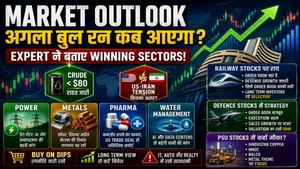 Share Market की तेज़ी बुरा फंसाएगी, बाज़ार में इन Stocks से बना लो दूरी!
 -
 Share Market में जोरदार तेजी, निफ्टी 24,200 के पार; सबसे अधिक किस शेयर में तेजी?
 -
 Trump Warning से Iran-US तनाव बढ़ा, Crude Oil में हलचल: Share Market Panic में क्या करें?
 -
 Share Market: कल की भारी गिरावट के बाद बाजार में लौटी तेजी, Sensex और Nifty में बढ़त के साथ कारोबार; आगे क्या
 -
 South Korea Market Crash: टेक शेयरों की बिकवाली से मचा हड़कंप! Bear Market में क्यों पहुंचा KOSPI?
 -
 Stock Market: शेयर बाजार में आज क्यों आई गिरावट? अमेरिका-ईरान तनाव के अलावा क्या है गिरावट की सबसे बड़ी वजहें
 -
 Sensex Outlook: सेंसेक्स 1 लाख तक पहुंचेगा या 66,000 तक गिरेगा? मॉर्गन स्टेनली ने बताए तीन बड़े अनुमान
 -
 Kalyan Jewellers Share Crash: अच्छे बिजनेस अपडेट के बावजूद 8% क्यों टूटा शेयर? जानिए पूरी वजह
 -
 Stock Market: अचानक क्यों टूटा बाज़ार? Sensex 350 प्वाइंट तो Nifty 24,450 के नीचे! जानिए 4 बड़ी वजहें
 -
 Stock Market Today: सप्ताह के पहले दिन शेयर बाजार में तेजी! आज शेयर बाजार में किसका रहा जलवा?
 -
 Stock Market में आएगा बड़ा ब्रेकआउट? 2026 के 5 सबसे दमदार सेक्टर्स!
 -
 HCL Tech Share Price: AI Deal के दम पर शेयर में 7% की तेजी, क्या आगे भी बढ़ेगा?
 -
 Share Market Today: सेंसेक्स 650 अंक उछला, निवेशकों की दौलत ₹2.43 लाख करोड़ बढ़ी, जानें तेजी की वजह
 -
 Nifty IT में 4% की तूफानी रैली! Infosys, TCS, Wipro में खरीदारी का मौका?
 -
 Vedanta Demerger के बाद धमाका: Oil & Gas में 20% की तेजी, निवेशकों की हुई चांदी
 -
 Nifty Outlook: क्या खत्म होगी गिरावट? 10 साल का Data क्या कहता है, जानें आगे की चाल
-
Block for 8 hours
-
Block for 12 hours
-
Block for 24 hours
-
Don't block

 Sign in with Google
- Male
- Female
- Others
- Under 18
- 18 to 25
- 26 to 35
- 36 to 45
- 45 to 55
- 55+