
 A Oneindia Venture


 Click it and Unblock the Notifications
Future Consumer Ltd. के अकाउंट के लिये नोट
Mar 31, 2024
e) Share options granted under the Company''s employee share option plan
Share options granted under the Company''s employee share option plan carry no rights to dividends and no voting rights. Further details of the employee share option plan are provided in Refer Note 34.
f) Rights, Preferences and Restrictions attached to equity shares:
i) The Company has one class of equity shares having a par value of Rs.6 per share. Each holder of equity share is entitled to one vote per share.
ii) Right to receive dividend as may be approved by the Board of Directors / Annual General Meeting.
iii) The equity shares are not repayable except in the case of a buy back, reduction of capital or winding up in terms of the provisions of the Companies Act, 2013.
iv) Every member of the Company holding equity shares has a right to attend the General Meeting of the Company and has a right to vote in proportion to his share of the paid-up capital of the Company.
g) In the event of liquidation of the Company, the holders of equity shares will be entitled to receive remaining assets of the Company, after distribution of all preferential amounts. The distribution will be in proportion to the number of equity shares held by the shareholders.
Description of reserves Capital reserve
Capital reserve is created for excess of net book value of assets taken and liabilities assumed over the consideration transferred for various business combinations in earlier years. The same will be utilized as per the provisions of Companies Act 2013 (as amended from time to time) and any other law guiding the utilization of the same, for the time being in force.
Securities premium account
Where the Company issued shares at a premium, a sum equal to the aggregate amount of the premium received on those shares was transferred to a "securities premium account" as per the provisions of the Companies Act, 2013. The reserve can be utilised only for limited purposes such as issuance of bonus shares in accordance with the provisions of the Companies Act, 2013.
General reserve
General Reserve is created out of profits earned by the Company by way of transfer from surplus in the statement of profit and loss. The same will be utilized as per the provisions of Companies Act 2013 (as amended from time to time) and any other law guiding the utilization of the same, for the time being in force.
Share options outstanding account
This reserve relates to share options granted by the Company to its employees under its employee share option plan. Further information about share-based payments to employees is set out in note 34.
Capital redemption reserve
As per the provisions of the Companies Act, 2013 capital redemption reserve is created out of the general reserve for the amount of share capital reduction in earlier years. The reserve can be utilized for issuing fully paid up equity shares.
Foreign Currency Translation reserve
When preparing financial statements, differences arising on translation of the financial statements of foreign operations is transferred to the Foreign Currency Translation Reserve (FCTR), which forms part of Other Comprehensive Income. The same will be utilized as per the provisions of Companies Act 2013 (as amended from time to time) and any other law guiding the utilization of the same, for the time being in force.
Retained earnings
This represents the surplus/ (deficit) of the statement of profit or loss. The amount that can be distributed by the Company as dividends to its equity shareholders is determined based on the separate financial statements of the Company and also considering the requirements of the Companies Act, 2013.
Other Comprehensive Income
This relates to the remeasurement impact of defined benefit plans, exchange differences in translating the financial statements of foreign operations and income tax effect of the same.
# The Company has defaulted on payment of interest/repayment of principal amount on loans from banks and unlisted debts securities as on March 31, 2024, amounting to Rs. 49,361.12 lakhs (March 31, 2023 Rs. 45,342.89 lakhs) including interest and penal interest of Rs. 8,470.89 lakhs (March 31, 2023 Rs. 4,483.64 lakhs). During the previous year ended March 31, 2023, the banks have classified the loans given to the Company as non-performing assets (NPA).
# The Company has defaulted on payment of interest/repayment of principal amount on loans from banks and unlisted debts securities as on March 31,2024, amounting to Rs. 49,361.12 lakhs (March 31, 2023 Rs. 45,342.89 lakhs) including interest and penal interest of Rs. 8,470.89 lakhs (March 31, 2023 Rs. 4,483.64 lakhs). During the previous year ended March 31, 2023, the banks have classified the loans given to the Company as non-performing assets (NPA).
21.2 The Company derives its revenue from the business of Branding, Manufacturing, Processing, Selling and Distribution of "Consumer Products" which constitutes a single service line. This is consistent with the revenue information that is disclosed for each reportable segment under Ind AS 108. (Refer Note 30 on Operating segment information.)
Trade receivables are non interest bearing and are generally on terms of 0 to 60 days. The Company receives payments from customers based upon contractual billing schedules. Trade receivables are recorded when the right to consideration becomes unconditional.
Contract assets includes amounts related to our contractual right to consideration for completed performance objectives not yet invoiced.
Contract liabilities include payments received in advance of performance under the contract, and are realised with the associated revenue recognised under the contract.
21.5 Performance Obligation
Remaining unsatisfied performance obligations represent the transaction price for goods and services for which the Company has a material right but either not yet transferred control of a product or performing services over the period of time to customers. Transaction price includes the price agreed with customer, variable consideration and changes in transaction price. The transaction price of order related to unfilled, confirmed customer orders is estimated at each reporting date and payment is generally due within 0 to 60 days from delivery.
The Company is engaged in the business of Branding, Manufacturing, Processing, Selling and Distribution of "Consumer Products" which constitutes a single reporting segment. Hence there is no separate reportable segment under Indian Accounting Standard on Ind AS 108 ''Operating Segment ''.
The Chief Operating Decision Maker (CODM) monitors the operating results at the Company level for the purpose of making decisions about resource allocation and performance assessment.
Company as a lessee
The Company has lease contracts for various items of plant and machinery, vehicles, warehouse, office premises and buildings used in its operations. As at year ended March 31, 2024 Company has Lease contracts for warehouses and buildings with lease terms between 3 and 9 years. The Company''s obligations under its leases are secured by the lessor''s title to the leased assets. Generally, the Company is restricted from assigning and subleasing the leased assets and some contracts require the Company to maintain certain financial ratios. There are several lease contracts that include extension and termination options and variable lease payments, which are further discussed below
The Company had total cash outflows for principle payment of leases is Rs. 61.36 lakhs in 31 March 2024 (Previous Year: Rs 174.30 lakhs). 31.5 Additional information on termination option
Some leases of building contain termination options exercisable by the Company after the end of the non-cancellable contract period. Where practicable, the Company seeks to include termination options in new leases to provide economic viability. The termination options held are exercisable only by the Company and not by the lessors. The Company assesses at lease commencement whether it is reasonably certain to exercise the termination options. The Company reassesses whether it is reasonably certain to exercise the options if there is a significant event or significant change in circumstances within its control.
32.1 Defined Contribution Plans
The Company''s contribution to provident fund, employee state insurance are determined under the relevant schemes and / or statutes and charged to the statement of profit and loss.
The Company''s contribution to Provident Fund for the year 2023-2024 aggregating to Rs. 17.16 lakhs (Previous Year: Rs.72.32 lakhs), Rs. 0.18 lakhs (Previous Year: Rs. 3.73 lakhs ) for ESIC and Rs.0.18 lakhs for New Pension Scheme (Previous year: Rs 1.04 lakhs) has been recognised in the statement of profit and loss under the head employee benefits expense. (Refer Note 25).
32.2 Defined Benefit Plans Gratuity
The Company operates a gratuity plan covering qualifying employees. The benefit payable is the greater of the amount calculated as per the Payment of Gratuity Act, 1972 or the Company scheme applicable to the employee. The benefit vests upon completion of five years of continuous service and once vested it is payable to employees on retirement or on termination of employment. The gratuity benefits payable to the employees are based on the employee''s service and last drawn basic salary at the time of leaving. The employees do not contribute towards this plan and the full cost of providing these benefits are met by the Company. In case of death while in service, the gratuity is payable irrespective of vesting. The Company''s obligation towards Gratuity is a Defined Benefit plan which is not funded.
The plans typically expose the Company to actuarial risks such as: interest rate risk, longevity risk and salary risk.
Interest risk
A increase in the government bond interest rate will decrease the plan liability.
Longevity risk
The present value of the defined benefit plan liability is calculated by reference to the best estimate of the mortality of plan participants both during and after their employment. An increase in the life expectancy of the plan participants will increase the plan''s liability.
Salary risk
The present value of the defined benefit plan liability is calculated by reference to the future salaries of plan participants. As such, an increase in the salary of the plan participants will increase the plan''s liability.
The most recent actuarial valuation of the plan assets and the present value of the defined benefit obligation were carried out at March 31, 2024 by M/s Universal Actuaries and Benefit Consultants. The present value of the defined benefit obligation, and the related current service cost and past service cost, were measured using the projected unit credit method.
The rate of mortality and attrition do not have a significant impact on the liability, and hence are not considered for the purpose of sensitivity analysis. The sensitivity analysis presented above may not be representative of the actual change in the defined benefit obligation as it is unlikely that the change in assumptions would occur in isolation of one another as some of the assumptions may be correlated.
Furthermore, in presenting the above sensitivity analysis, the present value of the defined benefit obligation has been calculated using the projected unit credit method at the end of the reporting period, which is the same as that applied in calculating the defined benefit obligation liability recognised in the balance sheet. There was no change in methods and assumptions used in preparing the sensitivity analysis from prior years. The weighted average duration of the gratuity plan is 6.60 years (Previous Year: 4.49 years).
33 FINANCIAL INSTRUMENTS AND RISK REVIEW
33.1 Capital Management
The Company being in a working capital intensive industry, its objective is to maintain a strong credit rating, healthy ratios and establish a capital structure that would maximise the return to stakeholders through optimum mix of debt and equity.
The Company''s capital requirement is mainly to fund its capex, working capital, repayment of principal and interest on its borrowings and strategic acquisitions. The principal source of funding of the Company has been, and is expected to continue to be, cash generated from its operations supplemented by funding from bank borrowings and the capital markets. The Company is not subject to any externally imposed capital requirements.
The Company regularly considers other financing and refinancing opportunities to diversify its debt profile, reduce interest cost and closely monitors its judicious allocation amongst competing capex, to capture market opportunities at minimum risk.
The Company monitors its capital using gearing ratio, which is net debt divided to total equity. Net debt includes, interest bearing loans and borrowings less cash and cash equivalents, bank balances other than cash and cash equivalents and current investments. The Company manages its capital structure and makes adjustments in light of changes in economic condition and the requirements of the financial covenants.
(i) Debt is defined as long and short-term borrowings, and Lease Liabilities.
(ii) Equity includes all capital and reserves of the Company that are managed as capital.
(iii) Cash and cash equivalent includes bank deposits with more than 12 months maturity shown under other financial assets.
At the end of the reporting period, there are no significant concentrations of credit risk for financial assets measured at FVTPL. The carrying amount reflected above represents the Company''s maximum exposure to credit risk for such Financial assets.
Fair Value Measurement and related disclosures
Fair value of the Company''s financial assets and financial liabilities that are measured at fair value on a recurring basis:
Some of the Company''s financial assets are measured at fair value at the end of each reporting period. The following table gives information about how the fair values of these financial assets and financial liabilities are determined (in particular, the valuation technique(s) and inputs used).
The Company uses the following hierarchy for determining and/or disclosing the fair value of financial instrument by valuation technique:
(i) Level 1 â Quoted (unadjusted) market prices in active markets for identical assets or liabilities;
(ii) Level 2 â Valuation techniques for which the lowest level input that is significant to the fair value measurement is directly or indirectly bservable;
(iii) Level 3 â Valuation techniques for which the lowest level input that is significant to the fair value measurement is unobservable.
There were no transfers between Level 1 and 2 during the period.
Financial assets and financial liabilities that are not measured at fair values (but fair values disclosures are required)
The Company considers that the carrying amounts of financial assets and financial liabilities recognised in the balance sheet approximates their fair values.
The management assessed that carrying values of financial assets and liabilities other than those disclosed above such as trade receivable, loans, finance lease obligations, cash and cash equivalents, other bank balances and trade payables are reasonable approximations of their fair values.
The fair value of the financial assets and liabilities is included at the amount at which the instrument could be exchanged in a current transaction between willing parties.
33.3 Financial risk management objectives
The Company has a Risk Management Committee established by its Board of Directors for overseeing the Risk Management Framework and developing and monitoring the Company''s risk management policies. The risk management policies are established to ensure timely identification and evaluation of risks, setting acceptable risk thresholds, identifying and mapping controls against these risks, monitor the risks and their limits, improve risk awareness and transparency. Risk management policies and systems are reviewed regularly to reflect changes in the market conditions and the Company''s activities to provide reliable information to the Management and the Board to evaluate the adequacy of the risk management framework in relation to the risk faced by the Company.
33.4 Market Risks
Market risk is the risk that the fair value of future cash flows of a financial instrument will fluctuate because of changes in the market prices. The Company is exposed in the ordinary course of its business to risks related to changes in foreign currency exchange rates, interest rates and other price risk.
The Company seeks to minimize the effects of these risks by using derivative financial instruments to hedge risk exposures. The use of financial derivatives is governed by the Company''s policies approved by the Board of Directors, which provide principles on foreign exchange risk and interest rate risk. Compliance with policies and exposure limits is reviewed by the Management and the internal auditors on a continuous basis. The Company does not enter into or trade financial instruments, including derivatives for speculative purposes.
33.5 Foreign Currency Risk Management
The Company''s functional currency is Indian Rupees (INR). The Company undertakes transactions denominated in foreign currencies; consequently, exposure to exchange rate fluctuations arise. Volatility in exchange rates affects the Company''s revenue from export markets and the costs of imports. The Company is exposed to exchange rate risk under its trade and debt portfolio.
Adverse movements in the exchange rate between the Rupee and any relevant foreign currency result''s in increase in the Company''s overall debt position in Rupee terms without the Company having incurred additional debt and favourable movements in the exchange rates will conversely result in reduction in the Company''s receivables in foreign currency. In order to hedge exchange rate risk, the Company has a Forex policy approved by the Board of Directors.
All hedging activities are carried out in accordance with the Company''s internal risk management policies, as approved by the Board of Directors, and in accordance with the applicable regulations where the Company operates. When a derivative is entered into for the purpose of being a hedge, the Company negotiates the terms of those derivatives to match the terms of the hedged exposure. For hedges of forecast transactions the derivatives cover the period of exposure from the point the cash flows of the transactions are forecasted up to the point of settlement of the resulting receivable or payable that is denominated in the foreign currency.
The Year end foreign currency forward contracts and unhedged foreign currency exposures are given below :-
a) No Derivatives (forward contracts) are outstanding as at the reporting date and in previous year.
Foreign exchange risk sensitivity:
10% is the sensitivity rate used when reporting foreign currency risk internally to key management personnel and represents management''s assessment of the reasonably possible change in foreign exchange rates. The sensitivity analysis includes only outstanding foreign currency denominated monetary items and adjusts their translation at the period end for a 10% change in foreign currency rates. The sensitivity analysis includes external loans as well as loans to foreign operations within the Group where the denomination of the loan is in a currency other than the functional currency of the lender or the borrower. A positive number below indicates an increase in profit and negative number below indicates a decrease in profit.
In management''s opinion, the sensitivity analysis is not representative of the inherent foreign exchange risk because the exposure at the end of the reporting period does not reflect the exposure during the year.
33.6 Interest rate risk
Interest rate risk is the risk that the fair value or future cash flows of a financial instrument will fluctuate because of changes in market interest rates. The Company is exposed to interest rate risk because funds are borrowed at both fixed and floating interest rates. Interest rate risk is measured by using the cash flow sensitivity for changes in variable interest rate. The borrowings of the Company are principally denominated in rupees with a mix of fixed and floating rates of interest. The Company has exposure to interest rate risk, arising principally on changes in base lending rate. The Company uses a mix of interest rate sensitive financial instruments to manage the liquidity and fund requirements for its day to day operations like short term and long term loans. The risk is managed by the Company by maintaining an appropriate mix between fixed and floating rate borrowings. Hedging activities, if any are evaluated regularly to align with interest rate views and defined risk appetite, ensuring the most cost-effective hedging strategies are applied.
Interest rate risk sensitivity:
The sensitivity analyses below have been determined based on the exposure to interest rates for both derivatives and non-derivative instruments at the end of the reporting period. For floating rate liabilities, the analysis is prepared assuming the amount of the liability outstanding at the end of the reporting period was outstanding for the whole year. A 50 basis point increase or decrease is used when reporting interest rate risk internally to key management personnel and represents management''s assessment of the reasonably possible change in interest rates.
If interest rates had been 50 basis points higher/lower and all other variables were held constant, following is the impact on profit and pre-tax equity. A positive is increase in profit and negative is decrease in profit.
33.7 Other price risks
The Company''s exposure to other risks arises from investments in preference shares amounting to Rs. 3,821.58 Lakhs (Previous Year Rs. 3,394.84 Lakhs). The investments are held for strategic rather than trading purpose.
The sensitivity analysis has been determined based on the exposure to price risk at the end of the reporting period. If the prices of the above instruments had been 5% higher/lower, profit for the year ended 31st March 2024 would increase/decrease by Rs. 191.07 Lakhs (Previous year by Rs.169.74 Lakhs).
33.8 Credit risk
Credit risk refers to the risk that a counterparty will default on its contractual obligations resulting in financial loss to the Company. Credit risk arises from deposits with banks and financial institutions, other deposits, other receivables, security deposits and from credit exposures to customers, including outstanding receivables.
The Company has limited credit risk arising from cash and cash equivalents as the deposits are maintained with banks and financial institutions with high credit rating. The Company has a policy in place whereby it evaluates the recoverability of these financial assets at each quarter ended date and wherever required, a provision is created against the same.
Since most of Company''s transactions are done on credit, the Company is exposed to credit risk on trade and other receivable. Any delay, default or inability on the part of the other party to pay on time will expose the Company to credit risk and can impact profitability. Company''s maximum credit exposure is in respect of trade receivables of Rs. 41,633.64 lakhs and Rs. 41,867.96 lakhs as at March 31, 2024 and March 31, 2023, respectively and other receivables of Rs. 8,007.24 lakhs and Rs. 8,076.90 lakhs as at March 31, 2024 and March 31, 2023, respectively. The Company adopted an effective receivable management system to control the Days'' Sales Outstanding. Refer below note for the age wise analysis of trade receivables that are not due as well as past due and allowance for the doubtful receivables. The Company does not have significant credit risk exposure to any single counterparty. Majority of trade receivable are from related parties which are disclosed in Note 35 including related parties accounted for more than 10% of gross trade receivables. The average credit period on sales of goods is 0 to 60 days. No interest is charged on trade receivables.
Further, the Hon''ble National Company Law Tribunal, Mumbai bench ("NCLT") has pronounced an order dated July 20, 2022 admitting application under Section 7 of the Insolvency and Bankruptcy Code, 2016 against one of the major customer of the Company, Future Retail Limited. The Company has significant amount of receivables from the said customer amounting to Rs. 37,819.43 lakhs and had recorded an expected credit loss on the entirety of the receivable from the said customer in earlier year(s).
For trade receivables and other receivables, as a practical expedient, the Company computes credit loss allowance based on a provision matrix. The provision matrix is prepared based on historically observed default and delay rates over the expected life of trade and other receivables and is adjusted for forward-looking estimates.
For intercorporate deposits, the Company has received request from related parties for extension of repayment of outstanding and waiver of interest on inter-corporate deposits. On the approval of the Board of Directors, extention and waiver has been granted to such related parties.
Credit risk from balances with banks is managed by Company''s treasury in accordance with the Board approved policy.
33.9 Liquidity risk
Liquidity risk refers to the risk of financial distress or extraordinary high financing costs arising due to shortage of liquid funds in a situation where business conditions unexpectedly deteriorate and requiring financing. The Company requires funds both for short term operational needs as well as for long term capital expenditure for capex. The Company has established an appropriate liquidity risk management framework for the management of the Company''s short, medium and long-term funding and liquidity management requirements. The Company manages liquidity risk by maintaining adequate reserves, banking facilities and reserve borrowing facilities, by continuously monitoring forecast and actual cash flows, and by matching the maturity profiles of financial assets and liabilities.
In Previous year the Company has defaulted on payment of interest/repayment of principal amount on loans from banks/financial institution and unlisted debts securities as a result the banks have classified the loans given to the Company as non-performing assets (NPA). The Company has total debt servicing obligations due (including interest accrued) aggregating to Rs. 49,361.12 lakhs as at March 31, 2024.
Further, the Company has also discussed the Asset Monetisation Plan with the lenders of the Company in a Joint-lender''s meeting (JLM) held on July 06, 2022. Considering the Asset Monetisation Plan, the lenders allowed the Company to repay its borrowings till January 31, 2023. However, the Company was unable to conclude re-negotiations or obtain replacement financing or monetise it''s assets as agreed with the lenders during the said period. On February 9, 2023, March 21, 2023, June 12, 2023, September 14, 2023, December 28, 2023, January 16, 2024 and March 11, 2024 the Company held meetings with JLM and updated them about the status and likely timelines for assets monetisation and /or fresh investments, besides few proposals parallelly in pipeline on individual business verticals, and in either case the Company being able to settle the loans amicably with the lenders. Currently, JLM has restricted the banking transactions of the Company. JLM has also indicated initiation of legal action for recovery of dues.
The following tables detail the Company''s remaining contractual maturity for its non-derivative financial liabilities with agreed repayment periods. The tables have been drawn up based on the undiscounted cash flows of financial liabilities based on the earliest date on which the Company can be required to pay. The tables include both interest and principal cash flows.
To the extent that interest flows are floating rate, the undiscounted amount is derived from interest rate curves at the end of the reporting period. The contractual maturity is based on the earliest date on which the Company may be required to pay.
The amounts included above for financial guarantee contracts are the maximum amounts the Company could be forced to settle under the arrangement for the full guaranteed amount if that amount is claimed by the counterparty to the guarantee. Based on expectations at the end of the reporting period, the Company considers that it is more likely than not that such an amount will not be payable under the arrangement. However, this estimate is subject to change depending on the probability of the counterparty claiming under the guarantee which is a function of the likelihood that the financial receivables held by the counterparty which are guaranteed suffer credit losses.
33.9 (a)Details of Quarterly Statements to Banking Lenders
The Company has not submitted the quarterly statements (DP filings) to banking lenders as the Banks had classified the Company account as Non Performing Asset (NPA) (Refer Note 18).
34.1 Details of the employee share based plan of the Company
a) The ESOP scheme titled "FVIL Employees Stock Option Plan 2011" (ESOP 2011) was approved by the shareholders at the Annual General Meeting held on 10th August 2010. 5,00,00,000 options are covered under the ESOP 2011 for 5,00,00,000 shares. Post listing of equity shares on the stock exchanges, the Shareholders have ratified the pre-IPO scheme.
In the previous years, the Nomination and Remuneration / Compensation Committee of the Company has granted 3,45,35,000 options under ESOP 2011 to certain directors and employees of the Company and some of its Subsidiaries. The options allotted under ESOP 2011 are convertible into equal number of equity shares. The exercise price of each option is Rs. 6/-.
The options granted vest over a period of 3 years from the date of the grant in proportions specified in the Scheme. Options may be exercised within 3 years from date of vesting.
b) The ESOP scheme titled "Future Consumer Enterprise Limited - Employee Stock Option Plan 2014" was approved by the Shareholders vide resolution passed at the Extra Ordinary General Meeting held on 12th January, 2015 and through postal ballot on 12th May 2015 in respect of grant of 3,19,50,000 options under primary route (ESOP 2014-Primary) and 7,98,00,000 options under secondary market route (ESOP 2014-Secondary). ESOP 2014 has been implemented through a trust route whereby Vistra ITCL India Limited (Formerly IL&FS Trust Company Limited) has been appointed as the Trustee who monitors and administers the operations of the Trust.
In the previous year, the Nomination and Remuneration / Compensation Committee has i) at its meeting held on 2nd February, 2022, granted 58,89,500 options under secondary market route (ESOP 2014-Secondary) to certain employees of the Company. The options allotted under ESOP 2014-Secondary are convertible into equal number of equity shares. The exercise price per Option for shares granted under the secondary market route shall not exceed market price of the Equity Share of the Company as on date of grant of Option or the cost of acquisition of such equity shares to the Trust applying FIFO basis, whichever is higher. The exercise price per Option for shares granted under the primary route shall not exceed market price of the Equity Share of the Company as on date of grant of Option, which may be decided by the Nomination and Remuneration / Compensation Committee.
The options granted vest over a period of 3 years from the date of the grant in proportions specified in the Scheme. Options may be exercised within 3 years from date of vesting.
Note-1 The options granted vest over a period of 3 years from the date of the grant in proportions specified in the Scheme. Options may be exercised within 3 years from date of vesting.
Note-2 Market price of the Equity Share of the Company as on date of grant of Option or the cost of acquisition of such shares to the Company applying FIFO basis, whichever is higher.
35.4 Terms and conditions of transactions with related parties
The sales to and purchases from related parties are made on terms equivalent to those that prevail in arm''s length transactions. Outstanding balances at the year-end are unsecured and interest free and settlement occurs in cash. There have been no guarantees provided or received for any related party receivables or payables. For the year ended 31 March 2024, the Company has recorded an impairment loss of Rs.1375.99 lakhs on receivables relating to amounts owed by related parties (31 March 2023: Rs. 140.71 lakhs). This assessment is undertaken each financial year through examining the financial position of the related party and the market in which the related party operates.
35.5 Loans & Corporate Guarantees to Related Parties
The Company has given loans and corporate guarantees to subsidiaries and relevant joint ventures in the ordinary course of business to meet the working capital requirements of subsidiaries and joint ventures. (Refer note 38 & 44)
|
36 CONTINGENT LIABILITIES |
(Rs. In lakhs) |
|
|
Particulars |
As at |
As at |
|
31st March 2024 |
31st March 2023 |
|
|
Claims against the company not acknowledged as debt* |
41.05 |
45.45 |
|
Disputed income tax demands |
- |
- |
|
Disputed indirect tax matters |
646.63 |
361.47 |
|
Corporate guarantees issued to banks and financial institutions are against credit facilities issued to third parties (Loans outstanding as at 31st March 2024 Rs. 40.24 lakhs; Previous Year Rs. 99.13 lakhs) |
3,951.83 |
4,721.90 |
|
4,639.51 |
5,128.82 |
* Does not include cases where liability is not ascertainable.
Future cash outflows in respect of matters considered disputed are determinable only on receipt ofjudgments/decisions pending at various forums/authorities. The management does not expect these claims to succeed and accordingly, no provision for the contingent liability has been recognized in the financial statements.
The Company''s pending litigations comprise of claims against the Company primarily by the customers and proceedings pending with tax authorities. The Company has reviewed all its pending litigations and proceedings and has adequately provided for where provisions are required and disclosed contingent liabilities where applicable, in its financial statements. The Company does not expect the outcome of these proceedings to have a material adverse effect on the financial statements.
The estimated amount of contracts remaining to be executed on capital account as at 31st March 2024 is Rs. Nil (Previous Year Rs Nil)
a) Subsequent acquisition of subsidiaries from The Nilgiri Dairy Farm Private Limited (Pertaining only to Previous Year ended March 31, 2023):
The Company has entered into share purchase agreements with its subsidiaries i.e., The Nilgiri Dairy Farm Private Limited (NDF), Nilgiris Franchise Limited (NFL), Nilgiri''s Mechanised Bakery Private Limited (NMB) and Appu Nutritions Private Limited (Appu).
b) The Scheme of Amalgamation between Future Food and Products Limited and Future Food Processing Limited and the Future Consumer Limited ("The Company") and their respective shareholders under section 230 to 232 and other applicable provisions of the Companies Act, 2013 (hereinafter "the Scheme") was filed in the year 2021. NCLT has approved the said scheme of merger vide order C.A.(CAA)/234/ MB-V/2021 dated November 22, 2023 having effective date as November 30, 2023 and appointed date as April 01, 2021. The accounting treatment for the said transaction have been taken in Book of Accounts effective from appointed date. Accordingly previous year figures have been restated whereever required.
Note a
The Company was allotted 13,20,159 equity shares of Amar Chitra Katha Private Limited (ACK), upon conversion of 4,977 Compulsorily Convertible Debentures (CCDs) on maturity in previous year ended March 31, 2022, which is an associate of the Company. The Board of Directors of the Company have vide their resolution dated February 10, 2022 resolved to liquidate the Company''s stake in ACK pursuant to which the investment in ACK has been recognized as Current Asset Held For Sale. In May 2022, the Company has entered into a definitive agreement for sale of part of its stake in ACK for 3,61,290 equity shares, at a total consideration of Rs. 1,362.00 lakhs out of which shares worth Rs. 1,062.01 lakhs (Previous year Rs. 300 lakhs) have been sold during the year ended March 31, 2024. Further, considering the expected realisable value of these investments, the Company recognised an impairment loss of Rs. 1078.42 lakhs (Previous year Rs. 2,113.92 lakhs) during the year ended March 31, 2024, which has been included in the exceptional items.
Note b
Due to significant reductions in business operations, the Company intends to sell certain Property, Plant & Equipment (PPE) at various locations. During the current year, the Company has transfer PPE having net book value of Rs. 567.81 lakhs, which has recoverable value of Rs. 565.00 lakhs to current assets held for sale. Accordingly impairment loss of Rs. 2.81 lakhs is recognized during the year ended March 31, 2024 on these assets, which has been included in exceptional items. The Company has also sold assets of Rs. 39.71 lakhs and having aggregate PPE of Rs. 2,742.79 lakhs as Asset held for sale
42.1 Impairment of Investments and Inter-Corporate Deposits (including Interest)
a) MNS Foods Limited
The Company has converted Intercorporate deposits, interest accrued thereon and advances given to MNS Foods Limited totalling to Rs. 1,140 lakhs into 1140000 Numbers of 0.001% Compulsory Convertible Debentures of MNS Foods Private Limited of Rs. 100 each. As on March 31, 2023 the net book value of Intercorporate deposits and interest thereon is Rs. 356.28 lakhs and during the year interest on ICD charged is Rs. 20.96 lakhs agreegating to Rs. 377.24 lakhs as on March 31, 2024. Durtng the year, the Company has recognised impairment loss on interest income of Rs. 20.96 lakhs (Previous year Rs. nil) and Intercorporate deposits of Rs. Nil (Previous Year Rs. 709.10 Lakhs). MNS is a joint venture of the Company, impairment is considered due to lower business performance and based on the analysis of recoverable value of MNS.
b) Aadhaar Wholesale Trading & Distribution Limited
During the year Aadhaar Wholesale Trading & Distribution Limited (Aadhaar), a wholly owned subsidiary of the company, has approved transfer of business undertaking to ''Brescon CAT-1 (AIF) Special Situation Fund'' (''Purchaser'') by way of slump sale for an aggregate consideration of Rs. 2,300 lakhs and other terms as agreed by and between the subsidiary company and the said Purchasers. Accordingly the Company has recognized an impairment loss on its investments and Intercorporate deposits (including interest) given to Aadhaar of Rs. Nil (previous year Rs. 5,317.83 Lakhs) and Rs. 807.71 lakhs (Previous year Rs. 8,806.62 lakhs) respectively.
c) Bloom Foods and Beverages Private Limited
The Company has received interest from Bloom Foods and Beverages Private Limited (Bloom), a subsidiary of the Company of Rs. 41.32 lakhs during the year ended March 31, 2024. In previous years the Company has fully impaired the intercorporate deposits and interest thereon. As the amount is received from Bloom impairment of interest to the extent of receipts has been reversed. During the year ended March 31, 2023 the Company has recognized an impairment loss of Rs. 625.49 lakhs on its investment and Rs. 542.60 lakhs on Inter Corporate Deposits (including interest) given to Bloom, due to lower business performance and based on the analysis of recoverable value. Recoverable amount has been calculated as fair value less cost to sell in accordance with the requirements of applicable financial reporting framework.
d) Integrated Food Park Limited
The Company has recognized an impairment loss of Rs. 8,220.00 (Previous year Rs. 3,410.19 lakhs) on Inter Corporate Deposits (including interest) given to Integrated Food Park Limited, a step-down subsidiary of the Company due to lower business performance and based on the analysis of recoverable value. Recoverable amount has been calculated as fair value less cost to sell in accordance with the requirements of applicable financial reporting framework.
e) FCL Tradevest Private Limited (Pertaining only to Previous Year ended March 31, 2023)
Consequent to the impairment in its step-down subsidiaries due to lower business performance and based on the analysis of recoverable value, the Company has recognized an impairment loss of Rs. 7874.00 lakhs on its investment and Rs. 376.74 lakhs on Inter Corporate Loans (including interest) in FCL Tradevest Private Limited, a wholly owned subsidiary. Recoverable amount has been calculated as fair value less cost to sell in accordance with the requirements of applicable financial reporting framework. Impairments in step down subsidiaries are as follows:
1. Future Food and Products Limited Rs. Rs. 2,353.00 lakhs
2. Integrated Food Park Private Limited Rs. 4,023.19 lakhs
3. MNS Foods Limited Rs. 86.00 lakhs
4. Delect Foods & Spices Rs. 255.00 lakhs
5. Hain Future Natural Products Private Limited Rs. 37.19 lakhs and
6. Future Food Processing Limited Rs. 772.59 lakhs
f) Hain Future Natural Products Private Limited (Pertaining only to Previous Year ended March 31, 2023)
The Company has recognized an impairment loss of Rs. Rs. 599.24 lakhs on its investment and Interest receivable in Hain Future Natural Products Private Limited (Hain), a joint venture due to lower business performance and based on the analysis of recoverable value. The enterprise value is based on a value in use calculation which uses Cash Flow Projections based on financial budget approved by the management covering a period of five years, discounted at a rate of 13.93% per annum, that is the weighted average cost of capital. Cash flows beyond the period of five years have been extrapolated using the steady growth rate of 5% per annum, based on the long-term average growth rate for Hain''s business.
g) Nilgiri''s Mechanised Bakery Private Limited (Pertaining only to Previous Year ended March 31, 2023)
The Company has recognized an impairment loss of Rs. 174.63 lakhs on its investments in Nilgiris Mechanised Bakery Private Limited (NMBPL), a subsidiary of the Company due to lower business performance and based on the analysis of recoverable value. Recoverable amount has been calculated as fair value less cost to sell in accordance with the requirements of applicable financial reporting framework.
h) Nilgiris Franchise Limited (Pertaining only to Previous Year ended March 31, 2023)
The Company has recognized an impairment loss of Rs. 49.28 lakhs on its investments in Nilgiris Franchise Limited (NFL), a subsidiary of the Company due to lower business performance and based on the analysis of recoverable value. Recoverable amount has been calculated as fair value less cost to sell in accordance with the requirements of applicable financial reporting framework.
42.2 Impairment of Property, Plant and Equipments (PPE)
Due to significant reductions in business operations, and based on an analysis of the recoverable value, the Company has considered an impairment loss of Rs. Rs. 442.23 lakhs (Previous year 5,409.05 lakhs) during the current year on some of its Property, Plant and Equipments (PPE). Recoverable amount has been calculated as fair value less cost to sell in accordance with the requirements of applicable financial reporting framework. Among these assets, the Company is planning to sell some PPE and those are classified as Assets held for Sale in accordance with IndAS 105.
42.3 Impairment of Brands
Brand and Brand usage rights (Pertaining only to Previous Year ended March 31, 2023):
The Company is currently facing significant liquidity crunch which has adversely impacted the business operation of the Company. Consequently, based on an analysis of the recoverable value of its brands, the Company has fully impaired the book value of its brand of Rs. 317.00 lakhs and brand usage rights of Rs. 7,350.56 lakhs during the year ended March 31, 2023.
42.4 Goodwill written off - Centre of Plate (Pertaining only to Previous Year ended March 31, 2023):
The Company is currently facing significant liquidity crunch which has adversely impacted the business operation of the Company including its operations at Centre of Plate business. Based on an analysis of the recoverable value, the Company has fully written off the book value of the Goodwill that was relating to this business amounting to Rs. 2,951.82 lakhs during the year ended March 31, 2023 that has been included in exceptional items.
42.5 Provision on Inventory (Pertaining only to Previous Year ended March 31, 2023):
Due to lower business performance of the Company including its operations at Centre of Plate business, the Company has created a 100% provision on the Inventory of packaging materials relating to this business considering its negligible recoverable value. Consequently, a loss of Rs. 754.98 lakhs is included in exceptional items during the year ended March 31, 2023.
42.6 Provision on Other Receivables (Pertaining only to Previous Year ended March 31, 2023):
The Company has identified a financial asset whose net book value is Rs. 855.43 lakhs as non-recoverable. Consequently, an impairment loss of Rs. 855.43 lakhs is included in exceptional items during the year ended March 31, 2023.
42.7 Write back of provisions/liabilities (Pertaining only to Previous Year ended March 31, 2023):
Basis negotiations with the vendors on price and deficiency in the service and considering certain old liablities which are no longer payable, the Company has written back these provisions for expenses and liabilities, amounting to Rs. 4,196.89 lakhs.These write back of Provisions/ Liabilities are classified as exceptional items during the year ended March 31, 2023.
42.8 Gain on sale of Property, Plant and Equipments
The Company has sold property, plants and equipments during the year and recognised gain of Rs. 12.81 lakhs (Previous year land classified under assets held for sale was sold having book value of Rs. 3,571.53 lakhs for Rs. 4,160.28 lakhs).
44 Particulars of loans given/ investments made/ guarantees given as required by clause (4) of Section 186 of the Companies Act, 2013
1) Loans given
The Company has not given any loan during the current year and previous year.
2) Investment made
The Company has not made any investment during the current year and previous year.
Guarantees given during the year is Rs. Nil (Previous year Rs. Nil)
46 CORPORATE SOCIAL RESPONSIBILITY
As per Section 135 of the Companies Act, 2013, a Company, meeting the applicability threshold, needs to spend at least 2% of its average net profit for the immediately preceding three financial years on corporate social responsibility (CSR) activities. The areas for CSR activities are eradication of hunger and malnutrition, promoting education, art and culture, healthcare, destitute care and rehabilitation, environment sustainability, disaster relief and rural development projects. A CSR committee has been formed by the Company as per the Act. The Company has incurred losses in current and in previous years, Accordingly, as the average net profit for immediately preceding three financial years is Rs. NIL there are no amounts required to be spend on corporate social responsibility under section 135 of the Companies Act, 2013. Consequently, there are no unspent amount on ongoing projects / other than ongoing projects.
The Company is currently facing significant liquidity crunch which has impacted the operations of the Company during the quarter and year ended March 31, 2024. The Company has incurred loss before tax during the quarter and year ended March 31, 2024 amounting to Rs. 6,789.94 lakhs and Rs. 19,077.66 lakhs respectively (including exceptional items, refer note 42 above) primarily owing to the exceptional items, lower volumes, finance costs and depreciation and also has accumulated losses as at March 31, 2024 of Rs. 1,96,904.04 lakhs. Company''s current liabilities exceeded its current assets by Rs. 58,576.34 lakhs as at the quarter and year end. The Company has also suffered consistent downgrades in its credit ratings, as a result of which the Company''s ability to raise funds has been substantially impaired, with normal business operations being substantially curtailed. Further, the Company has defaulted on payment of interest/repayment of principal amount on loans from banks/financial institution and unlisted debts securities as a result the banks have classified the loans given to the Company as nonperforming assets (NPA). The Company has total debt servicing obligations due including debentures (including interest accrued) aggregating to Rs. 49,361.12 lakhs as at March 31, 2024.
Further, RBL Bank Limited ("RBL Bank") has outstanding debt obligation including interest of Rs.1,808.81 lakhs which is secured against immovable property comprising of land and building situated at Veerasandra Village in the district of Bangalore admeasuring 44116 Sq.Fts. ("Secured Assets") owned by Appu Nutritions Private Limited (''wholly owned subsidiary''). As on January 23, 2024 the RBL Bank has taken physical possession of the secured assets u/s 13(4) of the Securitisation and Reconstruction of Financial Assets and Enforcement of Security Interest Act, 2002 read with the Security Interest (Enforcement) Rules, 2002 framed thereunder. Further, RBL Bank informed the Company on April 23, 2024 about publication of E-Auction sale notice in few newspapers for sale of the said Mortgaged Property on 30th May 2024.
Further, the Company has outstanding 11.07% Non Convertible Debentures of Rs. 15,882.35 lakhs and interest of Rs. 5,800.97 lakhs aggregating to Rs. 21,683.32 lakhs as at March 31, 2024 to British International Investment Plc ("BII") Catalyst Trusteeship Limited (''debenture trustee'' or ''CTL'') which is secured against fixed assets of the subsidiary. On April 26, 2024 the CTL has issued notice to the Company and Integrated Food Park Limited (''Wholly Owned Subsidiary'' or ''IFPL'') to repay the outstanding amount within 15 days from the date of notice, failure of which shall lead to initiation of mortgaged immovable properties situated at Tumkur, Karnataka, owned by IFPL.
Further, the Hon''ble National Company Law Tribunal, Mumbai bench ("NCLT") has pronounced an order dated July 20, 2022 admitting application under Section 7 of the Insolvency and Bankruptcy Code, 2016 against one of the major customer of the Company, Future Retail Limited. The Company has significant amount of receivables from the said customer amounting to Rs. 37,803.97 lakhs and had recorded an expected credit loss on the entirety of the receivable from the said customer in earlier year(s).
The Company has also discussed the Asset Monetisation Plan with the lenders of the Company in a Joint-lender''s meeting (JLM) held on July 06, 2022. Considering the Asset Monetization Plan, the lenders allowed the Company to repay its borrowings till January 31, 2023. However, the Company was unable to conclude re-negotiations or obtain replacement financing or monetise it''s assets as agreed with the lenders during the said period. On February 9, 2023, March 21, 2023, June 12, 2023, September 14, 2023, December 28, 2023, January 16, 2024 and March 11, 2024, the Company held meetings with JLM and updated them about the status and likely timelines for assets monetisation and / or fresh investments, besides few proposals parallelly in pipeline on individual business verticals, and in either case the Company being able to settle the loans amicably with the lenders. Currently, JLM has restricted the banking transactions of the Company. JLM has also indicated initiation of legal action for recovery of dues.
During the period ended March 31, 2024 the Board of "The Nilgiri Dairy Farm Private Limited (''NDFPL'')" and "Aadhaar Wholesale Trading and Distribution Limited (''AWTDL'')" material wholly owned subsidiaries of the Company has approved transfer of business undertaking to ''AVA Cholayil Healthcare Private Limited'' (''Purchaser'') and ''Brescon CAT-1 (AIF) Special Situation Fund'' (''Purchaser'') respectively by way of slump sale for an aggregate consideration of Rs. 6,700 lakhs and Rs. 2,300 lakhs respectively and other terms as agreed by and between the subsidiary companies and the said Purchasers. In the meeting with lenders in JLM dated January 16, 2024 it was discussed that the Company will initiate Swiss Challenge Process through an agency, being appointed by the Company in consultation with lenders, taking bid of AVA Cholayil Healthcare Pvt Ltd and Brescon as Anchor Bidder. Successful bidder will be declared after Swiss Challenge Process. In terms of the same, the Company has appointed IDBI Capital as swiss process advisor and DSK legal counsel as Company legal counsel for completion of swiss challenge process. Currently, the Swiss challenge process is in progress.
These events/conditions indicate the existence of material uncertainty that may cast significant doubt about the Company''s ability to continue as going concern. The financial results do not include any adjustments to reflect the possible future effects on the recoverability and classification of assets or the amounts and classification of liabilities that might result from the outcome of this uncertainty.
To address the liquidity crunch and to maintain the sufficient working capital, the Company has adopted several measures including sales to other customers, earning royalty income on company owned brands like Kara, Thinkskin and other brands , cost optimization, discussion with banks for restructuring / one time settlement of loans, other strategic initiatives for fresh investments, monetisation of identified assets, etc. The expected proceeds from monetisation of these assets which includes property plant and equipment, investments and other assets and/or fresh investments will be utilized to repay the borrowings (including interest) and manage the working capital requirements. These identified assets for monetisation have been classified as assets held for sale in accordance with Ind AS 105 ''Non-current Assets Held for Sale and Discontinued Operations'' at lower of their carrying value and fair value less costs to sell. Accordingly, the Company has recognised impairment loss on the said assets and disclosed the same under ''exceptional items'' (refer note 42 above ). The management has initiated the plan to locate the prospective buyers of these assets.
The success of the above measures adopted by the Company is dependent on the effective implementation of its operating plans and timely closure with the potential buyers for monetisation of its assets and / or fresh investments into the Company which is dependent on many internal / external factors. The management is confident that they will be able to arrange sufficient liquidity by either monetization and /or fresh investments, increase in operations and other strategic initiatives. Accordingly, the financial results are prepared on a going concern basis.
48 FORENSIC AUDIT OF THE COMPANY
The Company has received through email a letter from Securities and Exchange Board of India Bearing Ref.: SEBI/HO/CFID_SEC2/P/ OW/2022/34082/1 dated 3rd August, 2022 ("SEBI Letter") addressed to Interim Resolution Professional ("IRP") of Future Retail Limited ("FRL") intimating about appointment of M/s Chokshi & Chokshi LLP, Chartered Accountants as forensic auditors with respect to Consolidated Financial Statements of FRL and audit of books of account of the Company and some other entities for review period being the financial year ended March 31, 2020, March 31,2021, and March 31,2022. The said appointment has been made in terms of the provisions laid down under Regulations 5 of SEBI (PFUTP) Regulations, 2003 read with applicable provisions contained in SEBI Act, 1992. Audit of the Company will be with respect to the related party transactions with FRL only. Subsequently, the Company has submitted the data as requested in this regard. Forensic audit is currently in progress.
During the previous year, bank borrowing accounts of the Company have been classified as Non Performing Asset (NPA) by all banks and as per the extant guidelines of Reserve Bank of India (RBI), account need to be reviewed for conducting Forensic Audit.
Mar 31, 2023
2.24 Contingent liabilities
A contingent liability is:-
a) a possible obligation that arises from past events and whose
existence will be confirmed only by the occurrence or non¬
occurrence of one or more uncertain future events not wholly
within the control of the entity; or
b) a present obligation that arises from past events but is not
recognised because:-
i) it is not probable that an outflow of resources
embodying economic benefits will be required to settle
the obligation; or
ii) the amount of the obligation cannot be measured with
sufficient reliability.
Contingent liability is disclosed in the case of:
⢠a present obligation arising from past events, when it is not
probable that an outflow of resources will be required to settle
the obligation;
⢠a present obligation arising from past events, when no reliable
estimate is possible;
⢠a possible obligation arising from past events, unless the
probability of outflow of resources is remote.
A contingent asset is disclosed where an inflow of economic
benefits is probable.
Provisions, contingent liabilities and contingent assets are
reviewed at each balance sheet date.
2.25 Operating segment
Identification of segment - Operating segments are reported in
the manner consistent with the internal reporting provided to the
Chief Operating Decision Maker (CODM) of the Company.
Segment accounting policies - The Board of Directors of the
Company have been identified as the Chief Operating Decision
Maker (CODM) as defined under Ind AS 108. CODM reviews overall
financial information of the Company together for performance
evaluation and allocation of resources and does not review any
discrete information to evaluate performance of any individual
product or geography.
The Company prepares its segment information in conformity
with accounting policies adopted for preparing and presenting the
financial statements of the Company as a whole.
2.26 Non- Current Asset held for sale
The Company classifies non current - assets as held for sale if their
carrying amounts will be recovered principally through a sale rather
than through continuing use.
Assets classified as held for sale are measured at the lower of their
carrying amount and fair value less costs to sell. Costs to sell are
the incremental costs directly attributable to the disposal of an
asset, excluding finance costs and income tax expense.
The criteria for held for sale classification is regarded as met
only when the sale is highly probable, and the asset is available
for immediate sale in its present condition. Actions required to
complete the sale/ distribution should indicate that it is unlikely
that significant changes to the sale will be made or that the
decision to sell will be withdrawn. Management must be committed
to the sale and the sale expected within one year from the date of
classification.
For these purposes, sale transactions include exchanges of non¬
current assets for other non-current assets when the exchange has
commercial substance. The criteria for held for sale classification is
regarded met only when the assets are available for immediate sale
in its present condition, subject only to terms that are usual and
customary for sales of such assets, its sale is highly probable; and it
will genuinely be sold, not abandoned. The Company treats sale of
the asset to be highly probable when:
⢠The appropriate level of management is committed to a plan
to sell the asset,
⢠An active programme to locate a buyer and complete the plan
has been initiated (if applicable),
⢠The asset is being actively marketed for sale at a price that is
reasonable in relation to its current fair value
⢠The sale is expected to qualify for recognition as a completed
sale within one year from the date of classification, and
⢠Actions required to complete the plan indicate that it is
unlikely that significant changes to the plan will be made or
that the plan will be withdrawn.
Property, plant and equipment and intangible are not depreciated,
or amortised assets once classified as held for sale.
Assets and liabilities classified as held for sale are presented
separately from other items in the balance sheet.
2.27 Onerous contracts
If the Company has a contract that is onerous, the present
obligation under the contract is recognised and measured as a
provision. However, before a separate provision for an onerous
contract is established, the Company recognises any impairment
loss that has occurred on assets dedicated to that contract.
An onerous contract is a contract under which the unavoidable
costs (i.e., the costs that the Company cannot avoid because it
has the contract) of meeting the obligations under the contract
exceed the economic benefits expected to be received under it.
The unavoidable costs under a contract reflect the least net cost
of exiting from the contract, which is the lower of the cost of
fulfilling it and any compensation or penalties arising from failure
to fulfil it. The cost of fulfilling a contract comprises the costs that
relate directly to the contract (i.e., both incremental costs and an
allocation of costs directly related to contract activities).
3. Key sources of estimation uncertainty and critical accounting
judgements
Significant Estimates
Going Concern
The Company has prepared future cash flow forecasts taking
into cognizance the plan for monetization of some of the assets
including investments and Property, Plant and Equipments, to
repay the debts and manage the working capital requirements,
sales to other customers and cost optimisation (Refer Note 48
of standalone financial statements), which involves judgement
and estimates of key variables and market conditions. Based on
such an analysis, the Company continues to prepare its financial
statements on a going concern basis.
In the course of applying the accounting policies, the Company is
required to make judgements, estimates and assumptions about
the carrying amount of assets and liabilities that are not readily
apparent from other sources. The estimates and associated
assumptions are based on historical experience and other factors
that are considered to be relevant. Actual results may differ from
these estimates.
The estimates and underlying assumptions are reviewed on an
ongoing basis. Revisions to accounting estimates are recognized
in the period in which the estimate is revised if the revision affects
only that period, or in the period of the revision and future period, if
the revision affects current and future periods.
Key sources of estimation uncertainty
a) Useful lives of property, plant and equipment
Management reviews the useful lives of property, plant and
equipment at least once a year. Such lives are dependent upon an
assessment of both the technical lives of the assets and also their
likely economic lives based on various internal and external factors
including relative efficiency and operating costs. Accordingly,
depreciable lives are reviewed annually using the best information
available to the Management. Refer Note 4 for further disclosure.
b) Impairment of property plant and equipment and intangible assets
Determining whether the property, plant and equipment are
impaired requires an estimate in the value in use of cash generating
units and estimate of recoverable amount (Higher of FV and Value
in Use). It requires to estimate the future cash flows expected to
arise from the cash generating units and a suitable discount rate
in order to calculate present value. When the actual cash flows are
less than expected, a material impairment loss may arise. Refer
Note 4 for further disclosure.
c) Impairment of investments in subsidiaries, joint ventures and
associate and impairment of goodwill
Determining whether the goodwill or investments in subsidiaries,
joint ventures and associate are impaired requires an estimate in the
value in use. In considering the value in use, the Management have
anticipated the future cash flows, discount rates and other factors
of the underlying businesses/companies. In estimating the fair
value of an asset or a liability, the Company uses market-observable
data to the extent it is available. In certain cases, the Company
engages third party qualified valuers to perform the valuation. The
management works closely with the qualified external valuers to
establish the appropriate valuation techniques and inputs to the
model. A degree of judgment is required in establishing fair values.
Judgements include consideration of inputs such as liquidity risk,
credit risk and volatility. Any subsequent changes to the cash flows
could impact the carrying value of investments/goodwill. Refer
Note 4 and 5 for further disclosure.
d) Provisions, liabilities and contingencies
Provisions and liabilities are recognized in the period when it
becomes probable that there will be a future outflow of funds
resulting from past events that can reasonably be estimated. The
timing of recognition requires application of judgement to existing
facts and circumstances which may be subject to change.
In the normal course of business, contingent liabilities may arise
from litigation and other claims against the Company. Potential
liabilities that are possible but not probable of an outflow of
resources embodying economic benefits are treated as contingent
liabilities. Such liabilities are disclosed in the notes but are not
recognized. Refer Note 37 for further disclosure.
e) Taxes
Deferred tax assets are recognized for unused tax losses to
the extent that it is probable that taxable profit will be available
against which the losses can be utilized. Significant management
judgement is required to determine the amount of deferred tax
assets that can be recognised, based upon the likely timing and
the level of future taxable profits together with future tax planning
strategies. Refer Note 8 for further disclosure.
f) Employee benefit plans
The cost of defined benefit gratuity plan and other post¬
employment benefits are determined using actuarial valuations.
An actuarial valuation involves making various assumptions that
may differ from actual developments in the future. These include
the determination of the discount rate, future salary increases and
mortality rates. Due to the complexities involved in the valuation
and its long-term nature, a defined benefit obligation is highly
sensitive to changes in these assumptions. All assumptions are
reviewed at each reporting date.
The mortality rate is based on publicly available mortality tables
for India. Those mortality tables tend to change only at interval in
response to demographic changes. Future salary increases and
gratuity increases are based on expected future inflation rates.
Refer Note 26 and 33 for further disclosure.
g) Share based payments
The Company initially measures the cost of equity-settled
transactions with employees using an appropriate valuation model
to determine the fair value of the liability incurred. Estimating
fair value for share-based payment transactions requires
determination of the most appropriate valuation model, which is
dependent on the terms and conditions of the grant. This estimate
also requires determination of the most appropriate inputs to the
valuation model including the expected life of the share option,
volatility and dividend yield and making assumptions about them.
The assumptions and models used for estimating fair value for
share-based payment transactions are disclosed in Note no 35.
h) Lease
The application of Ind AS 116 requires company to make
judgements and estimates that affect the measurement of right-
of-use assets and liabilities. In determining the lease term, we
must consider all facts and circumstances that create an economic
incentive to exercise renewal options (or not exercise termination
options). Assessing whether a contract includes a lease also
requires judgement. Estimates are required to determine the
appropriate discount rate used to measure lease liabilities.
The Company cannot readily determine the interest rate implicit
in the lease, therefore, it uses its incremental borrowing rate (IBR)
to measure lease liabilities. The IBR is the rate of interest that the
Company would have to pay to borrow over a similar term, and
with a similar security, the funds necessary to obtain an asset
of a similar value to the right-of-use asset in a similar economic
environment. The IBR therefore reflects what the Company ''would
have to pay'', which requires estimation when no observable rates
are available or when they need to be adjusted to reflect the terms
and conditions of the lease. The Company estimates the IBR using
observable inputs (such as market interest rates) when available
and is required to make certain entity-specific estimates.
i) Impairment of Financial Assets:
The impairment provision for financial assets is based on
assumptions about risk of default and expected loss rates. The
Company uses judgement in making these assumptions and
selecting the inputs to the impairment calculation, based on the
Company''s history, existing market conditions as well as forward
looking estimates at the end of each reporting period. Estimated
impairment allowance on financial assets is based on the aging
of the receivable balances and historical experience. Individual
receivable balances are written off when management deems
them not to be collectible. The information about the impairment
provision on the Company''s trade and other receivables is disclosed
in Note 34.8.
3.1 Change in Accounting policies and disclosures
New and amended standards
The Ministry of Corporate Affairs has notified Companies (Indian
Accounting Standard) Amendment Rules 2022 dated March 23,
2022, to amend the following Ind AS which are effective from April
01, 2022.
(i) Onerous Contracts - Costs of Fulfilling a Contract -
Amendments to Ind AS 37
(ii) Reference to the Conceptual Framework - Amendments to
Ind AS 103
(iii) Property, Plant and Equipment: Proceeds before Intended
Use - Amendments to Ind AS 16
(iv) Ind AS 101 First-time Adoption of Indian Accounting Standards
- Subsidiary as a first-time adopter
(v) Ind AS 109 Financial Instruments - Fees in the ''10 per cent'' test
for derecognition of financial liabilities
(vi) Ind AS 41 Agriculture - Taxation in fair value measurements
These amendments had no impact on the accounting policies and
disclosures made in the standalone financial statements of the
Company.
Mar 31, 2018
1. General Information about the company
Future Consumer Limited (the âCompanyâ) is a company incorporated in India on 10th July 1996, under the name âSubhikshith Finance and Investments Limitedâ. The name of the Company was changed to âFuture Ventures India Private Limitedâ with effect from 9th August 2007 and it became a Public Limited Company with effect from 7th September 2007 as âFuture Ventures India Limitedâ. The shares of the Company are listed on the National Stock Exchange Limited and BSE Limited since 10th May 2011. The name of the Company was changed to âFuture Consumer Enterprise Limitedâ w.e.f. 30th September 2013 and then to âFuture Consumer Limitedâ effective from 13th October 2016. The Company is engaged in the business of sourcing, manufacturing, branding, marketing and distribution of fast moving consumer goods (âFMCGâ), Food and Processed Food Products in Urban and Rural India. Earlier the Company was regulated by the Reserve Bank of India (the âRBIâ) as a non-deposit taking Non-Banking Financial Company (âNBFCâ). The RBI in terms of application made by the Company has vide its order passed on 21st July 2015 cancelled the Certificate of Registration granted to the Company. Consequently, the Company ceased to be an NBFC.
The registered office of the Company is located at Knowledge House, Shyam Nagar, Off. Jogeshwari Vikhroli Link Road, Jogeshwari (East), MumbaRs.400 060 and the corporate office is located at 247 Park, Tower âCâ, LBS Marg, Vikhroli (West), MumbaRs.400 083.
The financial statements were authorised for issue in accordance with a resolution of the Board of directors passed on 22 May 2018.
2. Key sources of estimation uncertainty and critical accounting judgements
In the course of applying the accounting policies, the Company is required to make judgements, estimates and assumptions about the carrying amount of assets and liabilities that are not readily apparent from other sources. The estimates and associated assumptions are based on historical experience and other factors that are considered to be relevant. Actual results may differ from these estimates.
The estimates and underlying assumptions are reviewed on an ongoing basis. Revisions to accounting estimates are recognized in the period in which the estimate is revised if the revision affects only that period, or in the period of the revision and future period, if the revision affects current and future periods.
Key sources of estimation uncertainty
a) Useful lives of property, plant and equipment
Management reviews the useful lives of property, plant and equipment at least once a year. Such lives are dependent upon an assessment of both the technical lives of the assets and also their likely economic lives based on various internal and external factors including relative efficiency and operating costs. Accordingly, depreciable lives are reviewed annually using the best information available to the Management.
b) Impairment of property plant and equipment Determining whether the property, plant and equipment are impaired requires an estimate in the value in use of cash generating units. It requires to estimate the future cash flows expected to arise from the cash generating units and a suitable discount rate in order to calculate present value. When the actual cash flows are less than expected, a material impairment loss may arise.
c) Impairment of investments in subsidiaries, joint ventures and associate and impairment of goodwill
Determining whether the goodwill or investments in subsidiaries, joint ventures and associate are impaired requires an estimate in the value in use. In considering the value in use, the Management have anticipated the future cash flows, discount rates and other factors of the underlying businesses/companies. In estimating the fair value of an asset or a liability, the Company uses market-observable data to the extent it is available. In certain cases, the Company engages third party qualified valuers to perform the valuation. The management works closely with the qualified external valuers to establish the appropriate valuation techniques and inputs to the model. A degree of judgment is required in establishing fair values. Judgements include consideration of inputs such as liquidity risk, credit risk and volatility. Any subsequent changes to the cash flows could impact the carrying value of investments/goodwill.
d) Provisions, liabilities and contingencies
Provisions and liabilities are recognized in the period when it becomes probable that there will be a future outflow of funds resulting from past events that can reasonably be estimated. The timing of recognition requires application of judgement to existing facts and circumstances which may be subject to change.
In the normal course of business, contingent liabilities may arise from litigation and other claims against the Company. Potential liabilities that are possible but not probable of an outflow of resources embodying economic benefits are treated as contingent liabilities. Such liabilities are disclosed in the notes but are not recognized.
e) Taxes
Deferred tax assets are recognized for unused tax losses to the extent that it is probable that taxable profit will be available against which the losses can be utilized. Significant management judgement is required to determine the amount of deferred tax assets that can be recognised, based upon the likely timing and the level of future taxable profits together with future tax planning strategies.
f) Share based payments
The Company initially measures the cost of equity-settled transactions with employees using an appropriate valuation model to determine the fair value of the liability incurred. Estimating fair value for share-based payment transactions requires determination of the most appropriate valuation model, which is dependent on the terms and conditions of the grant. This estimate also requires determination of the most appropriate inputs to the valuation model including the expected life of the share option, volatility and dividend yield and making assumptions about them. The assumptions and models used for estimating fair value for share-based payment transactions are disclosed in Note no 36.
g) Employee benefit plans
The cost of defined benefit gratuity plan and other postemployment benefits are determined using actuarial valuations. An actuarial valuation involves making various assumptions that may differ from actual developments in the future. These include the determination of the discount rate, future salary increases and mortality rates. Due to the complexities involved in the valuation and its longterm nature, a defined benefit obligation is highly sensitive to changes in these assumptions. All assumptions are reviewed at each reporting date.
The parameter most subject to change is the discount rate. In determining the appropriate discount rate for plans operated in India, the management considers the interest rates of government bonds in currencies consistent with the currencies of the post-employment benefit obligation.
The mortality rate is based on publicly available mortality tables for India. Those mortality tables tend to change only at interval in response to demographic changes. Future salary increases and gratuity increases are based on expected future inflation rates.
d) Share options granted under the Companyâs employee share option plan
Share options granted under the Companyâs employee share option plan carry no rights to dividends and no voting rights. Further details of the employee share option plan are provided in note no. 36
e) Rights, Preferences and Restrictions attached to equity shares:
i) The Company has one class of equity shares having a par value of Rs.6 per share. Each holder of equity share is entitled to one vote per share.
ii) Right to receive dividend as may be approved by the Board of Directors / Annual General Meeting.
iii) The equity shares are not repayable except in the case of a buy back, reduction of capital or winding up in terms of the provisions of the Companies Act, 2013.
iv) Every member of the Company holding equity shares has a right to attend the General Meeting of the Company and has a right to vote in proportion to his share of the paid-up capital of the Company.
f) During the financial year 2017-18:
i) The Company has allotted 29,476,462 equity shares to Srishti Mall Management Company Private Limited consequent to conversion of Warrants, at a conversion price of Rs.22.73 per share.
ii) The Company has allotted 149,656,999 equity shares to Black River Food 2 Pte. Ltd. consequent to conversion of Compulsorily Convertible Debentures and coupons thereon, at a conversion price of Rs.22.73 per share.
iii) The Company has allotted 66,864,981 equity shares to International Finance Corporation consequent to conversion of Compulsorily Convertible Debentures and coupons thereon, at a conversion price of Rs.22.73 per share.
g) As at 31st March, 2018, 12,307,017 equity shares (FY 2017: 20,150,000 equity shares and FY 2016 - 15,700,000 equity shares) were reserved for issuance towards outstanding employee stock options granted (Refer note 36).
h) Aggregate number of equity shares allotted as fully paid up without payment being received in cash for the period of 5 years immediately preceding the balance sheet date is 45,918,367 equity shares issued in 2014-15.
i) In the event of liquidation of the company, the holders of equity shares will be entitled to receive remaining assets of the company, after distribution of all preferential amounts. The distribution will be in proportion to the number of equity shares held by the shareholders.
Description of reserves capital redemption reserve
As per the provisions of the Companies Act, 2013 capital redemption reserve is created out of the general reserve for the amount of share capital reduction in earlier years.
Share options outstanding account
This reserve relates to share options granted by the Company to its employees under its employee share option plan. Further information about share-based payments to employees is set out in note 36.
General reserve
The general reserve is used from time to time to transfer profits from retained earnings for appropriation purposes. As the general reserve is created by a transfer from one component of equity to another and is not an item of other comprehensive income. Items included in the general reserve will not be reclassified subsequently to profit or loss.
Securities premium account
Where the Company issued shares at a premium, a sum equal to the aggregate amount of the premium received on those shares was transferred to a âsecurities premium accountâ as per the provisions of the Companies Act, 2013.
Equity component of compound financial instruments
The Company had issued Compulsory Convertible Debentures (âCCDâ) with each CCD being compulsorily convertible into equity shares of the Company at a fixed conversion price appropriately adjusted for corporate events.
The instrument is a compound instrument and therefore total proceeds is divided into âequityâ and âliabilityâ. The equity portion is recorded under this reserve.
capital reserve for bargain purchase business combinations
Capital reserve is created for excess of net book value of assets taken and liabilities assumed over the consideration transferred for various business combinations in earlier years.
Retained earnings
This represents the surplus/ (deficit) of the statement of profit or loss. The amount that can be distributed by the Company as dividends to its equity shareholders is determined based on the separate financial statements of the Company and also considering the requirements of the Companies Act, 2013.
3 Segment information
The Company is engaged in the business of Branding, Manufacturing, Processing, Selling and Distribution of âConsumer Productsâ which constitutes a single reporting segment. Hence there is no separate reportable segment under Indian Accounting Standard on Ind AS 108 âOperating Segment â.
*In previous year this has been calculated considering 190,871,095 number of shares to be issued on conversion of CCDâs
4 Leasing Arrangement
The Company has entered into operating lease arrangement for its warehouse and office premises. Lease payments for the year 2017-2018 is Rs.2,102.58 lakhs (Previous year: Rs.1,573.33 lakhs) and lease income for the year 2017-18 is Rs.302.5 lakhs (Previous year: Rs.106.58 lakhs). There are no non-cancellable operating lease.
5 Employee benefit
5.1 Defined Contribution Plans
The Companyâs contribution to provident fund, employee state insurance are determined under the relevant schemes and / or statutes and charged to the statement of profit or loss.
The Companyâs contribution to Provident Fund for the year 2017-2018 aggregating to Rs.347.92 Lakhs (Previous Year: Rs.273.10 lakhs) and Rs.60.55 Lakhs (Previous Year: Rs.39.74 lakhs ) for ESIC has been recognised in the Statement of profit or loss under the head employee benefits expense. (Refer Note 27)
5.2 Defined Benefit Plans Gratuity
The Company operates a gratuity plan covering qualifying employees. The benefit payable is the greater of the amount calculated as per the Payment of Gratuity Act, 1972 or the Company scheme applicable to the employee. The benefit vests upon completion of five years of continuous service and once vested it is payable to employees on retirement or on termination of employment. The gratuity benefits payable to the employees are based on the employeeâs service and last drawn salary at the time of leaving. The employees do not contribute towards this plan and the full cost of providing these benefits are met by the Company. In case of death while in service, the gratuity is payable irrespective of vesting. The Companyâs obligation towards Gratuity is a Defined Benefit plan is not funded.
The plans typically expose the Company to actuarial risks such as: interest rate risk, longevity risk and salary risk. Interest risk
A decrease in the government bond interest rate will increase the plan liability. longevity risk
The present value of the defined benefit plan liability is calculated by reference to the best estimate of the mortality of plan participants both during and after their employment. An increase in the life expectancy of the plan participants will increase the planâs liability.
Salary risk
The present value of the defined benefit plan liability is calculated by reference to the future salaries of plan participants. As such, an increase in the salary of the plan participants will increase the planâs liability.
The most recent actuarial valuation of the plan assets and the present value of the defined benefit obligation were carried out at March 31, 2018 by M/s Universal Actuaries and Benefit Consultants. The present value of the defined benefit obligation, and the related current service cost and past service cost, were measured using the projected unit credit method.
Principal assumptions
The principal assumptions used for the purposes of the actuarial valuations were as follows.
Sensitivity analysis:
Significant actuarial assumptions for the determination of the defined obligation are discount rate and expected salary increase. The sensitivity analyses below have been determined based on reasonably possible changes of the respective assumptions occurring at the end of the reporting period, while holding all other assumptions constant.
The result of Sensitivity Analysis on Defined Benefit Obligation due to increase or decrease in discount and salary escalation rate:
The rate of mortality and attrition do not have a signifcant impact on the liability, and hence are not considered for the purpose of sensitivity analysis. The sensitivity analysis presented above may not be representative of the actual change in the defined benefit obligation as it is unlikely that the change in assumptions would occur in isolation of one another as some of the assumptions may be correlated.
Furthermore, in presenting the above sensitivity analysis, the present value of the defined benefit obligation has been calculated using the projected unit credit method at the end of the reporting period, which is the same as that applied in calculating the defined benefit obligation liability recognised in the balance sheet. There was no change in methods and assumptions used in preparing the sensitivity analysis from prior years. The weighted average duration of the gratuity plan is 4.9 years (Previous Year: 4.9 years).
5.3 The Company has recognised an amount of Rs.227.26 Lakhs (Previous Year Rs.155.43 lakhs) for long term compensated absences in the statement of profit and loss account. Actuarial Assumption for long-term compensated absences are :
6 Financial instruments and Risk Review
6.1 capital management
The Company being in a working capital intensive industry, its objective is to maintain a strong credit rating, healthy ratios and establish a capital structure that would maximise the return to stakeholders through optimum mix of debt and equity.
The Companyâs capital requirement is mainly to fund its capex, repayment of principal and interest on its borrowings and strategic acquisitions. The principal source of funding of the Company has been, and is expected to continue to be, cash generated from its operations supplemented by funding from bank borrowings and the capital markets. The Company is not subject to any externally imposed capital requirements.
The Company regularly considers other financing and refinancing opportunities to diversify its debt profile, reduce interest cost and closely monitors its judicious allocation amongst competing capex, to capture market opportunities at minimum risk.
The Company monitors its capital using gearing ratio, which is net debt divided to total equity. Net debt includes, interest bearing loans and borrowings less cash and cash equivalents, bank balances other than cash and cash equivalents and current investments.
(i) Debt is defined as long and short-term borrowings and includes current maturities of long term debt.
(ii) Equity includes all capital and reserves of the Company that are managed as capital.
(iii) Includes bank deposits with more than 12 months maturity shown under other financial assets.
* includes current maturity of long term borrowings
At the end of the reporting period, there are no significant concentrations of credit risk for financial assets measured at FVTPL. The carrying amount reflected above represents the Companyâs maximum exposure to credit risk for such Financial assets.
6.3 Financial risk management objectives
The Company has a Risk Management Committee established by its Board of Directors for overseeing the Risk Management Framework and developing and monitoring the Companyâs risk management policies. The risk management policies are established to ensure timely identification and evaluation of risks, setting acceptable risk thresholds, identifying and mapping controls against these risks, monitor the risks and their limits, improve risk awareness and transparency. Risk management policies and systems are reviewed regularly to reflect changes in the market conditions and the Companyâs activities to provide reliable information to the Management and the Board to evaluate the adequacy of the risk management framework in relation to the risk faced by the Company.
6.4 Market Risks
Market risk is the risk that the fair value of future cash flows of a financial instrument will fluctuate because of changes in the market prices. The Company is exposed in the ordinary course of its business to risks related to changes in foreign currency exchange rates, interest rates and other price risk.
The Company seeks to minimize the effects of these risks by using derivative financial instruments to hedge risk exposures. The use of financial derivatives is governed by the Companyâs policies approved by the Board of Directors, which provide principles on foreign exchange risk and interest rate risk. Compliance with policies and exposure limits is reviewed by the Management and the internal auditors on a continuous basis. The Company does not enter into or trade financial instruments, including derivatives for speculative purposes.
6.5 Foreign currency Risk management
The Companyâs functional currency is Indian Rupees (INR). The Company undertakes transactions denominated in foreign currencies; consequently, exposure to exchange rate fluctuations arise. Volatility in exchange rates affects the Companyâs revenue from export markets and the costs of imports. The Company is exposed to exchange rate risk under its trade and debt portfolio.
Adverse movements in the exchange rate between the Rupee and any relevant foreign currency resultâs in increase in the Companyâs overall debt position in Rupee terms without the Company having incurred additional debt and favourable movements in the exchange rates will conversely result in reduction in the Companyâs receivables in foreign currency. In order to hedge exchange rate risk, the Company has a Forex policy approved by the Board of Director.
All hedging activities are carried out in accordance with the Companyâs internal risk management policies, as approved by the Board of Directors, and in accordance with the applicable regulations where the Company operates.
Foreign exchange risk sensitivity:
10% is the sensitivity rate used when reporting foreign currency risk internally to key management personnel and represents managementâs assessment of the reasonably possible change in foreign exchange rates. The sensitivity analysis includes only outstanding foreign currency denominated monetary items and adjusts their translation at the period end for a 10% change in foreign currency rates. The sensitivity analysis includes external loans as well as loans to foreign operations within the Group where the denomination of the loan is in a currency other than the functional currency of the lender or the borrower. A positive number below indicates an increase in profit and negative number below indicates a decrease in profit.
In managementâs opinion, the sensitivity analysis is not representative of the inherent foreign exchange risk because the exposure at the end of the reporting period does not reflect the exposure during the year.
6.6 Interest rate risk
Interest rate risk is the risk that the fair value or future cash flows of a financial instrument will fluctuate because of changes in market interest rates. The Company is exposed to interest rate risk because funds are borrowed at both fixed and floating interest rates. Interest rate risk is measured by using the cash flow sensitivity for changes in variable interest rate. The borrowings of the Company are principally denominated in rupees and US dollars with a mix of fixed and floating rates of interest. The Company has exposure to interest rate risk, arising principally on changes in base lending rate. The Company uses a mix of interest rate sensitive financial instruments to manage the liquidity and fund requirements for its day to day operations like commercial paper and short term loans. The risk is managed by the Company by maintaining an appropriate mix between fixed and floating rate borrowings. Hedging activities are evaluated regularly to align with interest rate views and defined risk appetite, ensuring the most cost-effective hedging strategies are applied. The Company hedges its US dollar interest rate risk through interest rate swaps to reduce the floating interest rate risk.
Interest rate risk sensitivity:
The sensitivity analyses below have been determined based on the exposure to interest rates for both derivatives and nonderivative instruments at the end of the reporting period. For floating rate liabilities, the analysis is prepared assuming the amount of the liability outstanding at the end of the reporting period was outstanding for the whole year. A 50 basis point increase or decrease is used when reporting interest rate risk internally to key management personnel and represents managementâs assessment of the reasonably possible change in interest rates.
If interest rates had been 50 basis points higher/lower and all other variables were held constant, following is the impact on profit. A positive is increase in profit and negative is decrease in profit.
6.7 other price risks
The Company exposure to other risks arises from investments in preference shares and debentures amounting to Rs.2,852.34 Lakhs (Previous Year Rs.1,916.33 Lakhs). The investments are held for strategic rather than trading purpose.
The sensitivity analysis below have been determined based on the exposure to price risk at the end of the reporting period. If the prices of the above instruments had been 5% higher/lower, profit for the year ended 31st March 2018 would increase/decrease by Rs.107.91 Lakhs (Previous year by Rs.95.82 Lakhs)
6.8 credit risk
Credit risk refers to the risk that a counterparty will default on its contractual obligations resulting in financial loss to the Company. Credit risk arises from entering into derivative financial instruments and from deposits with banks and financial institutions, as well as from credit exposures to customers, including outstanding receivables.
The Company has adopted a policy of only dealing with creditworthy counterparties. Detailed KYC documentation is done before the transaction is done with the customers. Also, majority of the Companyâs sales is to other Future Group Companies, hence the risk of realisation of sales money is minimised. The Companyâs exposures are continuously monitored. Credit exposure is controlled by counterparty limits that are reviewed and approved annually. Ongoing credit evaluation is performed on the financial condition of accounts receivable. Also periodic reconciliation is being done with the customers. There is no history of bad debts suffered by the Company.
Apart from Future Retail Limited, being the largest customer of the company, the Company does not have significant credit risk exposure to any single counterparty. Concentration of credit risk related to Future Retail Limited did not exceed 80% (Previous Year: 84%) of gross trade receivable as at the end of reportIng period. No other single customer accounted for more than 10% of total trade receivable. The credit risk on liquid funds and derivative financial instruments is limited because the counterparties are banks with high credit-ratings assigned by international credit-rating agencies. The Company does not hold any collateral or other credit enhancements to cover its credit risks associated with its financial assets.
The average credit period on sales of goods is 7 to 90 days. No interest is charged on trade receivables.
In determining the allowances for doubtful trade receivables, the Company has used a practical expedient by computing the expected credit loss allowance for trade receivables. It takes into account historical credit loss experience and is adjusted for forward looking information. The expected credit loss allowance is based on the ageing of the past due receivables. There has been no significant change in the credit quality of receivables past due for more than 180 days.
Credit risk from balances with banks is managed by Companyâs treasury in accordance with the Board approved policy.
6.9 liquidity risk
Liquidity risk refers to the risk of financial distress or extraordinary high financing costs arising due to shortage of liquid funds in a situation where business conditions unexpectedly deteriorate and requiring financing. The Company requires funds both for short term operational needs as well as for long term capital expenditure for capex. The Company generates sufficient cash flow for operations, which together with the available cash and cash equivalents provide liquidity in the short-term and long-term. The Company has established an appropriate liquidity risk management framework for the management of the Companyâs short, medium and long-term funding and liquidity management requirements. The Company manages liquidity risk by maintaining adequate reserves, banking facilities and reserve borrowing facilities, by continuously monitoring forecast and actual cash flows, and by matching the maturity profiles of financial assets and liabilities.
The following tables detail the Companyâs remaining contractual maturity for its non-derivative financial liabilities with agreed repayment periods and its non-derivative financial assets. The tables have been drawn up based on the undiscounted cash flows of financial liabilities based on the earliest date on which the Company can be required to pay. The tables include both interest and principal cash flows
To the extent that interest flows are floating rate, the undiscounted amount is derived from interest rate curves at the end of the reporting period. The contractual maturity is based on the earliest date on which the Company may be required to pay.
The amounts included above for financial guarantee contracts are the maximum amounts the Company could be forced to settle under the arrangement for the full guaranteed amount if that amount is claimed by the counterparty to the guarantee. Based on expectations at the end of the reporting period, the Company considers that it is more likely than not that such an amount will not be payable under the arrangement. However, this estimate is subject to change depending on the probability of the counterparty claiming under the guarantee which is a function of the likelihood that the financial receivables held by the counterparty which are guaranteed suffer credit losses.
The Company has Rs.15,900 Lakhs (Previous Year Rs.10,298.45 Lakhs) undrawn facilities at its disposal to further reduce liquidity risks.
6.10 Fair Value Measurement and related disclosures
Fair value of the Companyâs financial assets and financial liabilities that are measured at fair value on a recurring basis:
Some of the Companyâs financial assets are measured at fair value at the end of each reporting period. The following table gives information about how the fair values of these financial assets and financial liabilities are determined (in particular, the valuation technique(s) and inputs used).
Financial assets and financial liabilities that are not measured at fair values (but fair values disclosures are required)
The Company considers that the carrying amounts of financial assets and financial liabilities recognised in the balance sheet approximates their fair values.
The management assessed that carrying values of financial assets and liabilities other than those disclosed above such as trade receivable, loans, finance lease obligations, cash and cash equivalents, other bank balances and trade payables are reasonable approximations of their fair values.
The fair value of the financial assets and liabilities is included at the amount at which the instrument could be exchanged in a current transaction between willing parties, other than in a forced or liquidation sale.
7 Share Based Payments
7.1 Details of the employee share based plan of the Company
a) The ESOP scheme titled âFVIL Employees Stock Option Plan 2011â (ESOP 2011) was approved by the shareholders at the Annual General Meeting held on 10th August 2010. 50,000,000 options are covered under the ESOP 2011 for 50,000,000 shares. Post listing of equity shares on the stock exchanges, the Shareholders have ratified the pre-IPO scheme.
In the previous years, the Nomination and Remuneration / Compensation Committee of the Company has granted 34,535,000 options under ESOP 2011 to certain directors and employees of the Company and some of its Subsidiaries. The options allotted under ESOP 2011 are convertible into equal number of equity shares. The exercise price of each option is Rs.6/-.
The options granted vest over a period of 3 years from the date of the grant in proportions specified in the Scheme. Options may be exercised within 3 years from date of vesting.
b) The ESOP scheme titled âFuture Consumer Enterprise Limited - Employee Stock Option Plan 2014â was approved by the Shareholders vide resolution passed at the Extra Ordinary General Meeting held on 12th January, 2015 and through postal ballot on 12th May 2015 in respect of grant of 31,950,000 options under primary route (ESOP 2014-Primary) and 79,800,000 options under secondary market route (ESOP 2014-Secondary). ESOP 2014 has been implemented through a trust route whereby Vistra ITCL India Limited (Formerly IL&FS Trust Company Limited) has been appointed as the Trustee who monitors and administers the operations of the Trust.
In the previous years, the Nomination and Remuneration / Compensation Committee has i) at its meeting held on 15th May 2015, granted 15,950,000 options under the ESOP 2014-Secondary to certain directors / employees of the Company and some of its Subsidiaries under the secondary market route and ii) at its meeting held on 12th August 2016 granted 10,000,000 options under the ESOP 2014 to certain directors / employees of the Company and some of its Subsidiaries under the primary route.
During the current year, the Nomination and Remuneration / Compensation Committee has at its meeting held on 14th August, 2017 and 8th November, 2017 granted 3,500,000 options and 4,900,000 options respectively under the ESOP 2014-Secondary to certain directors / employees of the Company and some of its Subsidiaries under the secondary market route.
The options allotted under ESOP 2014 are convertible into equal number of equity shares. The exercise price per Option for shares granted under the secondary market route shall not exceed market price of the Equity Share of the Company as on date of grant of Option or the cost of acquisition of such equity shares to the Trust applying FIFO basis, whichever is higher. The exercise price per Option for shares granted under the primary route shall not exceed market price of the Equity Share of the Company as on date of grant of Option, which may be decided by the Nomination and Remuneration / Compensation Committee.
The options granted vest over a period of 3 years from the date of the grant in proportions specified in the Scheme. Options may be exercised within 3 years from date of vesting.
The following share-based payment arrangements were in existence during the current and prior years:
Note-1 The options granted vest over a period of 3 years from the date of the grant in proportions specified in the Scheme. Options may be exercised within 3 years from date of vesting.
Note-2 Market price of the Equity Share of the Company as on date of grant of Option or the cost of acquisition of such shares to the Company applying FIFO basis, whichever is higher.
7.2 Options were priced using a Black Scholes option pricing model. Expected volatility is based on the historical share price volatility over the past 1 year.
8 Related Party transaction
8.1 Name of Related Party and Nature of Relationship
a) Subsidiary companies
Aadhaar Wholesale Trading and Distribution Limited
Future Food and Products Limited
Future Consumer Products Limited
Future Food Processing Private Limited
Star and Sitara Wellness Limited (upto 30th March 2018)
Express Retail Services Private Limited (upto 30th March 2018)
FCEL Overseas FZCO
FCEL Food Processors Limited
The Nilgiri Dairy Farm Private Limited
Appu Nutritions Private Limited
Nilgiriâs Mechanised Bakery Private Limited
Nilgiris Franchise Private Limited
Integrated Food Park Private Limited
Bloom Foods and Beverages Private Limited (Formerly known as Bloom Fruit and Vegetables Private Limited)
b) Associate
Sarjena Foods Private Limited
c) Joint Venture
Mibelle Future Consumer Products AG
Amar Chitra Katha Private Limited
ACK Media Direct Limited
IBH Books & Magazines Distributors Limited
Aussee Oats India Private Limited
Ideas Box Entertainment Limited
Aussee Oats Milling (Private) Limited
MNS Foods Private Limited
Genoa Rice Mills Private Limited
Avante Snack Foods Private Limited
Hain Future Natural Products Private Limited (w.e.f. - 20 June 2017)
Affluence Food Processors Private Limited*
Sublime Foods Private Limited
* Share application money paid on 20th March, 2018.
d) Key management Personnel (KMP) and their relatives
Kishore Biyani Ashni Biyani
Narendra Baheti (With effect from 30th August 2016)
Rajendra Baheti (With effect from 30th August 2016)
Archana Baheti (With effect from 30th August 2016)
Sunder Devi Baheti (With effect from 30th August 2016)
Amulya Baheti (With effect from 30th August 2016)
e) Entities which have significant influence over the Company
Future Corporate Resources Limited (Upto 30th March 2017)
Weavette Business Ventures Limited (upto 30th March 2017)
Birthright Games & Entertainment Private Limited (upto 30th March 2017)
f) Entities controlled / having significant influence by KMP and their relatives Premium Harvest Limited
Future Ideas Company Limited Future Retail Limited Future Lifestyle Fashion Limited Future Supply Chain Solutions Limited
8.4 terms and conditions of transactions with related parties
The sales to and purchases from related parties are made on terms equivalent to those that prevail in armâs length transactions. Outstanding balances at the year-end are unsecured and interest free and settlement occurs in cash. There have been no guarantees provided or received for any related party receivables or payables. For the year ended 31 March 2018, the Group has not recorded any impairment of receivables relating to amounts owed by related parties (31 March 2017: Rs. Nil). This assessment is undertaken each financial year through examining the financial position of the related party and the market in which the related party operates.
8.5 Loans & corporate Guarantees to Related Parties
The Company has given loans and corporate guarantees to subsidiaries and relevant joint ventures in the ordinary course of business to meet the working capital requirements of subsidiaries and joint ventures.
The amounts disclosed in the table are the amounts recognised as an expense during the reporting period related to key management personnel.
This do not include the provision made for gratuity and expenses for Leave Encashment as they are determined on an acturial basis for the Company as a whole.
* Does not include cases where liability is not ascertainable.
Future cash outflows in respect of matters considered disputed are determinable only on receipt of judgments/decisions pending at various forums/authorities. The management does not expect these claims to succeed and accordingly, no provision for the contingent liability has been recognized in the financial statements.
The Companyâs pending litigations comprise of claims against the Company primarily by the customers and proceedings pending with tax authorities. The Company has reviewed all its pending litigations and proceedings and has adequately provided for where provisions are required and disclosed contingent liabilities where applicable, in its financial statements. The Company does not expect the outcome of these proceedings to have a material adverse effect on the financial statements.
9 capital commitment
The estimated amount of contracts remaining to be executed on capital account as at 31st March 2018 is Rs.321.30 Lakhs (Previous Year Rs.1,031.40 Lakhs)
The information has been given in respect of such vendor to the extent they could be identified as Micro and Small Enterprise as on the basis of information available with the Company
10 The amount of borrowing costs capitalised on Rice and Combi Mills during the year ended 31 March 2018 was Rs.528.72 lakhs (31 March 2017: Rs.270.98 lakhs). The rate used to determine the amount of borrowing costs eligible for capitalisation was 11.5%, which is the effective interest rate of the specific borrowing.
Capital Work in Progress includes Combi Mill at Tumkur of Rs.4,431.88 lakhs, a Polyhouse at Tumkur of Rs.138.98 lakhs and Distribution Centres under development. Total amount of CWIP is Rs.4,798.86 lakhs. (31 March 2017: Rs.5,702.47 lakhs)
KBFP represents convenience store chain KBâs Fair price and Big Apple. These stores were mainly operated in Delhi, Mumbai and Bangalore. These store formats are typically located in close proximity of customers in easy accessible locations. These stores are designed as low frills stores, the business model hinges on low operating as well as low capex costs and high turns for the goods sold within the stores.
Center of Plate (COP) is into the business of procuring, processing and supplying agricultural commodities in loose and packed form under various brands.
Goodwill
The recoverable amount of Goodwill is determined based on a value in use calculation which uses cash flow projections based on financial budgets approved by the management covering a five year and seven year period, and a discount rate of 12.41% and 10.85% per annum of COP and KBFP respectively. Cash flow projections during the budget period are based on the same expected gross margins and raw materials price inflation throughout the budget period. The cash flows beyond that five-year period have been extrapolated using a steady 5% per annum growth rate (for all CGU and Subsidiaries) which is the projected long-term average growth rate for the industry. The management believes that any reasonably possible change in the key assumptions on which recoverable amount is based would not cause the aggregate carrying amount to exceed the aggregate recoverable amount of the cash-generating unit.
11.1 Brand Kara is considered to have indefinite useful life based on the management assessment that the same will continue to generate future cash flows for the Company indefinitely. The recoverable amount is Rs.1,209 lakhs (Previous Year : Rs.1,209 Lakhs). The recoverable amount of brand âKaraâ is determined based on a value in use calculation which uses cash flow projections based on financial budgets approved by the management covering a five-year period, and a discount rate of 13.61% per annum respectively. Cash flow projections during the budget period are based on the same expected gross margins and raw materials price inflation throughout the budget period. The cash flows beyond that five-year period have been extrapolated using a steady 5% per annum growth rate which is the projected long-term average growth rate for the industry. The directors believe that any reasonably possible change in the key assumptions on which recoverable amount is based would not cause the aggregate carrying amount to exceed the aggregate recoverable amount of the brand.
12 Particulars of loans given/ investments made/ guarantees given as required by clause (4) of Section 186 of the Companies Act, 2013
Figures in brackets relate to previous year
13 The accumulated loss of Future Consumer Products Limited (âFCPLâ), a subsidiary company, has eroded its net worth which stands at Rs. (31.74) lakhs at 31 March 2018 (2017: Rs. (47.52) lakhs). FCPL owns the brand called âSachâ based on cricketer Sachin Ramesh Tendulkarâs image and popularity for a range of FCMG and apparel products centred around him. FCPL earns its royalty income through Sach brand. FCPL believes that its revenue will increase due to increase in sale of its products under Sach brand through new stores, new product mix and brand positioning. Based on a business valuation, after considering the aforesaid, the Company has recognised an impairment loss of Rs.380 lakhs. Based on its future business plans and strategic growth projections, the Company has determined that no further impairment is required at this stage.
14 The accumulated loss of Sarjena Foods Private Limited (âSFPLâ), an associate company, as substantially eroded its net worth which stands at Rs. (707.23) lakhs at 31st March 2018 (2017: Rs. (334.50) lakhs). The Company continues to take steps to revamp its business operations. However, in the near term, the Company does not foresee positive cash flows. Based on a business valuation the Company has fully impaired its investment of Rs.500 lakhs.
15 indian Accounting Standard (âind ASâ) issued but not effective
On 28th March 2018, the Ministry of Corporate Affairs (MCA) has notified Ind AS 115 - Revenue from Contract with Customers and certain amendment to existing Ind AS. These amendments shall be applicable to the Company from 1st April 2018.
(a) issue of ind As 115 - Revenue from contracts with customers
Ind AS 115 will supersede the current revenue recognition guidance including Ind AS 18 Revenue, Ind AS 11 Construction Contracts and the related interpretations. Ind AS 115 provides a single model of accounting for revenue arising from contracts with customers based on the identification and satisfaction of performance obligations. The Company principally satisfies its performance obligation at a point in time and the amounts of revenue recognized relating to performance obligation satisfied over time are not significant. The accounting for revenue under Ind AS 115 does not, therefore, represent a substantive change from the Companyâs current practice of recognising revenue from sale to customers.
(b) amendment to Existing issued ind As
The MCA has also carried out amendments of the following accounting standards:
i. Ind AS 21 - The Effects of Changes in Foreign Exchange Rates
ii. Ind AS 40 - Investment Property
iii. Ind AS 12 - Income Taxes
iv. Ind AS 28 - Investments in Associates and Joint Ventures and
v. Ind AS 112 - Disclosure of Interests in Other Entities
Application of above standards are not expected to have any significant impact on the Companyâs Financial Statements
16 Previous Year Note
The comparative financial information of the Company for the year ended 31 March, 2017 prepared in accordance with Ind AS included in this Financial Statements is based on Financial Statements audited by predecessor auditor M/s. Deloitte Haskins & Sells, Chartered Accountants vide their report dated 26 May, 2017.
Previous year figures have been regrouped and re-classified where necessary to make them comparable.
The accompanying notes are an integral part of the financial statements 1-48
Mar 31, 2017
1 Financial Instruments and Risk Review
2. Capital Management
The Company manages its capital to ensure that company will be able to continue as going concern while maximizing the return to shareholders by striking a balance between debt and equity. The capital structure of the Company consists of net debt (offset by cash and bank balances) and equity of the Company (comprising issued capital, reserves, retained earnings). The Company is not subject to any externally imposed capital requirements except financial covenants agreed with lenders.
In order to optimize capital allocation, the review of capital employed is done considering the amount of capital required to fund capacity expansion, increased working capital commensurate with increase in size of business and also fund investments in new ventures which will drive future growth. The Chief Financial officer (âCFOâ) reviews the capital structure of the Company on a regular basis. As part of this review, the CFO considers the cost of capital and the risks associated with each class of capital. The Company has a target Debt to Equity ratio of 1:1 determined as the proportion of net debt to equity. The Debt to Equity ratio at 31st March 2017 was 0.32 : 1
* includes current maturity of long term borrowings
At the end of the reporting period, there are no significant concentrations of credit risk for financial assets measured at FVTPL. The carrying amount reflected above represents the Companyâs maximum exposure to credit risk for such financial assets.
3. Financial risk management objectives
The Company has a Risk Management Committee instituted by its Board of Directors for overseeing the Risk Management Framework and developing and monitoring the Companyâs risk management policies. The risk management policies are established to ensure timely identification and evaluation of risks, setting acceptable risk thresholds, identifying and mapping controls against these risks, monitor the risks and their limits, improve risk awareness and transparency. Risk management policies and systems are reviewed regularly to reflect changes in the market conditions and the Companyâs activities to provide reliable information to the Management and the Board to evaluate the adequacy of the risk management framework in relation to the risk faced by the Company.
4 Market Risks
Market risk is the risk that the fair value of future cash flows of a financial instrument will fluctuate because of changes in the market prices. The Company is exposed in the ordinary course of its business to risks related to changes in foreign currency exchange rates, interest rates and other price risk.
The Company seeks to minimize the effects of these risks by using derivative financial instruments to hedge risk exposures. The use of financial derivatives is governed by the Companyâs policies approved by the Board of Directors, which provide principles on foreign exchange risk and interest rate risk. Compliance with policies and exposure limits is reviewed by the Management and the internal auditors on a continuous basis. The Company does not enter into or trade financial instruments, including derivatives for speculative purposes.
5 Foreign Currency Risk Management
The Companyâs exposure in foreign currencies is limited, however it is exposed to foreign exchange risks arising from some import of goods and services. Foreign exchange risks arises from recognized assets and liabilities, when they are denominated in a currency other than Indian Rupee.
To manage the foreign exchange risk arising from recognized assets and liabilities, the Company uses spot transactions, foreign exchange forward contracts, according to the Companyâs foreign exchange risk policy. Corporate Treasury is responsible for managing the net position in each foreign currency and for putting in place the appropriate hedging actions.
Foreign exchange risk sensitivity:
10% is the sensitivity rate used when reporting foreign currency risk internally to key management personnel and represents managementâs assessment of the reasonably possible change in foreign exchange rates. The sensitivity analysis includes only outstanding foreign currency denominated monetary items and adjusts their translation at the period end for a 10% change in foreign currency rates. The sensitivity analysis includes external loans as well as loans to foreign operations within the Group where the denomination of the loan is in a currency other than the functional currency of the lender or the borrower.
A positive number below indicates an increase in profit and negative number below indicates a decrease in profit. Following is the analysis of change in profit where the Indian Rupee strengthens and weakens by 10% against the relevant currency:
6 Interest rate risk
Inerest rate risk is the risk that the fair value or future cash flows of a financial instrument will fluctuate because of changes in market interest rates. The Company is exposed to interest rate risk because funds are borrowed at both fixed and floating interest rates. Interest rate risk is measured by using the cash flow sensitivity for changes in variable interest rate. The borrowings of the Company are principally denominated in rupees and US dollars with a mix of fixed and floating rates of interest. The Company hedges its US dollar interest rate risk through interest rate swaps to reduce the floating interest rate risk. The Company has exposure to interest rate risk, arising principally on changes in base lending rate and LIBOR rates.
Interest rate risk sensitivity:
The sensitivity analysis below have been determined based on the exposure to interest rates for both derivatives and no derivative instruments at the end of the reporting period. For floating rate liabilities, the analysis is prepared assuming the amount of the liability outstanding at the end of the reporting period was outstanding for the whole year. A 50 basis point increase or decrease is used when reporting interest rate risk internally to key management personnel and represents managementâs assessment of the reasonably possible change in interest rates.
.7 Other price risks
The Company exposure to other risks arises from investments in preference shares and debentures amounting to Rs, 1,916.33 lakhs (Previous Year Rs, 1,311.70 lakhs). The investments are held for strategic rather than trading purpose.
The sensitivity analysis below have been determined based on the exposure to price risk at the end of the reporting period. If the prices of the above instruments had been 5% higher/lower, profit for the year ended 31st March 2017 would increase/decrease by Rs, 95.82 lakhs (Previous year by Rs, 65.59 lakhs).
8 Credit risk
Credit risk refers to the risk that a counterparty will default on its contractual obligations resulting in financial loss to the Company. Credit risk arises from entering into derivative financial instruments and from deposits with banks and financial institutions, as well as from credit exposures to customers, including outstanding receivables.
The Company has adopted a policy of only dealing with creditworthy counterparties. Detailed KYC documentation is done before the transaction is done with the customers. Also, majority of the Companyâs sales is to other Future Group Companies, hence the risk of realization of sales money is minimised. The Companyâs exposures are continuously monitored. Credit exposure is controlled by counterparty limits that are reviewed and approved annually. Ongoing credit evaluation is performed on the financial condition of accounts receivable. Also periodic reconciliation is being done with the customers. There is no history of bad debts suffered by the company.
Apart from Future Retail Limited, the largest customer of the company, the Company does not have significant credit risk exposure to any single counterparty. Concentration of credit risk related to Future Retail Limited did not exceed 84% (Previous Year 77%) of gross trade receivable as at the end of reporting period. No other single customer accounted for more than 10% of total trade receivable. The credit risk on liquid funds and derivative financial instruments is limited because the counterparties are banks with high credit-ratings assigned by international credit-rating agencies. The Company does not hold any collateral or other credit enhancements to cover its credit risks associated with its financial assets.
The average credit period on sales of goods is 7 to 90 days. No interest is charged on trade receivables.
In determining the allowances for doubtful trade receivables, the Company has used a practical expedient by computing the expected credit loss allowance for trade receivables. It takes into account historical credit loss experience and is adjusted for forward looking information. The expected credit loss allowance is based on the ageing of the past due receivables. There has been no significant change in the credit quality of receivables past due for more than 180 days.
9 Liquidity risk
Ultimate responsibility for liquidity risk management rests with the board of directors. There is an established liquidity risk management framework for the management of the Companyâs (a) short term, (b) medium term (c) long-term funding and liquidity management requirements. The Company manages liquidity risk by maintaining adequate reserves, banking facilities and reserve borrowing facilities, by continuously monitoring forecast and actual cash flows, and by matching the maturity profiles of financial assets and liabilities.
Liquidity and interest risk tables
The following tables detail the Companyâs remaining contractual maturity for its non-derivative financial liabilities with agreed repayment periods. The tables have been drawn up based on the undiscounted cash flows of financial liabilities based on the earliest date on which the Company can be required to pay. The tables include both interest and principal cash flows. To the extent that interest flows are floating rate, the undiscounted amount is derived by reference to the conditions existing at the end of the reporting period.
âThe amounts included above for financial guarantee contracts are the maximum amounts the Company could be forced to settle under the arrangement for the full guaranteed amount if that amount is claimed by the counterparty to the guarantee. Based on expectations at the end of the reporting period, the Company considers that it is more likely than not that such an amount will not be payable under the arrangement. However, this estimate is subject to change depending on the probability of the counterparty claiming under the guarantee which is a function of the likelihood that the financial receivables held by the counterparty which are guaranteed suffer credit losses.
The Company has Rs, 10,298.45 lakhs (Previous Year Rs, 3,323.84 lakhs) undrawn facilities at its disposal to further reduce liquidity risks.
10 Fair Value Measurement and related disclosures
Fair value of the Companyâs financial assets and financial liabilities that are measured at fair value on a recurring basis:
Some of the Companyâs financial assets are measured at fair value at the end of each reporting period. The following table gives information about how the fair values of these financial assets and financial liabilities are determined (in particular, the valuation technique(s) and inputs used).
Financial assets and financial liabilities that are not measured at fair values (but fair values disclosures are required)
The Company considers that the carrying amounts of financial assets and financial liabilities recognized in the balance sheet approximate their fair values.
11. Share Based Payments
12. Details of the employee share based plan of the Company
a) The ESOP scheme titled âFVIL Employees Stock Option Plan 2011â (ESOP 2011) was approved by the shareholders at the Annual General Meeting held on 10th August 2010. 50,000,000 options are covered under the ESOP 2011 for 50,000,000 shares. Post listing of equity shares on the stock exchanges, the Shareholders have ratified the pre-IPO scheme.
In the previous years, the Nomination and Remuneration / Compensation Committee of the Company has granted 34,535,000 options under ESOP 2011 to certain directors and employees of the Company and some of its Subsidiaries. The options allotted under ESOP 2011 are convertible into equal number of equity shares. The exercise price of each option is Rs, 6/-.
The options granted vest over a period of 3 years from the date of the grant in proportions specified in the Scheme. Options may be exercised within 3 years from date of vesting.
b) The ESOP scheme titled âFuture Consumer Enterprise Limited - Employee Stock Option Plan 2014â was approved by the Shareholders vide resolution passed at the Extra Ordinary General Meeting held on 12th January, 2015 and through postal ballot on 12th May 2015 in respect of grant of 31,950,000 options under primary route (ESOP 2014-Primary) and 79,800,000 options under secondary market route (ESOP 2014-Secondary). ESOP
2014 has been implemented through a trust route whereby Vistra ITCL India Limited (Formerly IL&FS Trust Company Limited) has been appointed as the Trustee who monitors and administers the operations of the Trust. In the previous year, the Nomination and Remuneration / Compensation Committee, at its meeting held on 15th May 2015, has granted 15,950,000 options under the ESOP 2014-Secondary to certain directors / employees of the Company and some of its Subsidiaries under the secondary market route. During the current year, the Nomination and Remuneration / Compensation Committee, at its meeting held on 12th August 2016 has granted 10,000,000 options under the ESOP 2014-Primary to certain directors / employees of the Company and some of its Subsidiaries under the primary route. The options allotted under ESOP 2014 are convertible into equal number of equity shares. The exercise price per Option for shares granted under the secondary market route shall not exceed market price of the Equity Share of the Company as on date of grant of Option or the cost of acquisition of such equity shares to the Trust applying FIFO basis, whichever is higher. The exercise price per Option for shares granted under the primary route shall not exceed market price of the Equity Share of the Company as on date of grant of Option, which may be decided by the Nomination and Remuneration / Compensation Committee.
The options granted vest over a period of 3 years from the date of the grant in proportions specified in the Scheme. Options may be exercised within 3 years from date of vesting.
The following share-based payment arrangements were in existence during the current and prior years:
Note-1 The options granted vest over a period of 3 years from the date of the grant in proportions specified in the Scheme. Options may be exercised within 3 years from date of vesting.
Note-2 Market price of the Equity Share of the Company as on date of grant of Option or the cost of acquisition of such shares to the Company applying FIFO basis, whichever is higher.
13. Options were priced using a Black Scholes option pricing model. Expected volatility is based on the historical share price volatility over the past 1 year.
14. Related Party Disclosures
15. Names of Related Parties and Nature of Relationship
a. Subsidiary Companies
Aadhaar Wholesale Trading and Distribution Limited Future Food and Products Limited Future Consumer Products Limited Future Food Processing Private Limited
(Formerly known as Future Personal Care and Hygiene Products Private Limited) Star and Sitara Wellness Limited Express Retail Services Private Limited FCEL Overseas FZCO
FCEL Food Processors Limited (formerly known as ACK Edutainment Limited)
The Nilgiri Dairy Farm Private Limited
Appu Nutritions Private Limited
Nilgiriâs Mechanised Bakery Private Limited
Nilgiris Franchise Private Limited
Integrated Food Park Private Limited
Bloom Fruit and Vegetables Private Limited
b. Associate
Sarjena Foods Private Limited
c. Joint Ventures
Mibelle Future Consumer Products AG
Amar Chitra Katha Private Limited
ACK Media Direct Limited
IBH Books & Magazines Distributors Limited
Aussee Oats India Private Limited
Ideas Box Entertainment Limited
Aussee Oats Milling (Private) Limited
MNS Foods Private Limited
Genoa Rice Mills Private Limited
Avante Snack Foods Private Limited
Sublime Foods Private Limited
d. Key Management Personnel (KMP) and their relatives Kishore Biyani
Ashni Biyani
Narendra Baheti (With effect from 30th August 2016)
Rajendra Baheti (With effect from 30th August 2016)
Arun Kumar Agarwal ( Upto 4th February 2017)
Archana Baheti (With effect from 30th August 2016)
Sunder Devi Baheti (With effect from 30th August 2016)
Amulya Baheti (With effect from 30th August 2016)
Rajkumari Agarwal (Upto 4th February 2017)
e. Entities which have significant influence over the Company Future Corporate Resources Limited (Upto 30th March 2017)
Weavette Business Ventures Limited (upto 30th March 2017)
Birthright Games & Entertainment Private Limited (upto 30th March 2017)
f. Entities controlled by KMP and their relatives Premium Harvest Limited
Future Ideas Company Limited
16. During the previous year, pursuant to approval granted by the Shareholders of the Company at an Extra Ordinary General Meeting held on 22nd January 2016, the Committee of Directors of the Board of Directors of the Company had on 5th February 2016 issued and allotted 6,700 Warrants of '' 100,000/- each to Srishti Mall Management Company Private Limited (âSrishtiâ), a promoter group company, on preferential allotment basis upon receipt of '' 1,675 lakhs from Srishti being 25% of the total consideration price for the warrants. The warrant holder may exercise the warrants at any time before expiry of 18 months from the date of allotment of warrants. Upon such exercise and on payment of balance 75% of the total consideration amount by the warrant holder, the warrants shall be converted into equity shares at a conversion price of '' 22.73 per equity share.
In the event the warrant holder does not exercise the Warrants within the staid period, the warrants shall lapse and the amount paid shall stand forfeited by the Company.
17. During the previous year, the Company had re-aligned its business by way of shifting the operations of convenience stores to be undertaken under a Franchisee model. Under the new model all the convenience stores which earlier were operated by the Company and/or its subsidiaries under various format brands âKBâs Fair Priceâ, âKBâs Conveniently Yoursâ, âBig Appleâ, âAadhaarâ and âNilgirisâ are now operated by the franchisee appointed by the Company. As a result of the above, the Company does not operate any convenience stores either directly by itself or by any of the above mentioned subsidiaries.
18. Addition to Capital Work in Progress during the year includes borrowing cost amounting to Rs, 270.98 lakhs (Previous Year Rs, 81.30 lakhs)
KBFP CGU represents convenience store chain KBâs Fairprice and Big Apple. These stores were mainly operated in Delhi, Mumbai and Bangalore. These store formats are typically located in close proximity of customers in easy accessible locations . These stores are designed as low frills stores, the business model hinges on low operating as well as low capex costs and high turns for the goods sold within the stores.
Center of Plate (COP) CGU is into the business of procuring, processing and supplying agricultural commodities in loose and packed form under various brands.
Goodwill
The recoverable amount of Goodwill is determined based on a value in use calculation which uses cash flow projections based on financial budgets approved by the management covering a five-year period, and a discount rate of 16.36% per annum respectively. Cash flow projections during the budget period are based on the same expected gross margins and raw materials price inflation throughout the budget period. The cash flows beyond that five-year period have been extrapolated using a steady 5% per annum growth rate (for all CGU and Subsidiaries) which is the projected long-term average growth rate for the industry. The management believes that any reasonably possible change in the key assumptions on which recoverable amount is based would not cause the aggregate carrying amount to exceed the aggregate recoverable amount of the cash-generating unit.
As at transition date, the Company carried out a review of the recoverable amount of KBFP CGU as mandated under Ind-AS 101. The review led to the recognition of an impairment loss in Goodwill of Rs, 7,352.51 lakhs which has been recognized in retained earnings. The recoverable amount of the relevant assets has been determined on the basis of their value in use, which amounted to Rs, 614.50 lakhs as at 1st April 2015. The discount rate used in measuring value in use was 14% per annum. No impairment assessment under previous GAAP was performed in 2014-2015 as there was no indication of impairment. The business was relatively new with a long gestation period.
19. Brand Kara is considered to have indefinite useful life based on the management assessment that the same will continue to generate future cash flows for the Company indefinitely. The recoverable amount is Rs, 1,209 lakhs (Previous Year : Rs, 1,209 lakhs). The recoverable amount of brand âKaraâ is determined based on a value in use calculation which uses cash flow projections based on financial budgets approved by the management covering a five-year period, and a discount rate of 17% per annum respectively. Cash flow projections during the budget period are based on the same expected gross margins and raw materials price inflation throughout the budget period. The cash flows beyond that five-year period have been extrapolated using a steady 5% per annum growth rate which is the projected long-term average growth rate for the industry. The directors believe that any reasonably possible change in the key assumptions on which recoverable amount is based would not cause the aggregate carrying amount to exceed the aggregate recoverable amount of the brand.
20. During the previous year, pursuant to approval granted by the Shareholders of the Company at an Extra Ordinary General Meeting held on 22nd January 2016, the Company had on 26th April 2016 issued and allotted 100 Equity Shares of Rs, 6 each at a premium of Rs, 16.73 per equity share and 29,985 CCDs of Rs, 100,000/- each to Black River Food 2 Pte. Limited (âBlack Riverâ) upon receipt of Rs, 29,985.02 lakhs, on preferential allotment basis.
The CCDs carry a coupon of 8.50% per annum compounded on a quarterly basis. The CCDs shall automatically and compulsorily be converted into equity shares at a conversion price of Rs, 22.73 per equity share on the earlier of occurrence of following events - a) Black River electing to convert the CCDs into equity shares and b) the date that is 18 months from the date of issue of CCDs. In the event of unpaid coupons, if any, the Investor shall be entitled to such number of equity shares, equivalent to the amount of coupons remaining unpaid at a conversion price of Rs, 22.73 for each equity share.
21. Pursuant to approval granted by the Shareholders of the Company at an Extra Ordinary General Meeting held on 17th June 2016, the Company has on 2nd July 2016 issued and allotted 100 Equity Shares of Rs, 6 each at a premium of Rs, 16.73 per equity share and 13,400 CCDs of Rs, 100,000/- each to International Finance Corporation (âIFCâ) upon receipt of an aggregate amount of Rs, 13,400.02 lakhs, on preferential allotment basis.
The CCDs shall carry a coupon of 8.50% per annum compounded quarterly on a cumulative basis from the date of allotment. The CCDs shall be converted into equity shares of the Company at a conversion price of Rs, 22.73 per equity share on the earlier of following events (i) IFC electing to convert the CCDs into equity sharers by issuing a conversion notice to the Company; and (ii) the last date falling within 18 months from the allotment of CCDs. In the event of unpaid coupons, if any, IFC shall be entitled to such number of equity shares, equivalent to the amount of coupons remaining unpaid, at a conversion price of Rs, 22.73 for each equity share.
Capital Reserve arose in the acquisition of KARA amounting to Rs, 314.94 lakhs which has directly been recognized in Equity. The consideration paid for the combination effectively included amounts in relation to the benefit of expected synergies, revenue growth, future market development and the assembled workforce.
No Cash and cash equivalent has been obtained under this acquisition. Acquisition-related costs amounting to Rs, 88.42 lakhs have been excluded from the consideration transferred and have been recognized as an expense in statement of profit or loss in the year of acquisition, within the âOther expensesâ line item.
Revenue for the year 31st March 2016 includes Rs, 1,215 lakhs in respect of business acquired. Profit for the year in respect of business acquired cannot be ascertained separately as this being a division, no separate books of accounts are maintained.
Had these business combinations been effected at 1st April 2015, the revenue of the Company from continuing operations for year ended 31st March 2016 would have been Rs, 134,408.03 lakhs. The Company considers these âpro-formaâ numbers to represent an approximate measure of the performance of the combined Company on an annualized basis and to provide a reference point for comparison in future periods.
22. Particulars of loans given/ investments made/ guarantees given as required by clause (4) of Section 186 of the Companies Act, 2013
23. Approval of Financial Statements
The Financial Statements were approved for issue by the Board of Directors on 26th May 2017 .
24. First Time Ind AS Adoption Reconciliation
Notes
A. Under previous GAAP, long term investments were measured at cost less diminution in value which is other than temporary. Under Ind AS certain financial assets (preference shares and optionally convertible debentures) are measured at fair value through statement of profit or loss which has resulted into a reduction of equity by Rs, 4,423.27 lakhs as at transition date.
The Company have considered fair value of Investment in a Joint venture as deemed cost on transition date. This has resulted in reduction of equity by Rs, 2,751.44 lakhs as at transition date. The aggregate deemed cost of those investments for which deemed cost is their previous GAAP carrying amount is Rs, 48,165.11 lakhs and aggregate deemed cost of those investments for which deemed cost is their fair value is Rs, 6,390.00 lakhs as at transition date.
B. Under previous GAAP, there was no accounting for fair value of financial guarantees given. Under Ind AS the financial guarantees given on behalf of subsidiaries, Joint ventures and associates are fair valued on the date on giving the guarantee and subsequently unwound over the period of guarantee given.
C. Under previous GAAP, the cost of Employee Stock Option Scheme was recognized using the intrinsic value method. Under Ind AS the same is recognized based on fair value of the options as on the grant date and amortized over vesting period. Cost of employee stock option given to employees of subsidiaries of the Company is accounted as deemed investment under Ind AS.
D. Under previous GAAP, interest expense was recognized based on contractual rate and fund raising expenses was charged off in statement of Profit or Loss when incurred. Under Ind AS interest is charged based on Effective Interest Rate method.
E. Under Ind AS assets acquired and liabilities assumed are measured at fair value as on acquisition date (Refer Note no 47). Expenses related business acquisition are charged to statement of profit or loss in the period it occurs.
F. In accordance with Ind AS 101, the Company has elected to measure certain items of PPE at fair value as at transition date. This fair values are considered as deemed cost. All other assets are measured as per Ind AS
25. This resulted in increase in deemed cost of land by Rs, 121.10 lakhs and decrease in deemed cost of other Property, plant and Equipment by Rs, 1,564.27 lakhs as at transition date. Goodwill has been tested for impairment in accordance with Ind AS 101 and an impairment loss of Rs, 7,352.51 lakhs has been recognized as at transition date. Under previous GAAP, Goodwill and brands was amortized based on estimated useful life. Under Ind AS Goodwill and brand having indefinite useful life is tested for impairment on transition date as well as subsequent balance sheet date. Certain items of PPE has been fair valued under Ind AS on transition date. Depreciation is provided accordingly. The same has resulted in decrease of depreciation/amortisation expenses by Rs, 1,735.79 lakhs for previous year.
G. Shares acquired by trust under employee share based option plan are accounted as treasury shares.
Notes:
a) Shares acquired by trust (Net) amounting to Rs, 2,028.85 lakhs under employee share based option plan are accounted as treasury shares and reflects in Net cash flow from financing activities. In previous GAAP the same was reflected as increase/decrease in advance under Net cash flows from operating activities.
b) Expenses related to business combination amounting to Rs, 88.42 lakhs was capitalized under previous GAAP and reflected in Net cash flows from investing activities. The same has been charged to statement of profit or loss under Ind AS.
c) Bank Balances not considered in Cash and Cash equivalents (net) amounting to Rs, 150.03 lakhs was reflected in Net cash flows from investing activities under previous GAAP. The same has been considered in working capital changes under Ind AS.
Mar 31, 2016
1. Corporate Information
The Company was incorporated on July 10, 1996, under the name
"Subhikshith Finance and Investments Limited". The name of the Company
was changed to "Future Ventures India Private Limited" with effect from
August 09, 2007 and became a Public Limited Company with effect from
September 07, 2007 as "Future Ventures India Limited".
The shares of the Company are listed on the National Stock Exchange
Limited and BSE Limited since May 10, 2011. The name of the Company was
changed to Future Consumer Enterprise Limited w.e.f. September 30,
2013. The Company is engaged in the business of Sourcing,
Manufacturing, Branding, Marketing and Distribution of FMCG, Food and
Processed Food Products in Urban and Rural India.
The Reserve Bank of India in terms of application made by the Company
has vide its order passed on 21st July, 2015 cancelled Certificate of
Registration granted to the Company. Consequently, the Company now
ceases to be a Non Banking Financial Company.
2. The Company has recognised an amount of Rs.233.37 lakhs (Previous
Year Rs.217.01 lakhs) for Provident Fund contributions and Rs.70.20
lakhs (Previous Year Rs.80.84 lakhs) for Employee State Insurance
Scheme contributions in the Statement of Profit and Loss.
3. Employee Stock Option Plan
a) The ESOP scheme titled "FVIL Employees Stock Option Plan 2011" (ESOP
2011) was approved by the shareholders at the Annual General Meeting
held on August 10, 2010. 5,00,00,000 options are covered under the ESOP
2011 for 5,00,00,000 shares. Post listing of equity shares on the stock
exchanges, the Shareholders have ratified the pre-IPO scheme.
In the previous years, the Nomination and Remuneration / Compensation
Committee of the Company had granted 1,95,35,000 options under the ESOP
2011 to certain directors and employees of the Company and some of its
Subsidiaries. During the current year, the Nomination and Remuneration
/ Compensation Committee at its meeting held on 26th December 2015 has
granted 1,50,00,000 options under the ESOP 2011 to certain directors /
employees of the Company and some of its Subsidiaries. The options
allotted under ESOP 2011 are convertible into equal number of equity
shares. The exercise price of each option is Rs.6/-.
The options granted vest over a period of 3 years from the date of the
grant in proportions specified in the Scheme. Options may be exercised
within 3 years from date of vesting.
b) The ESOP scheme titled "Future Consumer Enterprise Limited -
Employee Stock Option Plan 2014" (ESOP 2014) was approved by the
Shareholders vide resolution passed at the Extra Ordinary General
Meeting held on 12th January, 2015 and through postal ballot on May 12,
2015 in respect of grant of 3,19,50,000 options under primary route and
7,98,00,000 options under secondary market route. ESOP 2014 has been
implemented through a trust route whereby IL&FS Trust Company Limited
has been appointed as the Trustee who monitors and administers the
operations of the Trust.
The Nomination and Remuneration / Compensation Committee at its meeting
held on 15th May 2015 has granted 1,59,50,000 options under the ESOP
2014 to certain directors / employees of the Company and some of its
Subsidiaries under the secondary market route. The options allotted
under ESOP 2014 are convertible into equal number of equity shares. The
exercise price per Option shall not exceed market price of the Equity
Share of the Company as on date of grant of Option or the cost of
acquisition of such equity shares to the Company applying FIFO basis,
whichever is higher.
The options granted vest over a period of 3 years from the date of the
grant in proportions specified in the Scheme. Options may be exercised
within 3 years from date of vesting.
Stock Compensation Expense:
The employee compensation cost has been calculated using the intrinsic
value method of accounting for Options issued under the Company''s
Employee Stock Option Schemes. Since options are granted under graded
vesting plan with only service conditions, the Company has recognised
the share-based compensation cost on a straight-line basis over the
requisite service period for the entire award as per para 42A of the
ICAI Guidance on Accounting for Employee Share-based Payments. The
employee compensation cost as per the intrinsic value method for the
financial year 2015-16 is Rs.265.64 Lakhs (Previous Year Rs.Nil).
4. Segment Reporting
The Company is engaged in the business of Branding, Manufacturing,
Processing, Selling and Distribution of "Consumer Products" which
constitutes a single reporting segment. Hence there is no separate
reportable segment under Accounting Standard on "Segment Reporting" (AS
17).
5. Earnings per Share
The Company has only one class of equity share, hence the Profit after
Tax is used for computation of earnings per share without any
adjustment.
6. Related Party Disclosures
A) Names of Related Parties and Nature of Relationship
a. Subsidiary Companies
a. Aadhaar Wholesale Trading and Distribution Limited
b. Future Consumer Products Limited
c. Future Food and Products Limited
d. Star and Sitara Wellness Limited
e. Amar Chitra Katha Private Limited and its subsidiaries:
i. IBH Books and Magazines Distributors Limited
ii. ACK Edutainment Limited
iii. ACK Media Direct Limited
iv. Karadi Tales Company Private Limited (upto 16th July, 2015 )
v. Ideas Box Entertainment Limited
f. Express Retail Services Private Limited
g. Future Food Processing Private Limited (Formerly known as Future
Personal Care and Hygiene Products Private Limited)
h. Aussee Oats Milling (Private) Limited
i. Aussee Oats India Private Limited (w.e.f. 19th February, 2016)
j. The Nilgiri Dairy Farm Private Limited
i. Appu Nutritions Private Limited
ii. Nilgiri''s Mechanised Bakery Private Limited
iii. Nilgiris Franchise Private Limited
k. Sublime Foods Private Limited
l. Integrated Food Park Private Limited
m. Bloom Fruit and Vegetables Private Limited (w.e.f. 15th January,
2016)
n. MNS Foods Private Limited (w.e.f. 4th August, 2015)
o. FCEL Overseas FZE*
b. Associates
a. Sarjena Foods Private Limited
b. Karadi Path company Private Limited (Associate of Amar Chitra Katha
Private Limited) (From 17th July, 2015 to 3rd October 2015)
c. Joint Ventures
a. Mibelle Future Consumer Products AG (w.e.f. 9th October, 2015)
d. Key Management Personnel (KMP)
a. Arun Kumar Agarwal - Manager
b. Ashni Biyani - Whole Time Director
e. Enterprises over which key management personnel can exercise
control / significant influence (KMP has significant influence)
a. Future Ideas Company Limited
b. Future Enterprises Limited (Formerly known as Future Retail
Limited)
c. Future Lifestyle Fashions Limited
d. Srishti Mall Management Company Private Limited
* Subsidiary by virtue of control through composition of Board
7. Details on derivative instruments and unhedged foreign currency
exposures
a) The following derivative positions are open as at 31st March, 2016.
These transactions have been undertaken to act as economic hedges for
the Company''s exposures to various risks in foreign exchange markets
and may / may not qualify or be designated as hedging instruments.
Cross Currency Interest rate swaps to hedge against fluctuations in
interest rate changes and fluctuation in changes in exchange rate: No.
of contracts: 2 (Previous Year : Nil)
b) The year-end foreign currency exposures are given below:
8. The estimated amount of contracts remaining to be executed on
capital account as at 31st March 2016 is Rs.Nil. (Previous Year
Rs.1,362.53 lakhs).
9. details of leasing arrangements:
The Company has entered into cancellable operating lease arrangement
for its stores and office premises. Operating lease rentals charged to
Statement of Profit and Loss aggregate to Rs.2,573.83 Lakhs (Previous
year Rs.2,567.92 Lakhs.)
10. Certain subsidiaries of the Company have incurred losses resulting
in erosion of their net- worth. These companies are in the process of
building respective businesses/brands and creating substantial value.
The management is fully committed to lead to profitability by providing
the necessary financial support and mentoring. Therefore, in the
opinion of the management, the diminutions in the value of the said
investment are temporary in nature and consequently, no adjustment is
considered necessary to the carrying value of investment.
11. Pursuant to approval granted by the Shareholders of the Company at
an Extra Ordinary General Meeting held on 22nd January, 2016, the
Committee of Directors of the Board of Directors of the Company had on
5th February, 2016 issued and allotted 6,700 Warrants of Rs.1,00,000/-
each to Srishti Mall Management Company Private Limited ("Srishti"), a
promoter group company, on preferential allotment basis upon receipt of
Rs.1,675 lakhs from Srishti being 25% of the total consideration price
for the warrants. The warrant holder may exercise the warrants at any
time before expiry of 18 months from the date of allotment of warrants.
Upon such exercise and on payment of balance 75% of the total
consideration amount by the warrant holder, the warrants shall be
converted into equity shares at a conversion price of Rs.22.73 per
equity share.
In the event the warrant holder does not exercise the Warrants within
the said period, the warrants shall lapse and the amount paid shall
stand forfeited by the Company.
12. The information as required to be disclosed under the Micro, Small
and Medium Enterprises Development Act, 2006 has been determined to the
extent such parties have been identified based on information available
with the Company.
13. During the year under review, the Company has re-aligned its
business by way of shifting the operations of convenience stores to be
undertaken under a Franchisee model. Under the new model all the
convenience stores which earlier were operated by the Company and/or
its subsidiaries under various format brands "KB''s Fair Price", "KB''s
Conveniently Yours", "Big Apple", "Aadhaar" and "Nilgiris" will be
operated by the franchisee appointed by the Company. As a result of the
above, the Company shall not hereafter be operating any convenience
stores either directly by itself or by any of the above mentioned
subsidiaries.
14. Addition to Capital Work in Progress during the year includes
borrowing cost - Rs.81.30 Lakhs (Previous Year - Rs.Nil), adjustment on
account of exchange rate fluctuation - Rs.0.78 Lakhs (Previous Year -
Rs.Nil) and other expenditure in the course of construction of the
assets - Rs.414.55 Lakhs (Previous Year - Rs.Nil). Foreign exchange
fluctuation included above remaining to be amortised is Rs.0.78 Lakhs
(Previous Year - Rs.Nil).
Addition to Plant & Machinery includes borrowing cost amounting to
Rs.14.39 Lakhs. (Previous Year - Rs.Nil).
15. The Company has interest in the following Joint venture Entity:
16. Pursuant to approval granted by the Shareholders of the Company at
an Extra Ordinary General Meeting held on January 22, 2016, the Company
has on April 26, 2016 issued and allotted 100 Equity Shares of Rs.6
each at a premium of Rs.16.73 per equity share and 29,985 CCDs of
Rs.1,00,000/- each to Black River Food 2 Pte. Ltd ("Black River") upon
receipt of Rs.29,985.02 Lakhs on preferential allotment basis.
The CCDs shall carry a coupon of 8.50% per annum compounded on a
quarterly basis. The CCDs shall automatically and compulsorily be
converted into equity shares at a conversion price of Rs.22.73 per
equity share on the earlier of occurrence of following events - a)
Black River electing to convert the CCDs into equity shares and b) the
date that is 18 months from the date of issue of CCDs. In the event of
unpaid coupons, if any, the Investor shall be entitled to such number
of equity shares, equivalent to the amount of coupons remaining unpaid
at a conversion price of Rs.22.73 for each equity share.
17. Particulars of loans given \ investments made \ guarantees given,
as required by clause (4) of Section 186 of the Companies Act, 2013
Figures in bracket represent previous year''s figures.
18. Previous year''s figures have been regrouped / reclassified
wherever necessary to correspond with the current year''s classification
/ disclosure. Pursuant to shareholders'' approval, w.e.f. February 1,
2016, the Company has re-aligned its business by way of shifting the
operations of convenience stores to be undertaken under a Franchisee
model. Consequently, the figures for the current year are not
comparable with that of the previous year.
Mar 31, 2015
1. CORPORATE INFORMATION
The Company was incorporated on July 10, 1996, under the name
"Subhikshith Finance and Investments Limited" The name of the Company
was changed to "Future Ventures India Private Limited" with effect from
9th August, 2007 and became a Public Limited Company with effect from
September 7 2007 as "Future Ventures India Limited"
The shares of the Company are listed on the National Stock Exchange of
India Limited and BSE Limited since May 10, 2011. Pursuant to a
composite scheme of Amalgamation and Arrangement coming into effect
during the financial year 2012-13, the Company has become an operating
entity from being a Non-Banking Finance Company "(NBFC") since it was
unable to satisfy the prescribed norms of assets / income pattern as
required under the Reserve Bank of India regulations. In view of the
same, the Company has made an application to Reserve Bank of India
("RBI") seeking de-registration as NBFC on May 30, 2013.
The name of the Company was changed to Future Consumer Enterprise
Limited w.e.f. September 30, 2013. Consequent to the aforesaid, the
Company is now engaged in the business of Sourcing, Branding, Marketing
and Distribution of FMCG, Food and Processed Food Products in Urban and
Rural India.
2.SHARE CAPITAL
Terms/Rights attached to Equity Shares:
The Company has only one class of equity shares having a face value of
RS. 6 per share. Each holder of equity shares is entitled to one vote
per share.
In the event of repayment of capital of the Company, the holders of
equity shares will be entitled to receive remaining assets of the
Company, after distribution of all preferential amounts. The
distribution will be in the proportion to the number of equity shares
held by the shareholders.
e) As at 31st March, 2015 in terms of FVIL Employees Stock Option Plan
2011 equity shares aggregating to 1,006,000 (Previous Year- 15,785,000
equity shares) were reserved for issuance towards outstanding Employee
Stock Options granted. (Refer Note 29)
f) The Company has alloted 45,918,367 (Previous Year - NIL) equity
shares of RS. 6 each fully paid up at a premium of RS. 6.74 per share
on preferential basis without payment being received in cash to the
minority shareholders of Aadhaar Wholesale Trading and Distribution
Limited (a subsidiary of the Company) for acquisition of their stake
consequently Aadhaar Wholesale Trading and Distribution Limited has
become as wholly owned subsidiary of the Company.
3. The Company has recognised an amount of " 21701 lakhs (Previous
Year RS. 163.53 lakhs) for Provident Fund contributions and RS. 80.84
lakhs (Previous Year RS. 65.84 lakhs) for Employee State Insurance
Scheme contributions in the Statement of Profit and Loss.
4. EMPLOYEE STOCK OPTION PLAN
The Board at its meeting held on July 12, 2010, has approved issue of
Stock Options up to a maximum of 50,000,000 Equity Shares, with a
ceiling of upto 1% of the paid-up equity share capital in any financial
year subject to the approval of the shareholders under Section 81 (1A)
of the Companies Act, 1956. The options allotted under ESOP are
convertible into equal number of equity shares.The Shareholders of the
Company at the Annual General Meeting held on August 10, 2010 approved
the afore-said issue of 50,000,000 stock options on Equity Shares under
one or more Employee Stock Option Scheme(s). Post listing of the Equity
Shares on the stock exchanges, the Shareholders have ratified the
pre-IPO scheme. The Compensation and Nomination Committee has approved
the following grants to certain directors and employees of the Company
and some of its Subsidiaries in accordance with the FVIL Employees
Stock Option Plan 2011 (ESOP Scheme):
Stock Compensation Expense:
The employee compensation cost has been calculated using the intrinsic
value method of accounting for Options issued under the Company"s
Employee Stock Option Schemes. The employee compensation cost as per
the intrinsic value method for the financial year 2014-15 is Nil.
Fair Value Methodology
The fair value of Options used to compute proforma net profit and
earnings per Equity Share have been estimated on the date of the grant
using Black-Scholes model by an independent valuer.
5. SEGMENT REPORTING
The Company is engaged in Branding, Selling and Distribution of
"Consumer products" which in terms of Accounting Standard 17 "Segment
Reporting" constitute a single reporting segment. Hence, there is no
separate reportable segment under Accounting Standard 17 "Segment
Reporting"
6. RELATED PARTY DISCLOSURES
A. Names of Related Parties and Nature of Relationship
1. Subsidiary Companies
a. Aadhaar Wholesale Trading and Distribution Limited
b. Future Consumer Products Limited
c. Future Food and Products Limited
d. Star and Sitara Wellness Limited
e. Amar Chitra Katha Private Limited and its subsidiaries
i. IBH Books and Magazines Distributors Limited
ii. ACK Edutainment Limited
iii. ACK Media Direct Limited
iv. Karadi Tales Company Private Limited
v. Ideas Box Entertainment Limited
f. Express Retail Services Private Limited
g. Future Personal Care and Hygiene Private Limited (Formerly known as
ACK Eaglemoss Collectibles Publishing Private Limited)
h. Aussee Oats Milling (Private) Limited (w.e.f. 16th Sept 2014)
i. The Nilgiri Dairy Farm Private Limited (w.e.f. 20th Nov 2014)
i. Appu Nutritions Private Limited
ii. Nilgiri"s Mechanised Bakery Private Limited
iii. Nilgiris Franchise Private Limited
j. Sublime Foods Private Limited (w.e.f. 18th Feb 2015)
k. Integrated Food Park Private Limited (Associate during the period
24th July 2014 to 5th Feb 2015)
2. Associates
a. Sarjena Foods Private Limited (w.e.f. 5th July 2014)
3. Key Management Personnel (KMP)
a. Arun Kumar Agarwal - Manager
b. Ashni Biyani - Whole Time Director (w.e.f 15th Nov 2014)
4. Enterprises over which key management personnel can exercise
control / significant influence (KMP has significant influence)
a. Future Ideas Company Limited (upto 30th May 2013)
b. Future Retail Limited (formerly known as Pantaloon Retail (India)
Limited) (upto 30th May 2013)
7. CONTINGENT LIABILITIES
As at As at
Particulars 31st March 2015 31st March 2014
RS. In Lakhs RS. In Lakhs
Corporate Guarantees issued to bank 11,015.98 5,565.24
Disputed Income Tax Demand 2,01758 126.70
Disputed Sales Tax Matter 14705 -
Claims not acknowledged as debt* 50.98 4763
13,231.59 5,739.57
*does not include cases where liability is not ascertainable.
Future cash outflows in respect of the above matters are determinable
only on receipt of judgments / decisions pending at various forums /
authorities.
8. The estimated amount of contracts remaining to be executed on
capital account as at 31st March "2015 is RS. 1,362.53 lakhs.
(Previous Year RS. NIL).
9. COMPOSITE SCHEME OF AMALGAMATION AND ARRANGEMENT
A Scheme of Amalgamation under Sections 391 and 394 and other
applicable provisions of the Companies Act, 1956, filed by the Company
for merger of its subsidiary Future Agrovet Limited (FAL) with the
Company has been approved by the Hon"ble High Court of Bombay on
January 30, 2015 and necessary filings have been done with the
Registrar of Companies on March 13, 2015. The scheme has been given
effect to in the books with effect from April 1, 2014, being the
Appointed Date as approved by the Hon"ble High Court at Bombay on the
following basis:
1. The business of FAL which stands transferred to and vested in the
Company comprises of the business of procuring, processing and
supplying of agricultural commodities in loose and packaged form under
various private brands of the company.
2. The amalgamation has been accounted under the Purchase Method.
3. The entire assets and liabilities of FAL (the Amalgamating Company)
have been accounted in the books of the Company at their respective
fair values.
4. Since the entire share capital of FAL is held by the Company, no
shares or consideration is to be issued / payable by the Company.
5. The difference between the fair value of assets net of liabilities
of FAL and the value of investments in FAL held by the Company
amounting to RS. 3279.80 lakhs has been debited to goodwill.
10. DETAILS OF LEASING ARRANGEMENTS:
The Company has entered into cancellable operating lease arrangement
for its stores and office premises. Operating lease rentals charged to
Statement of Profit and Loss aggregate to RS. 2,56792 lakhs (Previous
year RS. 2,092.46 lakhs.)
11. Certain subsidiaries of the company have incurred losses resulting
in erosion of their net- worth. These companies are in the process of
building respective businesses/brands and creating substantial value.
The management is fully committed to lead to profitability by providing
the necessary financial support and mentoring. Therefore, in the
opinion of the management, the diminutions in the value of the said
investment are temporary in nature and consequently, no adjustment is
considered necessary to the carrying value of investment.
12. During the year, pursuant to the notification of Schedule II to
the Companies Act, 2013 with effect from April 1, 2014, the Company has
revised the estimated useful life of some of its assets to align the
useful life with those specified in Schedule II. Further, assets
individually costing RS. 5,000/- or less that were depreciated fully
in the year of purchase are now depreciated based on the useful life
considered by the Company for the respective category of assets.
The depreciation expense in the statement of Profit and Loss for the
year is higher by RS. 266.51 lakhs consequent to the change in useful
life of the assets.
Pursuant to the transition provisions prescribed in Schedule II to the
Companies Act, 2013, the Company has fully depreciated the carrying
value of assets, net of residual value, where the remaining useful life
of the asset was determined to be nil as on April 1,2014, and has
adjusted an amount of RS. 63.82 lakhs against the opening balance in
Profit & Loss Account under Reserves and Surplus.
13. This information as required to be disclosed under the Micro,
Small and Medium Enterprises Development Act, 2006 has been determined
to the extent such parties have been identified based on information
available with the Company. The principal amount due and remaining
unpaid as on 31st March 2015 is RS. NIL (Previous year RS. 26.04
lakhs) and interest due and payable there on is RS. 0.82 lakhs
(Previous year 0.82 lakhs ).
14. During the current year, one of the subsidiary of the Company,
Star and Sitara Wellness Limited has closed down its business on
account of losses. The Company has made a provision for other than
temporary diminution in value of its entire Investment in Star and
Sitara Wellness Limited amounting to RS. 1,800 lakhs and written off
inter corporate deposits of RS. 714.00 lakhs given to the Subsidiary.
15. The Company is engaged primarily in operating Food and FMCG
products sourcing, branding and distribution business and is no longer
entitled to hold the certificate of registration based on the
non-fulfilment of the principal business criteria as required for being
a Non-Banking Financial Company ("NBFC"), as laid down in the press
release dated April 08, 1999. The Company accordingly has intimated the
change in business to the Reserve bank of India (RBI) and has applied
for deregistration as a NBFC, vide its communication dated May 30,
2013.
However, pending deregistration by the RBI, the Company has for the
year under consideration, complied with the prudential norms relating
to income recognition, accounting standards, asset classification and
provisioning for bad and doubtful debts as applicable to it in terms of
the Non-Banking Financial (Non-Deposit Accepting or Holding) Companies
Prudential Norms (Reserve Bank) Directions, 2007 However, no
disclosures pursuant to Reserve Bank of India Notification DNBS.193DG
(VL) - 2007 dated 22nd February, 2007 (Para 13 Disclosure),
Notification DNBS.200/ CGM (PK) 2008 dated 1st August, 2008 (CRAR
Disclosure) and additional disclosure pursuant to Notification DNBR
(PD) CC.No.002/03.10.001/2014-15 dated 10th November, 2014 have been
made in these financial statements, as the same are no longer
considered to be pertinent.
16. Previous year"s figures have been regrouped / reclassified
wherever necessary to correspond with the current year"s classification
/ disclosure. The figures for the current year includes the operations
of the entire business undertaking of Future Agrovet Limited with
effect from April 1, 2014 as explained in detail in Note 38. In view of
this, the figures for the current year are not comparable with those of
the corresponding previous year.
Mar 31, 2014
1. Employee Stock Option Plan
The Board at its meeting held on July 12, 2010, has approved issue of
Stock Options up to a maximum of 50,000,000 Equity Shares, with a
ceiling of upto 1% of the paid-up equity share capital in any fi
nancial year subject to the approval of the shareholders under Section
81 (1A) of the Companies Act, 1956. The options allotted under ESOP are
convertible into equal number of equity shares. The Shareholders of the
Company at the Annual General Meeting held on August 10, 2010 approved
the afore-said issue of 50,000,000 Equity Shares of the Company under
one or more Employee Stock Option Scheme(s). Post listing of the
Company, the Shareholders have ratifi ed the pre-IPO scheme. The
Compensation and Nomination Committee has approved the following grants
to certain directors and employees of the Company and some of its
Subsidiaries in accordance with the FVIL Employees Stock Option Plan
2011 (ESOP Scheme):
Stock Compensation Expense:
The employee compensation cost has been calculated using the intrinsic
value method of accounting for Options issued under the Company''s
Employee Stock Option Schemes. The employee compensation cost as per
the intrinsic value method for the financial year 2013-14 is Nil.
Fair Value Methodology
The fair value of Options used to compute proformanet profit and
earnings per Equity Share have been estimated on the date of the grant
using Black-Scholes model by an independent valuer.
2. Segment Reporting
The Company was in the process of reorganizing its business, since the
previous year, to become an entity engaged in Branding, Selling and
Distribution of "Consumer products" which in terms of Accounting
Standard 17 "Segment Reporting" constitute a single reporting segment.
Consequently, on all the schemes becoming effective, investment
activities are no longer considered a separate business segment by the
management and thus reporting of "Investment" as a separate segment has
been discontinued. Hence, there is no separate reportable segment under
Accounting Standard 17 "Segment Reporting".
3. Earnings per Share
The Company has only one class of equity share, hence the Profi t after
Tax is used for computation of earnings per share without any
adjustment.
4. Related Party Disclosures
A. Names of Related Parties and Nature of Relationship for Financial
Year 2013-14 1. Subsidiary Companies
a. Aadhaar Wholesale Trading and Distribution Limited (formerly known
as Aadhaar Retailing Limited)
b. Future Agrovet Limited (w.e.f. 12th November 2013)
c. Future Consumer Products Limited
d. Future Food and Products Limited (formerly known as Future Consumer
Enterprises Limited)
e. Star and Sitara Wellness Limited (Formerly known as Star and Sitara
Wellness Private Limited)
f. Amar Chitra Katha Private Limited and its subsidiaries:
i. IBH Books and Magazines Distributors Limited (Formerly known as IBH
Books and Magazines Distributors Private Limited)
ii. ACK Edutainment Limited (Formerly known as ACK Edutainment Private
Limited)
iii. ACK Eaglemoss Collectibles Publishing Private Limited
iv. ACK Media Direct Limited (Formerly known as ACK Media Direct
Private Limited)
v. Karadi Tales Company Private Limited
vi. Ideas Box Entertainment Limited (Formerly known as Ideas Box
Entertainment Private Limited)
g. Express Retail Services Private Limited
2. Associates
a. Capital Foods Private Limited (Formerly known as Capital Foods
Exportts Private Limited (upto 11th December 2013) and its subsidiary:
i. Integrated Food Park Private Limited (upto 11th December 2013)
b. Karadi Path Education Company Private Limited (Upto 31st August
2013) (Associate of Amar Chitra Katha Private Limited).
3. Key Management Personnel (KMP)
a. Mr. Kishore Biyani - Managing Director (upto 30th May, 2013)
b. Mr. K.K. Rathi - Executive Director and CEO (From 31st May 2013
upto 4th February 2014)
c. Arun Kumar Agarwal - Manager (w.e.f. 5th February 2014)
4. Enterprises over which key management personnel can exercise
control / significant influence (KMP has significant influence)
a. Future Ideas Company Limited (upto 30th May, 2013)
b. Vayuputra Realty Private Limited (upto 30th May, 2013)
c. Future Retail Limited (formerly known as Pantaloon Retail (India)
Limited) (upto 30th May, 2013)
B. Names of Related Parties and Nature of Relationship for Financial
Year 2012-13
1. Subsidiary Companies
a. Aadhaar Wholesale Trading and Distribution Limited (formerly
Aadhaar Retailing Limited)
b. Indus League Clothing Limited (Upto 31st December,2012)
c. Lee Cooper (India) Limited (Up to 30th November,2012)
d. Indus Tree Crafts Private Limited (Up to 31st December,2012)
e. Indus Tree Producer Transform Private Limited (Up to 31st
December,2012)
f. Future Consumer Products Limited
g. Amar Chitra Katha Private Limited and its subsidiaries:
i. IBH Books and Magazines Distributors Limited (Formerly known as IBH
Books and Magazines Distributors Private Limited)
ii. ACK Edutainment Limited (Formerly known as ACK Edutainment Private
Limited)
iii. ACK Eaglemoss Collectibles Publishing Private Limited
iv. ACK Media Direct Limited (Formerly ACK Media Direct Private
Limited)
v. Karadi Tales Company Private Limited
vi. Ideas Box Entertainment Limited (Formerly known as Ideas Box
Entertainment Private Limited )
h. Express Retail Services Private Limited (With effect From 15th
September,2012)
i. Think Fresh International Private Limited (With effect from 15th
September,2012)
j. Star and Sitara Wellness Limited (Formerly known as Star and Sitara
Wellness Private Limited) (With effect From 12th September,2012)
k. Future Food and Products Limited (Formerly known as Future Consumer
Enterprises Limited )
2. Associates
a. And Designs India Limited (Up to 31st December,2012)
b. Capital Food Private Limited (Formerly known as Capital Foods
Exportts Private Limited) and its subsidiary:
i. Integrated Food Park Private Limited
c. Turtle Limited (Up to 31st December,2012) (Associate of Indus
League Clothing Limited)
d. Biba Apparels Private Limited (Up to 31st December,2012)
e. Karadi Path Education Company Private Limited (Associate of Amar
Chitra Katha Private Limited)
3. Joint Ventures
a. Holii Accessories Private Limited (Up to 31st December,2012)
b. Celio Future Fashion Limited (Joint Venture of Indus League
Clothing Limited) (Up to 31st December,2012)
c. Clarks Future Footwear Limited (Up to 31st December,2012)
4. Key Management Personnel (KMP)
a. Mr. Kishore Biyani - Managing Director
5. Enterprises over which key management personnel can exercise
control/significant influence
i. Akar Estate Finance Private Limited
ii. Anchor Residency Private Limited (Formerly known as "Anchor Malls
Private Limited")
iii. Asian Retail Lighting Limited
iv. Bansi Mall Management Co Private Limited
v. DMA Yellow Works Limited
vi. ESES Commercial Private Limited
vii. Fashion Global Retail Limited
viii. FSC Brand Distribution Services Limited
ix. Future Agrovet Limited
x. Future Brands Limited
xi. Future Corporate Resources Limited
xii. Future E Commerce Infrastructure Limited
xiii. Future Venture Employee Welfare Trust
xiv. Future Human Development Limited
xv. Future Ideas Company Limited
xvi. Future Ideas Realtors India Limited
xvii. Future Knowledge Services Limited
xviii. Future Lifestyle Fashion Limited
xix. Future Outdoor Media Solutions Limited
xx. Future Retail Limited (formerly Pantaloon Retail (India) Limited)
xxi. Future Supply Chain Solutions Limited
xxii. Future Value Retail Limited
xxiii. Idiom Design and Consulting Limited
xxiv. Manz Retail Private Limited
xxv. Nufuture Digital (India) Limited
xxvi.nuFuture Haribhakti Business Services Limited
xxvii.PRTL Enterprises Limited
xxviii.Staples Future Office Products Private Limited
xxix.Suhani Trading and Investment Consultants Private Limited
xxx. Vayuputra Realty Private Limited
xxxi. Weavette Texstyles Limited
5. Contingent Liabilities
As at As at
Particulars 31st March
2014 31st March
2013
Rs.In Lakhs Rs. In Lakhs
Corporate Guarantees issued to bank 5,565.24 3,900.00
Bank Guarantees 28.00
Disputed Income Tax Demand 126.70 51.80
Bill Discounting 292.37
Claims not acknowledged as debt* 47.63
Total 5,739.57 4,272.17
*does not include cases where liability is not ascertainable.
Future cash outflows in respect of the above matters are determinable
only on receipt of judgments / decisions pending at various forums /
authorities.
6. Composite scheme of Amalgamation and Arrangement
A. The Composite Scheme of Arrangement and Amalgamation fi led by the
Company in respect of transfer of business and undertakings of Express
Retail Services Private Limited (ERSPL) relating to food products and
related activities, and transfer of entire business and undertakings of
Think Fresh International Private Limited (TFIPL) with the Company, as
a going concern, with the H''ble High Court at Delhi, has been approved
on July 25, 2013 and necessary flings have been done with the
Registrar of Companies on September 25, 2013. The scheme has been given
effect to in the books with effect from September 15, 2012, being the
Appointed Date as approved by the H''ble High Court at Delhi.
Consequently:-
(a) The net loss of the above mentioned business and undertakings from
the appointed date till March 31, 2013, amounting to Rs. 866.58 lakhs,
has been transferred to opening Reserves and surplus (Defi cit in
Statement of Profi t and Loss) as on April 1, 2013; and
(b) The difference between the value of assets and liabilities (after
adjustment of investment in the above mentioned business and
undertakings), ofRs. 4,672.75 lakhs has been debited to goodwill,
(c) Amortization of goodwill (net of capital reserve amounting to Rs.
715.51 lacs) for the period ended March 31, 2013 amounting to Rs. 396.30
lakhs has been adjusted against the opening Reserves and Surplus (defi
cit in Statement of Profit and Loss)
(d) Since the entire share capital of ERSPL is held by the Company, no
shares or considerations is to be issued/payable by the company.
B. Disclosures relating to amalgamation of TFIPL with the Company as
required under AS 14:
Pursuant to the composite scheme of amalgamation and arrangement as
explained in Para 37 A, the entire business and undertaking of TFIPL
(the Amalgamating Company) stand transferred to and vested in the
Company as a going concern w.e.f. September 15, 2012. The accounting for
this arrangement was done as per the scheme sanctioned by the Hon''ble High
Court of Judicature at Delhi vide its order dated July 25, 2013 and the
same has been given effect to as under:
1. The business of TFIPL which stands transferred to and vested in the
Company comprises of the business of food products.
2. The amalgamation has been accounted under the Purchase Method.
3. The entire assets and liabilities of TFIPL (the Amalgamating
Company) have been accounted in the books of the Company at their
respective fair values.
4. Since the entire share capital of TFIPL is held by ERSPL and
consequently pursuant to the transfer of ERSPL Demerged undertaking,
the entire capital of TFIPL will be held by the Company, no shares or
consideration is to be issued / payable by the Company.
5. The difference between the value of assets net of liabilities of
TFIPL and the value of investments in TFIPL held by the Company
amounting to Rs. 62.66 lakhs has been debited to goodwill.
7. A composite scheme of Amalgamation and Arrangement between the
Company, Indus League Clothing Limited, Lee Cooper (India) Limited,
Future Retail Limited (formerly known as Pantaloon Retail (India)
Limited) and Future Lifestyle Fashion Limited and their respective
shareholders and creditors was approved by the Hon''ble High Court and
has been given effect to in the books of accounts in the previous
Financial Year. Similarly, a part of composite scheme of Amalgamation
and Arrangement between the Company, Future Food and Products Limited
(formerly known as Future Consumer Enterprises Limited), Express Retail
Services Private Limited and Think Fresh International Private Limited
and their respective shareholders and creditors was also given effect
to in the books of accounts in the previous Financial Year.
8. Details of leasing arrangements:
The Company has entered into cancellable operating lease arrangement
for its stores and office premises. Operating lease rentals charged to
revenue aggregate to Rs. 2,092.46 Lakhs (Previous year Rs. 1,206.78 Lakhs.)
9. Certain subsidiaries of the company have incurred losses resulting
in erosion of their net- worth. These companies are in the process of
building respective businesses/brands and creating substantial value.
The management is fully committed to lead to profitability by
providing the necessary financial support and mentoring. Therefore, in
the opinion of the management, the diminutions in the value of the said
investment are temporary in nature and consequently, no adjustment is
considered necessary to the carrying value of investment.
10. This information as required to be disclosed under section 22 of
the Micro, Small and Medium Enterprises Development Act, 2006 has been
determined to the extent such parties have been identified on the
basis of information available with the Company. The principal amount
outstanding and interest due there on as at the year end is Rs. 26.04
lakhs and Rs. 0.82 lakhs respectively.
11. Consequent to the amalgamation and arrangement schemes becoming
effective in the previous financial year, the Company became an entity
engaged primarily in operating Food and FMCG outlets and distribution
business. As a result of the above- mentioned reorganisation, the
asset/ income pattern of the Company as on March 31, 2013 changed
consequent to which the Company was no longer entitled to hold the
certificate of registration based on the non-fulfillment of the
principal business criteria as required for being a Non-Banking
Financial Company ("NBFC"), as laid down in the press release dated
April 08, 1999. The Company accordingly intimated the change to the
Reserve bank of India (RBI) and has applied for deregistration as a
NBFC, vide its communication dated May 30, 2013.
However, pending deregistration by the RBI, the Company has for the
year under consideration, complied with the prudential norms relating
to income recognition, accounting standards, asset classification and
provisioning for bad and doubtful debts as applicable to it in terms of
the Non-Banking Financial (Non-Deposit Accepting or Holding) Companies
Prudential Norms (Reserve Bank) Directions, 2007. However, no
disclosures pursuant to Reserve Bank of India Notification DNBS.193DG
(VL) - 2007 dated 22nd February, 2007 (Para 13 Disclosure) and
Notification DNBS.200/CGM (PK) 2008 dated 1st August, 2008 (CRAR Disclosure)
have been made in these financial statements, as the same are no
longer considered to be pertinent.
12. Previous year''s figures have been regrouped / reclassified
wherever necessary to correspond with the current year''s classification /
disclosure. The figures for the current year includes the
operations of demerged undertaking of Express Retail Services Private
Limited (ERSPL) and entire business undertaking of Think Fresh
International Private Limited (TFIPL) with effect from September 15,
2012 as explained in detail in Note 37. In view of this, the figures
for the current year are not comparable with those of the corresponding
previous year.
Mar 31, 2013
1. Corporate Information
Future Ventures India Limited ("Company") is part of Future Group and
its vision is to create, build, acquire, and invest in and operate
innovative and emerging businesses in India''s rapidly growing
"consumption-led" sectors. This sector is highly dependent on the
growing purchasing power of Indian consumers and their changing tastes,
lifestyle and spending habits. Vision is achieved through operational
control or infl uence in the business ventures that the company
promotes or in which it acquires interest in. It also engages in
operationally managing and strategically mentoring these businesses.
The Company was incorporated on 10th July, 1996, as a Private Limited
Company and became a Public Limited Company with effect from 7th
September, 2007. The shares of the Company were listed in the National
Stock Exchange and Bombay Stock Exchange on 10th May, 2011. The Company
is regulated by the RBI as a non-deposit taking Non-Banking Financial
Company (NBFC).
During the year, the management of Future Group reorganized their
businesses in order to consolidate the food and fashion businesses
through two separate Composite Scheme of Amalgamation and Arrangement
("the Schemes") which were sanctioned by the Hon''ble High Court of
Judicature at Bombay vide its order dated 10th May, 2013 (Refer Note 38
for further details about the Scheme). As a result of the
reorganization as stated above, the Company has become an entity,
engaged in operating Food and FMCG outlets and distribution in Urban
and Rural areas with its own branded products in addition to the third
party brands and products, and will not be able to satisfy the norms of
having the prescribed assets/income pattern otherwise required for
being a Non-Banking Financial Company. The Company is in the process of
carrying out the necessary formalities to surrender its Certifi cate of
Registration with the Reserve Bank of India. Pending completion of
formalities and surrendering of the Certifi cate of Registration, the
Company has for the year, complied with the prudential norms relating
to income recognition, accounting standards, asset classifi cation and
provisioning for bad and doubtful debts as applicable to it in terms of
the Non-Banking Financial (Non-Deposit Accepting or Holding) Companies
Prudential Norms (Reserve Bank) Directions, 2007.
2. Employee Stock Option Plan
The Board at its meeting held on 12th July, 2010, has approved issue of
Stock Options up to a maximum of 50,000,000 Equity Shares, with a
ceiling of upto 1% of the paid-up equity share capital in any fi
nancial year subject to the approval of the shareholders under Section
81 (1A) of the Companies Act, 1956. The Shareholders of the Company at
the Annual General Meeting held on 10th August, 2010 approved the
aforesaid issue of 50,000,000 Equity Shares of the Company under one or
more Employee Stock Option Scheme(s). Post listing of the Company, the
Shareholders have ratifi ed the pre-IPO scheme.
3. Segment Reporting
In accordance with paragraph 4 of Accounting Standard 17 - Segment
Reporting, segment information has been presented only on the basis of
the consolidated fi nancial statements.
4. Earnings Per Share
The Company has only one class of equity share, hence the Profi t after
Tax is used for computation of earnings per share without any
adjustment
5. Certain subsidiaries of the Company have incurred losses resulting
in erosion of their networth. These companies are in the process of
building respective businesses/brands and creating substantial value.
The management is fully committed to lead to profi tability by
providing the necessary fi nancial support and mentoring. Therefore, in
the opinion of the management, the diminutions in the value of the said
investment are temporary in nature and consequently, no adjustment is
considered necessary to the carrying value of investment.
6. Related Party Disclosures
A. Names of Related Parties and Nature of Relationship
( as identifi ed by the management and relied upon by the auditors)
1. Subsidiary Companies
i. Aadhaar Retailing Limited
ii. Indus League Clothing Limited (Upto 31st December,2012)
iii. Lee Cooper (India) Limited (Subsidiary of Indus League Clothing
Limited) (Up to 30th November,2012)
iv. Indus Tree Crafts Private Limited (Up to 31st December,2012)
v. Indus Tree Producer Transform Private Limited (Subsidiary of Indus
Tree Craft Private Limited) (Up to 31st December,2012)
vi. Future Consumer Products Limited
vii. Amar Chitra Katha Private Limited
viii. India Books and Magazines Distributors Private Limited
(Subsidiary of Amar Chitra Katha)
ix. ACK Edutainment Limited (formerly known as ACK Edutainment Private
Limited) (Subsidiary of Amar Chitra Katha)
x. ACK Eaglemoss Collectibles Publishing Private Limited (Subsidiary
of Amar Chitra Katha)
xi. ACK Media Direct Private Limited (Subsidiary of Amar Chitra Katha)
xii. Karadi Tales Company Private Limited (Subsidiary of Amar Chitra
Katha)
xiii. Ideas Box Entertainment Limited (formerly known as Ideas Box
Entertainment Private Limited) (Subsidiary of Amar Chitra Katha)
xiv. Express Retail Services Private Limited (With effect From 15th
September,2012)
xv. Think Fresh International Private Limited (Subsidiary of Express
Retail Services Private Limited) (With effect From 15th September,2012)
xvi. Star and Sitara Wellness Private Limited (With effect From 12th
September,2012)
xvii. Future Consumer Enterprises Limited
2. Associates
i. And Designs India Limited (Up to 31st December,2012)
ii. Capital Foods Exportts Private Limited
iii. Integrated Food Park Private Limited (Subsidiary of Capital Foods
Exportts Private Limited )
iv. Turtle Limited (Up to 31st December,2012) (Associate of Indus
League Clothing Limited)
v. Biba Apparels Private Limited (Up to 31st December,2012)
vi. Karadi Path Education Company Private Limited (Associate of Amar
Chitra Katha)
3. Joint Ventures
i. Holii Accessories Private Limited (Up to 31st December,2012)
ii. Celio Future Fashion Limited (Joint Venture of Indus League
Clothing Limited)(Up to 31st December,2012)
iii. Clarks Future Footwear Limited (Up to 31st December,2012)
4. Enterprises over which key management personnel can exercise
control/ signifi cant infl uence i. Akar Estate Finance Private
Limited
ii. Anchor Residency Private Limited (Formerly known as "Anchor Malls
Private Limited")
iii. Asian Retail Lighting Limited
iv. Bansi Mall Management Co Private Limited
v. DMA Yellow Works Limited
vi. ESES Commercial Private Limited
vii. Fashion Global Retail Limited
viii. FSC Brand Distribution Services Limited
ix. Future Agrovet Limited
x. Future Brands Limited
xi. Future Corporate Resources Limited
xii. Future E Commerce Infrastructure Limited
xiii. Future Ventures Employee Welfare Trust
xiv. Future Human Development Limited
xv. Future Ideas Company Limited
xvi. Future Ideas Realtors India Limited
xvii. Future Knowledge Services Limited
xviii. Future Lifestyle Fashion Limited
xix. Future Outdoor Media Solutions Limited
xx. Future Retail Limited (formerly Pantaloon Retail (India) Limited)
xxi. Future Supply Chain Solutions Limited
xxii. Future Value Retail Limited
xxiii. Idiom Design and Consulting Limited
xxiv. Manz Retail Private Limited
xxv. Nufuture Digital (India) Limited
xxvi. nuFuture Haribhakti Business Services Limited
xxvii. PRTL Enterprises Limited
xxviii. Staples Future Offi ce Products Private Limited
xxix. Suhani Trading and Investment Consultants Private Limited
xxx. Vayuputra Realty Private Limited
xxxi. Weavette Texstyles Limited
5. Key Management Personnel
i. Kishore Biyani - Managing Director
7. Contingent Liabilities
As at As at
Paicuars 31st March
2013 31st March
2012
Rs. In Lakhs RS. In Lakhs
Corporate Guarantees issued to Bank 3,900.00 3,900.00
Bank Guarantees 28.00
Disputed Income Tax Demand 51.80 113.20
Bill Discounting 292.37
Total 4,272.17 4,013.20
No provision is presently considered necessary for Income tax demands
aggregating to Rs. 51.80 Lakhs (Previous Year Rs. 113.20 Lakhs) which are
under various stages of appeal as the Company is of the view that the
said demands are not sustainable in law.
8. Composite scheme of Amalgamation and Arrangement
A. A composite scheme of Amalgamation and Arrangement (hereinafter
referred as "Fashion Scheme") between the Company, Indus League
Clothing Limited ("ILCL"), Lee Cooper (India) Limited ("LEE"),
Pantaloon Retail (India) Limited ("PRIL") (now known as "Future Retail
Limited"), and Future Lifestyle Fashion Limited ("FLFL") and their
respective shareholders and creditors has been sanctioned by Hon''ble
Bombay High Court vide its order dated 10th May, 2013. As the relevant
appointed dates from which the arrangements under the scheme are
effective fall within the Financial Year As at 31st March 2013 the said
scheme has been given effect to in these fi nancial statements.
Pursuant to the said "Fashion scheme":
1. The entire business and undertaking of ILCL relating to its Fashion
business and related activities (ILCL demerged undertaking) stand
transferred to and vested in the Company as a going concern w.e.f. 1st
December, 2012.
2. The entire business and undertaking of LEE (the Amalgamating
Company) stand transferred to and vested in the Company as a going
concern w.e.f. 1st December, 2012.
3. The entire business and undertaking of fashion business of the
Company (FVIL demerged undertaking) stand transferred to and vested in
FLFL as a going concern w.e.f. 1st January, 2013.
4. In consideration of the transfer of ILCL demerged undertaking to
the Company the minority shareholders of ILCL have to be issued and
allotted 2,17,32,971 fully paid equity share of Rs. 10 each in the
Company against 14,27,364 shares held by them.
5. The entire share capital of LEE is held by ILCL and consequently
pursuant to the transfer of ILCL demerged undertaking, the entire
capital of LEE (which forms part of ILCL demerged undertaking) will be
held by the Company, no shares or consideration is to be issued /
payable by the Company.
6. In consideration of the transfer of FVIL demerged undertaking to
FLFL, equity shareholders of the Company have to be issued and allotted
1 (One) equity share of Rs. 2/- each of FLFL fully paid up for every 31
(thirty one) fully paid up equity shares of the Company held by them.
7. As an integral part of the scheme the face value of shares held by
shareholders of the Company stands reduced from Rs. 10 to Rs. 6 each.
Pursuant to the above, an amount of Rs. 63,919.07 Lakhs has been credited
to Business Restructuring Reserve and has been set off against the
goodwill aggregating to Rs. 63,203.56 Lakhs arising in the books of the
Company pursuant to the Fashion scheme referred above and food scheme
referred in 38 B below. The balance amount of Rs. 715.51 Lakhs remaining
in the Business Restructuring Reserve has been transferred to Capital
Reserve which shall be subject to adjustment of goodwill on giving
effect to the Composite Scheme of Amalgamation and Arrangement with
respect to Food Scheme which is pending before the Hon''ble High Court
of Delhi for their sanction (Refer Note 38B(3)).
B. A composite scheme of Amalgamation and Arrangement (hereinafter
referred as "Food Scheme") between the Company, Future Consumer
Enterprise Limited ("FCEL"), Express Retail Services Private Limited
("ERSPL"), and Think Fresh International Private Limited ("TFIPL") and
their respective shareholders and creditors has been sanctioned by
Hon''ble Bombay High Court vide its order dated 10th May, 2013. As the
relevant appointed date from which the arrangement under the scheme are
effective fall in the Financial Year As at 31st March 2013 the said
scheme has been given effect to in the fi nancial statements.
Pursuant to the said "Food scheme":
1. The entire business and undertaking of FCEL relating to Consumer
Goods business and related activities (FCEL demerged undertaking) stand
transferred to and vested in the Company as a going concern w.e.f. 1st
April, 2012.
2. Since the entire share capital of FCEL is held by the Company, no
shares or consideration is to be issued / payable by the Company.
3. The other part of the scheme relating to transfer of entire
business and undertaking relating to food business of ERSPL to the
Company as a going concern and transfer of entire business and
undertaking of TFIPL to the Company as a going concern is pending for
sanction by Hon''ble High Court of Delhi. The scheme will be given
effect to in the books with effect from 15th September, 2012, being the
appointed date upon receipt of sanction of the said part of the scheme
from Hon''ble High Court of Delhi and on completion of other regulatory
formalities.
C. Disclosures relating to Amalgamation of Lee with the Company as
required under AS 14:
Pursuant to the composite scheme of Amalgamation and Arrangement as
explained in Para 38 A, the entire business and undertaking of LEE (the
Amalgamating Company) stand transferred to and vested in the Company as
a going concern w.e.f. 1st December, 2012. The accounting for this
arrangement was done as per the scheme sanctioned by the Hon''ble Bombay
High Court vide its order dated 10th May, 2013 and the same has been
given effect to as under:
1. Lee is engaged in the business of manufacturing and retailing of
lifestyle products ,including denims, trousers , jackets , shirts and
shoe under the "Lee Cooper Brand"
2. The Amalgamation has been accounted under the Purchase Method.
3. The entire assets and liabilities of LEE (the Amalgamating Company)
has been accounted in the books of the Company at their respective fair
values.
4. Since the entire share capital of LEE is held by ILCL and
consequently pursuant to the transfer of ILCL demerged undertaking, the
entire capital of LEE will be held by FVIL, no shares or consideration
is to be issued / payable by the Company.
5. The difference between the value of assets net of liabilities of
LEE and the value of investments in Lee held by the Company amounting
to Rs. 209.97 Lakhs has been credited to Capital reserve. This amount is
set-off against goodwill referred in Para 38A7 above.
9. Details of leasing arrangements:
The Company has entered into cancellable operating lease arrangement
for its stores and offi ce premises. Operating lease rentals charged to
revenue aggregate to Rs.1027.98 Lakhs.
10. In view of the reorganisation of the businesses by the Future
Group and pursuant to the composite scheme of Amalgamation and
Arrangement, as sanctioned by the Hon''ble High Court, as referred in
Note 1 above, the Company has become an operating entity, engaged
predominantly in operating Food and FMCG outlets and distribution
business. Accordingly, the Company now has operating income from
activities which are not fi nancial activities and hence is not able to
satisfy the norms of having the prescribed assets/income pattern
otherwise required for being a Non-Banking Financial Company. The
Company has intimated about the same to the Reserve Bank of India and
pending completion of formalities and surrendering of the Certifi cate
of Registration, the Company has for the year, complied with the
prudential norms relating to income recognition, accounting standards,
asset classifi cation and provisioning for bad and doubtful debts as
applicable to it in terms of the Non-Banking Financial (Non-Deposit
Accepting or Holding) Companies Prudential Norms (Reserve Bank)
Directions, 2007. However, no disclosures pursuant to Reserve Bank of
India Notifi cation DNBS.193DG (VL) - 2007 dated 22nd February, 2007
(Para 13 Disclosure) and Notifi cation DNBS.200/CGM (PK) 2008 dated 1st
August, 2008 (CRAR Disclosure) have been made in these fi nancial
statements as they are no longer pertinent.
11. Previous year''s fi gures have been regrouped / reclassifi ed
wherever necessary to correspond with the current year''s classifi
cation / disclosure. The results for the current year includes the
operations of demerged undertaking of Future Consumer Enterprises
Limited with effect from 1st April, 2012 and the demerged undertaking
of Indus League (ILCL) and entire business undertaking of Lee Cooper
(LEE) for one month as more explained in detail in Note 38. In view of
this, the results for the current year are not comparable with those of
the corresponding previous year.
Mar 31, 2012
Notes:
i) Pursuant to the Initial Public Offer made during the month of April
2011, the Company issued 750,000,000 Shares of Rs. 10 each at a price of
Rs.10 each raising Rs. 75,000 Lakhs. The shares of the Company were listed
on National Stock Exchange of India Limited and Bombay Stock Exchange
Limited on May 10, 2011.
ii) During the previous year, the Company had issued 250,000,000 Equity
shares at par value ofRs. 10/- each to promoter companies on preferential
basis.
a) Terms/Rights attached to Equity Shares
The Company has only one class of equity shares having a par value of Rs.
10 per share. Each holder of equity shares is entitled to one vote per
share. During the year ended March 31, 2012 and March 31, 2011, the
Company has not declared any dividend.
In the event of liquidation of the Company, the holders of equity
shares will be entitled to receive remaining assets of the Company,
after distribution of all preferential amounts. The distribution will
be in the proportion to the number of equity shares held by the
shareholders.
1. EXCEPTIONAL ITEMS - IPO EXPENSES
During the year, the Company has allotted 750,000,000 Shares at par
value ofRs. 10 per equity share. The IPO expenses incurred during the
year aggregating to Rs. 3,100.30 Lakhs (Previous Year Rs. 448.03 Lakhs)
have been absorbed in the Statement of Profit and Loss.
The estimates of future salary increase take into account inflation,
seniority, promotion and other relevant factors. The disclosure
requirement with regard to composition of Investments in the Fair Value
of Plan assets has not been furnished, since the liability is not
funded. Disclosure relating to experience adjustments has not been
provided in the absence of relevant information.
2. EMPLOYEE STOCK OPTION PLAN
The Board at its meeting held on July 12, 2010, approved issue of Stock
Options up to a maximum of 1 % of the paid up Equity Share Capital of
the Company (before Rights Issue) aggregating to 50,000,000 Equity
Shares in a manner provided in the SEBI (Employee Stock Option Scheme
and Employee Stock Purchase Scheme) Guidelines, 1999 subject to the
approval of the shareholders under Section 81 (1A) of the Companies
Act, 1956. The Shareholders of the Company at the Annual General
Meeting held on August 10, 2010 approved the aforesaid issue of
50,000,000 Equity Shares of the Company under one or more Employee
Stock Option Scheme(s). Post listing of the company, the shareholders
have ratified the pre-IPO scheme. The Compensation and Nomination
Committee has approved the following grants to certain directors and
employees of the Company and some of its Subsidiaries in accordance
with the FVIL Employees Stock Option Plan 2011 (ESOP Scheme):
Deferred Stock Compensation Expense:
As the exercise price has been fixed at fair value as on date of grant,
there is no compensation cost which needs to be amortized over the
vesting period of the stock option.
Fair Value Methodology
The fair value of Options used to compute proforma net profit and
earnings per Equity Share have been estimated on the date of the grant
using Black-Scholes model by an independent consultant.
3. During the year ended March 31, 2012, the Company has formulated a
scheme (Future Ventures Employee Welfare Trust Plan (FVEWTP)) which
shall be administered by the IL&FS Trust Company Limited . The
objective of the FVEWTP is to subscribe to the equity shares of the
Company, to hold and dispose them from time to time and to distribute
any surpluses arising there from to the beneficiaries of FVEWTP.
Certain eligible employees of the Company and its Business Ventures as
recommended by the Executive Committee are the beneficiaries under
FVEWTP.
4. SEGMENTAL REPORTING
The Company is primarily engaged in the business of investing/financing
in consumer product Businesses/Brands. Further, the Company does not
have any operations outside India. As such, there are no separate
reportable segments as per AS 17"Segmental Reporting".
5. EARNINGS PER SHARE Numerator
The Company has only one class of equity share, hence the Profit after
Tax is used for computation of earnings per share without any
adjustment.
The Company has issued employee stock options during the year which
gives rise to potential equity shares. However, as per the terms of the
stock option scheme, the exercise price is greater than the average
fair value of the shares during the year. Therefore, these potential
shares are considered to be anti-dilutive and accordingly, they are not
considered in the computation of diluted earnings per share. Hence the
basic and diluted earnings per share are the same.
Pending utilization of the full proceeds of the issue, the funds are
temporarily invested/held in various Mutual Funds, Certificate of
Deposits, Inter Corporate Deposits and Company's Bank Accounts.
6. Certain subsidiaries of the company have incurred losses resulting
in erosion of their net worth. These companies are in the process of
building respective businesses/brands and creating substantial value.
The management is fully committed to lead them to profitability by
providing the necessary financial support and mentoring. Therefore, in
the opinion of the management, the diminutions in the value of the said
investment are not other than temporary in the nature and consequently,
no adjustment is considered necessary to their carrying values.
Notes:
i. Includes Optional convertible debentures amounting to Rs. 2,000 Lakhs
issued by a subsidiary company Aadhaar Retailing Limited which has been
converted into equity shares ofRs. 10 each.
ii. Figures in bracket represent previous year's figures.
Notes:
i. Includes optionally convertible debentures amounting to Rs. 2,000
Lakhs issued by subsidiary company Aadhaar Retailing Limited has been
converted into equity.
ii. In the previous year, 7,000,000 shares of Aadhaar Retailing
Limited held by the Company have been pledged to Future Capital
Holdings Limited.
7. CONTINGENT LIABILITIES
A. Bank Guarantees and Asset Given as Security
As at As at
Particulars March 31, 2012 March 31, 2011
Rs.In Lakhs Rs.In Lakhs
Bank Guarantees
Indus League Clothing Ltd. 3,300.00 3,300.00
Indus Tree Crafts Pvt. Ltd. 600.00 600.00
Asset Given as Security *
Aadhaar Retailing Ltd - 1,900.00
TOTAL 3,900.00 5,800.00
* In the previous year, 7,000,000 Equity Shares in Aadhaar Retailing
Limited have been pledged to Future Capital Holdings Limited (FCH) as
security for loan availed by Aadhaar Retailing Limited from FCH.
B. Share Purchase Obligation towards investment in Group Company (net
of advances) is Rs. Nil (Previous Year - Rs. 2,188.08 Lakhs)
C. No provision is presently considered necessary for Income tax
demands aggregating to Rs. 113.20 Lakhs (Previous Year Rs. Nil) which are
under various stages of appeal as the company is of the view that the
said demands are not sustainable in law.
8. Disclosure Pursuant to Reserve Bank of India Notification
DNBS.193DG (VL) - 2007 dated February 22, 2007 (Para 13 Disclosure) is
given below :-
Schedule to the Balance Sheet of a non-deposit taking Non-Banking
Financial Company (as required in terms of paragraph 13 of Non-Banking
Financial (Non-Deposit Accepting or Holding) Companies Prudential Norms
(Reserve Bank) Directions, 2007)
9. Disclosure of Frauds reported during the year vide DNBS.PD.CC No.
256/03.10.042/2011-12 Dated March 2, 2012 (as relied upon by auditors).
During the year there were no events of frauds noticed or reported by
the Company.
10. INFORMATION ON JOINT VENTURE ENTITY
The particulars of the Company's Joint Venture Entities as at March
31, 2012 including its percentage holding and its proportionate share
of Assets, Liabilities, Contingent Liabilities, Capital Commitments,
Income and Expenditures of each Joint Venture Entities are given here
below: -
11. The Revised Schedule VI has become effective from April 1, 2011
for the preparation of financial statements. This has significantly
impacted the disclosure and presentation made in the financial
statements. Previous year's figures have been regrouped /
reclassified wherever necessary to correspond with the current year's
classification / disclosure.
Mar 31, 2011
1. A. Preferential Issue : During the year, the Company had issued
250,000,000 Equity shares at par value of Rs. 10/- each to promoter
companies on preferential basis.
B. Initial Public Offer : The Company made an Initial Public Offer of
750,000,000 Shares of Rs. 10 each at a price of Rs. 10 each raising Rs.
7,500,000,000 during the month of April 2011. The shares of the Company
were listed on National Stock Exchange of India Limited and Bombay
Stock Exchange Limited on May 10, 2011.
C. IPO Expenses : The IPO Committee, in their meeting held on May 05,
2011 has allotted 750,000,000 Shares at par value of Rs. 10 per equity
share. Consequently, there is no amount to be credited to the
Securities Premium Account and the IPO expenses incurred have to be
charged to Profit and Loss Account as and when they are incurred.
Accordingly, expenses aggregating to Rs. 44,803,498 incurred up to March
31, 2011 have been absorbed in the Profit & Loss Account for the period
ended March 31, 2011.
2. Employee Stock Option Plan
The Board at its meeting held on July 12, 2010, approved issue of Stock
Options up to a maximum of 1 % of the paid up Equity Share Capital of
the Company (before Rights Issue) aggregating to 50,000,000 Equity
Shares in a manner provided in the SEBI (Employee Stock Option Scheme
and Employee Stock Purchase Scheme) Guidelines, 1999 subject to the
approval of the shareholders under Section 81 (1A) of the Companies
Act, 1956. The Shareholders of the Company at the Annual General
Meeting held on August 10, 2010 approved the aforesaid issue of
50,000,000 Equity Shares of the Company under one or more Employee
Stock Option Scheme(s). The Compensation and Nomination Committee has
approved the following grants to certain directors and senior level
executives of the Company and some of its Subsidiaries in accordance
with the FVIL Employees Stock Option Plan 2011 (ESOP Scheme):
Deferred Stock Compensation Expense:
As the exercise price has been fixed at fair value as on date of grant,
there is no compensation cost which needs to be amortized over the
vesting period of the stock option.
Fair Value Methodology
The fair value of Options used to compute proforma net profit and
earnings per Equity Share have been estimated on the date of the grant
using Black-Scholes model by an independent consultant.
3. Segmental Reporting
The Company is primarily engaged in the business of
investing/financing. All the activities of the Company revolve around
the main business. Further, the Company does not have any operations
outside India. As such, there are no separate reportable segments as
per AS 17 "Segmental Reporting".
4. i) On the basis of revised/original return of income filed by the
Company for the financial years ended March 31, 2009 and March 31, 2010
respectively in October 2010, the net excess provision of Rs. 6,045,296
(after considering the MAT credit of Rs. 8,889,753 relating to financial
year 2009-10) has been written back. The MAT Credit of Rs. 8,889,753 is
carried under loans and advances considering the fact that the tax
liability for the year falls under provisions other than 115JB of
Income Tax Act, 1961 and also considering the future taxable income
against which the said MAT Credit can be adjusted within the stipulated
period.
5. A. Contingent Liability
Amount in Rs.
Particulars March 31, 2011 March 31,
Bank Asset Given Total 2010
Guarantees as Security *
Indus League
Clothing Ltd. 330,000,000 NIL 330,000,000 NIL
Indus Tree
Crafts Pvt. Ltd. 60,000,000 NIL 60,000,000 NIL
Aadhaar
Retailing Ltd NIL 190,000,000 190,000,000 NIL
Total 390,000,000 190,000,000 580,000,000 NIL
* Refer Footnote in Schedule 4
B. Share Purchase Obligation towards investment in Group Company (net
of advances) is Rs. 218,808,260 (Previous Year à Rs. Nil)
6. Certain subsidiaries of the company have incurred losses resulting
in erosion of their net worth.These companies are in the process of
building respective businesses/ brands and creating substantial value.
The management is fully committed to lead them to profitability by
providing the necessary financial support and mentoring.
Therefore, in the opinion of the management, the diminutions in the
value of the said investments are temporary in nature and consequently,
no adjustment is considered necessary to the carrying value of
investment.
7. A. Disclosure Pursuant to Reserve Bank of India Notification
DNBS.193DG (VL) - 2007 dated February 22, 2007 (Para 13 Disclosure) is
given in Annexure 1 A
B Disclosure Pursuant to Reserve Bank of India Notification
DNBS.200/CGM (PK) - 2008 dated August 1, 2008 (CRAR Disclosure) is
given in Annexure 1 B
8. Previous year's figures have been regrouped wherever necessary to
conform to current year's classification.
Disclaimer: This is 3rd Party content/feed, viewers are requested to use their discretion and conduct proper diligence before investing, GoodReturns does not take any liability on the genuineness and correctness of the information in this article
Future Consumer Ltd. पर और जानकारी
-
Future Consumer Ltd. टूल
- बल्क डील
- ब्लॉक डील
-
Future Consumer Ltd. कंपनी का विवरण
- कंपनी का प्रोफाइल
- कंपनी का इतिहास
- मैनेजमेंट टीम
- पूंजी ढांचा
- प्रॉडक्ट मिक्स
- बैंकर/ऑडीटर/रजिस्ट्रार
-
कंपनी का इतिहास
- बीएसई मूल्य इतिहास
- एनएसई मूल्य इतिहास
-
Future Consumer Ltd. मुख्य वित्तीय अनुपात
- अनुपात
-
Future Consumer Ltd. परिणाम
- तिमाही परिणाम
- छहमाही परिणाम
- नौ महीने के परिणम
- वार्षिक परिणाम
-
Future Consumer Ltd. Financial Data
- ऑडिट के परिणाम
- नकदी प्रवाह
- बैलेंस शीट
-
Future Consumer Ltd. की रिपोर्ट
- लेखा नीति
- ऑडीटर की रिपोर्ट
- निदेशक की रिपोर्ट
- खाते के लिये नोट
-
Future Consumer Ltd. कॉर्पोरेट घोषणाएं
- बुक क्लोज़र
- बोर्ड की मीटिंग
- नाम में परिवर्तन
-
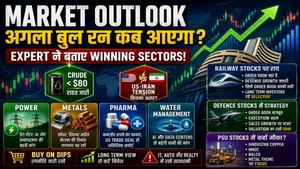 Share Market की तेज़ी बुरा फंसाएगी, बाज़ार में इन Stocks से बना लो दूरी!
 -
 Share Market में जोरदार तेजी, निफ्टी 24,200 के पार; सबसे अधिक किस शेयर में तेजी?
 -
 Trump Warning से Iran-US तनाव बढ़ा, Crude Oil में हलचल: Share Market Panic में क्या करें?
 -
 Share Market: कल की भारी गिरावट के बाद बाजार में लौटी तेजी, Sensex और Nifty में बढ़त के साथ कारोबार; आगे क्या
 -
 South Korea Market Crash: टेक शेयरों की बिकवाली से मचा हड़कंप! Bear Market में क्यों पहुंचा KOSPI?
 -
 Stock Market: शेयर बाजार में आज क्यों आई गिरावट? अमेरिका-ईरान तनाव के अलावा क्या है गिरावट की सबसे बड़ी वजहें
 -
 Sensex Outlook: सेंसेक्स 1 लाख तक पहुंचेगा या 66,000 तक गिरेगा? मॉर्गन स्टेनली ने बताए तीन बड़े अनुमान
 -
 Kalyan Jewellers Share Crash: अच्छे बिजनेस अपडेट के बावजूद 8% क्यों टूटा शेयर? जानिए पूरी वजह
 -
 Stock Market: अचानक क्यों टूटा बाज़ार? Sensex 350 प्वाइंट तो Nifty 24,450 के नीचे! जानिए 4 बड़ी वजहें
 -
 Stock Market Today: सप्ताह के पहले दिन शेयर बाजार में तेजी! आज शेयर बाजार में किसका रहा जलवा?
 -
 Stock Market में आएगा बड़ा ब्रेकआउट? 2026 के 5 सबसे दमदार सेक्टर्स!
 -
 HCL Tech Share Price: AI Deal के दम पर शेयर में 7% की तेजी, क्या आगे भी बढ़ेगा?
 -
 Share Market Today: सेंसेक्स 650 अंक उछला, निवेशकों की दौलत ₹2.43 लाख करोड़ बढ़ी, जानें तेजी की वजह
 -
 Nifty IT में 4% की तूफानी रैली! Infosys, TCS, Wipro में खरीदारी का मौका?
 -
 Vedanta Demerger के बाद धमाका: Oil & Gas में 20% की तेजी, निवेशकों की हुई चांदी
 -
 Nifty Outlook: क्या खत्म होगी गिरावट? 10 साल का Data क्या कहता है, जानें आगे की चाल
-
Block for 8 hours
-
Block for 12 hours
-
Block for 24 hours
-
Don't block

 Sign in with Google
- Male
- Female
- Others
- Under 18
- 18 to 25
- 26 to 35
- 36 to 45
- 45 to 55
- 55+