
 A Oneindia Venture


 Click it and Unblock the Notifications
Balgopal Commercial Ltd. के अकाउंट के लिये नोट
Mar 31, 2025
2.9 Provisions and contingencies
A provision is recognised when the Company has a present obligation as a result of past events and it is probable that an outflow of resources will be required to settle the obligation in
respect of which a reliable estimate can be made. Provisions (excluding retirement benefits) are not discounted to their present value and are determined based on the best estimate required
to settle the obligation at the Balance Sheet date. These are reviewed at each Balance Sheet date and adjusted to reflect the current best estimates
Contingent liabilities are disclosed in the Notes
The Company creates a provision when there is a present obligation as a result of past event that probably requires and outflows of resources and a reliable estimate can be made of the
amount of obligation. A disclosure of contingent liability is made when there is possible obligation or a present obligation that will probably not require outflow of resources or where a
reliable estimate of obligation cannot be made.
The company generally complied with the direction issued by Reserve Bank of India and provision of section 73 of the Companies Act, 2013. The policy of provisioning for Non¬
Performing Loans & Advances has been decided by management considering prudential norms prescribed by the Reserve Bank of India.
3.0 Employee benefits
All employees benefits falling due wholly within twelve month of rendering the services are classified as short term employee benefits which include benefits like salary, wages, short term
compensated, absences and performance incentives and are recognised as expense in the period in which the employee renders the related services.
All other income and expense are recognised in the period they occur.
3.1 Income taxes
Income tax comprises of current tax and deferred tax.
a. Current Tax
Current income tax for the current and prior periods are measured at the amount expected to be recovered from or paid to the taxation authorities based on the taxable profit for the period.
The tax rates and tax laws used to compute the amount are those that are enacted by the reporting date and applicable for the period. The Company offsets current tax assets and current tax
liabilities where it has a legally enforceable right to set off the recognized amounts and where it intends either to settle on a net basis, or to realise the asset and liability simultaneously.
b. Deferred tax
Deferred tax is recognised on temporary differences between the carrying amounts of assets and liabilities in the Balance Sheet and their tax bases. Deferred tax liabilities are recognised
for all taxable temporary differences. Deferred tax assets are recognised for all deductible temporary differences and incurred tax losses to the extent that it is probable that taxable profits
will be available against which those deductible temporary differences can be utilised. Such deferred tax assets and liabilities are not recognised if the temporary difference arises from the
initial recognition (other than in a business combination) of assets and liabilities in a transaction that affects neither the taxable profit nor the accounting profit.
Deferred tax liabilities and assets are measured at the tax rates that are expected to apply in the period in which the liability is settled or the asset realised, based on tax rates (and tax laws)
that have been enacted or substantively enacted by the end of the reporting period.
The carrying amount ofdeferred income tax assets is reviewed at each reporting date and reduced to the extent that it is no longer probable that sufficient taxable profit will be available to
allow all or part of the deferred income tax asset to be utilised.
The Company recognises deferred tax liabilities for all taxable temporary differences except those associated with the investments in subsidiaries where the timing of the reversal of the
temporary difference can be controlled and it is probable that the temporary difference will not reverse in the foreseeable future.
3.2 Investment
All the Investments are in Listed Securities. The Investments were valued at their Fair Market Value in accordance with INDAS.
4 Recent accounting pronouncements:
Ministry of Corporate Affairs (âMCAâ) notifies new standards or amendments to the existing standards under Companies (Indian Accounting Standards) Rules as issued from time to time.
For the year ended March 31, 2025, MCA has not notified any new standards or amendments to the existing standards applicable to the Company.
Further the new Promoters/Promoter Group of the Company are: Kiran Dalmia, Kamla Devi Jindal, Vibha Jindal, Sandeep Jindal, Vijay Laltaprasad Yadav, Allied
Commodities Private Limited, Basudev Dealers LLP, Prompt Vanijya LLP and Intellect Stock Broking Limited.
(E) No shares have been reserved for issue under options and contracts/commitments for the sale of shares. I
(F) During the period of 5 years preceding the date at which the Balance Sheet is prepared.
(A) No shares have been allotted by the Company as fully paid-up pursuant to contract(s) without payment being received in cash.
(B) No shares have been allotted by the Company as fully paid-up by way of bonus shares.
(C) No shares have been brought back by the Company.
(G) On 20th January, 2025, the Company has issued 45,00,000 warrants convertible into equity shares of face value of Rs. 10/- each at a premium of Rs. 50/- each to Promoters on I
preferential basis.
(H) On 20th January, 2025, the Company has issued 25,00,000 equity shares of face value of Rs. 10/- each at a premium of Rs. 50/- each to Promoter on preferential basis. I
(I) No shares of the Company have been forfeited.
Fair value hierarchy
The fair values of the financial assets and liabilities are included at the amount that would be received to sell an asset or paid to transfer a liability in an orderly
transaction between market participants at the measurement date other than in a forced or liquidation sale.
This section explains the judgements and estimates made in determining the fair values of the financial instruments that are (a) recognised and measured at fair
value and (b) measured at amortised cost and for which fair values are disclosed in the Financial Information. To provide an indication about the reliability of
the inputs used in determining fair value, the Company has classified its financial instruments into the three levels prescribed under the accounting standard. An
explanation of each level follows underneath the table.
The categories used are as follows:
⢠Level 1: Level 1 hierarchy includes financial instruments measured using quoted prices. For example, listed equity instruments that have quoted market price.
⢠Level 2: Level 2: The fair value of financial instruments that are not traded in an active market (for example, traded bonds, over-the-counter derivatives) is
determined using valuation techniques which maximise the use of observable market data and rely as little as possible on entity-specific estimates. If all
significant inputs required to fair value an instrument are observable, the instrument is included in level 2.
⢠Level 3: Level 3: If one or more of the significant inputs is not based on observable market data, the instrument is included in level 3. This is the case for
unlisted equity securities, contingent consideration and indemnification asset included in level 3.
The hierarchy gives the highest priority to quoted prices in active markets for identical assets or liabilities (Level 1 measurements) and lowest priority to
unobservable inputs (Level 3 measurements).
(i) The following methods and assumptions were used to estimate the fair values:
The management assessed that cash and cash equivalent, trade receivables, trade payables, other financial assets (current), other financial liability (current),
bank overdraft and cash credit, lease liabilities (current) and loans to employees approximates their fair value largely due to short-term maturities of these
instruments.
The fair value of remaining financial instruments are determined on transaction date based on discounted cash flows calculated using lending/ borrowing rate.
Subsequently, these are carried at amortized cost. The carrying amount of the remaining financial instruments are the reasonable approximation of their fair
value.
For financial assets carried at fair value, their carrying amount are equal to their fair value.
Note 24: Financial risk management
The Company is exposed to various risks in relation to financial instruments. The main types of risks are market risk, credit risk and liquidity risk. Group''s principal
financial liabilities comprises borrowings, trade and other payables. The main purpose of these financial liability is to finance Group''s operation. Group''s principal
financial asset include cash and cash equivalent, that directly derive from its business.
A Liquidity Risk
Liquidity risk is the risk that the Company may not be able to meet its present and future cash and collateral obligations without incurring unacceptable losses. The
Company''s objective it to, at all times maintain optimum levels of liquidity to meet its cash and collateral requirements. The Company closely monitors its position
and maintains adequate source of financing.
(i) Maturities of financial liabilities
The table below summarises the maturity profile of the Companyâs financial liabilities based on contractual payments at each reporting date:
B Market Risk
Market risk is the risk that the fair value of future cash flows of a financial instrument will fluctuate because of changes in market prices. Market risk comprises
three types of risk: Foreign currency risk, interest rate risk and credit risk. The details are given below :
(i) Credit Risk
Credit risk arises from the possibility that customers may not be able to settle their obligations as agreed. Trade receivables are typically unsecured and are derived
from revenue earned from customers located in Inida. Credit risk is managed through periodic assessment of the financial reliability of customers, taking into
account the financial condition, current economic trends, analysis of historical bad debts and ageing of trade receivables. Other financial instruments that are subject
to credit risk includes cash and cash equivalents, bank deposits, loans and security deposits.
The maximum exposure to credit risk at the reporting date is primarily from trade receivables which amounted to Rs in ''000 as at 31 March 2025 & 31 March 2024,
. The Company provides loss allowance using the ECL model on trade receivables by following simplified approach. An impairment analysis is performed at each
reporting date on an individual customer basis.
The credit risk on cash and cash equivalents and bank deposits is limited because the counterparties are banks with high credit ratings.
The maximum exposure to credit risk is equal to the carrying value of the financial assets. The objective of managing counterparty credit risk is to prevent losses in
financial assets. The Company assesses the credit quality of the counterparties, taking into account their financial position, past experience and other factors.
The Company does a credibility check on the landlords before taking any property on lease and hasnât had a single instance of non-refund of security deposit on
vacating the leased property. The Group also in some cases ensure that the notice period rentals are adjusted against the security deposits and only differential, if
any, is paid out thereby further mitigating the non-realization risk.
(ii) Foreign currency risk
The Company has limited international transactions and thus its exposure to foreign exchange risk arising from its operating activities is low. Foreign exchange risk
arises from future commercial transactions and recognised assets and liabilities denominated in a currency that is not the Companyâs functional currency. To
mitigate the Companyâs exposure to foreign currency risk, non-INR Cash Flows are monitored in accordance with the Companyâs risk management policies.
C Interest rate risk
Interest rate risk is the risk that the fair value or future cash flows of a financial instrument will fluctuate because of changes in market interest rates.
Interest rate exposure
The Group''s variable rate borrowing is subject to interest rate changes. Below is total outstanding borrowings:
Explanation for change in the ratio by more than 25%
1. Return on Equity Ratio (-75.16%)
Net profit has declined due to significant drop in operating revenue despite higher other income. On the other hand, equity base has increased due to retained profits
and capital infusion, reducing the return per rupee of equity.
2. Inventory Turnover Ratio (-98.53%)
Substantial increase in closing inventory along with a dramatic drop in purchases has caused turnover to fall drastically, suggesting stock accumulation as the new
construction activities has beem classified as WIP.
3. Trade payable turnover ratio (100%)
The company commenced additional lines of business, resulting in increased operational activity. This has impacted the trade payable turnover ratio, which now
reflects the inclusion of new supplier arrangements.
4. Net Capital Turnover Ratio (-98.61%)
A massive drop in sales with a simultaneous rise in working capital due to increased inventory and lower liabilities led to significant fall in capital turnover efficiency.
5. Return on Capital Employed (ROCE) (-82.40%)
Substantial increase in capital employed due to retained profits and issue of shares, while EBIT has fallen due to revenue drop, hence reduced return per rupee of
capital.
iii. Revaluation of property, plant and equipment (including right-of-use assets) and intangible assets
The Company does not have any property, Plant and Equipment (including Right of use Assets), thus valuation by a registered valuer as defined under rule 2 of the Companies (Registered Valuers
and Valuation) Rules, 2017 is not applicable.
The Company does not have any Intangible Assets, thus, disclosures relating to revaluation of Intangible Assets is not applicable.
iv. Details of benami property held
The Company does not have any Benami property, where any proceeding has been initiated or pending against the company for holding any Benami property.
v. Wilful Defaulter
The Company has not defaulted nor been declared wilful defaulter by any bank or financial institution or other lender.
vi. Relationship with struck off companies
The Company does not have any transactions with the Companies struck off under section 248 of the Companies Act, 2013 or section 560 of the Companies Act, 1956.
vii. Registration of charges or satisfaction with Registrar of Companies (ROC)
The Company does not have any charges or satisfaction which is yet to be registered with ROC beyond the statutory period.
viii. Compliance with number of layers of companies
The Company has complied with the number of layers prescribed under clause (87) of section 2 of the Act read with Companies (Restriction on number of Layers) Rules, 2017.
ix Compliance with approved Scheme(s) of Arrangements
The Company has not entered into any scheme of arrangements as approved by the competent authority in terms of Section 230 to 237 of the Companies Act, 2013, thus, the disclosures relating to
compliance with approved scheme of arrangements is not applicable to the Company.
x Undisclosed income
The Company does not have any undisclosed income which is not recorded in the books of account that has been surrendered or disclosed as income during the year (previous year) in the tax
assessments under the Income Tax Act, 1961.
xi Details of Crypto Currency or Virtual Currency
The Company has not traded or invested in crypto currency or virtual currency during the current or previous year.
Note 27(ii): The amounts in ''0.00'' represents the figures below INR 1,000.
Note 27(iii): Contingent Liabilities:
There is a pending litigation of Income Tax for the Financial Year 2017-18. Total Demand raised is Rs. 1,82,20,450/-. The Company has filed an appeal before the Competent Authority
against the same.
Note 27(iv): Subsequent Event
No Significant Subsequent events have been observed which may require an adjustments to the financial statements.
Note 27(v): Previous year figures have been regrouped/ reclassified to confirm presentation as per Ind AS and as required by Schedule III of the Act.
Note 27(vi): These financial statements have been approved for issue by the board of directors at its meeting held on 28 May 2025.
The above balance sheet should be read in conjunction with the accompanying notes. 2-27
As per our report of even date attached
For ARVIND BAID & ASSOCIATES For and on behalf of the board of directors of
Chartered Accountants BALGOPAL COMMERCIAL LIMITED
Firm Regn. No.137526W
Sd/- Sd/-
Sd/- Vijay Laltaprsad Yadav Navaneet Lal Damani
Managing Director Director
DIN-02904370 DIN-02904305
Sd/- Sd/-
Arvind Baid Ankita Devchand Darji Arvind Kumar Patel
Partner Company Secretary Chief Financial Officer
Membership No.155532
UDIN : 25155532BMIOPS2975
Place:- Mumbai Place:- Mumbai Place:-Mumbai
Date: May 28, 2025 Date: May 28. 2025 Date: May 28. 2025
Mar 31, 2024
Provisions and contingencies
A provision is recognised when the Company has a present obligation as a result of past events and it is probable that an outflow of resources will be required to settle the obligation in respect of which a reliable estimate can be made. Provisions (excluding retirement benefits) are not discounted to their present value and are determined based on the best estimate required to settle the obligation at the Balance Sheet date. These are reviewed at each Balance Sheet date and adjusted to reflect the current best estimates.
Contingent liabilities are disclosed in the Notes.
The Company creates a provision when there is a present obligation as a result of past event that probably requires and outflows of resources and a reliable estimate can be made of the amount of obligation. A disclosure of contingent liability is made when there is possible obligation or a present obligation that will probably not require outflow of resources or where a reliable estimate of obligation cannot be made.
Contingent liabilities & Commitments (to the extent not provided for):
Contingent Liabilities:
Claims against the company not acknowledged as debt :
There is a pending litigation of Income Tax for the Financial Year 2017-18. Total Demand raised is Rs. 1,59,18,221/-. The Company has filed an appeal before the Competent Authority against the same.
Other money for which the company is contingently liable : NIL
Commitments:
Estimated amount of contracts remaining to be executed on Capital A/c & not Provided : NIL
for
Uncalled liability on shares & other investments which are partly : NIL
The company generally complied with the direction issued by Reserve Bank of India and provision of section 73 of the Companies Act, 2013. The policy of provisioning for Non-Performing Loans & Advances has been decided by management considering prudential norms prescribed by the Reserve Bank of India.
Inventories
Inventories are stated at cost or net realisable value whichever is lower. Cost is determined on First-InFirst-Out basis.
Net realisable value represents the estimated selling price for inventories less all estimated costs of completion and costs necessary to make the sale.
''Cost'' comprises all costs of purchase, costs of conversion and other costs incurred in bringing the inventory to the present location and condition.
Taxation
Tax expense for the period, comprising current tax and deferred tax, are included in the determination of the net profit or loss for the period.
I. Current tax: -
Current tax is measured at the amount expected to be paid to the tax authorities in accordance with the taxation laws prevailing in the respective jurisdictions.
Current tax assets and current tax liabilities are offset when there is a legally enforceable right to set off the recognised amounts and there is an intention to settle the asset and the liability on a net basis.
II. Deferred tax:-
Deferred tax is recognized using the balance sheet approach. Deferred tax assets and liabilities are recognized for deductible and taxable temporary differences arising between the tax base of assets and liabilities and their carrying amount in financial statements.
Deferred tax asset is recognized to the extent that it is probable that taxable profit will be available against which such deferred tax assets can be realized. The carrying amount of deferred tax assets is reviewed at each reporting date and reduced to the extent that it is no longer probable that sufficient taxable profit will be available to allow all or part of the deferred income tax asset to be utilized.
Earnings per share (EPS):
Basic earnings per share is computed by dividing the profit / (loss) after tax (including the post tax effect of extraordinary items, if any) by the weighted average number of equity shares outstanding during the year. Diluted earnings per share is computed by dividing the profit / (loss) after tax (including the post tax effect of extraordinary items, if any) as adjusted for dividend, interest and other charges to expense or income relating to the dilutive potential equity shares, by the weighted average number of equity shares considered for deriving basic earnings per share and the weighted average number of equity shares which could have been issued on the conversion of all dilutive potential equity shares. Potential equity shares are deemed to be dilutive only if their conversion to equity shares would decrease the net profit per share from continuing ordinary operations.
Investment
All the Investments are in Listed Securities. The Investments were valued at their Fair Market Value in accordance with INDAS.
Reconciliation of profit between Indian GAAP and IND AS for the year ended 31.03.2024
Particulars Amount in Rs''000.
Profit/(loss) before tax as per IND AS 1,41,463.86
Add: Unrealized Loss due to change in Fair Value of
Investment 14,273.78
Profit/(Loss) as per Indian GAAP 1,55,737.64
Cash and Cash equivalents
Cash and Cash equivalents comprise cash and cash on deposit with banks and corporations. The
A
Company considers all highly liquid investments with a remaining maturity at the date of purchase of J three months or less and that are readily convertible to known amounts of cash to be cash equivalents.
A
Related Parties Disclosure: - J
A
There were no related party transactions except for the salary paid to Directors & KMPs which are as follows:
The company has initiated the process of obtaining the confirmation from suppliers who have registered themselves under the Micro, Small and Medium Enterprises Development Act, 2006 (MSMED Act, 2006) but has not received the same in totality. The above information is compiled based on the extent of responses received by the company from its suppliers.
Foreign Currency Transactions: -
Expenditure in Foreign Currency: - Nil
Earnings in Foreign Currency: - Nil
Risk:-
"Expected credit losses are the weighted average of credit losses with the respective risks of default occurring as the weights. Credit loss is the difference between all contractual cash flows that are due to the Company in accordance with the contract and all the cash flows that the Company expects to receive. The Company measures the loss allowance for a financial instrument at an amount equal to the lifetime expected credit losses if the credit risk on that financial instrument has increased significantly since initial recognition. If the credit risk on a financial instrument has not increased significantly since initial recognition, the Company measures the loss allowance for that financial instrument at an amount equal to 12-month expected credit losses. When making the assessment of whether there has been a significant increase in credit risk since initial recognition, the Company uses the change in the risk of a default occurring over the expected life of the financial instrument instead of the change in the amount of expected credit losses. Since in Our case there has been no significant change in credit risk and are all in current bucket no expected credit loss assessment and corresponding expected loss provision is required as on Balance sheet date. We don''t foresee any probable loss in the account in the near future. Hence the standard asset provision as per RBI requirement is done on these assets being in Stage I."
Additional Regulatory Information:-
(i) No loans or advances in the nature of loans are granted to promoters, directors, KMPs and the related parties (as defined under the Companies Act, 2013), either severally or jointly with any other person.
(ii) No Benami Property is held by the Company and that no proceedings have been initiated or pending against the company for holding any benami property under the Benami Transactions (Prohibition) Act, 1988 (45 of 1988) and rules made thereunder.
(iii) There are no borrowings from banks or financial institutions on the basis of security of current assets.
(iv) The Company is a not a declared wilful defaulter by any bank or financial Institution or other lender.
(v) The company has not entered into any transactions with the companies struck off under section 248
of Companies Act, 2013 or section 560 of Companies Act, 1956.
(vi) No charge is created on any property of the Company and that there are no charges or satisfaction yet to be registered with ROC beyond the statutory period.
(vii) The company has complied with the provisions for number of layers prescribed under clause (87) of section 2 of the Act read with Companies (Restriction on number of Layers) Rules, 2017.
(viii) No Scheme of Arrangement has been undertaken by the Company during the financial year in terms of sections 230 to 237 of the Companies Act, 2013.
(ix) Utilisation of Borrowed funds and share premium:
No funds have been advanced or loaned or invested (either from borrowed funds or share premium or any other sources or kind of funds) by the Company to or in any other persons or entities, including foreign entities ("Intermediaries") with the understanding, whether recorded in writing or otherwise, that the Intermediary shall lend or invest in party identified by or on behalf of the Company (Ultimate Beneficiaries). The Company has also not received any fund from any parties (Funding Party) with the understanding that the Company shall whether, directly or indirectly lend or invest in other persons or entities identified by or on behalf of the Funding Party ("Ultimate Beneficiaries") or provide any guarantee, security or the like on behalf of the Ultimate Beneficiaries.
(x) There are no transactions not recorded in the books of accounts that has been surrendered or disclosed as income during the year in the tax assessments under the Income Tax Act, 1961.
(xi) The company is not covered under section 135 of the Companies Act, 2013 and therefore not required to spend any amount on corporate social responsibility activities.
(xii) The Company has not traded or invested in Crypto currency or Virtual Currency during the financial year.
"Previous Year''s figure has been regrouped, rearranged wherever considered necessary.
For Arvind Baid & Associates For Balgopal Commercial Limited
Chartered Accountants FRN No. 103526W
Sd/- Sd/- Sd/-
Arvind D. Baid Vijay Laltaprasad Yadav Yash Saraogi
Partner Managing Director Director
Mem No:- 155532 DIN: 02904370 DIN: 00402101
UDIN: 24155532BKCPCJ7611 Place: Mumbai
Date: 09.05.2024 Sd/- Sd/-
Arvind Kumar Patel Ankita Devchand Darji
CFO Company Secretary
Mar 31, 2023
Provisions and contingencies
A provision is recognised when the Company has a present obligation as a result of past events and it is probable that an outflow of resources will be required to settle the obligation in respect of which a reliable estimate can be made. Provisions (excluding retirement benefits) are not discounted to their present value and are determined based on the best estimate required to settle the obligation at the Balance Sheet date. These are reviewed at each Balance Sheet date and adjusted to reflect the current best estimates. Contingent liabilities are disclosed in the Notes.
The Company creates a provision when there is a present obligation as a result of past event that probably requires and outflows of resources and a reliable estimate can be made of the amount of obligation. A disclosure of contingent liability is made when there is possible obligation or a present obligation that will probably not require outflow of resources or where a reliable estimate of obligation cannot be made.
Contingent liabilities & Commitments (to the extent not provided for):
Contingent Liabilities:
Claims against the company not acknowledged as debt : NIL
Other money for which the company is contingently liable : NIL
The company generally complied with the direction issued by Reserve Bank of India and provision of section 73 of the Companies Act, 2013. The policy of provisioning for Non-Performing Loans & Advances has been decided by management considering prudential norms prescribed by the Reserve Bank of India.
Inventories
Inventories are stated at cost or net realisable value whichever is lower. Cost is determined on First-InFirst-Out basis.
Net realisable value represents the estimated selling price for inventories less all estimated costs of completion and costs necessary to make the sale.
''Cost'' comprises all costs of purchase, costs of conversion and other costs incurred in bringing the inventory to the present location and condition.
During the year under review, inventories was converted into investments and accounting treatment has been followed.
Income Tax
Tax expense for the period, comprising current tax and deferred tax, are included in the determination of the net profit or loss for the period.
I. Current tax: -
Current tax is measured at the amount expected to be paid to the tax authorities in accordance with the taxation laws prevailing in the respective jurisdictions.
Current tax assets and current tax liabilities are offset when there is a legally enforceable right to set off the recognised amounts and there is an intention to settle the asset and the liability on a net basis.
II. Deferred tax:-
Deferred tax is recognized using the balance sheet approach. Deferred tax assets and liabilities are recognized for deductible and taxable temporary differences arising between the tax base of assets
and liabilities and their carrying amount in financial statements.
Deferred tax asset is recognized to the extent that it is probable that taxable profit will be available against which such deferred tax assets can be realized. The carrying amount of deferred tax assets is reviewed at each reporting date and reduced to the extent that it is no longer probable that sufficient taxable profit will be available to allow all or part of the deferred income tax asset to be utilized.
Earnings per share (EPS):
Basic earnings per share is computed by dividing the profit / (loss) after tax (including the post tax effect of extraordinary items, if any) by the weighted average number of equity shares outstanding during the year. Diluted earnings per share is computed by dividing the profit / (loss) after tax (including the post tax effect of extraordinary items, if any) as adjusted for dividend, interest and other charges to expense or income relating to the dilutive potential equity shares, by the weighted average number of equity shares considered for deriving basic earnings per share and the weighted average number of equity shares which could have been issued on the conversion of all dilutive potential equity shares. Potential equity shares are deemed to be dilutive only if their conversion to equity shares would decrease the net profit per share from continuing ordinary operations.
Investment
All the Investments are in Listed Securities. The Investments were valued at their Fair Market Value in accordance with INDAS.
Reconciliation of profit between Indian GAAP and IND AS for the year ended 31.03.2023
Particulars Amount in Rs''000.
Profit/(loss) before tax as per IND AS 361.67
Add: Unrealized Loss due to change in Fair Value of Investment 11,626.09
Profit/(Loss) as per Indian GAAP 11,987.86
Cash and Cash equivalents
Cash and Cash equivalents comprise cash and cash on deposit with banks and corporations. The Company considers all highly liquid investments with a remaining maturity at the date of purchase of three months or less and that are readily convertible to known amounts of cash to be cash equivalents.
Related Parties Disclosure: -
There were no transactions with the related parties as defined in the Accounting Standard except for salary paid to Rinky Shaw, Company Secretary amounting to Rs 4,12,855.
Notes forming part of accounts in relation to Micro and small enterprise
Based on information available with the company, on the status of the suppliers being Micro or small enterprises, on which the auditors have relied, the disclosure requirements of Schedule III to the Companies Act,2013 with regard to the payments made/due to Micro and small Enterprises are
The company has initiated the process of obtaining the confirmation from suppliers who have registered themselves under the Micro, Small and Medium Enterprises Development Act, 2006 (MSMED Act, 2006) but has not received the same in totality. The above information is compiled based on the extent of responses received by the company from its suppliers.
Foreign Currency Transactions: -
Expenditure in Foreign Currency: - Nil
Earnings in Foreign Currency: - Nil
Additional Regulatory Information:-
(i) No loans or advances in the nature of loans are granted to promoters, directors, KMPs and the related parties (as defined under the Companies Act, 2013), either severally or jointly with any other person.
(ii) No Benami Property is held by the Company and that no proceedings have been initiated or pending against the company for holding any benami property under the Benami Transactions (Prohibition) Act, 1988 (45 of 1988) and rules made thereunder.
(iii) There are no borrowings from banks or financial institutions on the basis of security of current assets.
(iv) The Company is a not a declared wilful defaulter by any bank or financial Institution or other lender.
(v) The company has not entered into any transactions with the companies struck off under section 248 of Companies Act, 2013 or section 560 of Companies Act, 1956.
(vi) No charge is created on any property of the Company and that there are no charges or satisfaction yet to be registered with ROC beyond the statutory period.
(vii) The company has complied with the provisions for number of layers prescribed under clause (87) of section 2 of the Act read with Companies (Restriction on number of Layers) Rules, 2017.
(viii) No Scheme of Arrangement has been undertaken by the Company during the financial year in terms of sections 230 to 237 of the Companies Act, 2013.
(ix) Utilisation of Borrowed funds and share premium:
No funds have been advanced or loaned or invested (either from borrowed funds or share premium or any other sources or kind of funds) by the Company to or in any other persons or entities, including foreign entities ("Intermediaries") with the understanding, whether recorded in writing or otherwise, that the Intermediary shall lend or invest in party identified by or on behalf of the Company (Ultimate Beneficiaries). The Company has also not received any fund from any parties (Funding Party) with the understanding that the Company shall whether, directly or indirectly lend or invest in other persons or entities identified by or on behalf of the Funding Party ("Ultimate Beneficiaries") or provide any guarantee, security or the like on behalf of the Ultimate Beneficiaries.
(x) There are no transactions not recorded in the books of accounts that has been surrendered or disclosed as income during the year in the tax assessments under the Income Tax Act, 1961.
(xi) The company is not covered under section 135 of the Companies Act, 2013 and therefore not required to spend any amount on corporate social responsibility activities.
(xii) The Company has not traded or invested in Crypto currency or Virtual Currency during the financial year.
"Previous Year''s figure has been regrouped, rearranged wherever considered necessary.
For Gupta Saharia & Co For Balgopal Commercial Limited
FRN No. 103446W Chartered Accountants
Sd/- Sd/- Sd/-
Pawan Gupta Vijay Laltaprasad Yadav Yash Saraogi
Partner Managing Director Director
Mem No:- 071471 DIN: 02904370 DIN: 00402101
UDIN: 23071471BGWSNZ7708
Sd/-
Place: Mumbai Arvind Kumar Patel
Date: 25/05/2023 CFO
Disclaimer: This is 3rd Party content/feed, viewers are requested to use their discretion and conduct proper diligence before investing, GoodReturns does not take any liability on the genuineness and correctness of the information in this article
Balgopal Commercial Ltd. पर और जानकारी
-
Balgopal Commercial Ltd. टूल
- बल्क डील
-
Balgopal Commercial Ltd. कंपनी का विवरण
- कंपनी का प्रोफाइल
- कंपनी का इतिहास
- मैनेजमेंट टीम
- पूंजी ढांचा
- प्रॉडक्ट मिक्स
- बैंकर/ऑडीटर/रजिस्ट्रार
-
कंपनी का इतिहास
- बीएसई मूल्य इतिहास
-
Balgopal Commercial Ltd. मुख्य वित्तीय अनुपात
- अनुपात
-
Balgopal Commercial Ltd. परिणाम
- तिमाही परिणाम
- छहमाही परिणाम
- नौ महीने के परिणम
- वार्षिक परिणाम
-
Balgopal Commercial Ltd. Financial Data
- ऑडिट के परिणाम
- नकदी प्रवाह
- बैलेंस शीट
-
Balgopal Commercial Ltd. की रिपोर्ट
- लेखा नीति
- ऑडीटर की रिपोर्ट
- निदेशक की रिपोर्ट
- खाते के लिये नोट
-
Balgopal Commercial Ltd. कॉर्पोरेट घोषणाएं
- बुक क्लोज़र
- बोर्ड की मीटिंग
- नाम में परिवर्तन
-
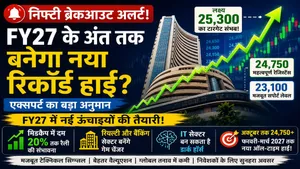 Share Market में नए Record High की तैयारी? Nifty, Midcap, Realty पर एक्सपर्ट का बड़ा दांव
 -
 Share Market: शेयर मार्केट में जोरदार तेजी! Nifty 24,100 के करीब, जानिए वजह
 -
 Meesho के शेयर में 6% से ज्यादा उछाल, Citi ने दी Buy रेटिंग, अब क्या करें निवेशक?
 -
 Share Market: शेयर बाजार में जोरदार गिरावट, निफ्टी ने 23,900 का लेवल तोड़ा, वजह जानकर हो जाएंगे हैरान
 -
 GRSE Share Price: नवरत्न स्टेटस के बाद शेयर में रॉकेट रैली, 5% उछाल; खरीदें या नहीं?
 -
 Kirloskar Oil Engines Ltd में तूफानी तेजी! डेटा सेंटर और AI में एंट्री से बना काम, 20% की तेज उछाल
 -
 Share Market में नई तेजी या करेक्शन? Jigar Patel के Top Stocks और Market Strategy!
 -
 Nifty IT Crash: Infosys, TCS समेत सभी शेयरों मे गिरवाट! Accenture की रिपोर्ट ने IT शेयरों को कैसे झटका दिया?
 -
 Nykaa में धमाका! शेयर 8% उछला, 1 साल के हाई पर पहुंचा स्टॉक, वजह क्या?
 -
 Share Market में लगी है सबसे बड़ी Discount Sale? 54% Share सस्ते, Experts क्या कह रहे?
 -
 Nifty Expiry के दिन तेजी का माहौल, लेकिन 24,000 के ऊपर टिक नहीं पाया बाज़ार
 -
 Stock Market Today: शेयर बाजार में अचानक क्यों आई इतनी बड़ी तेजी? रुपये की भी दमदार वापसी!
 -
 IT सेक्टर में हाहाकार, Anthropic के नए AI मॉडल ने मचाया तबाही! आखिर कब लौटेगी तेजी?
 -
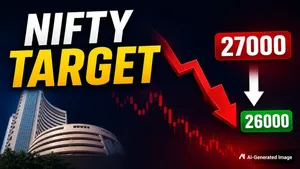 Nifty Target: विदेशी ब्रोकरेज ने घटाया निफ्टी का टारगेट, क्या बाजार पर मंडरा रहा है बड़ा खतरा?
 -
 Stock Market: सेंसेक्स 900 अंक टूटा, निफ्टी 250 अंक से ज्यादा लुढ़का! गिरावट के पीछे ये 5 बड़े कारण
 -
 Share Market Update: शेयर बाजार में आज भी Melody इफेक्ट बरकरार, सेंसेक्स-निफ्टी क्यों भाग रहे है?
-
Block for 8 hours
-
Block for 12 hours
-
Block for 24 hours
-
Don't block

 Sign in with Google
- Male
- Female
- Others
- Under 18
- 18 to 25
- 26 to 35
- 36 to 45
- 45 to 55
- 55+