
 A Oneindia Venture


 Click it and Unblock the Notifications
Oscar Global Ltd. के अकाउंट के लिये नोट
Mar 31, 2025
c. Terms /rights attached to equity
The company has only one class of equity shares havi ng a face value of Re.10/- per share. Each holder of equity shares is entitled to one vote per share. The dividend declared, if any is payable in Indian rupees. The dividend if any proposed by the Board of Directors is subject to the approval of the shareholders in the ensuing annual General Meeting. The board has not proposed any dividend for current year and previous year.
In the event of liquidation of the company, the holders of equity shares will be entitiled to receive remaining assets of the company, after distribution of all preferential amounts including preference shares. The distribution will be in proportion to the number of equity shares held by the shareholders.
|
NOTE 20 |
CONTINGENCIES AND COMMITMENTS |
As at 31st March, 2025 |
As at 31st March, 2024 |
||
|
(A) I |
Contingent liabilities Income Tax |
||||
|
II |
Other Legal Cases |
- |
- |
||
|
- |
- |
||||
|
(B) |
Capital and other commitments |
||||
|
Estimated amount of contracts remaining to be exe cuted on capital account, net of advan ces and not |
|||||
|
provided in the books are as follows: |
|||||
|
Particulars |
As at |
As at |
|||
22 MSME
Based on the informat ion available with the company, there are no dues as at March 31,2024 and 31st March, 2023 payable to enterprises covered under " Micro Small and Medium Enterprises Development Act, 2006. No Interest is paid/payable by the company in terms of Section 16 of the Micro, Small and Medium Enterprises Development Act, 2006.
The fair value of the assets and liabilities are included at the amount at which the instrument could be exchanged in a current transaction between willing parties, other than in forced or liquidation sale.The following methods and assumptions were used to estimate the fair values:
Fair Value of cash and current deposits, trade and other current receivables, trade payables, other current liabilities and other financial instruments approximate their carrying amounts largely due to the short term maturities of these instruments.
The different levels of fair value have been defined below:
Level 1: Quoted (Unadjusted) prices in active markets for identical assets or liabilities.
Level 2: Other techniques for which all inputs which have a significant effect on the recorded fair value are observable, either directly or indirectly
Level 3: Techniques which use inputs that have a significant effect on the recorded fair value that are not based on observable market data.
25 Financial Risk Management
The Company''s financial risk management is an integral part of how to plan and execute its business strategies. The Company''s financial risk management policy is set by the Managing Board. The financial risks are identified, measured and managed in accordance with the Company''s policies on risk management. Key financial risks and mitigation plans are reviewed by the board of directors of the Company.
A. MARKET RISK
Market risk is the risk of loss of future earnings, fair value of future c ash flows that may result from a change in the price of financial instrument. The value of a financial instrument may change as a result of changes in the interest rates, equity prices and other market changes that may effect market sensitivity instruments. Market risk is attributable to all market risk sensitive financial instruments including investments and deposits, loans and borrowings.
Interest Rate Risk
Interest rate risk is the risk that the fair value or future cash flows of a financial instrument will fluctuate because of changes in market interest rates. In order to balance the Company''s position with regards to interest income and interest expense and to manage the interest rate risk, management performs a comprehensive interest rate risk management. The Company has no interest bearing borrowings hence it is not exposed to significant interest rate risk as at the respective reporting dates. They are therefore not subject to interest rate risk, since neither the carrying amount nor the future cash flows will fluctuate because of change in market interest rates.
Price Risk
Price risk arises from exposure to equity securities prices from investments held by the Company. The Company does not have any investments in equity shares.
B. CREDIT RISK
Credit risk is the risk tha t customer or counter-party will not meet its obligation under the contract, leading to financial loss. Credit risk arises from trade receivables and other financial assets.
Other Financial
Assets
There is no credit risk exposure with respect to other financial assets as they are either supported by legal agreement or are with Nationalized banks.
- Deposits are held with Electricity Department, hence the risk of default is considered to be negligible.
- Loans to Others are supported with legal agreements, hence there is no credit risk involved.
Provision for Expected Credit losses
Financial Assets are considered to be of good quality and there is no credit risk to the Company.
C. LIQUIDITY RISK
Liquidity risk is the risk that the Company will encounter difficulty in meeting the obligations associated with its financial liabilities that are settled by delivering cash or another financial asset. The Group''s approach to managing liquidity is to ensure as far as possible, that it will have sufficient liquidity to meet its liabilities when they are due.
Management monitors rolling forecasts of the liquidity position and cash and cash equivalents on the basis of expected cash flows. The Company takes into account the liquidity of the market in which the entity operates.
Contractual Maturities of financial liabilities
The tables below provide details regarding the remaining contractual maturities of financial liabilities at reporting date based on contractual undiscounted payments.
NOTE
26 Capital Risk Management
The Company aim to manages its capital efficiently so as to safeguard its ability to continue as a going concern and to optimize returns to shareholders. The capital structure of the Company is based on management''s judgment of the appropriate balance of key elements in order to meet its strategic and day-to-day needs. We consider the amount of capital in proportion to risk and manage the capital structure in light of changes in economic conditions and the risk characteristics of the underlying assets. The Company''s policy is to maintain a stable and strong capital structure with a focus on total equity so as to maintain creditors and market confidence and to sustain future development and growth of its business. There in no change in the Company capital structure since previous year.
NOTE
27 Revenue from Contracts with Customer
Ind AS 115 Revenue with contracts with Customers, mandatory for reposrting periods beginning on or after April1,2018 replaces existing revenue recognition requirements. Under the modified restrospective approach there were no adjustments required to the retained earnings as at April1,2018. Application of Ind AS 115 did not have any impact on recognition and measurment of revenue and related items in the financial results.
31 Segment information
The company is operating in only one product i.e. leather garments and accessories. Hence there is no need to present financial information segment wise as required by AS-17.
information segement wise as required under Indian Accounting Standard -108.
Mar 31, 2024
NOTE
24 FAIR VALUE MEASUREMENTS ''
The fair value of the assets and liabiliti es are included at the amount at which the instrument
could be exchanged in a current transaction between willing parties, other than in forced or
liquidation sale. The following methods and assumptions were used to estimate the fair
values:
Fair Value of cash and current deposits, trade and other current receivables, trade payables,
other current liabilities and other financial instruments approximate their carrying amounts
largely due to the short term maturities of these instruments.
The different levels of fair value have been defined
below:
Level 1: Quoted (Unadjusted) prices in active markets for identical assets
or liabilities.
Level 2: Other techniques for which all inputs which have a significant effect on the recorded
fair value are observable, either directly or indirectly
Level 3: T echniques which use inputs that have a significant effect on the recorded fair value
that are not based on observable market data.
NOTE 25 Financial Risk Management
The Company''s financial risk management is an integral part of how to plan and execute its
business strategies. The Company''s financial risk management policy is set by the Managing
Board. The financial risks are identified, measured and managed in accordance with the
Company''s policies on risk management. Key financial risks and mitigation plans are reviewed by
the board of directors of the Company.
A. MARKET RISK
Market risk is the risk of loss of future earnings, fair value of future cash flows that may result
from a change in the price of financial instrument. The value of a financial instrument may
change as a result of changes in the interest rates, equity prices and other market changes that
may effect market sensitivity instruments. Market risk is attributable to all market risk sensitive
financial instruments including investments and deposits, loans and borrowings.
Interest Rate Risk
Interest rate risk is the risk that the fair value or future cash flows of a financial instrument will
fluctuate because of changes in market interest rates. In order to balance the Company''s position
with regards to interest income and interest expense and to manage the interest rate risk,
management performs a comprehensive interest rate risk management. The Company has no
interest bearing borrowings hence it is not exposed to significant interest rate risk as at the
respective reporting dates. They are therefore not subject to interest rate risk, since neither the
carrying amount nor the future cash flows will fluctuate because of change in market interest
rates.
Price Risk
Price risk arises from exposure to equity securities prices from investments held by the
Company. The Company does not have any investments in equity shares.
B. CREDIT RISK
Credit risk is the risk that customer or counter-party will not meet its obligation under the
contract, leading to financial loss. Credit risk arises from trade receivables and other financial
assets.
Other Financial Assets
There is no credit risk exposure with resp ect to other fi nancial assets as they are either
supported by legal agreement or are with Nationalized banks.
- Deposits are held with Electricity Department, hence the risk of default is considered to be
negligible.
- Loans to Others are supported with legal agreements, hence there is no credit risk involved.
Provision for Expected Credit
losses
Financial Assets are considered to be of good quality an d there is no
credit risk to the Company.
C. LIQUIDITY RISK
Liquidity risk is the risk that the Company will encounter difficulty in meeting the obligations
associated with its financial liabilities that are settled by delivering cash or another financial
asset. The Group''s approach to managing liquidity is to ensure as far as possible, that it will have
sufficient liquidity to meet its liabilities when they are due.
Management monitors rolling forecasts of the liquidity position and cash and cash equivalents on
the basis of expected cash flows. The Company takes into account the liquidity of the market in
which the entity operates.
Contractual Maturities of financial liabilities
The tables below provide details regarding the remaining contractual maturities of financial
liabilities at reporting date based on contractual undiscounted payments.
26 Capital Risk Management
The Company aim to manages its capital efficiently so as to safeguard its ability to continue as a
going concern and to optimize returns to shareholders. The capital structure of the Company is
based on management''s judgment of the appropriate balance of key elements in order to meet its
strategic and day-to-day needs. We consider the amount of capital in proportion to risk and
manage the capital structure in light of changes in economic conditions and the risk
characteristics of the underlying assets. The Company''s policy is to maintain a stable and strong
capital structure with a focus on total equity so as to maintain creditors and market confidence
and to sustain future development and growth of its business. There in no change in the
Company capital structure since previous year.
Revenue from Contracts with
27 Customer
Ind AS 115 Revenue with contracts with Customers, mandatory for reposrting periods beginning
on or after April1,2018 replaces existing revenue recognition requirements. Under the modified
restrospective approach there were no adjustments required to the retained earnings as at
April1,2018. Application of Ind AS 115 did not have any impact on recognition and measurment
of revenue and related items in the financial results.
31 Segment information
The company is operating in only one product i.e. leather garments and accessories. Hence there is no
need to present financial information segment wise as required by AS-17.
information segement wise as required under Indian Accounting
Standard -108.
For D.V. Mittal & Co. For OSCAR GLOBAL LIMITED
Chartered Accountants
ROHIT SINGHAL PAWAN CHADHA KARAN KANIKA VERMA
(Partner) WHOLE TIME CHAIRMAN & MANAGING
DIRECTOR & CFO DIRECTOR
Membership No.516295 DIN: 00415795 DIN : 00034343
FRN : 002997N
NITASHA SINHA
PLACE: NEW DELHI COMPANY
SECRETARY
DATE: Membership No.
23/05/2024 A27439
Mar 31, 2014
COMPNAY OVERVIEW
OSCAR GLOBAL LIMITED (here in after referred as ''OGL'' or ''company'') was
incorporated in 1990 and is engaged in the business of manufacturing
and export of Leather Garments and Accessories for men and women. The
company is exporting its goods mainly to the European countries such as
Germany, France, Holland etc. The manufacturing facilities are located
at Noida, Uttar Pradesh.
Amounts in the financial statements are presented in Rupees and are
exact amount unless and otherwise stated in the relevant note
The previous year figures have been re-grouped/classified, wherever
necessary to conform to the current period presentation.
1. CONTINGENT LIABILITIES AND COMITMENTS (to the extent not provided
for)
Disclosure pursuant to Note No. 6(T) of Schedule VI of the Companies
Act, 1956
Particulars As at As at
31 March 2014 31 March 2013
Rs. Rs.
(i) Contingent Liabilities
(a) Claims against the company not
acknowledged as debt - -
(b) Guarantees - -
(c) Other money for which the
company is contingently liable - -
(ii) Commitments
(a) Estimated amount of contracts
remaining to be executed on
capital account and not provided
for - -
(b) Uncalled liability on shares
and other investments partly paid - -
(c) Other commitments (specify nature) - -
2. Contingent liabilities and commitments (to the extent not provided
for)
Particulars As at As at
31 March 2014 31 March 2013
Rs. Rs.
(i) Contingent Liabilities
(a) Claims against the company not
acknowledged as debt - -
(b) Guarantees - -
(c) Other money for which the
company is contingently liable - -
(ii) Commitments
(a) Estimated amount of contracts
remaining to be executed on
capital account and not provided
for - -
(b) Uncalled liability on shares
and other investments partly paid - -
(c) Other commitments - -
Total - -
3. Segment information
The company is operating in only one product i.e. leather garments and
accessories. Hence there is no need to present financial information
segment wise as required by AS-17.
Mar 31, 2013
COMPNAY OVERVIEW
OSCAR GLOBAL LIMITED (here in after ''OGL'' or ''company'') was
incorporated in 1990 and is engaged in the business of manufacturing
and export of Leather Garments and Accessories for men and women. The
company is exporting its goods mainly to the European countries such as
Germany, France, Holland etc. The manufacturing facilities are located
at Noida, Uttar Pradesh.
1.1 CONTINGENT LIABILITIES AND COMITMENTS
(to the extent not provided for) Disclosure pursuant to
Note No. 6(T) of Schedule VI of the Companies Act, 1956
As at As at
Particulars 31 March 2013 31 March 2012
(i) Contingent Liabilities
(a) Claims against the company not
acknowledged as debt
(b) Guarantees
(c) Other money for which the company
is contingently liable
(ii) Commitments
(a) Estimated amount of contracts remaining to be executed on capital
account and not provided for
(b) Uncalled liability on shares andd other investments partly paid
(c) Other commitments (specify nature)
Total
1.2 Segment information
The company is operating in only one product i.e. leather garments and
accessories. Hence there is no need to present financial informations
segmentwise as required byAS-17.
Mar 31, 2012
COMPNAY OVERVIEW
OSCAR GLOBAL LIMITED (here in after 'OGL' or 'company') was
incorporated in 1990 and is engaged in the business of manufacturing
and export of Leather Garments and Accessories for men and women. The
company is exporting its goods mainly to the European countries such as
Germany' France' Holland etc. The manufacturing facilities are located
at Noida' Uttar Pradesh.
Amounts in the financial statements are presented in Rupees and are
exact amount unless and otherwise stated in the relevant note The
previous year figures have been re-grouped/classified' whereever
necessary to conform to the current period presentation.
1.1 Contingent liabilities and commitments (to the extent not provided
for)
As at As at
Particulars 31st
March 2012 31st March
2011
(i) Contingent Liabilities
(a) Claims against the company
not acknowleged as debt - -
(b) Guarantees
(c) Other Money for which the company
is contingently liable - -
(ii) Commitments
(a) Estimated amount of contracts
remaining to be executed on capital
account and not provided for - -
(b) Other commitments - -
Total - -
Mar 31, 2010
1. Previous year figures have been re-arranged / re-grouped wherever
necessary for comparison purposes.
2. There is no pending liability on capital account to be executed.
3. Contingent Liabilities not provided for in the accounts - Nil
4. Balances outstanding to the parties accounts (including personal
accounts) as on 31.03.2010 and the squared up accounts during the year
are subject to confirmation and reconciliation.
5. The Company is dealing in only one segments i.e. manufacturing of
leather garments; hence no separate reporting is required.
6. In view of the carried forward losses, no provision has been made
for deferred tax.
Disclaimer: This is 3rd Party content/feed, viewers are requested to use their discretion and conduct proper diligence before investing, GoodReturns does not take any liability on the genuineness and correctness of the information in this article
Oscar Global Ltd. पर और जानकारी
-
Oscar Global Ltd. टूल
- बल्क डील
-
Oscar Global Ltd. कंपनी का विवरण
- कंपनी का प्रोफाइल
- कंपनी का इतिहास
- मैनेजमेंट टीम
- पूंजी ढांचा
- प्रॉडक्ट मिक्स
- बैंकर/ऑडीटर/रजिस्ट्रार
-
कंपनी का इतिहास
- बीएसई मूल्य इतिहास
-
Oscar Global Ltd. मुख्य वित्तीय अनुपात
- अनुपात
-
Oscar Global Ltd. परिणाम
- तिमाही परिणाम
- छहमाही परिणाम
- नौ महीने के परिणम
- वार्षिक परिणाम
-
Oscar Global Ltd. Financial Data
- ऑडिट के परिणाम
- नकदी प्रवाह
- बैलेंस शीट
-
Oscar Global Ltd. की रिपोर्ट
- लेखा नीति
- ऑडीटर की रिपोर्ट
- निदेशक की रिपोर्ट
- खाते के लिये नोट
-
Oscar Global Ltd. कॉर्पोरेट घोषणाएं
- बुक क्लोज़र
- बोर्ड की मीटिंग
-
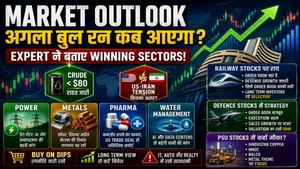 Share Market की तेज़ी बुरा फंसाएगी, बाज़ार में इन Stocks से बना लो दूरी!
 -
 Share Market में जोरदार तेजी, निफ्टी 24,200 के पार; सबसे अधिक किस शेयर में तेजी?
 -
 Trump Warning से Iran-US तनाव बढ़ा, Crude Oil में हलचल: Share Market Panic में क्या करें?
 -
 Share Market: कल की भारी गिरावट के बाद बाजार में लौटी तेजी, Sensex और Nifty में बढ़त के साथ कारोबार; आगे क्या
 -
 South Korea Market Crash: टेक शेयरों की बिकवाली से मचा हड़कंप! Bear Market में क्यों पहुंचा KOSPI?
 -
 Stock Market: शेयर बाजार में आज क्यों आई गिरावट? अमेरिका-ईरान तनाव के अलावा क्या है गिरावट की सबसे बड़ी वजहें
 -
 Sensex Outlook: सेंसेक्स 1 लाख तक पहुंचेगा या 66,000 तक गिरेगा? मॉर्गन स्टेनली ने बताए तीन बड़े अनुमान
 -
 Kalyan Jewellers Share Crash: अच्छे बिजनेस अपडेट के बावजूद 8% क्यों टूटा शेयर? जानिए पूरी वजह
 -
 Stock Market: अचानक क्यों टूटा बाज़ार? Sensex 350 प्वाइंट तो Nifty 24,450 के नीचे! जानिए 4 बड़ी वजहें
 -
 Stock Market Today: सप्ताह के पहले दिन शेयर बाजार में तेजी! आज शेयर बाजार में किसका रहा जलवा?
 -
 Stock Market में आएगा बड़ा ब्रेकआउट? 2026 के 5 सबसे दमदार सेक्टर्स!
 -
 HCL Tech Share Price: AI Deal के दम पर शेयर में 7% की तेजी, क्या आगे भी बढ़ेगा?
 -
 Share Market Today: सेंसेक्स 650 अंक उछला, निवेशकों की दौलत ₹2.43 लाख करोड़ बढ़ी, जानें तेजी की वजह
 -
 Nifty IT में 4% की तूफानी रैली! Infosys, TCS, Wipro में खरीदारी का मौका?
 -
 Vedanta Demerger के बाद धमाका: Oil & Gas में 20% की तेजी, निवेशकों की हुई चांदी
 -
 Nifty Outlook: क्या खत्म होगी गिरावट? 10 साल का Data क्या कहता है, जानें आगे की चाल
-
Block for 8 hours
-
Block for 12 hours
-
Block for 24 hours
-
Don't block

 Sign in with Google
- Male
- Female
- Others
- Under 18
- 18 to 25
- 26 to 35
- 36 to 45
- 45 to 55
- 55+