
 A Oneindia Venture


 Click it and Unblock the Notifications
Mehta Securities Ltd. के अकाउंट के लिये नोट
Mar 31, 2025
O. Provisions and contingencies:
Provisions are recognised when the Company has a present obligation (legal or constructive) as a result of a past
event, it is probable that the Company will be required to settle the obligation, and a reliable estimate can be made
of the amount of the obligation.
The amount recognized as a provision is the best estimate of the consideration required to settle the present
obligation at the end of the reporting period, taking into account the risks and uncertainties surrounding the
obligation. When a provision is measured using the cash flows estimated to settle the present obligation, its
carrying amount is the present value of those cash flows (when the effect of the time value of money is material).
When some or all of the economic benefits required to settle a provision are expected to be recovered from a third
party, a receivable is recognized as an asset if it is virtually certain that reimbursement will be received and the
amount of the receivable can be measured reliably.
P. Earnings per equity share:
Basic earnings per equity share are computed by dividing the net profit attributable to the equity holders of the
company by the weighted average number of equity shares outstanding during the period. Diluted earnings per
equity share is computed by dividing the net profit attributable to the equity holders of the company by the
weighted average number of equity shares considered for deriving basic earnings per equity share and also the
weighted average number of equity shares that could have been issued upon conversion of all dilutive potential
equity shares. The dilutive potential equity shares are adjusted for the proceeds receivable had the equity shares
been actually issued at fair value (i.e. the average market value of the outstanding equity shares). Dilutive potential
equity shares are deemed converted as of the beginning of the period, unless issued at a later date. Dilutive
potential equity shares are determined independently for each period presented.
The number of equity shares and potentially dilutive equity shares are adjusted retrospectively for all periods
presented for any share splits and bonus shares issues including for changes effected prior to the approval of the
standalone financial statements by the Board of Directors.
Q. Operating Cycle:
Based on the nature of products/activities of the Company and the normal time between acquisition of assets and
the realisation in cash or cash equivalents, the Company has determined its operating cycle as 12 months for the
purpose of classification of its assets and liabilities as current and non-current.
Note 10(b) Rights, Preferences and restrictions attached to Equity Shares
The Company has only one class of equity shares having a par value of Rs. 10/- per share. Each Shareholder is eligible for one vote per
share. The dividend if any proposed by the Board of Directors is subject to the approval of shareholders, except in case of interim
dividend. In the event of liquidation, the equity shareholders are eligible to receive the remaining assets of the Company, after
distribution of all preferential amounts, in proportion of their shareholding (in future if company ever had the other classes of share).
Note 17 - Financial risk management objectives and policies
Disclosure as per paragraph 134 and 135 of Ind AS 1 on Capital
For the purpose of the Company''s capital management, capital includes issued capital and other equity reserves. The primary
objective of the Company''s Capital Management is to maximise shareholders value. The Company manages its capital structure
and makes adjustments in the light of changes in economic environment and the requirements of the financial covenants.
The Company''s activities expose it to a variety of financial risks including market risk, credit risk and liquidity risk. The Company''s
primary risk management focus is to minimize potential adverse effects of market risk on its financial performance. The
Company''s risk management assessment and policies and processes are established to identify and analyze the risks faced by the
Company, to set appropriate risk limits and controls, and to monitor such risks and compliance with the same. The Board of
Directors and the Audit Committee is responsible for overseeing the Company''s risk assessment and management policies and
processes.
The Company''s financial risk management policy is set by the management. Market risk is the risk of loss of future earnings, fair
values or future cash flows that may result from a change in the price of a financial instrument. The value of a financial
instrument may change as a result of changes in the interest rates, foreign currency exchange rates, equity prices and other
market changes that affect market risk sensitive instruments. The Company manages market risk which evaluates and exercises
independent control over the entire process of market risk management. The activities include investment in mutual fund (debt
and equity), Equity Shares, Debentures, Alternative Investments plans, Real Estate Exposure through non-convertible
debentures/ as capital contributions in subsidiaries and other strategies investments. The market value and future yield on debt
fund will fluctuate because of changes in bank rate, RBI Policy and market interest rates while market value of the equity
instruments changes on account of performance of various industries/ investee in which the Company has made investments. In
order to optimize the Company''s position with regards to appreciation in value of mutual fund and to manage the interest rate
risk, it performs a comprehensive corporate interest rate risk management by balancing the proportion of floating rate and
accruals financial instruments in its total portfolio.
a. Credit risk
Credit risk is the risk of financial loss to the Company if a customer or counterparty to a financial instrument fails to
meet its contractual obligations, and arises principally from the Company''s receivables from customers, investments,
inter-corporate deposits and financial guarantees. Credit risk arises from cash held with banks and financial
institutions, as well as credit exposure to clients, including outstanding accounts receivable. The maximum exposure to
credit risk is equal to the carrying value of the financial assets. The objective of managing counterparty credit risk is to
prevent losses in financial assets. The Company assesses the credit quality of the counterparties, taking into account
their financial position, past experience and other factors. The Company establishes an allowance for doubtful debts
and impairment that represents its estimate of incurred losses in respect of trade and other receivables and
investments.
(i) Trade receivables
The Company''s exposure to credit risk is influenced mainly by the individual characteristics of each customer.
The demographics of the customer, including the default risk of the industry in which the customer operates, also
has an influence on credit risk assessment. Credit risk is managed through continuously monitoring the
creditworthiness of customers to which the Company grants credit terms in the normal course of business. An
impairment analysis is performed at each reporting date on an individual basis. The Company does not hold
collateral as security for outstanding trade receivables. The history of trade receivables shows an eligible
provision for bad and doubtful debts.
(ii) Investments and other financial assets
The Company limits its exposure to credit risk by generally investing in liquid securities, equity shares, mutual
funds and other investments and only with counter parties that have a good credit rating. The Company does not
expect any losses from non-performance by these counter parties, and does not have any significant
concentration of exposures to specific industry sectors. For derivative and financial instruments, the Company
attempts to limit the credit risk by only dealing with reputable banks and financial institutions having high credit-
ratings assigned. The Company does not expect any material credit risk on account of non-performance by
counterparties to whom the financial assets receivables.
(iii) Financial assets that are past due but not impaired
Credit risk from balances with banks and financial institutions is managed by the management in such a manner
that it is exposed to the lowest possible risk. None of the Company''s cash equivalents, including term deposits
(i.e. certificates of deposit) with banks, were past due or impaired as at March 31, 2025.
b. Liquidity risk
Liquidity risk is the risk that the Company will not be able to meet its financial obligations as they become due. The
Company invests its surplus funds in various marketable securities to ensure that the sufficient liquidity is available.
The Company manages its liquidity risk by ensuring, as far as possible, that it will always have sufficient liquidity to
meet its liabilities when due.
The Company also has access to a sufficient variety of sources of funding with the banks. Considering surplus funds
invested in liquid investments, the Company does not perceive any liquidity risk.
c. Market risk
Market risk is the risk of loss of future earnings, fair values or future cash flows related to financial instrument that may
result from adverse changes in market rates and prices (such as foreign exchange rates, interest rates, other prices).
The Company is exposed to market risk primarily related to currency risk, interest rate risk and price risk.
i. Currency risk
The Company has no foreign currency denominated assets. Accordingly, the exposure to currency risk is NIL.
ii. Interest rate risk
The Company''s investments are primarily in variable rate interest instruments. However, the exposure to
interest rate risk is insignificant.
iii. Price risk
Price risk is the risk that the value of the financial instrument will fluctuate as a result of changes in market
prices and related market variables including interest rate for investments in debt oriented mutual funds and
debt securities, whether caused by factors specific to an individual investment, its issuer or the market. The
Company exposed to price risk from its investment in Mutual Funds, listed Equity Shares, Bonds classified in
the balance sheet at cost.
Note : 18 Financial Ratio :
Disclosure of ratios, is not applicable to the Company as it is in share broking business and not an NBFC registered
under Section 45-IA of Reserve Bank of India Act, 1934.
Note: 19 First-time adoption of Ind AS - mandatory exceptions, optional exemptions:
These financial statements for the year ended March 31, 2018, are the Company''s first Ind AS financial statements which has
been prepared in accordance with Ind AS. For periods up to and including the year ended March 31, 2017, the Company
prepared its financial statements in accordance with accounting standards notified under section 133 of the Companies Act
2013, read together with relevant rules of the Companies (Accounts) Rules, 2014 (Indian GAAP or IGAAP).
Accordingly, the Company has prepared financial statements which comply with Ind AS applicable for periods ending on March
31, 2025, together with the comparative period data as at and for the year ended March 31, 2024, as described in the summary
of significant accounting policies. The Company has prepared the opening balance sheet as per Ind AS by recognizing all assets
and liabilities whose recognition is required by Ind AS, not recognizing items of assets or liabilities which are not permitted by Ind
AS, by reclassifying items from Previous GAAP to Ind AS as required under Ind AS, and applying Ind AS in measurement of
recognized assets and liabilities.
An explanation of how the transition from Previous GAAP to IND AS has affected the Company''s Balance sheet, Statement of
Profit and Loss, is set out here-in-after.
(I) Employee Benefits:
Under the previous GAAP, actuarial gains and losses on defined benefit liabilities were recognized in the statement
of profit and loss. Under IND AS, the actuarial gains and losses form part of re-measurement of net defined benefit
liability which is recognized in other comprehensive income. During the Financial year ended March 31, 2025 in the
case of Employee Benefits as to gratuity''s actuarial liabilities calculation was not undertaken by actuary. The same
has worked out to Rs. 0.24 Lakhs at the year ended 31st March 2025.
Note 22-Figures for the previous year have been regrouped/rearranged, wherever necessary, to conform to current year''s
classification. The impact of such regroupings / reclassifications are not material to Financial Statements.
Note 23 OTHER NOTES FORMING PART OF THE ACCOUNTS
1. The Company has ceased to carry on fund based business and hence not governed by Reserve Bank of India Act.
2. The company has no liabilities towards the secured loan from banks, financial institutions as at 31st March 2025.
3. Balance in Sundry Creditors, Debtors and Advances are subject to confirmation.
4. There have been no events after the reporting date that require disclosure in these financial statements.
5. Various claims receivable of the previous year and liabilities relating to the previous year have been brought in the
current years to show a true and fair view of the accounts.
6. The requirements of IndAS as to deferred tax have been considered and the management is of the opinion that no
deferred tax assets / liability needs to be created.
7. In the absence of the taxable income, no provision for taxation has been made under the provisions the Income Tax
Act, 1961.
8. Auditors Remuneration: (Rs. In Lakhs)
Particulars 31/03/2025 31/03/2024
The Company has not made any provision for Income Tax as the Company does not envisage any liability.
9. Information Pursuant to Schedule III of the Companies Act, 2013.
31/03/2025 31/03/2024
a) Earning in Foreign Currency NIL NIL
b) Expenditure in Foreign Currency NIL NIL
10. Earnings Per Share:
31/03/2025 31/03/2024
Profit after tax 15.85 (14.82)
Number of Shares outstanding
at the end of the year 30.89 30.89
Basis EPS (Rs) 0.51 (0.48)
Nominal Value of Shares (Rs) 10.00 10.00
For M/s. Asim Ravindra & Associates For and on behalf of Board of Directors,
Chartered Accountants
Firm Registration No. : 118775W Bhavna D. Mehta Dhaval D. Sheth
Ravindra C Mehta (Chairperson & Managing Director) (Director)
Partner (DIN : 01590958) (DIN : 02418261)
Membership No : 43051
Sd/- Sd/-
Place: Ahmedabad Mahesh Motivaras Mitesh Sheth
Date: 30th May, 2025 (Company Secretary) (Chief Financial Officer)
M. N. A63815
Place: Ahmedabad Date: 30th May, 2025
Dec 31, 2014
1) Terms/rights attached to equity shares
The company has only one class of equity shares having a par value of
Rs 10/- per share. Each holder of equity shares is entitled to one vote
per share. The dividend if any proposed by the Board of Directors is
subject to the approval of the shareholders in the ensuing Annual
General Meeting. During the year ended 31 December 2014, the company
has not declared any dividend to equity shareholders (31st December
2014: Rs Nil).
2) Details of Shares held by each shareholder holding more than 5 %
shares:
As per records of the company, including its register of
shareholders/members and other declarations received from shareholders
regarding beneficial interest, the above shareholding represents both
legal and beneficial ownership of shares.
3) Reconciliation of the shares outstanding at the beginning and at the
end of the reporting period.
As at 31/12/2014 As at 31/12/2013
Outstanding at the end of the period Nil Nil
4) The company has not issued any bonus shares or shares for
consideration other than cash or bought back equity shares during the
year or for the period of five years immediately preceding the date of
balance sheet.
Note - 5: DISCLOSURE REQUIRED UNDER SECTION 22 OF THE MICRO, SMALL &
MEDIUM ENTERPRISES DEVELOPMENT AT, 2006.
The company has not received information from vendors regarding their
status under the micro/small & medium enterprises development Act,
2006, hence disclosure relating to amounts unpaid as at the yearend
under this Act has not been given.
Note - 6: RELATED PARTIES DISCLOSURE IN ACCORDANCE WITH ACCOUNTING
STANDARD - 18
a) Key management personnel:
1) Managing Director
2) Director
b) Any other person influenced by key management personnel or their
relatives.
Transactions that have taken place during the year January 1, 2014 to
December 31, 2014 with related parties by Company.
Enterprises owned or Nature of Amount Amount
significantly Transaction 2014 2013
influenced by key (in Rs.) (in Rs.)
management personnel
or their relatives
1. Bhavna D. Mehta Business Dealings 12.54(Dr) 5.01(Dr)
2. Chirag D. Mehta Business Dealings 3.74(Dr) 3.30(Dr)
3. Indira V. Mehta Business Dealings 42.87(Dr) 3.18(Cr)
4. Darshan V. Mehta Business Dealings 0.57(Cr) NIL
5. Mehta Housing Business Dealings 14.68(Cr) 41.45(Dr)
Finance Ltd
6. Mehta Integrated Business Dealings 76.28(Dr) 119.55(Dr)
Finance Limited
Related party relationship is as identified by the management & relied
upon by the auditors.
1. The Company has ceased to carry on fund based business and hence
not governed by Reserve Bank of India Act.
2. The liabilities towards the secured loan towards banks, financial
institutions have been fully accounted for, till date.
3. Previous and Current Year figures have been regrouped, reclassified
and represented properly wherever found necessary.
4. Various claims receivable of the previous year and liabilities
relating to the previous year have been brought in the current years to
show a true and fair view of the accounts.
5. Balance in Secured Loans, Unsecured Loans, Sundry Creditors,
Debtors, Loans & Advances are subject to confirmation.
6. On the basis of the information available with the Company, there
is no amount due but remaining unpaid as on 31st December, 2014 to any
supplier who is a Small Scale or Ancillary Industrial undertaking.
7. The Compromise & Arrangement as sanctioned by the Hon''ble Gujarat
High Court is in force and being implemented & accounted accordingly.
8. The requirements of Accounting Standard 22 "Accounting for taxes on
income" have been considered and the management is of the opinion that
no deferred tax assets / liability needs to be created.
9. In the absence of the taxable income, no provision for taxation has
been made u/s 115 JB of the Income Tax Act, 1961. However, the tax year
end of the Company being 31st March, 2015 the ultimate liability for
the A.Y.- 2014-15 will be determined on the total income of the Company
for the year ended 31st March, 2015.
10. Auditors Remuneration :
31/12/2014 31/12/2013
Audit Fees 10000 10000
(Excluding Service Tax)
Total 10000 10000
11. The Company has not made any provision for Income Tax as the
Company does not envisage any liability.
12. Information Pursuant to Schedule III of the Companies Act, 2013.
31/12/2014 31/12/2013
a) Earning in Foreign Currency NIL NIL
b) Expenditure in Foreign Currency NIL NIL
13. Earnings Per Share:
31/12/2014 31/12/2013
Profit after tax 56.45 0.00
Number of Shares outstanding
at the end of the year 3089400 3089400
Basis EPS (Rs) 1.83 00.00
Nominal Value of Shares (Rs) 10.00 10.00
Dec 31, 2013
1. Terms/rights attached to equity shares
The company has only one class of equity shares having a par value of
Rs 10/- per share. Each holder of equity shares is entitled to one vote
per share. The dividend if any proposed by the Board of Directors is
subject to the approval of the shareholders in the ensuing Annual
General Meeting. During the year ended 31 December 2013, the company
has not declared any dividend to equity shareholders.
2. a) The Company has invested in shares. where some times there is
diminuton in value of investment. No provision has been made for any
possible loss in value of investments, considering the instrinsic value
of the business, the nature of invesments being of a long term nature
and the expected improvement in performance of the investee company.
b) Investments :
No Provision for difference between book value and market value of in
value of long term quoted investments in one script has been made since
in the opinion of the management such difference is of temporary nature
and do not represent a diminution other than temporary.
Note : 3 Disclosure required under section 22 of the Micro, Small &
Medium Enterprises development At, 2006. The company has not received
information from vendors regarding their status under the micro / small
& medium enterprises development Act 2006, hence disclosure relating to
amounts unpaid as at the year end under this Act has not been given.
4. On the basis of the information available with the Company, there
is no amount due but remaining unpaid as on 31st December 2013 to any
suppliers who is a small scale or ancillary industrial undertaking.
5. The requirement of Accounting Standard 22 "Accounting for Taxes on
Income" have been considered and the management opinion that no
deferred tax assets/liability needs to be created.
As per Accounting Standard 22 issued by The Institute of Chartered
Accountants of India during the year, due to the loss the company has
not provided taxation in Books of Account including deferred tax
liability as the company do not envisage any such liability in near
future.
6. In the absence of the taxable income, no provision for taxation has
been made U/s.115JB of The Income Tax Act. However, the tax-year end of
the Company being 31/03/2014, the ultimate liability for the
A.Y2014-2015 will be determined on the total Income of the Company for
the year ended 31/03/2014.
7. Corresponding figures of the previous year have been regrouped or
restated to make them comparable with current year figures whenever
necessary.
8. Unsecured Loans, Current Liabilities, Loans & Advances, Deposits
and Sundry Debtors are subject to confirmation and adjustments, if any.
9. Segment Reporting :
The company is engaged in Investments and advisory services and hence
management is of the opinion that it does not have a reportable primary
segment identifiable in accordance with the Accounting Standard 17
issued by the Institute of Chartered Accountants of India.
10. Related Party Transactions :
The Company has identified all the related parties as defined under
Accounting Standard 18 "Related Party Disclosure" issued by the
Institute of Chartered Accountants of India having transactions during
the year, as per details given below. There were no amounts written off
or written back from such parties during the year. The related parties
included in the various categories above, where no transactions have
taken place.
Dec 31, 2012
1. On the basis of the information available with the Company, there
is no amount due but remaining unpaid as on 31st December 2012 to any
suppliers who is a small scale or ancillary industrial undertaking.
2. The requirement of Accounting Standard 22 "Accounting for Taxes on
Income" have been considered and the management opinion that no
deferred tax assets/liability needs to be created.
As per Accounting Standard 22 issued by The Institute of Chartered
Accountants of India during the year, due to the loss the company has
not provided taxation in Books of Account including deferred tax
liability as the company do not envisage any such liability in near
future.
3. In the absence of the taxable income, no provision for taxation has
been made U/s.115JB of The Income Tax Act. However, the tax-year end of
the Company being 31/03/2012, the ultimate liability for the
A.Y.2013-2014 will be determined on the total Income of the Company for
the year ended 31/03/2013.
4. Corresponding figures of the previous year have been regrouped or
restated to make them comparable with current year figures whenever
necessary.
5. Unsecured Loans, Current Liabilities, Loans & Advances, Deposits
and Sundry Debtors are subject to confirmation and adjustments, if any.
6. Related Party Transactions :
The Company has identified all the related parties as defined under
Accounting Standard 18 "Related Party Disclosure" issued by the
Institute of Chartered Accountants of India having transactions during
the year, as per details given below. There were no amounts written off
or written back from such parties during the year. The related parties
included in the various categories above, where no transactions have
taken place.
Dec 31, 2011
Note : 1 Disclosure required under section 22 of the Micro, Small &
Medium Enterprises development At, 2006. The company has not received
information from vendors regarding their status under the micro / small
& medium enterprises development Act , 2006, hence disclosure relating
to amounts unpaid as at the year end under this Act has not been given.
Note : 2 Related Parties disclosure in accordance with Accounting
Standard - 18
a. Key management personnel
1) ( Managing Director)
2). (Director )
b.ly influenced by key management personnel or their relatives
1). Pvt Ltd
2).Pvt. Ltd.
Transactions that have taken place during the year January 1st 2011 to
December 31, 2012 with related parties by Company.
1. On the basis of the information available with the Company, there
is no amount due but remaining unpaid as on 31st December 2011 to any
suppliers who is a small scale or ancillary industrial undertaking.
2. The requirement of Accounting Standard 22 "Accounting for Taxes on
Income" have been considered and the management opinion that no
deferred tax assets/liability needs to be created.
As per Accounting Standard 22 issued by The Institute of Chartered
Accountants of India during the year, due to the loss the company has
not provided taxation in Books of Account including deferred tax
liability as the company do not envisage any such liability in near
future.
3. In the absence of the taxable income, no provision for taxation has
been made U/s.115JB of The Income Tax Act. However, the tax-year end of
the Company being 31/03/2011, the ultimate liability for the
A.Y.2012-2013 will be determined on the total Income of the Company for
the year ended 31/03/2012.
4. Corresponding figures of the previous year have been regrouped or
restated to make them comparable with current year figures whenever
necessary.
5. Unsecured Loans, Current Liabilities, Loans & Advances, Deposits
and Sundry Debtors are subject to confir- mation and adjustments, if
any.
6. Segment Reporting :
The company is engaged in Investments and advisory services and hence
management is of the opinion that it does not have a reportable primary
segment identifiable in accordance with the Accounting Standard 17
issued by the Institute of Chartered Accountants of India.
Dec 31, 2010
1. On the basis of the information available with the Company' there
is no amount due but remaining unpaid as on 31st December 2010 to any
suppliers who is a small scale or ancillary industrial undertaking.
2. The requirement of Accounting Standard 22 ÃAccounting for Taxes on
Income" have been considered and the management opinion that no
deferred tax assets/liability needs to be created.
As per Accounting Standard 22 issued by The Institute of Chartered
Accountants of India during the year' due to the loss the company has
not provided taxation in Books of Account including deferred tax
liability as the company do not envisage any such liability in near
future.
3. In the absence of the taxable income' no provision for taxation has
been made U/s.115JB of The Income Tax Act. However' the tax-year end of
the Company being 31/03/2011' the ultimate liability for the
A.Y.2011-2012 will be determined on the total Income of the Company for
the year ended 31/03/2011.
4. Corresponding figures of the previous year have been regrouped or
restated to make them comparable with current year figures whenever
necessary.
5. Unsecured Loans' Current Liabilities' Loans & Advances' Deposits
and Sundry Debtors are subject to confir- mation and adjustments' if
any.
6. Segment Reporting :
The company is engaged in Investments and advisory services and hence
management is of the opinion that it does not have a reportable primary
segment identifiable in accordance with the Accounting Standard 17
issued by the Institute of Chartered Accountants of India.
7. Related Party Transactions :
The Company has identified all the related parties as defined under
Accounting Standard 18 ÃRelated Party Disclosure" issued by the
Institute of Chartered Accountants of India having transactions during
the year' as per details given below. There were no amounts written off
or written back from such parties during the year. The related parties
included in the various categories above' where no transactions have
taken place.
8. Additional information as required under Part IV of Schedule VI to
the Companies Act' 1956 of India:
Dec 31, 2008
1. On the basis of the information available with the Company, there
is no amount due but remaining unpaid as on 31st December 2008 to any
suppliers who is a small scale or ancillary industrial undertaking.
2. The requirement of Accounting Standard 22 "Accounting for Taxes on
Income" have been considered and the management opinion that no
deferred tax assets/liability needs to be created.
As per Accounting Standard 22 issued by The Institute of Chartered
Accountants of India during the year, due to the loss the company has
not provided taxation in Books of Account including deferred tax
liability as the company do not envisage any such liability in near
future.
3. In the absence of the taxable income, no provision for taxation has
been made U/S.115JB of The Income Tax Act. However, the tax-year end of
the Company being 31/03/2009, the ultimate liability for the
A.Y.2009-2010 will be determined on the total Income of the Company for
the year ended 31/03/2009.
4. Corresponding figures of the previous year have been regrouped or
restated to make them comparable with current year figures whenever
necessary.
5. Unsecured Loans, Current Liabilities, Loans & Advances, Deposits
and Sundry Debtors are subject to confir- mation and adjustments, if
any.
6. Segment Reporting :
The company is engaged in Investments and advisory services and hence
management is of the opinion that it does not have a reportable primary
segment identifiable in accordance with the Accounting Standard 17
issued by the Institute of Chartered Accountants of India.
7. Related Party Transactions :
The Company has identified all the related parties as defined under
Accounting Standard 18 "Related Party Disclosure" issued by the
Institute of Chartered Accountants of India having transactions during
the year, as per details given below. There were no amounts written off
or written back from such parties during the year. The related parties
included in the various categories above, where no transactions have
taken place.
Sr. No. Relation Party
1. Key Management Personnel 1. Chirag D. Mehta
2. Bhavna D. Mehta
2. Individual / Enterprise over which key NIL management personnel
exercise significant influence
8. Additional information pursuant o the provisions of paragraphs 3,
4C and 4D of Part II of Schedule VI to the Companies Act, 1956.
a. Production Capacity : Not Applicable
b. Turnover: Not Applicable
c. Raw Materials Consumed: (Indigenous Only): . Not Applicable
d. Stock: Nil
e. Value of Imports calculated on CIF Basis : Nil
f. Expenditure in Foreign Currency: Nil
g. Earnings in Foreign Currency: Nil
Disclaimer: This is 3rd Party content/feed, viewers are requested to use their discretion and conduct proper diligence before investing, GoodReturns does not take any liability on the genuineness and correctness of the information in this article
Mehta Securities Ltd. पर और जानकारी
-
Mehta Securities Ltd. कंपनी का विवरण
- कंपनी का प्रोफाइल
- कंपनी का इतिहास
- मैनेजमेंट टीम
- पूंजी ढांचा
- प्रॉडक्ट मिक्स
- बैंकर/ऑडीटर/रजिस्ट्रार
-
कंपनी का इतिहास
- बीएसई मूल्य इतिहास
-
Mehta Securities Ltd. मुख्य वित्तीय अनुपात
- अनुपात
-
Mehta Securities Ltd. परिणाम
- तिमाही परिणाम
- छहमाही परिणाम
- नौ महीने के परिणम
- वार्षिक परिणाम
-
Mehta Securities Ltd. Financial Data
- ऑडिट के परिणाम
- नकदी प्रवाह
- बैलेंस शीट
-
Mehta Securities Ltd. की रिपोर्ट
- लेखा नीति
- ऑडीटर की रिपोर्ट
- निदेशक की रिपोर्ट
- खाते के लिये नोट
-
Mehta Securities Ltd. कॉर्पोरेट घोषणाएं
- बुक क्लोज़र
- बोर्ड की मीटिंग
-
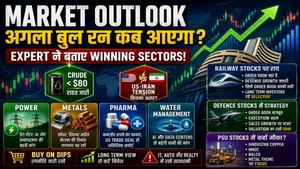 Share Market की तेज़ी बुरा फंसाएगी, बाज़ार में इन Stocks से बना लो दूरी!
 -
 Share Market में जोरदार तेजी, निफ्टी 24,200 के पार; सबसे अधिक किस शेयर में तेजी?
 -
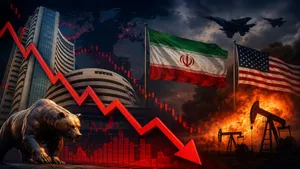 Trump Warning से Iran-US तनाव बढ़ा, Crude Oil में हलचल: Share Market Panic में क्या करें?
 -
 Share Market: कल की भारी गिरावट के बाद बाजार में लौटी तेजी, Sensex और Nifty में बढ़त के साथ कारोबार; आगे क्या
 -
 South Korea Market Crash: टेक शेयरों की बिकवाली से मचा हड़कंप! Bear Market में क्यों पहुंचा KOSPI?
 -
 Stock Market: शेयर बाजार में आज क्यों आई गिरावट? अमेरिका-ईरान तनाव के अलावा क्या है गिरावट की सबसे बड़ी वजहें
 -
 Sensex Outlook: सेंसेक्स 1 लाख तक पहुंचेगा या 66,000 तक गिरेगा? मॉर्गन स्टेनली ने बताए तीन बड़े अनुमान
 -
 Kalyan Jewellers Share Crash: अच्छे बिजनेस अपडेट के बावजूद 8% क्यों टूटा शेयर? जानिए पूरी वजह
 -
 Stock Market: अचानक क्यों टूटा बाज़ार? Sensex 350 प्वाइंट तो Nifty 24,450 के नीचे! जानिए 4 बड़ी वजहें
 -
 Stock Market Today: सप्ताह के पहले दिन शेयर बाजार में तेजी! आज शेयर बाजार में किसका रहा जलवा?
 -
 Stock Market में आएगा बड़ा ब्रेकआउट? 2026 के 5 सबसे दमदार सेक्टर्स!
 -
 HCL Tech Share Price: AI Deal के दम पर शेयर में 7% की तेजी, क्या आगे भी बढ़ेगा?
 -
 Share Market Today: सेंसेक्स 650 अंक उछला, निवेशकों की दौलत ₹2.43 लाख करोड़ बढ़ी, जानें तेजी की वजह
 -
 Nifty IT में 4% की तूफानी रैली! Infosys, TCS, Wipro में खरीदारी का मौका?
 -
 Vedanta Demerger के बाद धमाका: Oil & Gas में 20% की तेजी, निवेशकों की हुई चांदी
 -
 Nifty Outlook: क्या खत्म होगी गिरावट? 10 साल का Data क्या कहता है, जानें आगे की चाल
-
Block for 8 hours
-
Block for 12 hours
-
Block for 24 hours
-
Don't block

 Sign in with Google
- Male
- Female
- Others
- Under 18
- 18 to 25
- 26 to 35
- 36 to 45
- 45 to 55
- 55+