
 A Oneindia Venture


 Click it and Unblock the Notifications
Dhanlaxmi Cotex Ltd. के अकाउंट के लिये नोट
Mar 31, 2025
i. All the title deeds of the Immovable Properties are in the name of the company.
ii. The company has acquired an investment property which is currently under construction and not yet ready for its intended use.
As per Ind AS 40 - Investment Property, the property is classified as Investment Property and is being measured at cost.
Since the property is not yet available for use, no depreciation has been charged during the current financial year.
Depreciation will commence once the construction is completed and the asset is ready for its intended use, in accordance with the company''s accounting policies and Ind AS 40. As at March 31, 2025 the Investment Properties is under construction the fair value measurement not possible.
Note No 15.3: Terms/rights attached to equity shares
(A) The company has only one class of equity shares having a par value of Rs. 10/- per share. Each holder of equity shares is entitled to one vote per share.
(B) In the event of liquidation of the company, the holders of equity shares will be entitled to receive remaining assets of the company, after distribution of all preferential amounts. The distribution will be in proportion to the number of equity shares held by the shareholders.
Note No 15.4: Aggregate number of bonus shares issued and sub-division of shares during the period of five years immediately preceding the reporting date:
No Bonus Shares Issued and Sub-Division of shares during the period of five years.
1. Steps have been taken to identify the suppliers who qualify under the definition of micro and small enterprises, as defined under the Micro, Small and Medium Enterprises Development Act 2006. Since no intimation has been received from the suppliers regarding their status under the said Act as at 31st March 2025, disclosures relating to amounts unpaid as at the year end, if any, have not been furnished. In the opinion of the management, the impact of interest, if any, that may be payable in accordance with the provisions of the Act, is not expected to be material."
2. Trade Payable includes amounts due from related parties which are unsecured, considered good, and have arisen in the normal course of business. Which have been described in detail in Note: 27.
3. Disclosures required under Section 22 of the Micro, Small and Medium Enterprises Development Act, 2006:
|
Note - 28 |
For Year Ended |
For Year Ended |
|
CONTINGENT LIABILITY |
March 31,2025 |
March 31,2024 |
|
Claims against the Company/Disputed Liability not acknowledged as |
||
|
debts Demand Raised under Income Tax Act for which Dispute is |
408.70 |
408.70 |
|
pending in CIT Appeal. |
30. FINANCIAL INSTRUMENTS - FAIR VALUES AND RISK MANAGEMENT
A. Accounting classification and fair values
The following table shows the carrying amounts and fair values of financial assets and financial liabilities, including their levels in the fair value hierarchy. It does not include fair value information for financial assets and financial liabilities not measured at fair value if the carrying amount is a reasonable approximation of fair value.
B. Measurement of fair values
Valuation techniques and significant unobservable inputs
The Fair Value of the Financial Assets & Liabilities are included at the amount at which the instrument could be exchanged in a current transaction between willing parties, other than in a forced or liquidation sale.
C. Financial Risk Management
C. i. Risk management framework
A wide range of risks may affect the Company''s business and operational or financial performance. The risks that could have significant influence on the Company are market risk, credit risk and liquidity risk. The Company''s Board of Directors review s and sets out policies for managing these risks and monitors suitable actions taken by management to minimise potential adverse effects of such risks on the company''s operational and financial performance.
C. ii. Credit risk
Credit risk is the risk of financial loss to the Company if a customer or counterparty to a financial instrument fails to mee t its contractual obligations, and arises principally from the Company''s trade and other receivables, cash and cash equivalents and other bank balances. To manage this, the Company periodically assesses financial reliability of customers, taking into account the financial condition, current economic trends and analysis of historical bad debts and ageing of accounts receivable. The maximum exposure to credit risk in case of all the financial instruments covered below is restricted to their respective carrying amount.
(a) Trade and other receivables from customers
Credit risk in respect of trade and other receivables is managed through credit approvals, establishing credit limits and monitoring the creditworthiness of customers to which the Company grants credit terms in the normal course of business.
The Company considers the probability of default upon initial recognition of asset and whether there has been a significant increase in the credit risk on an on-going basis through each reporting period. To assess whether there is a significant increase in credit risk the Company compares the risk of default occurring on assets as at the reporting date with the risk of default as at the date of initial recognition. It considers reasonable and supportive forwarding-looking information such as:
i) Actual or expected significant adverse changes in business.
ii) Actual or expected significant changes in the operating results of the counterparty.
iii) Financial or economic conditions that are expected to cause a significant change to the counterparties ability to meet its obligation.
iv) Significant changes in the value of the collateral supporting the obligation or in the quality of third party guarantees or credit enhancements.
Financial assets are written off when there is no reasonable expectation of recovery, such as a debtor failing to engage in a repayment plan with the Company. When loans or receivables have been written off, the Company continues to engage in enforcement activity to attempt to recover the receivable due, when recoverable are made, these are recognised as income in the statement of profit and loss.
The Company measures the expected credit loss of trade receivables and loan from individual customers based on historical trend, industry practices and the business environment in which the entity operates. Loss rates are based on actual credit loss experience and past trends. Based on the historical data, loss on collection of receivable is not material hence no additional provision considered.
Financial Assets are considered to be of good quality and there is no significant increase in credit risk.
(b) Cash and cash equivalents and Other Bank Balances
The Company held cash and cash equivalents and other bank balances as stated in Note No. 11. The cash and cash equivalents are held with bank with good credit ratings and financial institution counterparties with good market standing.
C.iii. Liquidity risk
Liquidity risk is the risk that the Company will encounter difficulty in meeting the obligations associated with its financial liabilities that are settled by delivering cash or another financial asset.
Liquidity risk is managed by Company through effective fund management of the Company''s short, medium and long-term funding and liquidity management requirements. The Company manages liquidity risk by maintaining adequate reserves, banking facilities and other borrowing facilities, by continuously monitoring forecast and actual cash flows, and by matching the maturity profiles of financial assets and liabilities.
C.iv. Market risk
Market Risk is the risk that the fair value or future cash flows of a financial instrument will fluctuate because of changes in market prices. Market risk comprises two types of risk: currency risk, interest rate risk.
C.iv.a Currency risk
The Company is not exposed to any currency risk on account of its operating and financing activities. The functional currency of the Company is Indian Rupee. Our exposures are mainly denominated in INR''s Only. The Company''s business model incorporates assumptions on currency risks and ensures any exposure is covered through the normal business operations. This intent has been achieved in all years presented. The Company has put in place a Financial Risk Management Policy to Identify the most effective and efficient ways of managing the currency risks.
C.iv.b Interest rate risk
Interest rate risk is the risk that the fair value or future cash flows of a financial instrument will fluctuate because of changes in market interest rates. The Company is exposed to interest rate risk through the impact of rate changes on interest-bearing liabilities and assets. The Company manages its interest rate risk by monitoring the movements in the market interest rates closely.
NOTE 31 - SEGMENT INFORMATION (a) Description of segment
"The chief operational decision maker monitors the operating results of its business segment separately for the purpose of making decision about resource allocation and performance assessment. Segment performance is evaluated based on profit or loss and is measured consistently with profit or loss in the financial statements.
As per the reportable segment criteria given under Ind AS 108 on ''Operating Segment'', the Group has reportable segment i.e. Fabrics, Shares & Steel.
Operating segments are reported in a manner consistent with the internal reporting provided to the Chief Operating Decision Maker ("CODMâ) of the Group."
NOTE- 32
32.1. Balances of Sundry Creditors, Sundry debtors, Loans & advances, etc. are subject to confirmation and reconciliation, if any.
32.2. There have been no events after reporting date that requires disclosure in financial statement.
32.3. The financial statements were approved for issue by Board of Directors, at its meeting held on May 29, 2025.
32.4. Previous Years Figures have been regrouped / reclassified wherever necessary to correspond with current year''s classification/disclosures.
32.5. Additional Regulatory Information
(i) A. Title deeds of Immovable Property not held in name of the Company: N.A.
B. Valuation of Property Plant & Equipment, intangible asset:
The Company has not revalued its property, plant and equipment or intangible assets or both during the current or previous year."
C. Details of benami property held:
No proceedings have been initiated on or are pending against the Company for holding benami property under the Benami Transactions (Prohibition) Act, 1988 (45 of 1988) and rules made thereunder.
D. Borrowing secured against current assets
The Company has borrowings from banks on the basis of security of current assets. The quarterly returns or statements of current assets filed by the Company with banks are in agreement with the books of accounts.
E. Willful defaulter:
The Company has not been declared willful defaulter by any bank or financial institution or other lender.
F. Relationship with struck off companies:
The Company has no transactions with the companies struck off under Section 248 of the Companies Act, 2013 or Section 560 of the Companies Act, 1956.
G. Registration of charges or satisfaction with Registrar of Companies (ROC):
There are no charges or satisfaction yet to be registered with Registrar of Companies (ROC) beyond the statutory period.
H. Compliance with number of layers of companies:
The Company has complied with the number of layers prescribed under the Section 2(87) of the Companies Act, 2013 read with Companies (Restriction on number of layers) Rules, 2017.
I. Utilization of borrowed funds and share premium:
No funds have been advanced or loaned or invested (either from borrowed funds or share premium or any other sources or kind of funds) by the Company to or in any other person or entity, including foreign entities ("Intermediaries") with the understanding, whether recorded in writing or otherwise, that the Intermediary shall lend or invest in party identified by or on behalf of the Company (Ultimate Beneficiaries). The Company has not received any fund from any party (Funding Party) with the understanding that the Company shall whether, directly or indirectly lend or invest in other persons or entities identified by or on behalf of the Company ("Ultimate Beneficiaries") or provide any guarantee, security or the like on behalf of the Ultimate Beneficiaries.
J. Undisclosed income:
There is no income surrendered or disclosed as income during the current or previous year in the tax assessments under the Income Tax Act, 1961, that has not been recorded previously in the books of account.
K. Details of crypto currency or virtual currency:
The Company has not traded or invested in crypto currency or virtual currency during the current or previous year.
L. Utilization of borrowings availed from banks and financial institutions:
The borrowings obtained by the company from banks and financial institutions have been applied for the purposes for which such loans were taken."
Mar 31, 2024
(M) Provisions and Contingent Liabilities
The Company creates a provision when there is a present obligation as a result of a past event that probably requires an outflow of resources and a reliable estimate can be made of the amount of the obligation. A disclosure for a contingent liability is made when there is a possible obligation or a present obligation that may, but probably will not, require an outflow of resources.
Where there is a possible obligation or a present obligation in respect of which the likelihood of outflow of resources is remote, no provision or disclosure is made.
(N) Operating Cycle
Based on the nature of products/activities of the Company and the normal time between acquisition of assets and their realization in cash or cash equivalents, the Company has determined its operating cycle as 12 months for the purpose of classification of its assets and liabilities as current and non-current.
(O) Financial Instruments
(I) Financial Assets
(i) Initial recognition and measurement
All financial assets and liabilities are initially recognized at fair value. Transaction costs that are directly attributable to the acquisition or issue of financial assets and financial liabilities, which are not at fair value through profit or loss, are adjusted to the fair value on initial recognition. Purchase and sale of financial assets are recognised using trade date accounting.
(ii) Subsequent measurement
(a) Financial assets carried at amortised cost (AC): A financial asset is measured at amortised cost if it is held within a business model whose objective is to hold the asset in order to collect contractual cash flows and the contractual terms of the financial asset give rise on specified dates to cash flows that are solely payments of principal and interest on the principal amount outstanding.
(b) Financial assets at fair value through other comprehensive income (FVTOCI): A financial asset is measured at FVTOCI if it is held within a business model whose objective is achieved by both collecting contractual cash flows and selling financial assets and the contractual terms of the financial asset give rise on specified dates to cash flows that are solely payments o f principal and interest on the principal amount outstanding.
(c) Financial assets at fair value through profit or loss (FVTPL): A financial asset which is not classified in any of the above categories is measured at FVTPL.
(iii) Impairment of financial assets
In accordance with Ind AS 109, the Company uses ''Expected Credit Loss'' (ECL) model, for evaluating impairment of financial assets other than those measured at fair value through profit and loss (FVTPL).
Expected credit losses are measured through a loss allowance at an amount equal to:
(a) The 12-months expected credit losses (expected credit losses that result from those default events on the financial instrument that are possible within 12 months after the reporting date); or
(b) Full lifetime expected credit losses (expected credit losses that result from all possible default events over the life of the financial instrument).
For trade receivables Company applies ''simplified approach'' which requires expected lifetime losse s to be recognised from initial recognition of the receivables. The Company uses historical default rates to determine impairment loss on the portfolio of trade receivables. At every reporting date these historical default rates are reviewed and changes in the forward looking estimates are analyzed.
For other assets, the Company uses 12 month ECL to provide for impairment loss where there is no significant increase in credit risk. If there is significant increase in credit risk full lifetime ECL is used.
(II) Financial Liabilities
(i) Initial recognition and measurement
All financial liabilities are recognized at fair value and in case of loans, net of directly attributable cost. Fees of recurring nature are directly recognised in the Statement of Profit and Loss as finance cost.
(ii) Subsequent measurement
Financial liabilities are carried at amortized cost using the effective interest method. For trade and other payables maturing within one year from the balance sheet date, the carrying amounts approximate fair value due to the short maturity of these instruments.
28. FIRST TIME ADOPTION OF IND AS
The Company has adopted Ind AS with effect from 1st April 2017 with comparatives being restated. Accordingly the impact of transition has been provided in the Opening Reserves as at 1st April 2016. The figures for the previous period have been restated, regrouped and reclassified wherever required to comply with the requirement of Ind AS and Schedule III.
Explanation 1 - Exemptions and exceptions availed
Set out below are the applicable Ind AS 101 optional exemptions and mandatory exceptions applied in the transition from previous GAAP to Ind AS.
(I) Ind AS Optional exemptions
Deemed Cost - Property, Plant and Equipment and Intangible Assets
Ind AS 101 permits a first-time adopter to elect to continue with the carrying value for all of its property, plant and equipment as recognized in the financial statements as at the date of transition to Ind AS, measured as per the previous GAAP and use that as its deemed cost as at the date of transition after making necessary adjustments for de-commissioning liabilities. This exemption can also be used for intangible assets covered by Ind AS 38 Intangible Assets. Accordingly, the Company has elected to measure all of its property, plant and equipment and intangible assets at their previous GAAP carrying values.
(II) Ind AS mandatory exemptions
(i) Estimates
An entity''s estimates in accordance with Ind AS'' at the date of transition to Ind AS shall be consistent with the estimates made for the same date in accordance with the previous GAAP (after adjustments to reflect any difference in accounting policies) unless there is an objective evidence that those estimates were in error.
(ii) Classification and measurement of financial assets (other than equity instruments)
Ind AS 101 requires an entity to assess classification and measurement of financial assets on the basis of the facts and circumstances that exists at the date of transition to Ind AS.
(iii) De-recognition of financial assets and financial liabilities
Ind AS 101 requires a first time adopter to apply the de-recognition provisions for Ind AS 109 prospectively for transactions occurring on or after the date of transition to Ind AS. However, Ind AS 101 allows first time adopter to apply the DE recognition requirements provided that the information needed to apply Ind AS 109 to financial assets and financial liabilities derecognized as a result of past Ind AS 101 retrospectively from the date of entity''s choosing, transactions was obtained at the time of initially accounting for the transactions.
30. The previous year figures have been regrouped / reclassified, wherever necessary to conform to the current presentation as per the schedule III of Companies Act, 2013.
As per our attached report of even date For and on behalf of the Board of Directors
For M/s. Gohel and Associates LLP Chartered Accountants (FRN: W100162)
UDIN: 24152864BKCGLH2780 Sd/- Sd/- Sd/-
Mahesh S. Jhawar Rahul M. Jhawar Natwar Agarwal
(Whole Time Director) (Director & CFO) (Director)
Sd/- DIN: 00002908 DIN: 07590581 DIN: 08170211
Abhay M. Gohel
(Partner)
(Mem No. 152864) Sd/-
Place: Mumbai Arti Jain
Dated: 13th May, 2024 (Company Secretary)
Mem No. 63275
Mar 31, 2014
A. The break up of net Deferred Tax Liability / Assets on 31st March,
2014 is under.
(Rs. In Lakhs)
Deferred Tax Liability as on 01.04.2013 6.69
Less : Deferred Tax Assets for the year 0.08
(Difference between book & tax depreciation)
Net Deferred Tax Liability 6.61
The Deferred Tax balances have arisen principally on account of the
timing difference between the depreciation adjusted in account. Though
adjustment has been made in term of Accounting Standard 22, having
regard to the Normal Capital Expenditure which the Company is expected
to continue to make in likely to materialize on account thereof.
2. Figures pertaining to previous year have been regrouped and recast
wherever necessary so as to make them comparable with those of the
current year.
3. Related Party Disclosures as required by the Accounting Standard 18
"Related Party Disclosures" are given below.
a. List of related parties with whom the company entered in to
transactions during the year in the Ordinary Course of Business.
# Associate Companies.
1. M R Share Broking Pvt. Ltd.
2. V R M Share Broking Pvt. Ltd.
# Key Management Personnels and Relatives
1. Ramautar S. Jhawar
2. Mahesh S. Jhawar
b. Transaction with related parties.
4. The Companies main business segment is Investment & Trading in
equities which constitutes more than 90% of its turnover and the only
geographical segment is India. Consequently the need for separate
disclosure as required under Accounting Standared 17 "Segment
Reporting" is not considered relevant.
5. Disclosure under Section 22 of the Micro, Small and Medium
Enterprises Devlopment Act, 2006 could not be furnished as none of the
suppliers of the Company have provided the details of their
registration under the said Act.
6. As stipulated in AS-28, the Company assessed potetial generation of
economic benefits from its business units and is of the view that the
assets employed in continuing business are capable of generating
adequate returns over their useful lives in the usual course of
business, there is no indication to the Contrary and accordingly the
management is of the view that no impairment provision is called for in
these account.
7. The Company has returned leased office premises to Sohanlal Jhawar
Family Trust and using for office purpose premises owned by the
promoter.
8. Additional information pursuant to the provisions of part IV of
schedule VI of the Companies Act,1956.
Mar 31, 2013
1. Figures pertaining to previous year have been regrouped and recast
wherever necessary so as to make them comparable with those of the
current year.
2. Related Party Disclosures as required by the Accounting Standard 18
"Related Party Disclosures" are given below.
a. List of related parties with whom the company entered in to
transactions during the year in the Ordinary Course of Business.
# Associate Companies.
1. Sohanlal Jhawar Family Trust
2. MR Share Broking Pvt. Ltd.
3. V R M Share Broking Pvt. Ltd.
# Key Management Personnels and Relatives
1. Ramautar S. Jhawar
2. Mahesh S. Jhawar
b. Transaction with related parties.
Mar 31, 2012
1. Figures pertaining to previous year have been regrouped and recast
wherever necessary so as to make them comparable with those of the
current year.
2. Related Party Disclosures as required by the Accounting Standard
18 "Related Party Disclosures" are given below.
a. List of related parties with whom the company entered in to
transactions during the year in the Ordinary Course of Business.
# Associate Companies.
1. Sohanlal Jhawar Family Trust
2. MR Share Broking Pvt. Ltd.
3. V R M Share Broking Pvt. Ltd.
# Key Management Personnels and Relatives ;
1. Ramautar S. Jhawar
2. Mahesh S. Jhawar
3. The Companies main business segment is Investment & Trading in
equities which constitutes more than 90% of its turnover and the only
geographical segment is India. Consequently the need for separate
disclosure as required under Accounting Standared 17 "Segment
Reporting" is not considered relevant.
4. Disclosure under Section 22 of the Micro, Small and Medium
Enterprises Devlopment Act, 2006 could not be furnished as none of the
suppliers of the Company have provided the details of their
registration under the said Act.
5. As stipulated in AS-28, the Company assessed potetial generation
of economic benefits from its business units and is of the view that
the assets employed in continuing business are capable of generating
adequate returns over their useful lives in the usual course of
business, there is no indication to the Contrary and accordingly the
management is of the view that no impairment provision is called for in
these account.
6. The Company has taken office premises on lease from Sohanlal
Jhawar Family Trust @ Rs.1000/-p.m. at a lease rent and interest free
deposit of Rs.300000/-.
7. Additional information pursuant to the provisions of part IV of
schedule VI of the Companies Act, 1956.
Mar 31, 2010
A. The Company has adopted Accounting Standard-22 " Accounting for
taxes on Income" with effect from 1st April 2001.
During the current year the Company has a Deferred Tax Assets due to
higher depreciation adjusted as per the Companies Act, 1956 compared to
depreciation admissible as per the Income Tax Act, 1961 which is
credited to the Profit & Loss Account of the current year.
1. Figures pertaining to previous year have been regrouped and recast
wherever necessary so as to make them comparable with those of the
current year.
2. Related Party Disclosures as required by the Accounting Standard
18 "Related Party Disclosures" are given below.
a. List of related parties with whom the company entered in to
transactions during the year in the Ordinary Course of Business.
# Associate Companies.
1. Sohanlal Jhawar Family Trust
2. MR Share Broking Pvt. Ltd.
3. VRMShare Broking Pvt. Ltd.
# Key Management Personnels and Relatives
1. Ramautar S. Jhawar
2. Mahesh S. Jhawar
b. Transaction with related parties.
3. The Companies main business segment is Investment & Trading in
equities which constitutes more than 90% of its turnover and the only
geographical segment is India. Consequently the need for separate
disclosure as required under Accounting Standared 17 "Segment Reporting
is not considered relevant.
4. Disclosure under Section 22 of the Micro, Small and Medium
Enterprises Devlopment Act, 2006 could not be furnished as none of the
suppliers of the Company have provided the details of their
registration under the said Act.
5. As stipulated in AS-28, the Company assessed potetial generation
of economic benefits from its business units and is of the view that
the assets employed in continuing business are capable of generating
adequate returns over their useful lives in the usual course of
business, there is no indication to the Contrary and accordingly the
management is of the view that no impairment provision is called for in
these account.
6. The Company has taken office premises on lease from Sohanlal
Jhawar Family Trust @ Rs.1000/-p.m. at a lease rent and interest free
deposit of Rs.300000/-.
7. Additional information pursuant to the provisions of part IV of
schedule VI of the Companies Act, 1956 as per annexure 1.
Disclaimer: This is 3rd Party content/feed, viewers are requested to use their discretion and conduct proper diligence before investing, GoodReturns does not take any liability on the genuineness and correctness of the information in this article
Dhanlaxmi Cotex Ltd. पर और जानकारी
-
Dhanlaxmi Cotex Ltd. टूल
- बल्क डील
-
Dhanlaxmi Cotex Ltd. कंपनी का विवरण
- कंपनी का प्रोफाइल
- कंपनी का इतिहास
- मैनेजमेंट टीम
- पूंजी ढांचा
- प्रॉडक्ट मिक्स
- बैंकर/ऑडीटर/रजिस्ट्रार
-
कंपनी का इतिहास
- अधिकार
- बीएसई मूल्य इतिहास
-
Dhanlaxmi Cotex Ltd. मुख्य वित्तीय अनुपात
- अनुपात
-
Dhanlaxmi Cotex Ltd. परिणाम
- तिमाही परिणाम
- छहमाही परिणाम
- नौ महीने के परिणम
- वार्षिक परिणाम
-
Dhanlaxmi Cotex Ltd. Financial Data
- ऑडिट के परिणाम
- नकदी प्रवाह
- बैलेंस शीट
-
Dhanlaxmi Cotex Ltd. की रिपोर्ट
- लेखा नीति
- ऑडीटर की रिपोर्ट
- निदेशक की रिपोर्ट
- खाते के लिये नोट
-
Dhanlaxmi Cotex Ltd. कॉर्पोरेट घोषणाएं
- बुक क्लोज़र
- बोर्ड की मीटिंग
-
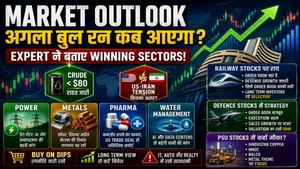 Share Market की तेज़ी बुरा फंसाएगी, बाज़ार में इन Stocks से बना लो दूरी!
 -
 Share Market में जोरदार तेजी, निफ्टी 24,200 के पार; सबसे अधिक किस शेयर में तेजी?
 -
 Trump Warning से Iran-US तनाव बढ़ा, Crude Oil में हलचल: Share Market Panic में क्या करें?
 -
 Share Market: कल की भारी गिरावट के बाद बाजार में लौटी तेजी, Sensex और Nifty में बढ़त के साथ कारोबार; आगे क्या
 -
 South Korea Market Crash: टेक शेयरों की बिकवाली से मचा हड़कंप! Bear Market में क्यों पहुंचा KOSPI?
 -
 Stock Market: शेयर बाजार में आज क्यों आई गिरावट? अमेरिका-ईरान तनाव के अलावा क्या है गिरावट की सबसे बड़ी वजहें
 -
 Sensex Outlook: सेंसेक्स 1 लाख तक पहुंचेगा या 66,000 तक गिरेगा? मॉर्गन स्टेनली ने बताए तीन बड़े अनुमान
 -
 Kalyan Jewellers Share Crash: अच्छे बिजनेस अपडेट के बावजूद 8% क्यों टूटा शेयर? जानिए पूरी वजह
 -
 Stock Market: अचानक क्यों टूटा बाज़ार? Sensex 350 प्वाइंट तो Nifty 24,450 के नीचे! जानिए 4 बड़ी वजहें
 -
 Stock Market Today: सप्ताह के पहले दिन शेयर बाजार में तेजी! आज शेयर बाजार में किसका रहा जलवा?
 -
 Stock Market में आएगा बड़ा ब्रेकआउट? 2026 के 5 सबसे दमदार सेक्टर्स!
 -
 HCL Tech Share Price: AI Deal के दम पर शेयर में 7% की तेजी, क्या आगे भी बढ़ेगा?
 -
 Share Market Today: सेंसेक्स 650 अंक उछला, निवेशकों की दौलत ₹2.43 लाख करोड़ बढ़ी, जानें तेजी की वजह
 -
 Nifty IT में 4% की तूफानी रैली! Infosys, TCS, Wipro में खरीदारी का मौका?
 -
 Vedanta Demerger के बाद धमाका: Oil & Gas में 20% की तेजी, निवेशकों की हुई चांदी
 -
 Nifty Outlook: क्या खत्म होगी गिरावट? 10 साल का Data क्या कहता है, जानें आगे की चाल
-
Block for 8 hours
-
Block for 12 hours
-
Block for 24 hours
-
Don't block

 Sign in with Google
- Male
- Female
- Others
- Under 18
- 18 to 25
- 26 to 35
- 36 to 45
- 45 to 55
- 55+