
 A Oneindia Venture


 Click it and Unblock the Notifications
Devinsu Trading Ltd. के अकाउंट के लिये नोट
Mar 31, 2025
vi) Provisions:
Provisions and liabilities are recognized in the period when it becomes probable that there will be a future outflow of funds resulting from
past operations or events and the amount of cash outflow can be reliably estimated. The timing of recognition and quantification of the
liability require the application of judgment to existing facts and circumstances, which can be subject to change. Since the cash outflows
can take place many years in the future, the carrying amounts of provisions and liabilities are reviewed regularly and adjusted to take
account of changing facts and circumstances.
10 (ii) The terms / rights attached to the Equity Shares:
The holder of equity shares of'' 10 each is entitled to one vote per share. The equity shareholders are entitled to dividend only if dividend in a
particular financial year is recommended by the Board of Directors and approved by the members at the annual general meeting of that year. In
the event of liquidation of the Company, the holders of equity shares will be entitled to receive any of the remaining assets of the Company, after
distribution of all preferential amounts. The distribution will be in proportion to the number of equity shares held by share holders.
Nature and Purpose -:
Capital Redemption Reserve - The reserve was created upon the redemption of preference shares and
will be utilised with the compliance of the Companies Act, 2013.
Retained Earnings - Retained earnings represents the accumulated profits/losses made by the Company
over the year.
Equity Instruments through other comprehensive income - The Company has elected to recognise
changes in the fair value of certain invetments in equity instruments through other comprehensive income.
Fair value hierarchy
The fair values of the financial assets and liabilities are included at the amount that would be received to sell an asset or paid to transfer a liability in an orderly
transaction between market participants at the measurement date.
This section explains the judgements and estimates made in determining the fair values of the financial instruments that are (a) recognised and measured at
fair value and (b) measured at amortised cost and for which fair values are disclosed in the financial statements. To provide an indication about the reliability of
the inputs used in determining fair value, the company has classified its financial instruments into the three levels prescribed under the accounting standard. An
explanation of each level follows underneath the table.
Level 1: Level 1 hierarchy includes financial instruments measured using quoted prices. This includes listed equity instruments that have quoted price and
financial instruments like Mutual Funds for which NAV (Net Assets Value) is published by Mutual Fund Operator. The fair value of all equity instruments which
are traded in the stock exchanges is valued using the closing price as at the reporting period and Mutual Fund are valued using the Closing NAV.
Level 2: The fair value of financial instruments that are not traded in an active market is determined using valuation techniques which maximise the use of
observable market data and rely as little as possible on entity-specific estimates. If all significant inputs required to fair value an instrument are observable, the
instrument is included in level 2.
Level 3: If one or more of the significant inputs is not based on observable market data, the instrument is included in level. Instruments in level 3 category for
the company include unquoted equity shares and FCCDs and unquoted units of venture capital funds_
During the years mentioned above, there have been no transfers amongst the levels of hierarchy.
The carrying amounts of cash and cash equivalents, other current financial assets, and trade payables are considered to be approximately equal to the fair
value.
The fair values disclosed above are based on discounted cash flows using a current borrowing rate. They are classified as level 3 fair values in the fair value
hierarchy due to the use of unobservable inputs.
Valuation process
The Company evaluates the fair value of financial assets and financial liabilities on periodic basis using the best and most relevant data available. Also, the
Company internally evaluates the valuation process and obtains independent price validation for certain instruments wherever necessary.
Valuation techniques used to determine fair value and significant estimates and judgements made in:
Significant valuation techniques used to value financial instruments include:
⢠Investment in units and equity instruments are fair valued using the discounted cash flow method or market comparison method or cost approach as
appropriate.
23 Financial risk management
The company is exposed to credit risk, liquidity risk and Market risk.
A Credit risk_
Credit risk arises from cash and bank balances and other financial assets measured at amortised cost.
Credit risk management
Credit risk arises from the possibility that counter party may not be able to settle their obligations as agreed. The
company is exposed to credit risk from bank balances, security deposits and other current financial assets.
The Company periodically assesses the financial reliability of the counter party, taking into account the financial
condition, current economic trends, and analysis of historical bad debts and ageing of accounts receivable.
Other Deposits as place with Government authorities hence the risk of credit loss is negligible.
B Liquidity risk_
Liquidity risk is defined as the risk that the Company will not be able to settle or meet its obligations on time or at a
reasonable price. For the Company, liquidity risk arises from obligations on account of financial liabilities - trade
payables and other financial liabilities.
Liquidity risk management
The company manages its liquidity risk by regularly monitoring its rolling cash flow forecasts. The company''s operations
provide a natural liquidity of receivables against payments due to creditors. Receipts exceeding the amount of payables
to creditors are invested in liquid assets like mutual funds.
C Market risk
Foreign currency risk
The Company is not exposed to foreign exchange risk .
Price risk
The Company holds investments in units, equity instruments and mutual funds. The Company''s exposure to equity security''s
price risks arises from these investments held by the Company and classified in the balance sheet either as fair value through
OCI or at fair value through profit or loss.
Price risk management :-
The Company evaluates the performance of its investments on a periodic basis. Also, the investments have been placed for a
long term objective and any deterioration for a temporary period is not taken into account while evaluating the performance of
its investments. Majority of the investments are placed for strategic management purposes.
Note 24 - Contingent Liabilities and Commitments
NIL(Previous year NIL)
Note 25 -Events occurring after the reporting date
NIL
Note 26 -Other Statutory Information :
(i) As per section 248 of the Companies Act, 2013, there are no transections with struck off companies.
(ii) The Company have not advanced or loaned or invested funds to any other person(s) or entity(ies), including foreign entities (Intermediaries) with the
understanding that the Intermediary shall:
(a) Directly or indirectly lend or invest in other persons or entities identified in any manner whatsoever by or on behalf of the company (Ultimate Beneficiaries) or
(b) Provide any guarantee, security or the like to or on behalf of the Ultimate Beneficiaries.
(III) The Company have not received any fund from any person(s) or entity(ies), including foreign entities (Funding Party) with the understanding (whether recorded
in writing or otherwise) that the Company shall:
(a) Directly or indirectly lend or invest in other persons or entities identified in any manner whatsoever by or on behalf of the Funding Party (Ultimate
Beneficiaries) or
(b) Provide any guarantee, security or the like on behalf of the Ultimate Beneficiaries
(iv) The Company does not have any such transaction which is not recorded in the books of accounts that has been surrendered or disclosed as income during the
year in the tax assessments under the Income-tax Act, 1961.
(v) There are no charges or satisfaction thereof which are yet to be registered with ROC beyond the statutory period.
(vi) The Company has not been declared a wilful defaulter by any bank or financial institution or other lender (as defined under the Companies Act, 2013) or
consortium thereof, in accordance with the guidelines on wilful defaulters issued by the Reserve Bank of India.
(vii) The Company have not traded or invested in Crypto currency or Virtual Currency during the financial year.
(viii) The Company has not revalued any of its property, plant and equipment (including Right of Use assets) and intangible assets during the year.
(ix) The Company is in compliance with the number of layers prescribed under clause (87) of section 2 of the Companies Act read with the Companies ( Restriction
on number of Layers) Rules, 2017.
As per Ind AS 108 on "Operating Segment" - Segment information is not applicable to company.
Note 30 Approval of Financial Statement
The Financial statement were approved for issue by the Board of Directors as on 17th April, 2025.
The figures for the corresponding previous year have been rearranged / regrouped wherever necessary to make
them comparable.
As per our report of even date For and on behalf of the Board of Directors
For SVP & Associates.
Chartered Accountants
FRN - 003838N (Deepa Bhawsar) (Rajan Sawant)
Director Director
DIN-07167937 DIN-08562840
Yogesh Kumar Singhania
Partner
Membership Number : 111473 (Nitin Parab) (Ritu Pareek)
Chief Finance Officer Company Secretary
Place : Mumbai
Date: 17th April 2025_
Mar 31, 2024
iii) Contingencies:
Management has estimated the possible outflow of resources at the end of each annual reporting financial year, if any, in respect of
contingencies/claim/litigations against the Company as it is not possible to predict the outcome of pending matters with accuracy.
iv) Impairment of financial assets:
The impairment provisions for financial assets are based on assumptions about risk of default and expected cash loss. The Company
uses judgment in making these assumptions and selecting the inputs to the impairment calculation, based on Company''s past history,
existing market conditions as well as forward looking estimates at the end of each reporting period.
v) Recoverability of trade receivable:
Judgments are required in assessing the recoverability of overdue trade receivables and determining whether a provision against those
receivables is required. Factors considered include the credit rating of the counterparty, the amount and timing of anticipated future
payments and any possible actions that can be taken to mitigate the risk of non-payment.
vi) Provisions:
Provisions and liabilities are recognized in the period when it becomes probable that there will be a future outflow of funds resulting
from past operations or events and the amount of cash outflow can be reliably estimated. The timing of recognition and quantification
of the liability require the application of judgment to existing facts and circumstances, which can be subject to change. Since the cash
outflows can take place many years in the future, the carrying amounts of provisions and liabilities are reviewed regularly and adjusted
to take account of changing facts and circumstances.
2.2 In accordance with the Indian Accounting Standard (Ind AS) 36 on "Impairment of Assets" the management during the year carried out
an exercise of identifying the assets that may have been impaired in respect of each cash generating unit in accordance with the said
Accounting Standard. On the basis of this review carried by the management, there was no impairment loss on Property, Plant and
Equipment during the year ended 31st March, 2024.
2.3 There are no proceedings initiated or pending against the company for holding any Benami Property under the Benami Transactions
(Prohibition) Act, 1988 (45 of 1988) and the rules made thereunder.
Nature and Purpose -:
Capital Redemption Reserve - The reserve was created upon the redemption of preference shares and
will be utilised with the compliance of the Companies Act, 2013.
Retained Earnings - Retained earnings represents the accumulated profits/losses made by the Company
over the year.
Equity Instruments through other comprehensive income - The Company has elected to recognise
changes in the fair value of certain invetments in equity instruments through other comprehensive income.
Fair value hierarchy
The fair values of the financial assets and liabilities are included at the amount that would be received to sell an asset or paid to transfer a liability in an
orderly transaction between market participants at the measurement date.
This section explains the judgements and estimates made in determining the fair values of the financial instruments that are (a) recognised and measured at
fair value and (b) measured at amortised cost and for which fair values are disclosed in the financial statements. To provide an indication about the reliability
of the inputs used in determining fair value, the company has classified its financial instruments into the three levels prescribed under the accounting
standard. An explanation of each level follows underneath the table.
Level 1: Level 1 hierarchy includes financial instruments measured using quoted prices. This includes listed equity instruments that have quoted price and
financial instruments like Mutual Funds for which NAV (Net Assets Value) is published by Mutual Fund Operator. The fair value of all equity instruments
which are traded in the stock exchanges is valued using the closing price as at the reporting period and Mutual Fund are valued using the Closing NAV.
Level 2: The fair value of financial instruments that are not traded in an active market is determined using valuation techniques which maximise the use of
observable market data and rely as little as possible on entity-specific estimates. If all significant inputs required to fair value an instrument are observable,
the instrument is included in level 2.
Level 3: If one or more of the significant inputs is not based on observable market data, the instrument is included in level. Instruments in level 3 category for
the company include unquoted equity shares and FCCDs and unquoted units of venture capital funds_
22 Financial risk management
The company is exposed to credit risk, liquidity risk and Market risk.
A Credit risk_
Credit risk arises from cash and bank balances and other financial assets measured at amortised cost.
Credit risk management
Credit risk arises from the possibility that counter party may not be able to settle their obligations as agreed. The
company is exposed to credit risk from bank balances, security deposits and other current financial assets.
The Company periodically assesses the financial reliability of the counter party, taking into account the financial
condition, current economic trends, and analysis of historical bad debts and ageing of accounts receivable.
Other Deposits as place with Government authorities hence the risk of credit loss is negligible.
B Liquidity risk_
Liquidity risk is defined as the risk that the Company will not be able to settle or meet its obligations on time or at a
reasonable price. For the Company, liquidity risk arises from obligations on account of financial liabilities - trade
payables and other financial liabilities.
Liquidity risk management
The Company manages its liquidity risk by regularly monitoring its rolling cash flow forecasts. The Company''s operations
provide a natural liquidity of receivables against payments due to creditors. Receipts exceeding the amount of payables
to creditors are invested in liquid assets like mutual funds.
C Market risk
Foreign currency risk
The Company is not exposed to foreign exchange risk .
Price risk
The company holds investments in units, equity instruments and mutual funds. The Company''s exposure to equity security''s
price risks arises from these investments held by the Company and classified in the balance sheet either as fair value through
OCI or at fair value through profit or loss.
Price risk management :-
The company evaluates the performance of its investments on a periodic basis. Also, the investments have been placed for a
long term objective and any deterioration for a temporary period is not taken into account while evaluating the performance of
its investments. Majority of the investments are placed for strategic management purposes.
Note 23 - Contingent Liabilities and Commitments
NIL(Previous year NIL)
Note 24 -Events occurring after the reporting date
NIL
Note 25 -Other Statutory Information :
(i) As per section 248 of the Companies Act, 2013, there are no transections with struck off companies.
(ii) The Company have not advanced or loaned or invested funds to any other person(s) or entity(ies), including foreign entities (Intermediaries) with the understanding that the
Intermediary shall:
(a) Directly or indirectly lend or invest in other persons or entities identified in any manner whatsoever by or on behalf of the company (Ultimate Beneficiaries) or
(b) Provide any guarantee, security or the like to or on behalf of the Ultimate Beneficiaries.
(III) The Company have not received any fund from any person(s) or entity(ies), including foreign entities (Funding Party) with the understanding (whether recorded in writing or
otherwise) that the Company shall:
(a) Directly or indirectly lend or invest in other persons or entities identified in any manner whatsoever by or on behalf of the Funding Party (Ultimate Beneficiaries) or
(b) Provide any guarantee, security or the like on behalf of the Ultimate Beneficiaries
(iv) The Company does not have any such transaction which is not recorded in the books of accounts that has been surrendered or disclosed as income during the year in the tax
assessments under the Income-tax Act, 1961.
(v) There are no charges or satisfaction thereof which are yet to be registered with ROC beyond the statutory period.
(vi) The Company has not been declared a wilful defaulter by any bank or financial institution or other lender (as defined under the Companies Act, 2013) or consortium thereof, in
accordance with the guidelines on wilful defaulters issued by the Reserve Bank of India.
(vii) The Company have not traded or invested in Crypto currency or Virtual Currency during the financial year.
(viii) The Company has not revalued any of its property, plant and equipment (including Right of Use assets) and intangible assets during the year.
(ix) The Company is in compliance with the number of layers prescribed under clause (87) of section 2 of the Companies Act read with the Companies ( Restriction on number of
Layers) Rules, 2017.
Note 31
Management is of the opinion that income from financial asset being more than 50% of total income and
financial assets is being more than 50% of total assets is the temporarily phenomenon due to present economic
constraints. The Company is taking necessarily steps to comply with the applicable RBI Regulations.
Note 32
The figures for the corresponding previous year have been rearranged / regrouped wherever necessary to make
them comparable.
As per our report of even date For and on behalf of the Board of Directors
For SVP & Associates.
Chartered Accountants
FRN - 003838N (Deepa Bhawsar) (Rajan Sawant)
Director Director
DIN-07167937 DIN-08562840
Yogesh Kumar Singhania
Partner
Membership Number : 111473 (Nitin Parab) (Ritu Pareek)
Chief Finance Officer Company Secretary
Place : Mumbai
Date: 29th May 2024_
Mar 31, 2013
Corporate information
Devinsu Trading Ltd. (L51900MH1985PLC036383)(the company) is a public
limited company domiciled in India and incorporated under the
provisions of the Companies Act, 1956. Its Shares are listed on the
Bombay Stock Exchange Limited in India. The company is presently
engaged in non-operational activities of investments in Shares and
securities and renting of Immovable Properties.
a) Earning per shares
Basic and Diluted earnings per equity shares Numeraator - profit after
tax and Preferance Dividend Donominator - weighted average number of
equity shares Nominal value per equity shares
b) The company has not received intimation from vendors regarding their
status under the Micro,Small and Medium Enterprises Development Act,
2005 and hence disclosures renting to amounts unpaid as at the year end
togetner with interest paid / payable under this Arjt have not been
given.
c) Deferred Tax Assets of Rs. 27,832 is in respect of Unabsorbed
Losses. However the same is not recognised in the books as the company
does not envisage profit in near future.
d) As the Company does not have distinquisable business segments, the
requirment to give segment reporting as per Accounting Standard (AS 17)
on Segment Reporting issued by the Institute of Chartered Accountants
of India is not applicable.
e) No related party transaction are identified by the management.
f) Balance of deLtcrs, creditors and other advances are subject to
confirmation. However, in the opition of the Board, Current Assets,
Loans and Advances have value which on realisation, in the ordinary
course of business would atleast be equal to the amount at which they
are stated.
Mar 31, 2012
A) During the year, the revised Schedule VI notified under Companies
Act, 1956. has become applicable to the Company. The previous year's
figures have been reclassified to conform to revised Schedule VI
classification and are to be read in relation to the amounts and other
disclosures relating to the current year.
b) The company has not received intimation from vendors regarding their
status under the Micro, Small and Medium Enterprises Development Act,
2006 and hence disclosures relating to amounts unpaid as at the year
end together with interest paid / payable under this Act have not been
given.
c) The Company has no deferred tax assets or liabilities as on
31-03-2012.
d) As the Company does not have distinguishable business segments, the
requirement to give . segment reporting as per Accounting Standard (AS
17) on Segment Reporting issued by the Institute of Chartered
Accountants of India is not applicable.
f) No related party transaction are identified by the management.
g) Balance of debtors, creditors and other advances are subject to
confirmation. However, in the option of the Board, Current Assets,
Loans and Advances have value which on realization, in the ordinary
course of business would at least be equal to the amount at which they
are stated.
Mar 31, 2010
1. Pursuance to compliance of AS-18, there is nothing to be disclosed
regarding related parties.
2 In view of single operation segement reporting in pursuance of AS-17,
is not required.
3. Earning per share for the year is Rs. 1.31 (Previous year Rs. 1.48)
in pursuance of AS-20.
4. Deferred Tax asset as on 31-03-2010 is Rs.2,517 On account of Short
Term Capital loss However, no deferred tax assets has been considered
in the books of accounts since the Company does not expect profits in
the near future.
5. Previous year figures have been regrouped wherever necessary.
Disclaimer: This is 3rd Party content/feed, viewers are requested to use their discretion and conduct proper diligence before investing, GoodReturns does not take any liability on the genuineness and correctness of the information in this article
Devinsu Trading Ltd. पर और जानकारी
-
Devinsu Trading Ltd. कंपनी का विवरण
- कंपनी का प्रोफाइल
- कंपनी का इतिहास
- मैनेजमेंट टीम
- पूंजी ढांचा
- बैंकर/ऑडीटर/रजिस्ट्रार
-
Devinsu Trading Ltd. मुख्य वित्तीय अनुपात
- अनुपात
-
Devinsu Trading Ltd. परिणाम
- तिमाही परिणाम
- छहमाही परिणाम
- नौ महीने के परिणम
- वार्षिक परिणाम
-
Devinsu Trading Ltd. Financial Data
- ऑडिट के परिणाम
- नकदी प्रवाह
- बैलेंस शीट
-
Devinsu Trading Ltd. की रिपोर्ट
- लेखा नीति
- ऑडीटर की रिपोर्ट
- निदेशक की रिपोर्ट
- खाते के लिये नोट
-
Devinsu Trading Ltd. कॉर्पोरेट घोषणाएं
- बुक क्लोज़र
- लाभांश
- बोर्ड की मीटिंग
- नाम में परिवर्तन
-
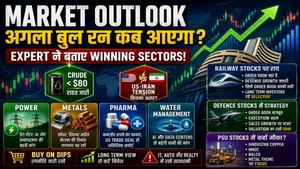 Share Market की तेज़ी बुरा फंसाएगी, बाज़ार में इन Stocks से बना लो दूरी!
 -
 Share Market में जोरदार तेजी, निफ्टी 24,200 के पार; सबसे अधिक किस शेयर में तेजी?
 -
 Trump Warning से Iran-US तनाव बढ़ा, Crude Oil में हलचल: Share Market Panic में क्या करें?
 -
 Share Market: कल की भारी गिरावट के बाद बाजार में लौटी तेजी, Sensex और Nifty में बढ़त के साथ कारोबार; आगे क्या
 -
 South Korea Market Crash: टेक शेयरों की बिकवाली से मचा हड़कंप! Bear Market में क्यों पहुंचा KOSPI?
 -
 Stock Market: शेयर बाजार में आज क्यों आई गिरावट? अमेरिका-ईरान तनाव के अलावा क्या है गिरावट की सबसे बड़ी वजहें
 -
 Sensex Outlook: सेंसेक्स 1 लाख तक पहुंचेगा या 66,000 तक गिरेगा? मॉर्गन स्टेनली ने बताए तीन बड़े अनुमान
 -
 Kalyan Jewellers Share Crash: अच्छे बिजनेस अपडेट के बावजूद 8% क्यों टूटा शेयर? जानिए पूरी वजह
 -
 Stock Market: अचानक क्यों टूटा बाज़ार? Sensex 350 प्वाइंट तो Nifty 24,450 के नीचे! जानिए 4 बड़ी वजहें
 -
 Stock Market Today: सप्ताह के पहले दिन शेयर बाजार में तेजी! आज शेयर बाजार में किसका रहा जलवा?
 -
 Stock Market में आएगा बड़ा ब्रेकआउट? 2026 के 5 सबसे दमदार सेक्टर्स!
 -
 HCL Tech Share Price: AI Deal के दम पर शेयर में 7% की तेजी, क्या आगे भी बढ़ेगा?
 -
 Share Market Today: सेंसेक्स 650 अंक उछला, निवेशकों की दौलत ₹2.43 लाख करोड़ बढ़ी, जानें तेजी की वजह
 -
 Nifty IT में 4% की तूफानी रैली! Infosys, TCS, Wipro में खरीदारी का मौका?
 -
 Vedanta Demerger के बाद धमाका: Oil & Gas में 20% की तेजी, निवेशकों की हुई चांदी
 -
 Nifty Outlook: क्या खत्म होगी गिरावट? 10 साल का Data क्या कहता है, जानें आगे की चाल
-
Block for 8 hours
-
Block for 12 hours
-
Block for 24 hours
-
Don't block

 Sign in with Google
- Male
- Female
- Others
- Under 18
- 18 to 25
- 26 to 35
- 36 to 45
- 45 to 55
- 55+