
 A Oneindia Venture


 Click it and Unblock the Notifications
CIAN Agro Industries & Infrastructure Ltd. के अकाउंट के लिये नोट
Mar 31, 2025
1Z Provisions and Contingent Liabilities.
Provisions are recognized when the Company has a present obligation as a result of a past event it is probable that an
outflow of resources embodying economic benefits will be required to settle the obligation and when a reliable estimate of
the amount of the obligation C3n be made. Provisions are measured at the best estimate of the expenditure required to
settle the present obligation at the Balance Sheet date. The expenses relating to a provision is presented in the Statement
of Profit and Loss net of any reimbursement
The Company uses significant judgements to assess contingent liabilities. Contingent liabilities are disclosed when there
is a possible obligation arising from past events, the existence of which wfll be confirmed only by the occurrence or non-
occurrence of one or more uncertain future events not wholly within the control of the company that arises from past events
where it is either not probable that an outflow of resources will be required to settle the obligation or a reliable estimate of
the amount cannot be made.
13. Earnings Per Share
Basic Earnings per share is calculated by dividing the net profit for the period attributable to equity shareholders by the
weighted average number of equities shares outstanding during the period.
For the purpose of calculating diluted earnings per share, the net profit for the period attributed to equity shareholders and
the weighted average number of shares outstanding during the period is adjusted for the effects of all dilutive potential
equity shares.
L During the previous financial year, the Company invested in 639Jb lakh Optionally Convertible Debentures (OCDs) with a face value
of 710 each, issued by Manas Power Ventures PvL Ltd., carrying a coupon rate of 0.01% per annum. I lie OCDs were convertible into a
fixed number of equity shares at the option of the Company, and during the current financial year, the Company exercised this option,
converting the OCDs into equity shares based on the issuer''s most recent valuation report. I he Company invested in b81 equity shares
of7l0 each at a premium of711,00,420 per share of Manas Power Ventures Private limited for an aggregate amount of 763,93,49,830
by way of subscription to the Preferential Issue made as per the terms of conversion and the agreement entered
between the companies
2. The Company has invested in 280 lakh Optionally Convertible Debentures (OCDs) of 710 each, carrying a 0.01% p.a coupon rale,
issued by Manas Power Ventures PvL Ltd. which were purdiased from Innopac Pnvate Limited. These OCDs are convertible into 0.01%
Redeemable Non Cumulative Preference Shares at the Company''s option, and the Company intends to exercise this option in the
upcoming financial year.
Nature and purpose of components of other equity
(A) Capital Reserve
Capital Reserve represents profits and gains of a capita! nature which are no: available for distnbution as dividends. It Is a fund set aside for
major long term Investments and other anticipated expenses wh>ch are legally permissible, and are in accordance with Companies Act.2013 and
applicable Ind AS.
(B) Capital Reserve created on account of common control transactions
Capital Reserve created on account of common control transactions is the gain on recognition of Merger of the company''s erstwhile subsidiaries
with the company during the financial year 2019-20, as per the requirements of Ind AS 103 Business Combination
(C) Securities Premium
Securities premium is used to record the premium on issue of shares. The reserve is utilised in accordance ''with the provisions of section 52 of
the Companies Act, 2013.
(0) Revaluation Reserve
Revaluation Reserve «s gain on revaluation of company''s Property. Plant a Equipment and Intangible Assets, it is transferred to Retained
earnings in the proportion of the excess depreciation charged to Statement of Profit & Loss every year
(E) Retained Earnings
Retained Earnings represent the accumulated net profits or losses of the Company after adjusting for dividends, appropriations, and transfers, it
includes movements from Other Comprehensive income (OCI). Revaluation Reserve, and other equity adjustments as per the applicable
accounting framework.
Intercorporate Deposits include amount payable to Khan? and larkunde Infrastructure Pvt Ltd. Such an amount was received as a
performance security to form a joint venture for a housing infrastructure development project to be taken up based ori the
projects feasibility. However, both parties have backed off lire agreement and the amount has been reclassified as intercorporate
deposit having a tenure of S years. I he carrying amount of the liability has been fair valued.
âLoan Others" includes balances that have been reclassified as financial liabilities during the current reporting period. Previously,
the Company had received advance payments uitended for trade transactions, which ultimately did not materialise. In light of the
current facts and circumstances, these advances have been reassessed and reclassified as borrowings.
I his reclassification and fair valuation have been made in accordance with the requirements of Ind AS 109 financial Instruments
and Ind AS 1U Fair Value Measurement
Note 41
Additional Regulatory Information pursuant to the requirement in Division II of Schedule III to the Companies Act 2013
(i) The company does not have any Benami property, where any proceeding has been initiated or pending against
the company for holding any Benami property.
(ii) The company does not have any transactions with companies struck off.
(iii) The company has not revalued its property, plant and equipment (including right-of-use assets) or intangible
assets or both during the current or previous year.luding its impact on financial statements, is reported in the
notes to accounts in the year of incorporation of revision.
(iv) The company has not traded or invested in crypto currency or virtual currency during the financial year
(v) The company has not advanced or loaned or invested funds to any other person(s) or entity(ies), including foreign
entities (Intermediaries) with the understanding that the Intermediary shall:
(a) directly or indirectly lend or invest in other persons or entities identified in any manner whatsoever by or on
behalf of the company (Ultimate Beneficiaries) or
(b) provide any guarantee, security or the like to or on behalf of the Uttimate Benefidanes
(vi) The company has not received any fund from any person(s) or entityfies). including foreign entities (Funding
Party) with the understanding (whether recorded in writing or otherwise) that the company shall:
(a) directly or indirectly lend or invest in other persons or entities identified in any manner whatsoever by or on
behalf of the Funding Party (Ultimate Beneficiaries) or
(b) provide any guarantee, security or the like on behalf of the Ultimate Beneficiaries(vii) The company has not
any such transaction which is not recorded in the books of accounts that has been surrendered or disclosed as
income during the year in the tax assessments under the Income Tax Act. 1961 (such as. search or survey or any
other relevant provisions of the Income Tax Act, 1961
(viii) The company has borrowings from banks and financial institutions on the basis of security of current assets. The
quarterly returns or statements of current assets filed by the company with banks and financial institutions are in
agreement with the books of accounts.(ix)None of the entities in the company have been declared wilful defaulter
by any bank or financial institution or government or any government authority
(x) The company has complied with the number of layers prescribed under the Companies Act 2013.
(xi) The company has not entered into any scheme of arrangement which h3s an accounting impact on current or
previous financial year.
C. Transfers between Levels
There have been no transfers between the levels.
Note on Financial Guarantee
The Company has extended a corporate guarantee to Varron Aluminium Pnvate Limited (VAPL) against the Loan
obligation to Bank amounting to Rs. 27.30.00.000 undertaken by VAPL.
The company is acting as a guarantor for VAPL and hence is required to make payments only in the event of a default
by them on the terms of the loan that is guaranteed by us
A financial guarantee contract is initially recognised at fair value. If the guarantee is issued to an unrelated party on a
commercial basis, the initial fair value is likely to equal the premium received. If no premium is received, the fair value
must be determined using a method that quantifies the economic benefit of the guarantee to the holder.
However, according to the information provided by the lender, the interest rate of the loan would have remained
unchanged even if we had not provided the guarantee. Hence, the guarantee wasnât initially recognised.
At the end of each subsequent reporting period, financial guarantees are measured at the higher of:
(i) The amount of the loss allowance, and
(ii) The amount initially recognised less cumulative amortisation
As per Ind AS 109. the loss allowance on the financial guarantee contract will be determined using:
Loss Allowance = Loan Amount x Probability of default
According to the latest valuation report, the creditor''s exposure to default is fully covered by the entityâs available
assets. Therefore, even if we assume a 100% probability of default, the likelihood of the guarantor facing a financial
burden is negligible. This implies that, under Ind AS 109, the carrying amount of the financial guarantee in the books
would be zero.
"The Company has exposure to the following risks arising from financial instruments:
i) Credit Risk
ii) Liquidity Risk
fii) Market Risk-
Risk Management Framework
The Companyâs board of directors have the overall responsibility for establishing and supervising the Company''s risk
management framework. They have formed the risk management committee, tasked with formulating and
supervising the Company''s risk management policies, and regulariy reporting its activities to the board of directors.
The Company''s risk management policies aim to identify and assess the risks encountered by the Company,
establish suitable risk limits and controls, and monitor both risks and compliance with these limits. These policies and
systems undergo regular review to adapt to market changes and the Companyâs operations.
(i) Credit risk
Credit risk is the risk of financial loss to the Company if a counterparty to a financial instrument fails to meet its
contractual obligations, and arises principally from the Company''s receivable from customers, loans advanced and
cash and bank deposits kept with banks
The Group ensures that sales of products are made to customers with appropriate creditworthiness.
The Company has issued financial guarantees to bank in respect of loan facilities availed by its subsidiaries. In
accordance with the policy of the Company, the Company has recognised these financial guarantees as liability at fair
value (Refer note 41 ). Outstanding loans in the subsidiaries against the financial guarantee contracts given by the
Company as at 31 st March. 2025 is Rs 2611.63 Lakhs.
Cash and cash equivalents
The Group held cash and cash equivalents with banks with good credit ratings.
(iff) Liquidity risk
Liquidity risk is the risk that the Company will encounter difficulty in meeting the obligations associated with its financial
liabilities that are settled by delivering cash or another financial asset. The Companyâs approach to managing liquidity is to
ensure, as far as possible, that it will have sufficient liquidity to meet its fiabilities when they 3re due. under both normal
and stressed conditions, without incumng unacceptable losses or risking damage to the Company''s reputation
Exposure to liquidity risk
The table below analyses the Groupâs financial liabilities into relevant matunty groupings based on their contractual
maturities for all non derivative financial liabilities The amounts are gross and undiscounted, and include contractual
interest payments.
Note 42
Financial instruments - Fair values and risk management (continued)
âMarket risk is the risk of loss of future earnings, or future cash flows arising out of changes in Market Conditions of
Agriculture Industry. Healthcare Industry & Infrastructure Industry, which include changes in prices of Raw Material and
commodity prices (indigeneously procured as well as import). The objective of market risk management is to avoid
excessive exposure to the fluctuations in market prices.
The company is exposed to high risk of changes in the prices of Crude and Soyabean oil. Due to their volatility, the prices
may fluctuate significantly over short periods of time for this commodity. The prices of the Companyâs commodity
generally fluctuate in line with global market conditions. Commodity price risk exposure is evaluated and managed
through operating procedures and policies. The company is mitigating such risk by not operating the oil refinery and
undertaking trading activities in oil. The exposure to market risk is significantly reduced by this since the Operating losses
under the ofl refinery under current market scenario are very high. As of March 31.2025, the Group had not entered into
any material derivative contracts to hedge exposure to fluctuations in commodity prices.
v. Currency risk
"The Company is exposed to currency risk on account of its operating and financing activities- The functional currency of
the Company is Indian Rupee.
The Company has not taken derivative instruments to hedge the foreign currency risk. Also, the Company continuously
monitors the fluctuation in currency risk and ensures that the Company does not have an adverse impact on account of
fluctuation in exchange rates."
Exposure to currency risk
The currency profile of financial assets and financial liabilities as at March 31,2025 and March 31.2024 are as below:
Interest rate risk
Interest rate risk is the risk that the fair value or future cash flows of a financial instrument win fluctuate because of
changes in market interest rates.
Cash flow interest rate risk is the risk that the future C3Sh flows of floating interest bearing instruments win fluctuate
because of fluctuations in the market interest rates.
The Company primarily enters into fixed- rate instruments which ensures that 80-90% of its interest rate risk exposure is at
a fixed rate.
The Company''s exposure to market risk for changes in interest rates primarily relates to overdrafts and cash credits from
banks.
For details of the Company''s long-term loans and borrowings, including interest rate profiles, refer to Note of these
financial statements
Interest rate sensitivity - fixed rate instruments
The Group''s fixed rate deposits and loans with banks are carried at amortised cost. They are therefore not subject to
interest rate risk as defined in Ind AS 107. since neither the carrying amount nor the future cash flow will fluctuate because
of a change in market interest rates
Interest rate sensitivity - variable rate instruments
A reasonably possible change of 100 basis points in interest rates at the reporting date would have increased/ decreased
profit or loss by amounts shown below. This analysis assumes th3t all other variables remain constant This calculation
also assumes that the change occurs at the balance sheet date and has been calculated based on risk exposures
outstanding as at that date. The period end balances are not necessarily representative of the average debt outstanding
during the period.
Mar 31, 2023
1.13 Provisions, Contingent Liability and Contingent Assets
1. Provisions are recognized when there is a present obligation (legal or constructive) as a result of a past event, it is probable that an outflow of resources embodying economic benefits will be required to settle the obligation and a reliable estimate can be made of the amount of the obligation. The expenses relating to a provision is presented in the Statement of Profit and Loss net of reimbursements, if any.
2. Contingent liabilities are possible obligations whose existence will only be confirmed by future events not wholly within the control of the Company, or present obligations where it is not probable that an outflow of resources will be required or the amount of the obligation cannot be measured with sufficient reliability. Contingent liabilities are not recognized in the financial statements but are disclosed unless the possibility of an outflow of economic resources is considered remote.
1.14 Operating Segments
According to the Ind AS 108, The Company has three segments- Agro, Healthcare and Infrastructure. These segments are categorized based on items that are individually identifiable to that segment. The entity has disclosed information required by it as per PARA 31 of Ind AS-108. Management believes that it is not practical to provide segmental disclosure relating to certain cost and expenses that are not specifically allocable to the segments, & accordingly these expenses are separately disclosed as âUnallocated" & adjusted against the total income of the company.
The Company has identified the Chief Operating Decision Maker (CODM) as its Managing Director.
The CODM reviews the performance of the segments'' business on an overall business.
1.15 Earnings Per Share
Basic Earnings per share is calculated by dividing the net profit for the period attributable to equity shareholders by the weighted average number of equity shares outstanding during the period.
For the purpose of calculating diluted earnings per share, the net profit for the period attributed to equity shareholders and the weighted average number of shares outstanding during the period is adjusted for the effects of all dilutive potential equity shares.
1.16 Cash and cash equivalents
Cash and cash equivalents includes cash on hand, deposits held at call with financial institutions, other shorter highly liquid investments with original maturities of three months or less that are readily convertible to known amounts of cash and which are subject to an insignificant risk of changes in value.
1.17 Cash Flows
Cash flows are reported using the indirect method, where by net profit before tax is adjusted for the effects of transactions of a non-cash nature, any deferrals or accruals of past or future operating cash receipts or payments and item of income or expenses associated with investing or financing cash flows. The cash flows from operating, investing and financing activities are segregated.
For the purpose of presentation in the cash flow statement, cash and cash equivalents would include other bank balances.
1.18 Foreign Currency Transactions
1.18.1 Monetary items :
Transactions in foreign currencies are initially recorded at their respective exchange rates at the date the transaction first qualifies for recognition. Monetary assets and liabilities denominated in foreign currencies are translated at exchange rates at the reporting date. Exchange differences arising on settlement or translation of monetary items are recognized in Statement of Profit and Loss as profit or loss on foreign currency transaction.
1.18.2 Non- Monetary items :
Non-monetary items that are measured in terms of historical cost in a foreign currency are translated using the exchange rates at the dates of the initial transactions.
(D) Narrations
1 Analysis of Defined Benefit Obligation
The resultant liability at the end of the period over the beginning of the period has increased by 52%.
2 Expected rate of return basis
Scheme is not funded EORA is not applicable
3 Description of Plan Assets and Reimbursement Conditions
Not Applicable
4 Investment / Interest Risk
Since the scheme is unfunded the Company is not exposed to Investment / Interest risk
5 Longevity Risk
The Company is not exposed to risk of the employees living longer as the benefit under the scheme ceases on the employee separating from the employer for any reason
6 Risk of Salary Increase
The Company is exposed to higher liability if the future salaries rise more than assumption of salary escalation.
7 Discount rate
The discount rate has changed by 0.15% and hence there is change in liability resulting in actuarial loss due to change in discount rate.
(E) The company has not created any provision of employee benefits for related party and key managerial
personnel in accordance with Ind AS 24.
(F) In view of the above, the management is of the view that no additional disclosure is required in terms of
Indian Accounting Standard 19 on âEmployee Benefits" notified under Section 133 of the Companies Act, 2013 [Companies (Indian Accounting Standards) Rules, 2015].
Note 43 Financial Instruments C. Financial Risk Management
The Company has exposure to the following risks arising from financial instruments:
i) Credit Risk
ii) Liquidity Risk
iii) Market Risk
i. Credit risk
Credit risk is the risk of financial loss to the Company if a counterparty to a financial instrument fails to meet its contractual obligations, and arises principally from the Company''s cash and bank deposits kept with banks, receivables from join) operators and loan to subsidiary. Credit risk is managed through credit approvals, establishing credit limits and continuously monitoring the creditworthiness of counter party.
The maximum exposure to credit risk in case of all the financial instruments covered below is restricted to their respective carrying amount.
Cash and cash equivalents
The Company held cash and cash equivalents with banks with good credit ratings.
Other Bank balance - Fixed Deposits with Bank
The Company has fixed deposits with banks with good credit ratings.
Other receivables
The credit worthiness of receivables from others is evaluated by the management on an ongoing basis and is considered to be good.
46 Note 46 Financial instruments - Fair values and risk management (continued)
Interest rate risk
Interest rate risk is the risk that the fair value or future cash flows of a financial instrument will fluctuate because of changes in market interest rates. Fair value interest rate risk is the risk of changes in fair values of fixed interest bearing instruments because of fluctuations in the interest rates. Cash flow interest rate risk is the risk that the future cash flows of floating interest bearing instruments will fluctuate because of fluctuations in the interest rates.
The Company''s exposure to market risk for changes in interest rates relates to fixed deposits with and borrowings from the Banks.
Compiled by: Dion Global Solutions Limited
ClANAgro Industries & Infrastructure Ltd.
CIRN
Independent Auditorâs Report
To,
The Members
CIAN Agro Industries & Infrastructure Limited
Report on the Audit of the Consolidated Financial Statements
Opinion
1. We have audited the accompanying Consolidated Financial Statements of CIAN Agro Industries & Infrastructure Limited (âthe Company") and its subsidiaries referred to as the âthe Groupâwhich comprise of the Consolidated Balance Sheet as at 31st March 2023, the Consolidated Statement of Profit and Loss (including other comprehensive income), the Consolidated Cash Flow Statement, Statement of Changes in Equity for the year then ended and notes to financial statement, including a summary of the Significant Accounting Policies and other explanatory information (hereinafter referred to as âConsolidated Financial Statementsâ).
2. In our opinion and to the best of our information and according to the explanations given to us, the aforesaid Consolidated Financial Statements give the information required by the Act in the manner so required and give a true and fair view, in conformity with the accounting principles generally accepted in India, including Ind AS, of their consolidated state of affairs of the Company as at 31stMarch 2023, and its consolidated profit & loss, consolidated other comprehensive income, consolidated changes in equity and consolidated cash flows for the year ended on that date.
Basis for Opinion
3. We conducted our audit in accordance with the Standards on Auditing (SAs) specified under section 143(10) of the Companies Act, 2013. Our responsibilities under those Standards are further described in the Auditor''s Responsibilities for the Audit of the Consolidated Financial Statements section of our report. We are independent of the Company in accordance with the Code of Ethics issued by the Institute of Chartered Accountants of India together with the ethical requirements that are relevant to our audit of the Consolidated Financial Statements under the provisions of the Companies Act, 2013 and the Rules thereunder, and we have fulfilled our other ethical responsibilities in accordance with these requirements and the Code of Ethics. We believe that the audit evidence we have obtained is sufficient and appropriate to provide a basis for our opinion.
Emphasis of Matter
4. We draw attention to
a. Note No 6 âInvestment'' where the Company has invested in Optionally Convertible Debentures of Manas Power Ventures Pvt. Ltd.
b. Note No. 23 ''Current- other financial liabilities'' regarding the performance security received from Khare and Tarkunde Infrastructure Pvt. Ltd. (KTIPL) amounting to Rs. 2,850.00 Lakhs during the year.
c. Note No. 34 âOther expenses'' wherein âOther Indirect Expenses'' amounting to Rs.359.20 Lakhs include balance written off pertaining to M/s B.Y. Agro& Infra Ltd., which is under liquidation.
Our opinion is not modified in respect of the above.

ANNUAL REPORT 2022-2023
Mar 31, 2018
Corporate Information
CIAN Agro Industries & Infrastructure Ltd. referred to as âCIANâ or âThe Companyâ was incorporated on 13th Day of September 1985 under the name of Umred Agro Complex Ltd. It was renamed to its present name in the year 2015. It is listed on the BSE Limited in India. The Company is primarily engaged in three divisions - Agro, Healthcare and Infrastructure.
1 Note
1 Earnings per share (EPS)
Basic EPS and Diluted EPS amounts are calculated by dividing the profit for the year attributable to equity holders by the weighted average number of Equity shares outstanding during the year.
(A) Defined Contribution Plan
The Company has long-term benefits such as Provident Fund and superannuation fund for its employees. In respect of directors and employees on deputation from BPCL, the cost towards these benefits is recognised based on debit notes from the respective companies.
(B) Defined Benefit Plan
The Company has different schemes such as Gratuity, Retirement Medical Scheme, etc. for its employees. In respect of directors and employees on deputation from BPCL, the cost towards these benefits is recognised based on debit notes from the respective companies.
During the year, the company has changed the benefit scheme in line with Payment of Gratuity Act, 1972 by increasing monetary ceiling from 10 lakhs to 20 lakhs. Change in liability (if any) due to this scheme change is recognised as past service cost.
The company offsets tax assets and liabilities if and only if it has a legally enforceable right to set off current tax assets and current tax liabilities and the deferred tax assets and deferred tax liabilities relate to income taxes levied by the same tax authority.
Significant management judgement is required in determining provision for income tax, deferred income tax assets and liabilities and recoverability of deferred income tax assets. The recoverability of deferred income tax assets is based on estimates of taxable income and the period over which deferred income tax assets will be recovered. Any changes in future taxable income would impact the recoverability of deferred tax assets.
Level 3 Fair Value :
Investment in Equity shares of Jairam Intraventure Pvt. Ltd., Purti Agrotech Pvt. Ltd., Wardha Nagrik Sahakari Bank, Nagpur Nagrik Sahakari Bank, Samruddhi Urban Co-Op Bank, Yavatmal Urban Co-Op Bank have been valued at cost. There is no material adverse change in the value of the investments.
Transfers between Levels :
There are no transfers betweeen the levels.
C. Financial Risk Management :
The Company has exposure to the following risks arising from financial instruments: i) Credit Risk ii) Liquidity Risk iii) Market Risk
i. Credit risk :
Credit risk is the risk of financial loss to the Company if a counterparty to a financial instrument fails to meet its contractual obligations, and arises principally from the Companyâs cash and bank deposits kept with banks, receivables from joint operators and loan to subsidiary. Credit risk is managed through credit approvals, establishing credit limits and continuously monitoring the creditworthiness of counter party. The maximum exposure to credit risk in case of all the financial instuments covered below is resticted to their respective carrying amount.
Cash and cash equivalents :
The Company held cash and cash equivalents with banks with good credit ratings.
Other Bank balance - Fixed Deposits with Bank
The Company has fixed deposits with banks with good credit ratings.
Receivables from subsidiaries
The Company had receivables from subsidiaries on each reporting dates. However, credit risk for these receivables are considered to be insiginificant as the Company does not foresee any risk since these are receivable from subsidiaries.
Other receivables
The credit worthiness of receivables from others is evaluated by the management on an ongoing basis and is considered to be good.
The Company does not have financial assets that are past due but not impaired.
ii. Liquidity risk
Liquidity risk is the risk that the Company will encounter difficulty in meeting the obligations associated with its financial liabilities that are settled by delivering cash or another financial asset. The Companyâs approach to managing liquidity is to ensure, as far as possible, that it will have sufficient liquidity to meet its liabilities when they are due, under both normal and stressed conditions, without incurring unacceptable losses or risking damage to the Companyâs reputation.
The company has not availed any credit facilities from banks and financial institutions.
Exposure to liquidity risk
The table below analyses the Companyâs financial liabilities into relevant maturity groupings based on their contractual maturities for all non derivative financial liabilities. The amounts are gross and undiscounted, and includes contractual interest payments.
iii. Market Risk
Market risk is the risk of loss of future earnings, or future cash flows arising out of changes in Market Conditions of Agro Industry, Healthcare Industry & Infrastructure Industry, which include changes in prices of Raw Material (indigeneously procured as well as import).
Currency risk
The Company is exposed to currency risk on account of its operating activities. The functional currency of the Company is Indian Rupee. The exchange rate between the Indian rupee and foreign currencies has changed substantially in recent periods and may continue to fluctuate substantially in the future.
Interest rate risk
Interest rate risk Is the risk that the fair value or future cash flows of a financial instrument will fluctuate because of changes in market interest rates. Fair value interest rate risk is the risk of changes in fair values of fixed interest bearing instruments because of fluctuations in the interest rates. Cash flow interest rate risk is the risk that the future cash flows of floating interest bearing instruments will fluctuate because of fluctuations in the interest rates.
The Companyâs exposure to market risk for changes in interest rates relates to fixed deposits with banks and borrowings from parent company. For details of the Companyâs long term loans and borrowings, including interest rate profiles, refer to Note 15 of these financial statements.
CIAN Agro Industries & Infastructure Ltd.
Notes forming part of the Financial Statement
2 Note
2 Capital Management
The Companyâs policy is to maintain a strong capital base so as to maintain investor, creditor and market confidence and to sustain future development of the business. Management monitors the return on capital as well as the level of dividends to ordinary shareholders
The Company has adequate cash and bank balances. The company monitors its capital by a careful scrutiny of the cash and bank balances, and a regular assessment of any debt requirements
The Corporation monitors capital using a ratio of âadjusted net debtâ to âadjusted equityâ. For this purpose, adjusted net debt is defined as total liabilities, comprising interest-bearing loans and borrowings as reduced by cash and cash equivalents. Adjusted equity comprises all components of equity.
The Corporationâs policy is to keep the ratio below 2.00. The Corporationâs adjusted net debt to equity ratio at March 31, 2017 was as follows.
3 Note
3 Exchange Rate
Exchange rate as at March 31, 2018 -1 USD = INR 65.0441,
(Source: The Reserve Bank of Indiaâs Reference Rate for the US Dollar)
4 Note
4 Related party transactions
A. Related Party Relationships
(i). Entities having significan influence
C) Key management personnel
Mr. Nikhil Gadkari, Managing Director Mr. Arvind Bakde, Wholetime Director*
Mr. Suneet Pande, Chief Executive Office Mr. Rajendra Zade, Chief Financial Officer*â
Mr. Nitin Bedekar, Chief Financial Officer***
Mr. Rohan Deshpande, Company Secretary & Compliance Officer
âChange in designation from the Wholetime Directors to Non Executive Director from June 30, 2017. Subsequently resigned from Directorship w.e.f. October 7, 2017.
** Appointed as Chief Financial Officer w.e.f. 11 July 2017 *** Resigned as Chief Financial Officer w.e.f. 30 June 2017
5 Note
5 Figures of March 31, 2017 have been regrouped wherever necessary, to confirm to current year presentation.
6 Note
6 Reconciliation of total comprehensive income as at March 31,2017
Mar 31, 2013
1. Consequent to the notification of Revised
Schedule VI under Companies Act 1956, the Financial statements for the
year ended on 31st March 2013 are prepared as per Revised Schedule VI.
Previous year''s figures have also been regrouped to confirm the current
Years classification.
2.Figures have been rounded off to the nearest place of second
decimal, where specified in Rs. Lacs. The figures specified in full
value have been rounded off to the nearest rupee.
3.CONTINGENT LIABILITIES NOT PROVIDED FOR:
a) Pending disputes of quality/ quantity regarding sale/ purchase.
Adjustments in respect of these matters are made in the Profit
& Loss A/C as and when they are settled with the party.
b) Claims, counter claims arising out of disputes/ litigation regarding
trade transactions, contracts, Joint Ventures, Memorandum of
Understandings, sale/ purchase arrangements, processing agreements, not
acknowledged as liabilities.
c) The amount of Rs. 8.16 Lacs towards recompense of sacrifices made by
Maharashtra State Electricity Distribution Company Limited (MSEDCL)
under Rehab Scheme (MRS 2004) to be paid after successful completion of
the Scheme.
d) Details of Disputed Sales Tax dues are as follows:
4.Dividend due on 14% Cumulative Redeemable
Preference Shares Capital of Rs. 5.00 Lacs from the year 2008-09
amounting to Rs. 3,50,000/-not paid/provided for.
5.As operations of the company comprise only Solvent Extraction and
Refinery, no separate Segmental Reporting is considered necessary.
6.On the basis of accounts compiled for the financial year there is no
taxable income hence, no provision for taxation for the assessment year
is being made.
7. Deferred tax Assets have not been created in view of Accumulated
Loss and Unabsorbed Depreciation. This is in conformity of AS-22
''Accounting for Taxes on Income" issued by ICAI.
8. Earnings in Foreign Exchange Export of Goods on F.O.B. basis during
the year was Rs Nil
9. Company has availed the services of the company secretary as
Retainer.
10. Company has formed as subsidiary company "Mid India Market Systems
Pvt. Ltd" on 14- Feb-2012 for carrying trading activity in goods and
commodities The company has not transacted any business during the
financial year 2012-13.
11. Related parties Disclosure as required by Accounting Standard 18
of ICAI
a) Key Management Personnel
Mr. Uday S. Kamat, Managing Director Mr. Arvind W. Bakde, Whole Time
Director Mr. Prashant S.Joshi, Vice President
b) Other Related Parties (Key Management Personnel having Significant
influence)
M/s Nagpur Imports and Exports Pvt. Ltd.
M/s Vibrant Market Themes Pvt. Ltd.
M/s YashAgro Energy Ltd.
Mar 31, 2012
1. The Financial Statements for the year ended on 31 st March 2011
were prepared as per then applicable schedule VI to Companies Act 1956.
Consequent to the notification of Revised Schedule VI under Companies
Act 1956, the Financial statements for the year ended on 31st March
2012 are prepared as per Revised Schedule VI. Accordingly previous
year's figures have also been regrouped to confirm the current Years
classification.
2. Figures have been rounded off to the nearest place of second
decimal, where specified in Rs. Lacs. The figures specified in full
value have been rounded off to the nearest rupee.
3. CONTINGENT LIABILITIES NOT PROVIDED FOR:
a) Pending disputes of quality/ quantity regarding sale/ purchase.
Adjustments in respect of these matters are made in the Profit & Loss
A/C as and when they are settled with the party.
b) Claims, counter claims arising out of disputes/ litigation regarding
trade transactions, contracts, Joint Ventures, Memorandum of
Understandings, sale/ purchase arrangements, processing agreements, not
acknowledged as liabilities.
c) The amount of Rs. 8.16 Lacs towards recompense of sacrifices made by
Maharashtra State Electricity Distribution Company Limited (MS-EDCL)
under Rehabilitation Scheme (MRS 2004) to be paid
after successful completion of the same
d) Details of Disputed Sales Tax dues are as follows:
4. Dividend due on 14% Cumulative Redeemable Preference Shares
Capital of Rs. 5.00 Lacs from the year 2008-09 amounting to Rs.
2,80,000/-not paid/provided for.
5. As operations of the company comprise only Solvent Extraction and
Refinery, no separate Segmental Reporting is considered necessary.
6. On the basis of accounts compiled for the financial year there is
no taxable income hence, no provision for taxation for the assessment
year is being made.
7. Deferred tax Assets have not been created in view of Accumulated
Loss and Unabsorbed Depreciation. This is in conformity of AS-22
"Accounting for Taxes on Income" issued by ICAI.
8. Earnings in Foreign Exchange Export of Goods on F.O.B. basis
during the year was Rs Nil (Previous Year Rs. Nil). Foreign Exchange
outgo was. Nil (Previous year Nil)
9. The Company has availed the services of the company secretary as
Retainer.
10. The Company has formed as subsidiary company "Mid India Market
Systems Pvt. Ltd" on 14-Feb-2012 for carryihg out trading activity
Mar 31, 2011
1. Previous period figures have been re-arranged/ re-grouped and
re-classified wherever necessary to confirm to the current year.
2. Figures have been rounded off to the nearest place of second
decimal, where specified in Rs. Lacs. The figures specified in full
value have been rounded off to the nearest rupee.
3. The Other Income includes Accrued Interest on Investments and
Miscellaneous Receipts
4. CONTINGENT LIABILITIES NOT PROVIDED FOR:
a. Pending disputes of quality/ quantity regarding sale/ purchase.
Adjustments in respect of these matters are made in the Profit & Loss
A/C as and when they are settled with the party.
b. Claims, counter claims arising out of disputes/ litigation
regarding trade transactions, contracts, Joint Ventures, Memorandum of
Understandings, sale/ purchase arrangements, processing agreements, not
acknowledged as liabilities.
c. The amount of Rs. 8.16 Lacs towards recompense of sacrifices made
by Maharashtra State Electricity Distribution Company Limited (MSEDCL)
under Rehabilitation Scheme (MRS 2004) to be paid after successful
completion of the same
d. The Sales Tax / Value Added Tax (VAT) liability, if any, for the
years from FY. 2005-06 to 2010-11.
Details of Disputed Sales Tax dues are as follows:
Year Amount Nature Remark
(Rs. Lacs)
1991-92 52.05 Interest pending recalculation of
interest as per standard
package of Govt. of
Maharashtra for sick
industrial units.
1992-93 115.10 Principal Assessment in process
& Interes
1993-94 10.95 Interest pending recalculation of
1994-95 81.49 & Principal interest as per standard
Interest package of Govt. of
Maharashtra for sick
industrial units.
1996-97 31.37 Principal Appeal Pending before
& Interest first Appellate Authority
1997-98 1.48 Interest pending recalculation of
interest as per standard
package of Govt. of
Maharashtra for sick
industrial units.
1998-99 1.59 Interest pending recalculation of
interest as per standard
package of Govt. of
Maharashtra for sick
industrial units.
1999-00 0.90 Interest pending recalculation of
interest as per standard
package of Govt. of
Maharashtra for sick
industrial units.
2000-01 298.20 Principal Appeal Pending before
& Interest first Appellate Authority
2001-02 367.51 Principal Appeal Pending before
& Interest first Appellate Authority
2002-03 276.26 Principal Appeal Pending before
& Interest first Appellate Authority
2003-04 142.87 Principal Appeal Pending before
& Interest first Appellate Authority
2004-05 3.02 Interest pending recalculation of
interest as per standard
package of Govt. of
Maharashtra for sick
industrial units.
5. The Deferred Liability Under Rehab Scheme (Schedule - 5) includes
(i) Deferred Liabilities in respect of the Pressing Creditors (Old) for
Raw materials, Stores & spares, Expenses etc.
6. Depreciation has been provided as per Straight Line Method and at
the prescribed rates given under Schedule XIV of the Companies Act,
1956 as amended from time to time. Depreciation on assets added during
the period is provided on pro-rata basis.
7. In the opinion of the Management, Current Assets, Loans and
Advances and other debit balances are approximately of value, if
realised, in normal course of business. Provisions for all loans and
liabilities are adequate and not in excess of amounts reasonably
necessary.
8. Statutory dues i.e., Contribution to PF, & ESIC outstanding as on
March 31, 2011 amounted to Rs. 1,75,480/- which has been paid
subsequently.
9. Inventories and Cash have been taken, valued and certified by the
Management of the Company.
10) Sundry Debtors and Creditors, Loans and Advances, Other Credit/
Debit balances, Balances in some Current Accounts with banks are
subject to confirmations.
11) Dividend due on 14% Cumulative Redeemable Preference Shares Capital
of Rs. 5.00 Lacs from the year 2008-09 amounting to Rs. 2,10,000/-not
paid/provided for.
12) As operations of the company comprises only Solvent Extraction and
Refinery, no separate Segmental Reporting is considered necessary.
13) On the basis of accounts compiled for the financial year there is
no taxable income hence, no provision for taxation for the assessment
year is being made.
15) During the year, in view of inadequacy of profits, no commission on
net profit is provided for.
16) The Identification of Suppliers as Small Scale Industrial
Undertakings (SSI) is done on basis of the information from suppliers.
17) Deferred tax Assets have not been created in view of Accumulated
Loss and Unabsorbed Depreciation. This is in conformity of AS-22
"Accounting forTaxes on Income" issued by ICAI.
18) Earnings in Foreign Exchange Export of Goods on F.O.B. basis during
the year was Rs Nil (Previous Year Rs. Nil). Foreign Exchange outgo
was. Nil (Previous year Nil)
19) Company has availed the services of Company Secretary in Advisory
capacity.
20) Prior Period/Other Miscellaneous Expenses include, write off of Rs.
8.87 Lacs on account of 'old unidentified difference' in Trial Balance
and expenses towards vehicle maintenance charges relating to previous
years.
21) During the year the company has started, new business segment.
Company has developed and sold ERP Software modules.
22) Related parties Disclosure as required by Accounting Standard 18 of
ICAI
a) Key Management Personnel
Mr. Uday S. Kamat, Managing Director
Mr. ArvindW. Bakde, Whole Time Director
Mr. Prashant S.Joshi, Vice President
b) Other Related Parties (Key Management Personnel having Significant
influence)
M/S Nagpur Imports and Exports Pvt. Ltd.
M/S Vibrant Market Themes Pvt. Ltd.
M/S Yash Agra Energy Ltd.
Mar 31, 2010
1. Previous period figures have been re- arranged/ re-grouped and
re-classified wherever necessary to confirm to the current year.
2. Figures have been rounded off to the nearest place of second
decimal, where specified in Rs. Lacs. The figures specified in full
value have been rounded off to the nearest rupee.
3. The Other Income includes Accrued Interest on Investments and
Miscellaneous Receipts
4. CONTINGENT LIABILITIES NOT PROVIDED FOR:
a. Pending disputes of quality/ quantity regarding sale/ purchase.
Adjustments in respect of these matters are made in the Profit & Loss
A/C as and when they are settled with the party.
b. Claims, counter claims arising out of disputes/ litigation
regarding trade transactions, contracts, Joint Ventures, Memorandum of
Understandings, sale/ purchase arrangements, processing agreements, not
acknowledged as liabilities.
c. The Sales Tax / Value Added Tax (VAT) liability, if any, for the
years 1997-98,1998-99, 1999-2000, 2000-2001, 2004-05, 2005-06, 2006-07,
2007-08, 2008-09 pending assessment.
Details of Disputed Sales Tax dues (In Rs. Lacs):
Year Amount Nature Remarks
1991-92 52.05 Interest Pending recalculation of
interest as per New
Industrial Policy 2006 of
Govt, of Maharashtra.
1992-93 115.10 Principal &
Interest Assessment in process
1993-94 10.95 Interest Pending recalculation of
interest as per New
Industrial Policy 2006 of Govt,
of Maharashtra
1994-95 81.49 Principal &
Interest Appeal Pending before first
Appellate Authority
1996-97 31.37 Principal &
Interest Appeal Pending before first
Appellate Authority
2001-02 224.15
213.00 Principal
Interest Appeal Pending before first
Appellate Authority
2002-03 247.08
147.90 Principal
Interest Appeal Pending before first
Appellate Authority
2003-04 72.83
70.03 Principal
Interest Appeal Pending before first
Appellate Authority
5. The Deferred Liability Under Rehab Scheme
(Schedule - 5) includes
(i) Deferred Liabilities in respect of the Pressing Creditors (Old) for
Raw materials, Stores & spares, Expenses etc.
6. Depreciation has been provided as per Straight Line Method and at
the prescribed rates given under Schedule XIV of the Companies Act,
1956 as amended from time to time. Depreciation on assets added during
the period is provided on pro-rata basis.
7. In the opinion of the Management, Current Assets, Loans and
Advances and other debit balances are approximately of value, if
realised, in normal course of business. Provisions for all loans and
liabilities are adequate and not in excess of amounts reasonably
necessary.
8. Statutory dues i.e., Contribution to PF, & ESIC outstanding as on
March 31,2010 amounted to Rs.1,15,569/- which has been paid
subsequently.
9. Inventories and Cash have been taken, valued and certified by the
Management of the Company.
10. Sundry Debtors and Creditors, Loans and Advances, Other Credit/
Debit balances, Balances in some Current Accounts with banks are
subject to confirmations.
11. Dividend due on 14% Cumulative Redeemable Preference Shares
Capital of Rs. 5.00 Lacs from the year 2008-09 amounting to Rs.
140,000/-not paid/provided for.
12. As operations of the company comprises only Solvent Extraction and
Refinery, no separate Segmental Reporting is considered necessary.
13. On the basis of accounts compiled for the financial year there is
no taxable income hence, no provision for taxation for the assessment
year is being made.
14. The remuneration (Salary, Perquisites etc.) paid/ payable to the
Managing Director and Whole-time Director in accordance with the
15. During the year, in view of inadequacy of profits, no commission
on net profit is provided for.
16. The Identification of Suppliers as Small Scale Industrial
Undertakings (SSI) is done on basis of the information from suppliers.
17. Deferred tax Assets have not been created in view of Accumulated
Loss and Unabsorbed Depreciation. This is in conformity of AS-22
"Accounting for Taxes on Income" issued by ICAI.
18. Earnings in Foreign Exchange
Export of Goods on F.O.B. basis during the year was Rs Nil (Previous
Year Rs. Nil). Foreign Exchange outgo was. Nil (Previous year Nil)
19. Company has availed the services of Company Secretary in Advisory
capacity.
20. Related parties Disclosure as required by Accounting Standard 18
of ICAI
a) Key Management Personnel
Mr. UdayS. Kamat, Managing Director Mr. ArvindW. Bakde, Whole Time
Director Mr.Prashant S.Joshi, Vice President
b) Other Related Parties (Key Management Personnel having Significant
influence) M/S Nagpur Imports and Exports Pvt. Ltd. M/S Vibrant Market
Themes Pvt. Ltd.
M/S Yash Energy Ltd.
21. The consumption figures in value are balancing figures ascertained
on the basis of opening stocks plus purchases less closing
stocks and therefore include adjustments for excess and shortages
(storage/transit) ascertained on physical count etc.
Disclaimer: This is 3rd Party content/feed, viewers are requested to use their discretion and conduct proper diligence before investing, GoodReturns does not take any liability on the genuineness and correctness of the information in this article
CIAN Agro Industries & Infrastructure Ltd. पर और जानकारी
-
CIAN Agro Industries & Infrastructure Ltd. टूल
- बल्क डील
-
CIAN Agro Industries & Infrastructure Ltd. कंपनी का विवरण
- कंपनी का प्रोफाइल
- कंपनी का इतिहास
- मैनेजमेंट टीम
- पूंजी ढांचा
- प्रॉडक्ट मिक्स
- बैंकर/ऑडीटर/रजिस्ट्रार
-
कंपनी का इतिहास
- बीएसई मूल्य इतिहास
-
CIAN Agro Industries & Infrastructure Ltd. मुख्य वित्तीय अनुपात
- अनुपात
-
CIAN Agro Industries & Infrastructure Ltd. परिणाम
- तिमाही परिणाम
- छहमाही परिणाम
- नौ महीने के परिणम
- वार्षिक परिणाम
-
CIAN Agro Industries & Infrastructure Ltd. Financial Data
- ऑडिट के परिणाम
- नकदी प्रवाह
- बैलेंस शीट
-
CIAN Agro Industries & Infrastructure Ltd. की रिपोर्ट
- लेखा नीति
- ऑडीटर की रिपोर्ट
- निदेशक की रिपोर्ट
- खाते के लिये नोट
-
CIAN Agro Industries & Infrastructure Ltd. कॉर्पोरेट घोषणाएं
- बुक क्लोज़र
- लाभांश
- बोर्ड की मीटिंग
- नाम में परिवर्तन
-
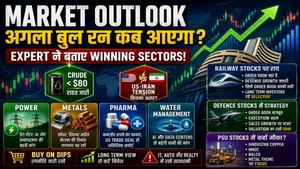 Share Market की तेज़ी बुरा फंसाएगी, बाज़ार में इन Stocks से बना लो दूरी!
 -
 Share Market में जोरदार तेजी, निफ्टी 24,200 के पार; सबसे अधिक किस शेयर में तेजी?
 -
 Trump Warning से Iran-US तनाव बढ़ा, Crude Oil में हलचल: Share Market Panic में क्या करें?
 -
 Share Market: कल की भारी गिरावट के बाद बाजार में लौटी तेजी, Sensex और Nifty में बढ़त के साथ कारोबार; आगे क्या
 -
 South Korea Market Crash: टेक शेयरों की बिकवाली से मचा हड़कंप! Bear Market में क्यों पहुंचा KOSPI?
 -
 Stock Market: शेयर बाजार में आज क्यों आई गिरावट? अमेरिका-ईरान तनाव के अलावा क्या है गिरावट की सबसे बड़ी वजहें
 -
 Sensex Outlook: सेंसेक्स 1 लाख तक पहुंचेगा या 66,000 तक गिरेगा? मॉर्गन स्टेनली ने बताए तीन बड़े अनुमान
 -
 Kalyan Jewellers Share Crash: अच्छे बिजनेस अपडेट के बावजूद 8% क्यों टूटा शेयर? जानिए पूरी वजह
 -
 Stock Market: अचानक क्यों टूटा बाज़ार? Sensex 350 प्वाइंट तो Nifty 24,450 के नीचे! जानिए 4 बड़ी वजहें
 -
 Stock Market Today: सप्ताह के पहले दिन शेयर बाजार में तेजी! आज शेयर बाजार में किसका रहा जलवा?
 -
 Stock Market में आएगा बड़ा ब्रेकआउट? 2026 के 5 सबसे दमदार सेक्टर्स!
 -
 HCL Tech Share Price: AI Deal के दम पर शेयर में 7% की तेजी, क्या आगे भी बढ़ेगा?
 -
 Share Market Today: सेंसेक्स 650 अंक उछला, निवेशकों की दौलत ₹2.43 लाख करोड़ बढ़ी, जानें तेजी की वजह
 -
 Nifty IT में 4% की तूफानी रैली! Infosys, TCS, Wipro में खरीदारी का मौका?
 -
 Vedanta Demerger के बाद धमाका: Oil & Gas में 20% की तेजी, निवेशकों की हुई चांदी
 -
 Nifty Outlook: क्या खत्म होगी गिरावट? 10 साल का Data क्या कहता है, जानें आगे की चाल
-
Block for 8 hours
-
Block for 12 hours
-
Block for 24 hours
-
Don't block

 Sign in with Google
- Male
- Female
- Others
- Under 18
- 18 to 25
- 26 to 35
- 36 to 45
- 45 to 55
- 55+