
 A Oneindia Venture


 Click it and Unblock the Notifications
Associated Ceramics Ltd. के अकाउंट के लिये नोट
Mar 31, 2025
d) Rights/prcfcrcnccs/rcstrictions attached to equity shares
The Company has only one class of equity shares having a par value of? 10 per share. Each holder of equity'' shares is entitled to one vote per share. The Company declares and pays dividends in Indian Rupees.
In the event of liquidation of the Company, the holders of equity shares will lie entitled to receive remaining assets of the company, after distribution of all preferential amounts, if any. The distribution will be in proportion to the number of equity shares held by the shareholders.
Note 29. Earnings per equity share
The Company''s Earning Per Share (''EPS'') is determined based on the net profit attributable to the shareholder''s of the company. Basic earning per share is computed rising the weighted average number of shares outstanding during the year. Diluted earnings per share is computed using the weighted average number of common and .dilutive common equivalent shares outstanding during the year including share options, except where the result would be anti-dilutive
|
Note 30. Contingent Liabilities |
(? in lacs) |
|
|
Descriptions |
31 March 2025 |
31 March 2024 |
|
Claims against the company not acknowledged as debt |
||
|
Income tax matter |
844 |
844 |
la) It is not practicable tV>r the Company to estimate the timings of cash outflows, if any, in respect of the above pending resolution of the respective proceedings, (b) The company does not expect any reimbursements in respect of the above contingent liabilities.
I.evcl 1: Level I hierarchy includes financial instruments measured using quoted prices This includes listed equity instruments, that have quoted price. The fair value of all equity instruments which are traded in the stock exchanges is valued using the closing price as at the reporting period.
l-evel 1: The fair value of financial instruments that are not traded in an active market is determined using valuation techniques which maximise the use of observable market data and rely as little as possible on entity specific estimates. If all significant inputs required to fair value an instrument are observable, the instrument is inlcuded in Level 2.
Level 3: If one or more of the significant inputs is not based on observable market data, the instrument is included in level 3. This is the case for unlisted equity securities, contingent consideration and indemnification asset included in level 3.
(i) Short-term financial assets and liabilities are stated at carrying value which is approximately equal to their lair value.
(ii) Derivatives are lair valued using market observable rates and published prices together with forecasted cash flow information where applicable.
(iii) Investments carried at fair value are generally based on market price quotations. Costs of unquoted equity instruments has been considered as an appropriate estimate of fair v alue because of a w ide range of possible fair value measurements and cost represents the best estimate of fair value w ithin that range
(iv) Fair value of borrowings which have a quoted market price in an active market is based on its market price which is categorised as level I. Fair value of borrowings which do not have an active market or are unquoted is estimated by discounting expected iuture cash flows using a discount rate equivalent to the risk-free rate of return adjusted for credit spread considered by lenders for instruments of similar maturities which is categorised as level 2 in the fair value hierarchy
(v) Management uses its bestjudgement in estimating the fair value of its financial instruments. However, there are inherent limitations in any estimation technique. Therefore, for substantially all financial instruments, the fair value estimates presented above are not necessarily indicativ e of the amounts that the Company could have realised or paid in sale Iraasactions as of respective dates. As such, fair value of financial instruments subsequent to the reporting dates may be different from the amounts reported at each reporting date.
J GU/ / cvx
.Note 32. Financial risk management
.The Company''s principal financial liabilities comprise loans and borrowings, trade and other payables. The main purpose of these financial liabilities is to finance the Company''s operations and to support its operations The Company''s financial assets include loans, trade and other receivables, and cash & cash equivalents that derive directly from its operations,
The Company is exposed to market risk, credit risk and liquidity risk. The company''s senior management oversees the management of these risks. The company''s senior management is supported by a financial risk committee that advises on financial risks and the appropriate financial risk governance framework for the Company. This financial risk committee provides assurance to the Company''s senior management that the Company''s financial risk activities are governed by appropriate policies and procedure and that financial risks arc identified, measured and managed in accordance with the Company''s policies and risk objectives. The Board of Directors reviews and agrees policies for managing each risk, which are summarised as below: ,
(A) Market risk
Market risk is the risk that the fair value of future cash flows of a financial instrument will fluctuate because of changes in market prices. Market risk comprises three types of risk interest rate risk, currency risk amt other price risks. Financial instruments affected by market risk include loans and borrowings, deposits and payables/receivables in foreign currencies.
a) Interest rate risk
Interest rate risk is the risk that the fair value or future cash flows of a financial instrument will fluctuate because of changes in market interest rates The Company''s exposure to the risk of changes in market interest rales relates primarily to the Company''s long term debt obligations with floating interest rates. The Company is carryg its borrowings primarily at variable rate. The Company expects the variable rate to decline, accordingly the Company is currently carrying its loans at variable interest rates.
Interest rate sensitivity
The following table demonstrates the sensitivity to a reasonably possible change in interest rates on that portion of loans and borrowings affected. With all other variable held constant, the Company''s profit before tax is affected through the impact on floating rate borrowings, as follows:
bl Credit risk
Credit risk is the risk that counterparty will not meet its obligations under a financial instrument or customer contract, leading lo a financial loss. The Company is exposed to credit risk from its operating activities (primarily trade receivables) and from its financing activates, including loans to related parties, deposits with banks and financial institutions, foreign exchange transaclions and other financial instruments.
(c) Trade receivables
Customer credit risk is managed by each business location subject to the Company''s established policy, procedures and control relating to customer credit risk management. Credit quality of a customer is assessed and individual credit limits are defined in accordance with the assessment both in terms of number of days and amount.
Credit risk from balances with banks and financial institutions is managed by the Company''s treasury department in accordance with the Company''s policy. Investment of surplus funds are made only with approved counterparties and within credit limits assigned lo each counterparty The Company''s maximum exposure to credit risk for the components of the balance sheet at 31 March 2024 and 31 March 2023 is the carrying amount as illustrated in Note 33.
(B) Liquidity risk
The Company monitors its risk of a shortage of funds by estimating the future cash flows. The Company''s objecii ve is to mainlain a balance between continuity of funding and flexibility through Ihe use of bank overdrafts, cash credit facilities and bank loans. The Company assessed the concentration of risk with respect to refinancing its debt and concluded it to be low The Company has access to a sufficient variety of sources of funding and debt maturity within 12 months can be rolled over with existing tenders. The Company had access to the following undrawn borrowing facilities at the end of the reporting periods -
Associated Global Finance Ltd, Snsri Finance Private Ltd, Express Vypaar Pvt Ltd have provided security in connection with an * Overdraft facility of Rs 10 cr obtained by the reporting enterprise during the reporting period from HDFC Bank Ltd.
â¢Note 34. Details of dues to Micro, Small and Medium Enterprises as per MSMED Act, 2006 to the extent of Confirmation received:
â¢The Company has no dues to micro and small enterprises in any year
Note 35 : Capital Management
For the purpose of the Companyâs capital management, capital includes issued equity capital, share premium and all other equity reserves attributable to the equity holders of the Company. The primary objective of the Companyâs capital management is to maximise the shareholder value
The Company manages its capital structure and makes adjustments in light of changes in economic conditions and the requirements of the financial covenants To maintain or adjust the capital structure, the Company may adjust the dividend payment to shareholders, return capital to shareholders or issue new shares. The Group monitors capital using a gearing ratio, which is net debt divided by total capital plus net debt The Company âs policy is to keep the gearing ratio between 0.5 to 1.00. The Company includes within net debt, interest bearing loans and borrowings, trade payables, less cash and cash equivalents.
Note 37. There are no charges or satisfaction of charges, which are yet to be registered with Registrar of Companies beyond the statutory period except the following: Overdraft facility with HDFC Bank Limited which was secured by charge of INR 7 cr has been closed in February 2023. However the satisfaction of charge has not yet been registered with Registrar of Companies, Rolkata which should have been registered by March 2023, as per Companies Act 2013 due to delay in providing the NOC from FIDFC Bank.
Note 38. No Proceeding have been initiated or pending against the Company for holding any Benami property under Benami Transactions (prohibition) Act, 1088.
Note 39. The Company has not borrowed any funds from hanks /Financial Institutions (being its current assets as collateral security) during the year under review
Note 40. The Company has not borrowed any borrow ings lor specific purpose from bank and financial Institution during the year.
Note 41.The Company has not eniered into any transactions w ills another Company whose name has been struck off by the Registrar of the Companies
Note 42. The Company is not a declared wil ful defaulter by any bank or financial institution or other lender during the year.
Note 43. The Company has rounded off the figures of financial statements to the nearest lacs.
Note 45. The Company has complied with the number of layers prescribed under Companies Act, 2013.
Note 46. Tile Company has not traded or invested in Crypto currency or Virtual Currency during the fianancial year.
Note 47. The Company has not advanced, loans or invested funds to any other person!s) or entity(ies). including foreign entities (Intermediaries) with the understanding that the Intermediary shall:
"(a) directly or indirectly lend or invest in other persoas or entities identified in any manner whatsoever by or on behalf of the Company (ultimate beneficiaries) or (I) l provide any guarantee, security or the like to or on bchal f of the ultimate beneficiaries
Note 48. The Company has not received any fund from any person(s) or cntity(ies), including foreign entities (funding party) with the understanding (whether recorded in writing or otherwise) that the Company shall:
(a) directly or indirectly lend or invest in other persons or entities identified in any manner whatsoever by or on behalf of the funding party (ultunate beneficiaries) or
(b) provide any guarantee, security or the like on behalf of the ultimate beneficiaries
Mar 31, 2024
d) Rights/preferences/restrictions attached to equity shares
The Company has only one class of equity shares having a par value of ^ 10 per share. Each holder of equity shares is entitled to one vote per share. The Company declares and pays dividends in Indian Rupees.
In the event of liquidation of the Company, the holders of equity shares will be entitled to receive remaining assets of the company, after distribution of all preferential amounts, if any. The distribution will be in proportion to the number of equity shares held by the shareholders.
Note 30. Earnings per equity share
The Companyâs Earning Per Share (EPS'') is determined based on the net profit attributable to the shareholderâs of the company. Basic earning per share is computed using the weighted average number of shares outstanding during the year. Diluted earnings per share is computed using the weighted average number of common and dilutive common equivalent shares outstanding during the year including share options, except where the result would be anti-dilutive.
(a) It is not practicable for the Company to estimate the timings of cash outflows, if any, in respect of the above pending resolution of the respective proceedings.
(b) The company does not expect any reimbursements in respect of the above contingent liabilities.
Level 1 : Level 1 hierarchy includes financial instruments measured using quoted prices. This includes listed equity instruments, that have quoted price. The fair value of all equity instruments which are traded in the stock exchanges is valued using the closing price as at the reporting period.
Level 2 : The fair value of financial instruments that are not traded in an active market is determined using valuation techniques which maximise the use of observable market data and rely as little as possible on entity specific estimates. If all significant inputs required to fair value an instrument are observable, the instrument is inlcuded in Level 2.
Level 3 : If one or more of the significant inputs is not based on observable market data, the instrument is included in level 3. This is the case for unlisted equity securities, contingent consideration and indemnification asset included in level 3.
(i) Short-term financial assets and liabilities are stated at carrying value which is approximately equal to their fair value.
(ii) Derivatives are fair valued using market observable rates and published prices together with forecasted cash flow information where applicable.
(in) Investments carried at fair value are generally based on market price quotations. Costs of unquoted equity instruments has been considered as an appropriate estimate of fair value because of a wide range of possible fair value measurements and cost represents the best estimate of fair value within that range.
(iv) Fair value of borrowings which have a quoted market price in an active market is based on its market price which is categorised as level 1. Fair value of borrowings which do not have an active market or are unquoted is estimated by discounting expected future cash flows using a discount rate equivalent to the riskfree rate of return adjusted for credit spread considered by lenders for instruments of similar maturities which is categorised as level 2 in the fair value hierarchy.
(v) Management uses its best judgement in estimating the fair value of its financial instruments. However, there are inherent limitations in any estimation technique. Therefore, for substantially all financial instruments, the fair value estimates presented above are not necessarily indicative of the amounts that the Company could have realised or paid in sale transactions as of respective dates. As such, fair value of financial instruments subsequent to the reporting dates may be different from the amounts reported at each reporting date.
(vi) There have been no transfers between Level 1 and Level 2 for the years ended March 31, 2023 and March 31, 2022.
Note 33. Financial risk management objectives and policies
The Companyâs principal financial liabilities comprise loans and borrowings, trade and other payables. The main purpose of these financial liabilities is to finance the Companyâs operations and to support its operations. The Companyâs financial assets include loans, trade and other receivables, and cash & cash equivalents that derive directly from its operations.
The Company is exposed to market risk, credit risk and liquidity risk. The companyâs senior management oversees the management of these risks. The companyâs senior management is supported by a financial risk committee that advises on financial risks and the appropriate financial risk governance framework for the Company. This financial risk committee provides assurance to the Companyâs senior management that the Companyâs financial risk activities are governed by appropriate policies and procedure and that financial risks are identified, measured and managed in accordance with the Companyâs policies and risk objectives. The Board of Directors reviews and agrees policies for managing each risk, which are summarised as below:
(A) Market risk
Market risk is the risk that the fair value of future cash flows of a financial instrument will fluctuate because of changes in market prices. Market risk comprises three types of risk interest rate risk, currency risk and other price risks. Financial instruments affected by market risk include loans and borrowings, deposits and payables/receivables in foreign currencies.
Interest rate risk is the risk that the fair value or future cash flows of a financial instrument will fluctuate because of changes in market interest rates. The Companyâs exposure to the risk of changes in market interest rates relates primarily to the Companyâs long term debt obligations with floating interest rates. The Company is carryg its borrowings primarily at variable rate. The Company expects the variable rate to decline, accordingly the Company is currently carrying its loans at variable interest rates.
Interest rate sensitivity
The following table demonstrates the sensitivity to a reasonably possible change in interest rates on that portion of loans and borrowings affected. With all other variable held constant, the Companyâs profit before tax is affected through the impact on floating rate borrowings, as follows:
b) Credit risk
Credit risk is the risk that counterparty will not meet its obligations under a financial instrument or customer contract, leading to a financial loss. The Company is exposed to credit risk from its operating activities (primarily trade receivables) and from its financing activites, including loans to related parties, deposits with banks and financial institutions, foreign exchange transactions and other financial instruments.
(c) Trade receivables
Customer credit risk is managed by each business location subject to the Companyâs established policy, procedures and control relating to customer credit risk management. Credit quality of a customer is assessed and individual credit limits are defined in accordance with the assessment both in terms of number of days and amount.
Credit risk from balances with banks and financial institutions is managed by the Companyâs treasury department in accordance with the Companyâs policy. Investment of surplus funds are made only with approved counterparties and within credit limits assigned to each counterparty. The Companyâs maximum exposure to credit risk for the components of the balance sheet at 31 March 2024 and 31 March 2023 is the carrying amount as illustrated in Note 33.
(B) Liquidity risk
The Company monitors its risk of a shortage of funds by estimating the future cash flows. The Companyâs objective is to maintain a balance between continuity of funding and flexibility through the use of bank overdrafts, cash credit facilities and bank loans. The Company assessed the concentration of risk with respect to refinancing its debt and concluded it to be low. The Company has access to a sufficient variety of sources of funding and debt maturity within 12 months can be rolled over with existing lenders. The Company had access to the following undrawn borrowing facilities at the end of the reporting periods -
Terms and conditions of transactions with related parties:
The sales and purchase from related parties are made on terms equivalent to those that prevail in armâs length transactions. Outstanding balance at the year-end are unsecured and settlement occurs in cash.
Assocaited Global Finance Ltd, Susri Finance Private Ltd, Express Vypaar Pvt Ltd have provided security in connection with an Overdraft facility of Rs. 10 cr obtained by the reporting eneterprise during the reporting period from HDFC Bank Ltd.
Note 35. Details of dues to Micro, Small and Medium Enterprises as per MSMED Act, 2006 to the extent of Confirmation received:
The Company has no dues to micro and small enterprises in any year.
Note 36 : Capital Management
For the purpose of the Companyâs capital management, capital includes issued equity capital, share premium and all other equity reserves attributable to the equity holders of the Company. The primary objective of the Companyâs capital management is to maximise the shareholder value.
The Company manages its capital structure and makes adjustments in light of changes in economic conditions and the requirements of the financial covenants. To maintain or adjust the capital structure, the Company may adjust the dividend payment to shareholders, return capital to shareholders or issue new shares. The Group monitors capital using a gearing ratio, which is net debt divided by total capital plus net debt. The Companyâs policy is to keep the gearing ratio between 0.5 to 1.00. The Company includes within net debt, interest bearing loans and borrowings, trade payables, less cash and cash equivalents.
In order to achieve this overall objective, the Groupâs capital management, amongst other things, aims to ensure that it meets financial covenants attached to the interest-bearing loans and borrowings that define capital structure requirements.
Note 38. There are no charges or satisfaction of charges, which are yet to be registered with Registrar of Companies beyond the statutory period except the following: Overdraft facility with HDFC Bank Limited which was secured by charge of INR 7 cr has been closed in February 2023. However the satisfaction of charge has not yet been registered with Registrar of Companies, Kolkata which should have been registered by March 2023, as per Companies Act, 2013 due to delay in providing the NOC from HDFC Bank.
Note 39. No Proceeding have been initiated or pending against the Company for holding any Benami property under Benami Transactions (prohibition)
Note 40. The Company has not borrowed any funds from banks /Financial Institutions (being its current assets as collateral security) during the year under review
Note 41. The Company has not borrowed any borrowings for specific purpose from bank and financial Institution during the year.
Note 42. The Company has not entered into any transactions with another Company whose name has been struck off by the Registrar of the Companies.
Note 43. The Company is not a declared wilful defaulter by any bank or financial institution or other lender during the year.
Note 44. The Company has rounded off the figures of financial statements to the nearest lacs.
Note 45. Corporate Social Responsibilities CSR activities:
Note 46. The Company has complied with the number of layers prescribed under Companies Act, 2013.
Note 47. The Company has not traded or invested in Crypto currency or Virtual Currency during the fianancial year.
Note 48. The Company has not advanced, loans or invested funds to any other person(s) or entity(ies), including foreign entities (Intermediaries) with the understanding that the Intermediary shall:
(a) directly or indirectly lend or invest in other persons or entities identified in any manner whatsoever by or on behalf of the Company (ultimate beneficiaries) or
(b) provide any guarantee, security or the like to or on behalf of the ultimate beneficiaries
Note 49. The Company has not received any fund from any person(s) or entity(ies), including foreign entities (funding party) with the understanding (whether recorded in writing or otherwise) that the Company shall:
(a) directly or indirectly lend or invest in other persons or entities identified in any manner whatsoever by or on behalf of the funding party (ultimate beneficiaries) or
(b) provide any guarantee, security or the like on behalf of the ultimate beneficiaries.
Mar 31, 2003
1. Certain Bank balances are subject to reconciliation as the company
could not obtain the bank statement from the concerned banks before the
date of audit.
2. Contingent Liabilities have not been provided in respect of
guarantees given by Bank to the extent of Rs. 1,62,35,828/- (Previous
Year Rs. 60,22,012/-).
3. Issued, Subscribed and Paid up Capital as at 31st March, 2003 is
represented by 30,05,030 Equity Shares of Rs. 10/- each and 9750
Preference Shares of Rs. 1000/- each (Previous Year : 9750 Preference
Shares), out of above 30,05,030 Equity Shares 20,44,730 Equity Shares
are fully paid up and 9,60,300 Equity Shares are partly paid up. (Due
Amount Rs. 7.50 per Share).
4. The Company is not providing interest on loan given to Refractory
Specialities India Ltd. Since 1998.
8. Related Party Transactions
Information given in accordance with the requirements of Accounting
Standard (AS-18) - Related party disclosures issued by the Institute of
Chartered Accountants of India :
A) List of Related Parties 1) Associates
a) Sharad Refractories (P) Ltd.
b) Mugma Coke Oven (P) Ltd.
c) Vikash Ceramics (P) Ltd.
d) Excellent Merchants (P) Ltd.
e) Paramount Finco & Traders Ltd.
f) Sharad International Ltd.
g) Associated Global Finance Limited
h) Somnath Fuels (P) Ltd.
i) Ipitata Commotrade (P) Ltd.
j) Amarjyoti Udyog Ltd.
2) Names of the management personnel of the company
a) Chairman-cum-Managing Director - Arun Agarwal
b) Director - Bimal Agarwal
c) Director - Binod Suhasaria
C) Transaction with key management personnel
Details of remuneration paid to management personnel is disclosed in
Note - 6.
10. As the companys business activity falls within a single business
segment viz Fire Brick and Fire Clay Powder the disclosure requirements
of Accounting Standard (AS-17) "Segment Reporting" are not applicable.
11. Additional Information pursuant to the Provisions of Paragraph 3 &
4 of Part - II of Schedule - VI to the Companies Act, 1956.
b) Quantitative Details : See Overleaf.
12. CIF Value of Imports : $ 30951861 ($ 227768.43) = Rs.
1,50,59,825/- (Rs. 1,10,84,215/-)
13. Earning in Foreign Currency : NIL (Previous Year : Nil)
14. Previous year figures have been re-grouped and re-arranged
wherever considered necessary.
Mar 31, 2002
1. Certain Bank balances are subjected to reconciliation as the
company could not obtain the bank statements from the concerned bank
before the date of audit.
2. Contingent Liabilities have not been provided in respect of
guarantees given by Bank to the extent of Rs. 60,22,012/- (Previous
Year Rs. 1,42,99,913).
3. Issued, Subscribed and Paid up Capital as at 31st March, 2002 is
represented by 30,05,030 Equity Shares of Rs. 10/- each and 9750
Preference Shares of Rs. 1000/- each (Previous Year : 2267 Preference
Shares), out of above 30,05,030 Equity Shares 20,44,730 Equity Shares
are fully paid up and 9,60,300 Equity Shares are partly paid up. (Due
Amount Rs. 7.50 per Share).
4. The Company is not providing interest on loan given to Refractory
Specialities India Ltd. Since 1998.
5. Cash Credit from Union Bank of Rs. 2,80,63,731/- (Previous Year Rs.
2,81,72,543/-) is secured by hypothecation of Raw Materials,
Work-in-Process, Finished Goods and Book Debts of the Company.
Note : In calculation of No. of Equity Shares, the shares in respect of
which allottment has not been made, have been ignored.
8. Related Party Transactions
Information given in accordance with the requirements of Accounting
Standard (AS-18) - Related party disclosures issued by the institute of
Chartered Accountants of India :
A) List of Related Parties i) Associates
a) Sharad Refractories (P) Ltd.
b) Mugma Coke Oven (P) Ltd.
c) Vikash Ceramics (P) Ltd.
d) Excellent Merchants (P) Ltd.
e) Paramount Finco & Traders Ltd.
f) Sharad International (P) Ltd.
g) Associated Global Finance Limited h) Somnath Fuels (P) Ltd.
i) Ipitata Commotrade (P) Ltd. j) Amarjyoti Udyog Ltd.
ii) Names of the management personnel of the company
a) Chairman - Bihari Agarwal
b) Managing Director - Arun Agarwal
c) Director - Bimal Agarwal
d) Director - Binod Suhasaria
B) Transactions with Associates
a) Mugma Coke Oven (P) Ltd. : Sold goods valued Rs. 684222/-
b) Vikash Ceramics (P) Ltd. : Sold goods valued Rs. 68825/-
c) Sharad Refractories (P) Ltd. : Purchased goods valued Rs. 28181/-
d) Excellent Merchants (P) Ltd. : Interest paid Rs. 94046/- in
respect of loan transaction.
e) Paramount Fincom & Traders Ltd. : Paid interest Rs. 383096/- in
respect of loan transaction.
f) Sharad International (P) Ltd. : Loan given Rs. 7,000/-
g) Associated Global Finance Ltd. : Interest paid Rs. 35,93,232/- in
respect of loan transaction.
h) Somnath Fuels (P) Ltd. : Interest paid Rs. 320055/- in
respect of loan transaction.
i) IPITATA Commotrade (P) Ltd. : Interest paid Rs. 532988/- in
respect of loan transaction.
j) Amarjyoti Udyog Ltd. : Interest paid Rs. 731571/- in
respect of loan transaction.
C) Transaction with key management personnel
Details of remuneration paid to management personnel is disclosed in
Note - 6.
10. Additional Information pursuant to the Provisions of Paragraph 3 &
4 of Part - II of Schedule - VI to the Companies Act, 1956.
b) Quantitative Details : See Overleaf.
11. CIF Value of Imports : $227768.43 ($541403.03) = Rs. 1,10,84,215/-
(Rs. 2,50,65,475)
12. Earning in Foreign Currency : NIL (Previous Year: $ 18227.16)
13. Previous year figures have been re-grouped and re-arranged
whenever considered necessary.
Disclaimer: This is 3rd Party content/feed, viewers are requested to use their discretion and conduct proper diligence before investing, GoodReturns does not take any liability on the genuineness and correctness of the information in this article
Associated Ceramics Ltd. पर और जानकारी
-
Associated Ceramics Ltd. कंपनी का विवरण
- कंपनी का प्रोफाइल
- कंपनी का इतिहास
- मैनेजमेंट टीम
- पूंजी ढांचा
- प्रॉडक्ट मिक्स
- बैंकर/ऑडीटर/रजिस्ट्रार
-
कंपनी का इतिहास
- बीएसई मूल्य इतिहास
-
Associated Ceramics Ltd. मुख्य वित्तीय अनुपात
- अनुपात
-
Associated Ceramics Ltd. परिणाम
- तिमाही परिणाम
- छहमाही परिणाम
- नौ महीने के परिणम
- वार्षिक परिणाम
-
Associated Ceramics Ltd. Financial Data
- ऑडिट के परिणाम
- नकदी प्रवाह
- बैलेंस शीट
-
Associated Ceramics Ltd. की रिपोर्ट
- लेखा नीति
- ऑडीटर की रिपोर्ट
- निदेशक की रिपोर्ट
- खाते के लिये नोट
-
Associated Ceramics Ltd. कॉर्पोरेट घोषणाएं
- बुक क्लोज़र
- बोर्ड की मीटिंग
-
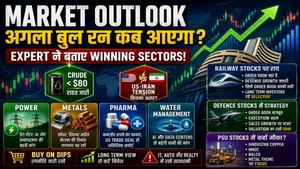 Share Market की तेज़ी बुरा फंसाएगी, बाज़ार में इन Stocks से बना लो दूरी!
 -
 Share Market में जोरदार तेजी, निफ्टी 24,200 के पार; सबसे अधिक किस शेयर में तेजी?
 -
 Trump Warning से Iran-US तनाव बढ़ा, Crude Oil में हलचल: Share Market Panic में क्या करें?
 -
 Share Market: कल की भारी गिरावट के बाद बाजार में लौटी तेजी, Sensex और Nifty में बढ़त के साथ कारोबार; आगे क्या
 -
 South Korea Market Crash: टेक शेयरों की बिकवाली से मचा हड़कंप! Bear Market में क्यों पहुंचा KOSPI?
 -
 Stock Market: शेयर बाजार में आज क्यों आई गिरावट? अमेरिका-ईरान तनाव के अलावा क्या है गिरावट की सबसे बड़ी वजहें
 -
 Sensex Outlook: सेंसेक्स 1 लाख तक पहुंचेगा या 66,000 तक गिरेगा? मॉर्गन स्टेनली ने बताए तीन बड़े अनुमान
 -
 Kalyan Jewellers Share Crash: अच्छे बिजनेस अपडेट के बावजूद 8% क्यों टूटा शेयर? जानिए पूरी वजह
 -
 Stock Market: अचानक क्यों टूटा बाज़ार? Sensex 350 प्वाइंट तो Nifty 24,450 के नीचे! जानिए 4 बड़ी वजहें
 -
 Stock Market Today: सप्ताह के पहले दिन शेयर बाजार में तेजी! आज शेयर बाजार में किसका रहा जलवा?
 -
 Stock Market में आएगा बड़ा ब्रेकआउट? 2026 के 5 सबसे दमदार सेक्टर्स!
 -
 HCL Tech Share Price: AI Deal के दम पर शेयर में 7% की तेजी, क्या आगे भी बढ़ेगा?
 -
 Share Market Today: सेंसेक्स 650 अंक उछला, निवेशकों की दौलत ₹2.43 लाख करोड़ बढ़ी, जानें तेजी की वजह
 -
 Nifty IT में 4% की तूफानी रैली! Infosys, TCS, Wipro में खरीदारी का मौका?
 -
 Vedanta Demerger के बाद धमाका: Oil & Gas में 20% की तेजी, निवेशकों की हुई चांदी
 -
 Nifty Outlook: क्या खत्म होगी गिरावट? 10 साल का Data क्या कहता है, जानें आगे की चाल
-
Block for 8 hours
-
Block for 12 hours
-
Block for 24 hours
-
Don't block

 Sign in with Google
- Male
- Female
- Others
- Under 18
- 18 to 25
- 26 to 35
- 36 to 45
- 45 to 55
- 55+