
 A Oneindia Venture


 Click it and Unblock the Notifications
Ashiana Agro Industries Ltd. के अकाउंट के लिये नोट
Mar 31, 2025
vii. Cash flow statement
Cash flows are reported using the indirect method, whereby profit before tax is adjusted for the effects of transactions of a non -cash nature and any deferrals or accruals of past or future cash receipts or payments. The cash flows from regular revenue generating, financing and investing activities of the Company are segregated.
The Company has extended an unsecured loan to Diadem Enterprises Private Limited for Rs. 2,27,00,000/- at an interest rate of 10% p.a. and the company received back Rs. 77,00,000/-during the financial year 2013-14 and Rs.50,00,000/- during the financial year 2024-2025, The balance as on 31st March2025 is Rs. 1,00,00,000/-. The unsecured loan is payable on demand and the company got confirmation letter from M/s. Diadem Enterprises Private Limited.
xi. Segment Reporting:
Company is operating in a single segment, i.e., trading in packaging material. Hence disclosure of Segment information is not applicable.
xii.
a) Financial Risk Management - Objectives and Policies:
The Company''s financial liabilities comprises of Trade Payables while financial assets comprise of Trade Receivables, Cash and Cash Equivalents, Bank Balances other than Cash and Cash Equivalents. The company has financial risk exposure in the form of credit risk and liquidity risk. The risk management policies of the Company are monitored by the Board of Directors. The present disclosure made by the Company summarizes the exposure to the Financial Risks.
(b) Credit Risk Management:
Credit risk refers to the risk that a counter party will default on its contractual obligations resulting in financial loss to the Company. Credit Risk arises primarily from financial assets such as trade receivables, bank balances and other balances with banks. The credit risk arising from the exposure of investing in other balances with banks and bank balances is limited and there is no collateral held against these because the counter parties are banks.
(c) Liquidity Risk Management:
Liquidity Risk is the risk that the Company will encounter difficulty in meeting obligations associated with financial liabilities that are settled by delivering cash or another financial asset. Liquidity Risk may result from an inability to sell a financial asset quickly to meet obligations when due. The Company''s exposure to liquidity risk arises primarily form mismatches of maturities of financial assets and liabilities.
The Company manages liquidity risk by
(i) maintaining adequate and sufficient cash and cash equivalents
(ii) making available the funds from realizing timely maturities of financial assets to meet the obligations when due.
Mar 31, 2024
iv. Provisions:
A provision is recognized when the company has a present obligation as a result of the past event, it is probable that an
outflow of resources embodying future economic benefits will be required to settle the obligations and a reliable measure
can be made of the amount of obligation. Provisions are not discounted to their present value and are determined on the
best estimate required to settle the obligation at the reporting date. These estimates are reviewed at each reporting date
and adjusted to reflect the current best estimates.
Contingent liability is disclosed for
⢠Possible obligations which will be confirmed only by future events not wholly within the control of the Company or
⢠Present obligations arising from past events where it is not probable that an outflow of resources will be required to
settle the obligation or a reliable estimate of the amount of the obligation cannot be made.
⢠Contingent Liabilities: NIL
Contingent assets are not recognized in the standalone financial statements since this may result in the recognition of
income that may never be realized.
v. Financial Instruments
A financial instrument is any contract that gives rise to a financial asset of one entity and a financial liability or equity
instrument of another entity.
Financial assets
Initial recognition and measurement
All financial assets are recognised initially at fair value plus, in the case of financial assets not recorded at fair value through
profit or loss, transaction costs that are attributable to the acquisition of the financial asset. Purchases or sales of financial
assets that require delivery of assets within a time frame established by regulation or convention in the market place (regular
way trades) are recognised on the trade date, i.e., the date that the Company commits to purchase or sell the asset.
Subsequent measurement
For purposes of subsequent measurement, financial assets are classified in four categories:
⢠Debt instruments at amortised cost
⢠Debt instruments at fair value through other comprehensive income (FVTOCI)
⢠Debt instruments, derivatives and equity instruments at fair value through profit or loss (FVTPL)
⢠Equity instruments measured at fair value through other comprehensive income (FVTOCI)
Debt instruments at amortised cost
A âdebt instrumentâ is measured at the amortised cost if both the following conditions are met:
⢠The asset is held within a business model whose objective is to hold assets for collecting contractual cash flows, and
⢠Contractual terms of the asset give rise on specified dates to cash flows that are solely payments of principal and interest
(SPPI) on the principal amount outstanding.
After initial measurement, such financial assets are subsequently measured at amortised cost using the effective interest rate
(EIR) method. Amortised cost is calculated by taking into account any discount or premium on acquisition and fees or costs that
are an integral part of the EIR. The EIR amortisation is included in finance income in the profit or loss. The losses arising from
impairment are recognised in the profit or loss. This category generally applies to trade and other receivables.
Debt instrument at FVTOCI
A âdebt instrumentâ is classified as at the FVTOCI if both of the following criteria are met:
⢠The objective of the business model is achieved both by collecting contractual cash flows and selling the financial assets,
and
⢠The assetâs contractual cash flows represent SPPI.
Debt instruments included within the FVTOCI category are measured initially as well as at each reporting date at fair value. Fair
value movements are recognized in the other comprehensive income (OCI). However, the Company recognizes interest
income, impairment losses & reversals and foreign exchange gain or loss in the P&L. On de-recognition of the asset, cumulative
gain or loss previously recognised in OCI is reclassified from the equity to P&L. Interest earned whilst holding FVTOCI debt
instrument is reported as interest income using the EIR method.
Debt instrument at FVTPL
Any debt instrument, which does not meet the criteria for categorization as at amortized cost or as FVTOCI, is classified as at
FVTPL.
In addition, the Company may elect to designate a debt instrument, which otherwise meets amortized cost or FVTOCI criteria,
as at FVTPL. However, such election is allowed only if doing so reduces or eliminates a measurement or recognition
inconsistency (referred to as ''accounting mismatch''). The Company has not designated any debt instrument as at FVTPL.
Debt instruments included within the FVTPL category are measured at fair value with all changes recognized in the P&L.
Equity investments
All equity investments in scope of Ind AS 109 are measured at fair value. Equity instruments which are held for trading and
"contingent consideration classified as liability" recognised by an acquirer in a business combination to which Ind AS103 applies
are classified as at FVTPL. For all other equity instruments, entities in the Company has made an irrevocable election to present
in other comprehensive income subsequent changes in the fair value. Such election is made on an instrument-by-instrument
basis. The classification is made on initial recognition and is irrevocable.
If the Company decides to classify an equity instrument as at FVTOCI, then all fair value changes on the instrument, excluding
dividends, are recognized in the OCI. There is no recycling of the amounts from OCI to P&L, even on sale of investment.
However, the Company may transfer the cumulative gain or loss within equity.
De-recognition
A financial asset (or, where applicable, a part of a financial asset or part of a Company of similar financial assets) is primarily de¬
recognised (i.e., removed from the Companyâs consolidated balance sheet) when:
⢠The rights to receive cash flows from the asset have expired, or
⢠The Company has transferred its rights to receive cash flows from the asset or has assumed an obligation to pay the
received cash flows in full without material delay to a third party under a ''pass-through'' arrangement; and either (a) the
Company has transferred substantially all the risks and rewards of the asset, or (b) the Company has neither transferred nor
retained substantially all the risks and rewards of the asset, but has transferred control of the asset.
When the Company has transferred its rights to receive cash flows from an asset or has entered into a pass-through
arrangement, it evaluates if and to what extent it has retained the risks and rewards of ownership. When it has neither
transferred nor retained substantially all of the risks and rewards of the asset, nor transferred control of the asset, the Company
continues to recognise the transferred asset to the extent of the Company''s continuing involvement. In that case, the Company
also recognises an associated liability. The transferred asset and the associated liability are measured on a basis that reflects
the rights and obligations that the Company has retained.
Continuing involvement that takes the form of a guarantee over the transferred asset is measured at the lower of the original
carrying amount of the asset and the maximum amount of consideration that the Company could be required to repay.
Impairment of financial assets
In accordance with Ind AS 109, the Company applies expected credit loss (ECL) model for measurement and recognition of
impairment loss on the following financial assets and credit risk exposure:
⢠Financial assets that are debt instruments, and are measured at amortised cost e.g., loans, debt securities, deposits, trade
receivables and bank balance
⢠Financial assets that are debt instruments and are measured as at FVTOCI
⢠Lease receivables under Ind AS 17
⢠Trade receivables or any contractual right to receive cash or another financial asset that result from transactions that are
within the scope of Ind aS 11 and Ind AS 18
⢠Loan commitments which are not measured as at FVTPL
⢠Financial guarantee contracts which are not measured as at FVTPL
The Company follows âsimplified approachâ for recognition of impairment loss allowance on:
⢠Trade receivables or contract revenue receivables; and
⢠All lease receivables resulting from transactions within the scope of Ind AS 17
The application of simplified approach does not require the Company to track changes in credit risk. Rather, it recognises
impairment loss allowance based on lifetime ECLs at each reporting date, right from its initial recognition.
For recognition of impairment loss on other financial assets, the Company determines that whether there has been a significant
increase in the credit risk since initial recognition. If credit risk has not increased significantly, 12-month ECL is used to provide
for impairment loss. However, if credit risk has increased significantly, lifetime ECL is used. If, in a subsequent period, credit
quality of the instrument improves such that there is no longer a significant increase in credit risk since initial recognition, then
the entity reverts to recognising impairment loss allowance based on 12-month ECL.
Lifetime ECL are the expected credit losses resulting from all possible default events over the expected life of a financial
instrument. The 12-month ECL is a portion of the lifetime ECL which results from default events that are possible within 12
months after the reporting date.
ECL is the difference between all contractual cash flows that are due to the Company in accordance with the contract and all the
cash flows that the entity expects to receive (i.e., all cash shortfalls), discounted at the original EIR. When estimating the cash
flows, an entity is required to consider:
⢠All contractual terms of the financial instrument (including prepayment, extension, call and similar options) over the expected
life of the financial instrument. However, in rare cases when the expected life of the financial instrument cannot be estimated
reliably, then the entity is required to use the remaining contractual term of the financial instrument
⢠Cash flows from the sale of collateral held or other credit enhancements that are integral to the contractual terms
As a practical expedient, the Company uses a provision matrix to determine impairment loss allowance on portfolio of its trade
receivables. The provision matrix is based on its historically observed default rates over the expected life of the trade
receivables and is adjusted for forward-looking estimates. At every reporting date, the historical observed default rates are
updated and changes in the forward-looking estimates are analysed.
ECL impairment loss allowance (or reversal) recognized during the period is recognized as income/ expense in the statement of
profit and loss (P&L). This amount is reflected under the head âother expensesâ in the P&L. The balance sheet presentation for
various financial instruments is described below:
⢠Financial assets measured as at amortised cost, contractual revenue receivables and lease receivables: ECL is presented
as an allowance, i.e., as an integral part of the measurement of those assets in the balance sheet. The allowance reduces the
net carrying amount. Until the asset meets write-off criteria, the Company does not reduce impairment allowance from the
gross carrying amount.
⢠Loan commitments and financial guarantee contracts: ECL is presented as a provision in the balance sheet, i.e., as a liability.
⢠Debt instruments measured at FVTOCI: Since financial assets are already reflected at fair value, impairment allowance is
not further reduced from its value. Rather, ECL amount is presented as âaccumulated impairment amountâ in the OCI.
For assessing increase in credit risk and impairment loss, the Company combines financial instruments on the basis of shared
credit risk characteristics with the objective of facilitating an analysis that is designed to enable significant increases in credit risk
to be identified on a timely basis.
Financial liabilities
Initial recognition and measurement
All financial liabilities are recognized initially at fair value and, in the case of loans and borrowings and payables, net of directly
attributable transaction costs.
The Companyâs financial liabilities include trade and other payables, loans and borrowings including bank overdrafts, financial
guarantee contracts and derivative financial instruments.
Subsequent measurement
The measurement of financial liabilities depends on their classification, as described below:
Financial liabilities at fair value through profit or loss
Financial liabilities at fair value through profit or loss include derivatives, financial liabilities held for trading and financial
liabilities designated upon initial recognition as at fair value through profit or loss. Financial liabilities are classified as held for
trading if they are incurred for the purpose of repurchasing in the near term. This category also includes derivative financial
instruments entered into by the Company that are not designated as hedging instruments in hedge relationships as defined by
Ind AS 109. Separated embedded derivatives are also classified as held for trading unless they are designated as effective
hedging instruments.
Gains or losses on liabilities held for trading are recognized in the profit or loss.
Financial liabilities designated upon initial recognition at fair value through profit or loss are designated as such at the initial date
of recognition, and only if the criteria in Ind AS 109 are satisfied. For liabilities designated as FVTPL, fair value gains/ losses
attributable to changes in own credit risks are recognized in OCI. These gains/ losses are not subsequently transferred to P&L.
However, the Company may transfer the cumulative gain or loss within equity. All other changes in fair value of such liability are
recognised in the statement of profit or loss. The Company has not designated any financial liability as at fair value through profit
and loss.
Loans and borrowings
After initial recognition, interest-bearing loans and borrowings are subsequently measured at amortised cost using the EIR
method. Gains and losses are recognised in profit or loss when the liabilities are derecognised as well as through the EIR
amortisation process.
Amortised cost is calculated by taking into account any discount or premium on acquisition and fees or costs that are an integral
part of the EIR. The EIR amortisation is included as finance costs in the statement of profit and loss.
De-recognition
A financial liability is derecognised when the obligation under the liability is discharged or cancelled or expires. When an existing
financial liability is replaced by another from the same lender on substantially different terms, or the terms of an existing liability
are substantially modified, such an exchange or modification is treated as the de-recognition of the original liability and the
recognition of a new liability. The difference in the respective carrying amounts is recognised in the statement of profit or loss.
Reclassification of financial assets
The Company determines classification of financial assets and liabilities on initial recognition. After initial recognition, no
reclassification is made for financial assets which are equity instruments and financial liabilities. For financial assets which are
debt instruments, a reclassification is made only if there is a change in the business model for managing those assets. Changes
to the business model are expected to be infrequent. The Companyâs senior management determines change in the business
model as a result of external or internal changes which are significant to the Companyâs operations. Such changes are evident
to external parties. A change in the business model occurs when the Company either begins or ceases to perform an activity that
is significant to its operations. If the Company reclassifies financial assets, it applies the reclassification prospectively from the
reclassification date which is the first day of the immediately next reporting period following the change in business model. The
Company does not restate any previously recognised gains, losses (including impairment gains or losses) or interest.
vi. Earnings Per share
Basic earnings per share is computed by dividing profit after tax (including the post-tax effect of extraordinary items, if any) by
the weighted average number of equity shares outstanding during the year.
Diluted earnings per share is computed by dividing the profit after tax (including the post-tax effect of extraordinary items, if any)
as adjusted for dividend, interest and other charges to expense or income (net of any attributable taxes) relating to the dilutive
potential equity shares by the weighted average number of equity shares considered for deriving basic earnings per share and
the weighted average number of equity shares which could have been issued on the conversion of all dilutive potential equity
shares.
Potential equity shares are deemed to be dilutive only if their conversion to equity shares would decrease the net profit per share
from continuing ordinary operations. Potential dilutive equity shares are deemed to be converted as at the beginning of the
period, unless they have been issued at a later date.
The dilutive potential equity shares are adjusted for the proceeds receivable had the shares been actually issued at fair value
(i.e., average market value of the outstanding shares). Dilutive potential equity shares are determined independently for each
period presented. The number of equity shares and potentially dilutive equity shares are adjusted for share splits/ reverse share
splits and bonus shares, as appropriate.
xi. Segment Reporting:
Company is operating in a single segment, i.e., trading in packaging material. Hence disclosure of Segment information is not
applicable.
xii.
a) Financial Risk Management - Objectives and Policies:
The Company''s financial liabilities comprises of Trade Payables while financial assets comprise of Trade Receivables, Cash
and Cash Equivalents, Bank Balances other than Cash and Cash Equivalents. The company has financial risk exposure in
the form of credit risk and liquidity risk. The risk management policies of the Company are monitored by the Board of
Directors. The present disclosure made by the Company summarizes the exposure to the Financial Risks.
(b) Credit Risk Management:
Credit risk refers to the risk that a counter party will default on its contractual obligations resulting in financial loss to the
Company. Credit Risk arises primarily from financial assets such as trade receivables, bank balances and other balances
with banks. The credit risk arising from the exposure of investing in other balances with banks and bank balances is limited
and there is no collateral held against these because the counter parties are banks.
(c) Liquidity Risk Management:
Liquidity Risk is the risk that the Company will encounter difficulty in meeting obligations associated with financial liabilities
that are settled by delivering cash or another financial asset. Liquidity Risk may result from an inability to sell a financial asset
quickly to meet obligations when due. The Company''s exposure to liquidity risk arises primarily form mismatches of
maturities of financial assets and liabilities.
The Company manages liquidity risk by
(i) maintaining adequate and sufficient cash and cash equivalents
(ii) making available the funds from realizing timely maturities of financial assets to meet the obligations when due.
As per our report of event date annexed
K GOPAL RAO & CO.,
^no''ccc^ For and on behalf of the Board of Directors
ICAI FRN: 000956S
Sd/-
Sd/- Sd/-
CA GOPAL KRISHNA RAJU V Kodanda Ram Pavan Kumar M
Director Whole Time Director
UDIN:24205929BKGVLB4530 Sd/- Sd/-
G. Nandhivarman EDM Menon
Date: 24th May, 2024 Chief Financial Officer Company Secretary
Place: Chennai
Mar 31, 2015
1. The rights, preferences and restrictions attaching to each class of
shares including restrictions on the distribution of dividends and the
repayment of capital
The company has one class of equity shares having par value of Rs.10
per share and one class of preference shares(not yet issued &
subscribed). Each holder of the equity share is entitled to vote. The
dividend, if any, proposed by the board is subject to the approval
ofthe shareholders in ensuring Annual General Meeting.
In the event of liquidation of the company, the holder of equity shares
will be entitled to receive the remaining assets of the company, after
distribution of all preferential amounts. The distribution will be in
proportion to the number of equity shares held by the shareholders.
Mar 31, 2013
1. The Company has given unsecured loan of Rs.2,27,00,000 in September
2009 to M/s Diadem Enterprises Private Limited and this is in excess of
the limit prescribed in Section 372A of the Companies Act, 1956. Since
this is a non compliance to the requirements of section 372A, it has no
specific effect in the financial statements.
AS -1: Disclosure of accounting policies
The accounts are prepared on accrual basis as a going concern. But
since the company has sold entire Plant & machinery and other ancillary
equipments pertaining to its edible vegetable oil refinery plant and
has not manufactured any product for the past 3 financial years, the
company''s ability to continue as a going concern is doubted in the
foreseeable future.
AS -2: Valuation of Inventories
The Company does not deal with inventories.
AS - 3: Cash flow Statements
The Company has complied with AS-3 and prepared Cash flow statements,
as attached in Annexure I.
AS - 4: Events occurring after the Balance Sheet Date
No significant event has occurred after the Balance Sheet Date.
AS - 5: Net profit or loss for the period, prior period items and
changes in accounting policies:
No change in accounting polices during the year.
AS - 6: Depreciation Accounting
Depreciation is provided on Straight Line Method, at the rates
specified in Schedule XIV to the Companies Act, 1956.
AS- 7: Construction Contracts
This Accounting Standard is not applicable.
AS - 8: Research & Development
This Accounting Standard has been withdrawn.
AS - 9: Revenue Recognition
Income from Loan Interest and Fixed deposit Interest is accounted as
they are accrued.
AS -10: Accounting for Fixed Assets
Fixed assets are valued at cost including expenditure incurred in
bringing them to usable condition less depreciation.
AS - 11: Accounting for effects of changes in foreign exchange rates
No Forex transactions in the current year.
AS -12: Accounting for Government Grants
The Company has not received any grants.
AS -13: Accounting for Investments
The company has not made any investments during the current year and
does not have any investments as on 31.03.2013
AS - 14: Accounting for amalgamations
No amalgamation during the year.
AS -15: Accounting for Employee Benefits
This accounting standard is applicable and the same is followed in an
consistent manner.
AS -16: Borrowing Cost
During the year, the Company has not dealt with any borrowings.
AS - 17: Segment reporting
(a) Business segment: The Company has considered business segment as
the primary segment for disclosure. As reported the Company has sold
its entire plant & machinery and other ancillary equipments pertaining
to its edible vegetable oil refinery plant, The Company has not
undertaken manufacturing activity during the year. The Company is
presently engaged in financing activity. The Company is in the process
of identifying new trading business venture. Hence there is no
distinguishable component of any product or services that can be
report.
(b) Geographical Segment: The conditions prevailing in India being
uniform, no separate geographical segment disclosure is considered
necessary.
As - 22: Accounting for taxes on Income
Deferred tax is recognized, subject to the consideration of prudence,
on timing differences, being the difference between the taxable incomes
and accounting income that originate in one period and are capable of
reversal in one or more subsequent period(s). On evaluation of
reasonable certainty and as per the AS -22, deferred tax liabilities /
assets are nil as the company believes that such liabilities / assets
are not likely to be reversed in the future years.
AS -23: Accounting for investments in associates
This standard is not applicable to the Company.
AS-24: Discontinuing Operation
During the year the Company has not discontinued any of its operations.
AS - 25: Interim Financial Reporting
This standard is not applicable to the Company.
AS - 26: Accounting for Intangible Assets
This standard is not applicable to the company.
AS - 27: Financial reporting of interests in Joint Venture
This standard is not applicable to the Company.
AS - 28: Impairment of Assets
As on the Balance Sheet date, the carrying amounts of the assets are
considered not less than the recoverable amount of those
assets. Hence, no impairment loss is considered.
AS - 29: Provisions, Contingent Liabilities and Contingent Assets
No contingent Liabilities or assets exists for the company.
Other Notes to Accounts
a) The Company has extended an unsecured loan to Daidem Enterprises
Private Limited for Rs. 2,27,00,000 at an interest rate of 10 % . TDS
is deducted on such interest received. There is no loan agreement for
the loan given to M/s Diadem Enterprises Private Limited, but there are
various communications with M/s Diadem Enterprises Private Limited to
confirm the loan.
b) Lending money with or without interest or security to any person as
is specified in the Memorandum of Association under the ancillary
objects clause and not under the main objects clause.
c) The Company has sold its entire plant & machinery and other
ancillary equipments pertaining to its edible vegetable oil refinery
plant. The Company has not undertaken manufacturing activity during the
year and hence additional information pursuant to part II of Schedule
VI to the Companies Act are not applicable to the Company.
d) The accounts have been prepared on going concern assumption. However
in view of the sale of entire plant & machinery, other ancillary
equipments pertaining to its edible vegetable oil refinery plant and
land & building, the company has not undertaken manufacturing activity
during the year. The company has so far not made any plans to replace
the fixed assets that have been sold. These factors raise substantial
doubt about the companies ability to continue as a going concern in the
foreseeable future.
f) As per the information available with the Company, there is no
amount due to the Enterprises mentioned in the Micro Small Medium
Enterprises Development Act, 2006 as on the date of Balance Sheet.
g) Previous year''s figures have been regrouped wherever necessary to
conform to current year''s classification.
Mar 31, 2012
1. Payments to Auditors : 2011-2012 2010-2011
Audit fees (including service tax) 16,836 16,836
2. Payments against supplies from small scale and ancillary
undertakings have been made in accordance with the agreed credit terms
and to the extent ascertainable from available information, there was
no amount overdue as on 31st March, 2012 in this regard.
3. In the opinion of the Board of Directors all the current assets,
loans & advances have value on realization at least of an amount equal
to the amount at which they are stated in the Balance Sheet.
4. The Company has sold its entire Plant & Machinery and other
ancillary equipments. The Company has not undertaken any manufacturing
activities during the year. Since no manufacturing activities had been
undertaken, additional information's pursuant to the Part- II of
Schedule VI to the Companies Act, 1956 are not applicable to the
Company.
5. The Accounts have been prepared on the going concern assumption.
However, in view of the sale of entire Plant & Machinery, other
ancillary equipment's pertaining to its edible vegetable oil refinery
plant and land & building during earlier year and company has been left
with no manufacturing activities. The company has so far not made any
plans to replace the fixed assets that have been sold. These factors
raise substantial doubt about the company's ability to continue as a
going concern in the foreseeable future.
6. Segment Reporting :
(a) Business Segment: The Company has considered business segment as
the primary segment for disclosure. As reported above the Company has
sold its entire Plant & Machinery and other ancillary equipment's
pertaining to its edible vegetable oil refinery plant. The Company has
not undertaken any manufacturing activities during the year. The
Company is presently primarily engaged in financing activities, i.e.
investing its surplus funds pending its final decision of starting any
new business venture. Hence there is no distinguishable component of
any product or services that can be reported. Interest generated on
loans & advances given during the year, which in the context of
Accounting Standard 17 issued by the Institute of Chartered Accountants
of India can be considered the only business Segment.
(b) Geographical Segment: The Conditions prevailing in India being
uniform, no separate geographical segment disclosure is considered
necessary.
7. Deferred Tax :
In compliance with the Accounting Standard-22 " Accounting for taxes on
income "issued by the Institute of Chartered Accountants of India,
which has become mandatory. The Company has not created deferred tax
liabilities /assets since it believes that such liabilities / assets
are not likely to be reversed in future years.
8. Related Part Disclosure :
Information relating to Related Party Transaction as per Accounting
Standard Ã18 issued by the Institute of Chartered Accountants of India
is given below:
A.Name of the Related Party Relationship
Serengeti Holdings Private Limited. Associate Company
Mr. Radesh Rangarajan Director
Mr. Pavan Kr. Reddy Whole Time Director
Mr. Nirmal Kumar Das Director
Mr. Shankar Venkatakrishnan Additional Director
B. Transactions during the year
Name of the Related Party Nature of Transaction
Mr. Radesh Rangarajan 1,250.00 Sitting Fees
Mr. Pavan Kumar Reddy 6,45,000.00 Salary & Allowance
1,750.00 Sitting Fees
Mr. Nirmal Kumar Das 1,750.00 Sitting Fees
Mr. Shankar Venkatakrishnan 1,250.00 Sitting Fees
9. Previous year's figures have been re-grouped wherever necessary
Mar 31, 2010
1. Payments against supplies from small scale and ancillary
undertakings have been made in accordance with the agreed credit terms
and to the extent ascertainable from available information, there was
no amount overdue as on 31st March, 2010 in this regard.
2. In the opinion of the Board of Directors all the current assets,
loans & advances have value on realization at least of an amount equal
to the amount at which they are stated in the Balance Sheet.
3. The Company has sold its entire Plant & Machinery and other
ancillary equipments. The Company has not undertaken any manufacturing
activities during the year. Since no manufacturing activities had been
undertaken, additional informations pursuant to the paragraphs 3 and 4
of Part- II of Schedule VI to the Companies Act, 1956 are not
applicable to the Company.
4. The Accounts have been prepared on the going concern assumption.
However, in view of the sale of entire Plant & Machinery, other
ancillary equipments pertaining to its edible vegetable oil refinery
plant and land & building during earlier year and company has been left
with no manufacturing activities. The company has so far not made any
plans to replace the fixed assets that have been sold. These factors
raise substantial doubt about the companys ability to continue as a
going concern in the foreseeable future.
5. Segment Reporting :
(a) Business Segment: The Company has considered business segment as
the primary segment for disclosure. As reported above the Company has
sold its entire Plant & Machinery and other ancillary equipments
pertaining to its edible vegetable oil refinery plant. The Company has
not undertaken any manufacturing activities during the year. The
Company is presently primarily engaged in financing activities, i.e.
investing its surplus funds pending its final decision of starting any
new business venture. Hence there is no distinguishable component of
any product or services that can be reported. Interest generated on
loans & advances given during the year, which in the context of
Accounting Standard 17 issued by the Institute of Chartered Accountants
of India can be considered the only business Segment.
(b) Geographical Segment: The Conditions prevailing in India being
uniform, no separate geographical segment disclosure is considered
necessary.
6. Deferred Tax :
In compliance with the Accounting Standard-22" Accounting for taxes on
income "issued by the Institute of Chartered Accountants of India,
which has become mandatory. The Company has not created deferred tax
liabilities /assets since it believes that such liabilities / assets
are not likely to be reversed in future years.
7. Related Part Disclosure :
Information relating to Related Party Transaction as per Accounting
Standard-18 issued by the Institute of Chartered Accountants of India
is given below:
A. Name of the Related Party Relationship
Serengeti Holdings Private Limited. Associate Company
Mr. Radesh Rangarajan Director
Mr. Pavan Kr. Reddy Director
Mr. Nirmal Kumar Das Director
8. Previous years figures have been re-grouped wherever necessary.
Disclaimer: This is 3rd Party content/feed, viewers are requested to use their discretion and conduct proper diligence before investing, GoodReturns does not take any liability on the genuineness and correctness of the information in this article
Ashiana Agro Industries Ltd. पर और जानकारी
-
Ashiana Agro Industries Ltd. कंपनी का विवरण
- कंपनी का प्रोफाइल
- कंपनी का इतिहास
- मैनेजमेंट टीम
- पूंजी ढांचा
- प्रॉडक्ट मिक्स
- बैंकर/ऑडीटर/रजिस्ट्रार
-
कंपनी का इतिहास
- बीएसई मूल्य इतिहास
-
Ashiana Agro Industries Ltd. मुख्य वित्तीय अनुपात
- अनुपात
-
Ashiana Agro Industries Ltd. परिणाम
- तिमाही परिणाम
- छहमाही परिणाम
- नौ महीने के परिणम
- वार्षिक परिणाम
-
Ashiana Agro Industries Ltd. Financial Data
- ऑडिट के परिणाम
- नकदी प्रवाह
- बैलेंस शीट
-
Ashiana Agro Industries Ltd. की रिपोर्ट
- लेखा नीति
- ऑडीटर की रिपोर्ट
- निदेशक की रिपोर्ट
- खाते के लिये नोट
-
Ashiana Agro Industries Ltd. कॉर्पोरेट घोषणाएं
- बुक क्लोज़र
- बोर्ड की मीटिंग
-
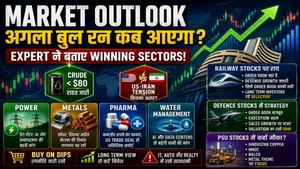 Share Market की तेज़ी बुरा फंसाएगी, बाज़ार में इन Stocks से बना लो दूरी!
 -
 Share Market में जोरदार तेजी, निफ्टी 24,200 के पार; सबसे अधिक किस शेयर में तेजी?
 -
 Trump Warning से Iran-US तनाव बढ़ा, Crude Oil में हलचल: Share Market Panic में क्या करें?
 -
 Share Market: कल की भारी गिरावट के बाद बाजार में लौटी तेजी, Sensex और Nifty में बढ़त के साथ कारोबार; आगे क्या
 -
 South Korea Market Crash: टेक शेयरों की बिकवाली से मचा हड़कंप! Bear Market में क्यों पहुंचा KOSPI?
 -
 Stock Market: शेयर बाजार में आज क्यों आई गिरावट? अमेरिका-ईरान तनाव के अलावा क्या है गिरावट की सबसे बड़ी वजहें
 -
 Sensex Outlook: सेंसेक्स 1 लाख तक पहुंचेगा या 66,000 तक गिरेगा? मॉर्गन स्टेनली ने बताए तीन बड़े अनुमान
 -
 Kalyan Jewellers Share Crash: अच्छे बिजनेस अपडेट के बावजूद 8% क्यों टूटा शेयर? जानिए पूरी वजह
 -
 Stock Market: अचानक क्यों टूटा बाज़ार? Sensex 350 प्वाइंट तो Nifty 24,450 के नीचे! जानिए 4 बड़ी वजहें
 -
 Stock Market Today: सप्ताह के पहले दिन शेयर बाजार में तेजी! आज शेयर बाजार में किसका रहा जलवा?
 -
 Stock Market में आएगा बड़ा ब्रेकआउट? 2026 के 5 सबसे दमदार सेक्टर्स!
 -
 HCL Tech Share Price: AI Deal के दम पर शेयर में 7% की तेजी, क्या आगे भी बढ़ेगा?
 -
 Share Market Today: सेंसेक्स 650 अंक उछला, निवेशकों की दौलत ₹2.43 लाख करोड़ बढ़ी, जानें तेजी की वजह
 -
 Nifty IT में 4% की तूफानी रैली! Infosys, TCS, Wipro में खरीदारी का मौका?
 -
 Vedanta Demerger के बाद धमाका: Oil & Gas में 20% की तेजी, निवेशकों की हुई चांदी
 -
 Nifty Outlook: क्या खत्म होगी गिरावट? 10 साल का Data क्या कहता है, जानें आगे की चाल
-
Block for 8 hours
-
Block for 12 hours
-
Block for 24 hours
-
Don't block

 Sign in with Google
- Male
- Female
- Others
- Under 18
- 18 to 25
- 26 to 35
- 36 to 45
- 45 to 55
- 55+