
 A Oneindia Venture


 Click it and Unblock the Notifications
Abhijit Trading Company Ltd. के अकाउंट के लिये नोट
Mar 31, 2025
14.2 No equity shares have been reserved for issue under options and contracts/ commitments for the sale of shares/ disinvestment as at the Balance Sheet date.
14.3 No equity shares have been bought back by the Company during the period of 5 years preceding the date as at which the Balance Sheet is prepared.
14.4 No securities convertible into equity shares have been issued by the Company during the year.
14.5 No calls are unpaid by any Director or Officer of the Company during the year.
14.6 Details of Shareholding of Promoters in the Company
Nature/ Purpose of each reserve
a) Securities Premium: The amount received in excess of face value of the equity shares is recognised in Securities Premium Reserve. This reserve is utilised in accordance with the provisions of the Companies Act 2013.
b) General Reserve: The reserve arises on transfer portion of the net profit to general reserve
c) Retained Earning: Generally represents the undistributed profit/amount of accumulated earnings of the company.
d) âOther Comprehensive Income (OCI) : Other Comprehensive Income (OCI) represents the balance in equity for items to be accounted under OCI and comprises of the following:
i) Equity Instruments through OCI: The Company has elected to recognise changes in the fair value of certain investment in equity instrument in other comprehensive income.
ii) Remeasurement of defined benefit obligations: The actuarial gains and losses arising on defined benefit obligations have been recognised in OCI. The amount is subsequently transferred to retained earnings as per the Schedule III requirement.
The management assessed that the fair values of cash and cash equivalents, trade ^ 2 receivables, trade payables, current borrowings, current loans and other financial '' assets & liabilities approximates their carrying amounts largely due to the short-term maturities of these instruments.
The management considers that the carrying amounts of Financial assets and
33.3 Financial liabilities recognized at nominal cost/amortised cost in the Financial statements approximate their fair values.
Non current borrowings has been contracted at floating rates of interest, which are
33.4 reset at short intervals. Fair value of floating interest rate borrowings approximates their carrying value subject to adjustments made for transaction cost.
34 Financial Risk Management
Financial management of the Company has been receiving attention of the top management of the Company. The management considers finance as the lifeline of the business and therefore, financial management is carried out meticulously on the basis of detailed management information systems and reports at periodical inte^als extending from daily reports to long-term plans. Importance is laid on liquidity and working capital management with a view to reduce over-dependence on borrowings and reduction in interest cost. Various kinds of financial risks and their mitigation plans are as follows:
34.1 Credit Risk
The credit risk is the risk of financial loss arising from counter party failing to discharge an obligation. The credit risk is controlled by analysing credit limits and credit duration for customers on continuous basis. Further, in order to manage the
34.2 Liquidity Risk
The Company determines its liquidity requirement in the short, medium and long term. This is done by drawing up cash forecast for short term and long term needs. The Company manage its liquidity risk in a manner so as to meet its normal financial obligations without any significant delay or stress. Such risk is managed through ensuring operational cash flow while at the same time maintaining adequate cash and cash equivalent position. The management has arranged for funding from banks and inter corporate and adopted a policy of managing assets with liquidity monitoring future cash flow and liquidity on a regular basis. Surplus funds not immediately required are invested in certain fixed deposits which provides flexibility to liquidate.
34.3 Market Risk
Market risk is the risk that the fair value or future cash flows of a financial instrument will fluctuate because of changes in market prices. Market risk comprises of Foreign Exchange Risk and Interest Rate Risk.
Foreign Exchange Risk
Foreign Exchange Risk is the exposure of the Company to the potential impact of the movement in foreign exchange rate. The Company does not have any material
Interest Rate Risk
Interest rate risk is the risk that the fair value or future cash flows of a financial instrument will fluctuate because of changes in market rates. The company''s exposure to the risk of changes in market interest rate relates primarily to company''s borrowing with floating interest rates. The Company do not have any significant The Company is aTso exposed to interest rate risk on surplus funds parked in loans. To manage such risks, such loans are granted for short durations with fixed interest rate in line with the expected business requirements for such funds.
37.0 ADDITIONAL REGULATORY REQUIREMENTS SCHEDULE III:
37.1 The Company do not have any Benami property, and does not have any proceeding
37.2 The Company do not have any charges or satisfaction which is yet to be registered
37.3 The Company have not traded or invested in crypto currency or virtual currency
37.4 The Company have not advanced or loaned or invested funds to any other
(a) directly or indirectly lend or invest in other persons or entities
(b) provide any guarantee, security or the like to or on behalf of the Ultimate
37.5 The Company have not received any fund from any person(s) or entity(ies), including
(a) directly or indirectly lend or invest in other persons or entities
(b) provide any guarantee, security or the like on behalf of the ultimate beneficiaries.
37.6 The Company have not any such transaction which is not recorded in the books of
37.7 The Company has not been declared as a wilful defaulter by any bank or financial
37.8 The Company does not have any transactions with Companies which are struck off.
3« Previous year figures have been reclassified/regrouped to confirm the presentation
Mar 31, 2024
(j) Provisions and Contingent Liabilities:
Provisions are recognized when the Company has a present obligation (legal or constructive) as a
result of a past event, it is probable that an outflow of resources embodying economic benefits will be
required to settle the obligation and a reliable estimate can be made of the amount of the obligation.
Provisions are measured at the best estimate of the expenditure required to settle the present
obligation at the Balance Sheet date.
If the effect of the time value of money is material, provisions are discounted to reflect its present
value using a current pre-tax rate that reflects the current market assessments of the time value of
money and the risks specific to the obligation. When discounting is used, the increase in the provision
due to the passage of time is recognized as a finance cost.
Contingent liabilities are disclosed when there is a possible obligation arising from past events, the
existence of which will be confirmed only by the occurrence or non-occurrence of one or more
uncertain future events not wholly within the control of the Company or a present obligation that
arises from past events where it is either not probable that an outflow of resources will be required to
settle the obligation or a reliable estimate of the amount cannot be made.
(k) Revenue Recognition:
Revenue from sale of goods is recognized when all the significant risks and rewards of ownership in
the goods are transferred to the buyer as per the terms of the contract, there is no continuing
managerial involvement with the goods and the amount of revenue can be measured reliably. The
Company retains no effective control of the goods transferred to a degree usually associated with
ownership and no significant uncertainty exists regarding the amount of the consideration that will be
derived from the sale of goods. Revenue is measured at fair value of the consideration received or
receivable, after deduction of any trade discounts, volume rebates and any taxes or duties collected on
behalf of the government which are levied on sales such as sales tax, value added tax, goods and
services tax, etc.
Interest income is recognized using the effective interest rate (EIR) method. Dividend income on
investments is recognized when the right to receive dividend is established.
(l) Expenditure:
Expenses are accounted on accrual basis.
(m) Income Taxes:
Income tax expense for the year comprises of current tax and deferred tax. It is recognized in the
Statement of Profit and Loss except to the extent it relates to a business combination or to an item
which is recognized directly in equity or in other comprehensive income.
Current tax is the expected tax payable/receivable on the taxable income/loss for the year using
applicable tax rates at the Balance Sheet date, and any adjustment to taxes in respect of previous years.
Interest expenses and penalties, if any, related to income tax are included in finance cost and other
expenses respectively. Interest Income, if any, related to Income tax is included in current tax
expense.
Deferred tax is recognized in respect of temporary differences between the carrying amount of assets
and liabilities for financial reporting purposes and the corresponding amounts used for taxation
purposes.
A deferred tax liability is recognized based on the expected manner of realization or settlement of the
carrying amount of assets and liabilities, using tax rates enacted, or substantively enacted, by the end
of the reporting period. Deferred tax assets are recognized only to the extent that it is probable that
future taxable profits will be available against which the asset can be utilized. Deferred tax assets are
reviewed at each reporting date and reduced to the extent that it is no longer probable that the related
tax benefit will be realized.
Current tax assets and current tax liabilities are offset when there is a legally enforceable right to set
off the recognized amounts and there is an intention to settle the asset and the liability on a net basis.
Deferred tax assets and deferred tax liabilities are offset when there is a legally enforceable right to set
off current tax assets against current tax liabilities; and the deferred tax assets and the deferred tax
liabilities relate to income taxes levied by the same taxation authority.
(n) Employee Benefits
No provision of retirement benefits of employees such as leave encashment, gratuity has been made
during the year by the company. The same shall be accounted for as and when arises.
22. Previous yearâs figures have been reworked, regrouped, & reclassified wherever necessary to confirm
to the current year presentation.
23. In the opinion of Board of Director, the current Assets, loans & advances have a value on realization
in the ordinary course of business at least equal to the amount at which these are stated.
24. The companyâs business activity falls within single primary/ secondary business segment viz.Finance
Activity. The disclosure requirement of IND AS-108âSegment Reporting âissued by the Institute of
chartered Accountants of India, therefore is not applicable.
25. The company state that one on loan given of the company in financial year 2015-16 to M/s Sunworld
Developers Pvt. Ltd amounting of Rs. 5,76,16,610/- as on 31.03.2024 has not recovered till date. The
management of the company assure full recovery in ensuing years. Hence any provision for doubtful
assets has not been made.
26. Related Party Disclosure:
As per IND AS-24, on related Party disclosure issued by the Institute of chartered Accountants of
India, The details of Such Related party transaction recognized during the year is as under:
27. Details of Policy Developed And Implemented by the Company on its Corporate Social
Responsibility Initiatives
The Company has not developed and implemented any Corporate Social Responsibility initiatives
as the said provisions are not applicable.
28. Details of Crypto / Virtual Currency
There were no Transaction and Financial Dealing in Crypto / Virtual Currency during the Financial
Year 2023-24.
30. There are no micro, Small and Medium Enterprises, to whom the Company owes dues which
outstanding for more than 45 days as at 31st March 2024. This information as required to be disclosed
under the micro, small and medium Development Act, 2006 has been determined to the extent such
parties have been identified on the basis of information available with company.
IN TERMS OF OUR REPORT OF EVEN DATE ANNEXED.
FOR GSA & ASSOCIATES LLP
(CHARTERED ACCOUNTANTS) FOR AND BEHALF OF
FRN: 000257N/N500339 ABHIJIT TRADING CO. LTD.
CA. MANINDRA K TIWARI VIRENDRA JAIN BABITA JAIN
(PARTNER) (MANAGING DIRECTOR) (DIRECTOR)
M.NO: 501419 DIN: 00530078 DIN:0560562
ARPITA AGGARWAL DHARMENDRA GUPTA
(COMPANY SECRETARY) (CFO)
M.NO:- A50493
PLACE: NEW DELHI
DATE: 23.05.2024
Disclaimer: This is 3rd Party content/feed, viewers are requested to use their discretion and conduct proper diligence before investing, GoodReturns does not take any liability on the genuineness and correctness of the information in this article
Abhijit Trading Company Ltd. पर और जानकारी
-
Abhijit Trading Company Ltd. कंपनी का विवरण
- कंपनी का प्रोफाइल
- कंपनी का इतिहास
- मैनेजमेंट टीम
- पूंजी ढांचा
- प्रॉडक्ट मिक्स
- बैंकर/ऑडीटर/रजिस्ट्रार
-
Abhijit Trading Company Ltd. मुख्य वित्तीय अनुपात
- अनुपात
-
Abhijit Trading Company Ltd. परिणाम
- तिमाही परिणाम
- छहमाही परिणाम
- नौ महीने के परिणम
- वार्षिक परिणाम
-
Abhijit Trading Company Ltd. Financial Data
- ऑडिट के परिणाम
- नकदी प्रवाह
- बैलेंस शीट
-
Abhijit Trading Company Ltd. की रिपोर्ट
- लेखा नीति
- ऑडीटर की रिपोर्ट
- निदेशक की रिपोर्ट
- खाते के लिये नोट
-
Abhijit Trading Company Ltd. कॉर्पोरेट घोषणाएं
- बुक क्लोज़र
- लाभांश
- बोर्ड की मीटिंग
-
 Stock Market Today: शेयर बाजार में डर का माहौल, रुपया रिकॉर्ड लो पर, आज सेंसेक्स-निफ्टी क्यों फिसला?
 -
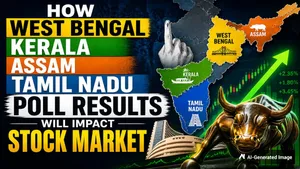 Stock Market: आज आएंगे बंगाल, असम, तमिलनाडु सहित इन राज्यों के नतीजे, शेयर बाजार में होगा बड़ा धमाका या शांति?
 -
 Share Market: मई में Share Market में गिरावट या तेजी, क्या कहता है 10 साल का ट्रेंड?
 -
 Stock Market: तेल की आग से जला शेयर बाजार! एक दिन में 9 लाख करोड़ साफ, बाजार में क्यों मचा कोहराम?
 -
 बाजार में आज सुस्त शुरुआत के संकेत! Q4 नतीजों और कच्चे तेल की चाल से बदलेगी तस्वीर
 -
 शेयर बाजार में आज जबरदस्त धमाका: सेंसेक्स-निफ्टी की रफ्तार देख निवेशक हैरान, क्या है तेजी की असली वजह?
 -
 Stock Alert: नाम में Hero, रिटर्न में Zero! बड़ी कंपनियों में कहीं डूब तो नहीं जाएगा आपका पैसा?
 -
 Stock Market Today: शेयर बाजार में हाहाकार, 3 बजते ही Sensex और Nifty 50 में धड़ाम!
 -
 Delta Corp Share Price: नतीजों का बुरा हाल, फिर भी रॉकेट बना शेयर; वजह जान हो जाएंगे हैरान!
 -
 HDFC AMC Q4 Results: मार्च तिमाही में मुनाफा घटा, रेवेन्यू बढ़ा; जानें कितनी डिविडेंड दे रही कंपनी?
 -
 Stock Market Rally: शेयर बाजार में पैसों की बारिश, निवेशक मालामाल, जानिए तेजी के पीछे की वजह
 -
 Nifty Target: शेयर बाजार को झटके पर झटका, BNP पारिबा ने घटाया Nifty का टारगेट
 -
 Stock Market Crash: 5 बड़े कारणों से शेयर बाजार में भारी गिरावट, ट्रेडिंग से पहले जान लें सच!
 -
 Stock Market Crash: तेल 100 डॉलर के पार, बाजार खुलते ही निवेशकों के लाखों डूबे, सेंसेक्स-निफ्टी धड़ाम!
 -
 भारतीय शेयर बाजार: आज ग्लोबल संकेतों से तय होगी दिशा
 -
 Share Market Update: सीजफायर से शेयर बाजार में पैसा बरसा! सेंसेक्स-निफ्टी में जोरदार उछाल
-
Block for 8 hours
-
Block for 12 hours
-
Block for 24 hours
-
Don't block

 Sign in with Google
- Male
- Female
- Others
- Under 18
- 18 to 25
- 26 to 35
- 36 to 45
- 45 to 55
- 55+