
 A Oneindia Venture


 Click it and Unblock the Notifications
Vaxfab Enterprises Ltd. के अकाउंट के लिये नोट
Mar 31, 2025
(B) Other Statutory Information
1 There are no proceedings initiated or pending against the company under Section 24 of The Prohibition of Benami Property, 1988 and rules made thereunder for holding any benami property.
2 The company has not been declared wilful defaulters by any bank or financial institution or consortium thereof in accordance with the guidelines on wilful defaulters issued by RBI.
3 The company does not have any transactions with struck off under Section 248 of the Companies Act, 2013.
4 There is no charge or satisfaction of charge which is yet to be registered with ROC beyond the statutory period.
5 The company has complied with the number of layers prescribed under Section 2(87) of the Companies Act, 2013 read with the Companies (Restriction on Number of Layers) Rules, 2017.
6 The company has not entered into any scheme of arrangement in terms of Section 230 to 237 of the Companies Act, 2013.
7 The Company has not advanced or loaned or invested funds (either borrowed funds or share premium or any other sources or kinds of funds) to any other person or entity, including foreign entities ("Intermediaries") with the understanding (whether recorded in writing or otherwise) that the intermediary shall, whether directly or indirectly lend or invest in other person / entities identified in any manner whatsoever by or on behalf of the company ("Ultimate Beneficiaries") or provide any guarantee, security or the like on behalf of Ultimate Beneficiaries.
8 The Company has not received any fund from any other person or entity, including foreign entities ("Funding Party") with the understanding (whether recorded in writing or otherwise) that the company shall directly or indirectly lend or invest in other person / entities identified in any manner whatsoever by or on behalf of the Funding Party ("Ultimate Beneficiaries") or provide any guarantee, security or the like on behalf of Ultimate Beneficiaries.
9 The company does not have any transaction not recorded in the books of accounts that has been surrendered or not disclosed as income during the year in tax assessments under the Income Tax Act, 1961.
10 The company has not traded or invested in Crypto Currency or Virtual Currency during the reporting periods.
11 The company has not been sanctioned working capital limit in form of term loans and overdraft facilities.
12 There are no immovable property in the books of the company whose title deed is not held in the name of the company.
26. Note on Audit Trail
The Company uses an accounting software for maintaining its books of account which has a feature of recording audit trail (edit log) facility and the same has operated throughout the year for all relevant transactions recorded in the accounting software. Further no instance of audit trail feature being tampered with was noted in respect of the accounting software.
27. Segment Information
Operating segments are reported in a manner consistent with the internal reporting provided to the Chief Operating Decision Maker (CODM). The CODM is considered to be the Board of Directors who makes strategic decisions and is responsible for allocating resources and assessing performance of the operating segments.
Trading in Textile is the Company''s only business segment ,hence the disclosure of segment wise information as required by Ind AS 108 on "Segment Reporting" is not applicable .
28. Recent Pronouncements
Ministry of Corporate Affairs ("MCA") notifies new standards or amendments to the existing standards under Companies (Indian Accounting Standards) Rules as issued from time to time. For the year ended March 31, 2025, MCA has notified Ind AS - 117 Insurance Contracts and amendments to Ind AS 116 - Leases, relating to sale and leaseback transactions, applicable to the Company w.e.f. April 1, 2024. The Company has reviewed the new pronouncements and based on its evaluation has determined that it does not have any significant impact in its financial statements.
29. Capital management
The Company manages its capital to ensure business continuity and maximize shareholder value by maintaining an optimal balance between debt and equity. It assesses capital needs through annual planning, funding them via equity, internal accruals, and both short- and long-term borrowings. The Company also aims to maintain a strong capital base to sustain future growth and uphold investor, creditor, and market confidence.
The Company is predominantly equity financed which is evident from the capital structure table.
30. Financial Risk Management
The Company''s principal financial liabilities, comprise loans and borrowings, trade and other payables. The main purpose of these financial liabilities is to finance the Company''s operations and to provide guarantees to support its operations. The Company''s principal financial assets include loans, trade and other receivables, and cash and cash equivalents that derive directly from its operations.
The Company''s activities expose it to a variety of financial risks: credit risk, liquidity risk and interest rate risk. The Company''s primary focus is to foresee the unpredictability of financial markets and seek to minimize potential adverse effects on its financial performance.
The Board of Directors reviews and agrees policies for managing each of these risks, which are summarised below:
A. Credit Risk
Credit risk is the risk of financial loss to the Company if a customer or counter party to a financial instrument fails to meet its contractual obligations, and arises principally from the Company''s receivables from customers and investment securities. Credit risk arises from cash held with banks and financial institutions, as well as credit exposure to clients, including outstanding accounts receivable. The maximum exposure to credit risk is equal to the carrying value of the financial assets. The objective of managing counterparty credit risk is to prevent losses in financial assets. The Company assesses the credit quality of the counter parties, taking into account their financial position, past experience and other factors.
(i) Trade and other receivables
The Company''s exposure to credit risk is influenced mainly by the individual characteristics of each customer. The demographics of the customer, including the default risk of the industry and country in which the customer operates, also has an influence on credit risk assessment. In addition, receivable balances are monitored on an ongoing basis with the result that the Company''s exposure to Bad debt is not significant. Also the Company does not enter into sales transaction with customers having credit loss history. There are no significant Credit risk with related parties of the Company. The Company''s is exposed to Credit risk in the event of non payment of customers. Credit risk concentration with respect to Trade Receivables is mitigated by the Company''s large customer base. Adequate expected credit losses are recognised as per the assessment.
(ii) Bank Deposits
The company maintains its cash and cash equivalents and bank deposits with reputed and highly rated bank. Hence, there is no significant credit risk on such deposits.
(iii) Investments
The Company limits its exposure to credit risk by generally investing in liquid securities and only with counterparties that have a good credit rating. The company does not expect any losses from non- performance by these counter-parties, and does not have any significant concentration of exposures to specific industry sectors.
Liquidity risk
Liquidity risk is the risk that the Company will not be able to meet its financial obligations as they become due. The Company manages its liquidity risk through credit limits with banks.
The Company''s corporate treasury department is responsible for liquidity, funding as well as settlement management. In addition, processes and policies related to such risks are overseen by senior management.
The management assessed that fair value of cash and short-term deposits, trade receivables, trade payables, and other current financial assets and liabilities approximate their carrying amounts largely due to the short-term maturities of these instruments.
The fair value of the financial assets and liabilities is included at the amount at which the instrument could be exchanged in a current transaction between willing parties, other than in a forced or liquidation sale.
Fair Value Hierarchy
Level 1: Level 1 hierarchy includes financial instruments measured using quoted prices. This includes listed equity instruments and mutual fund units that have a quoted price. The fair value of all equity instruments which are traded on the Stock Exchanges is valued using the closing price as at the reporting period. The mutual fund units are valued using the closing net assets value.
Level 2: The fair value of financial instruments that are not traded in an active market (for example over-the-counter derivatives) is determined using valuation techniques which maximise the use of observable market data and rely as little as possible on observable, the instrument is included in level 2.
Level 3: If one or more of the significant inputs is not based on observable market data, the instrument is included in level 3.
32. Events Occuring after the reporting period
The Company evaluates events and transactions that occur subsequent to the balance sheet date but prior to the approval of financial statements to determine the necessity for recognition and/or reporting of any of these events and transactions in the financial statements. As of the date of signing of this financial statements, there were no subsequent events to be recognised or reported that are not already disclosed.
33. Disclosure Regarding Derivative Instruments and Unhedged Foreign Currency Exposure
i) The company does not have any Foreign currency exposures which is not covered by derivative instruments or otherwise as at March 31, 2025 & March 31, 2024.
ii) The Company does not have any outstanding foreign currency derivative contracts as at March 31, 2025 & March 31, 2024 in respect of various types of derivative hedge instruments and nature of risk being hedged.
iii) The Company does not enters into derivative financial instruments such as foreign currency forward and option contracts to mitigate the risk of changes in exchange rates on foreign currency exposures.
34. The Standalone financial statements were authorized for issue in accordance with a resolution passed by the Board of Directors and are subject to final approval by its Shareholders.
The accompanying notes are an integral part of these financial statements.
Mar 31, 2024
Provisions are recognised when the Company has a present legal or constructive obligation as a
result of past events, it is probable that an outflow of resources will be required to settle the
obligation and the amount can be reliably estimated. Provisions are not recognised for future
operating losses.
Provisions are measured at the present value of management''s best estimate of the expenditure
required to settle the present obligation at the end of the reporting period.
Contingent Liabilities are disclosed in respect of possible obligations that arise from past events but
their existence will be confirmed by the occurrence or non-occurrence of one or more uncertain
future events not wholly within the control of the Company or where any present obligation cannot
be measured in terms of future outflow of resources or where a reliable estimate of the obligation
cannot be made.
7. Revenue recognition
The revenue from contract with customer is recognised upon transfer of control of promised
product o services to the customer in an amount that reflect the consideration, which the company
expect to receive in exchange of product or service. The revenue is measured based on the
transaction price, which is the consideration, adjusted for discount and other incentives if any. The
Amount of consideration to which the company expect to be entitled in exchange for transferring
promised goods or service to a customer excluding amounts collected on behalf of third parties
(Duties & Taxes on behalf of Government).
The specific recognition criteria from various steam of revenue are described as under:
(i) Sales of Goods:
Revenue from sales of the goods is recognised when the control of the goods has been
passed to the customers as per terms of agreement and there is no continuing effective
control or managerial involvement with goods.
(ii) Interest Income:
Interest income is accrued on a time basis, by reference to the principal outstanding amount
and at the effective interest rate applicable, the future cash receipt through the expected
life of the financial asset to that asset''s carrying amount on initial recognition.
8. Trade Receivable
A receivable represents the company''s right to an amount of consideration that is
unconditional i.e., only passage of time required before payment of consideration is due.
The Expected credit loss is mainly based on the historical experience. The receivables are
assessed on an individual basis for credit loss. The trade receivables are written of on cases-
to-cases basis, if deemed not to be collectable on assessment and circumstances.
9. Employee benefits
Employee''s benefit includes gratuity, compensated absences, contribution to provided fund,
employees state insurance and superannuation fund.
(i) Short-term Benefits
Employee benefit payable wholly within 12 months of rendering services are classified as
short-term employee benefit and recognised in the period which the employee renders
services. These are recognised at the undiscounted amount of the benefit expected to be
paid in exchange for those services.
(ii) Post-employment Benefit
(a) Defined contribution Plan
Retirement benefit in the form of provident fund and superannuation fund are defined
contribution schemes. The company has no obligation other than the contribution
payable to the provident fund. The company recognises contribution payable to such
funds as expenditure, when an employee renders services.
(b) Defined Benefit Plans
The company operates a defined benefit gratuity plan. The cost of providing benefit
under the defined benefit plan is determined based un actuarial valuation, carried out
by an independent actuary.
Remeasurement gains or losses arising from changes in actuarial assumptions, the same
are recognised immediately in balance sheet through other comprehensive income in
the period in which they occurred.
(c) Other Long-term employee Benefits
Other long-term employee benefits include compensated absences / leaves. The
actuarial valuation is done as per projected unit method. Remeasurement gains or losses
arising from changes in actuarial assumptions, the same are recognised immediately in
balance sheet through other comprehensive income in the period in which they
occurred.
(d) For the purpose of the presentation of the defined benefit plans and other long-term
benefits, the allocation between current and noncurrent provision has been made as
determined by the actuary.
10. Foreign currency translation
a) Functional and presentation currency
The financial statements are presented in Indian rupee (INR), which is Company''s functional and
presentation currency.
Transactions in foreign currencies are recognised at the prevailing exchange rates on the transaction
dates. Realised gains and losses on settlement of foreign currency transactions are recognised in the
Statement of Profit and Loss.
Monetary foreign currency assets and liabilities at the year-end are translated at the year-end
exchange rates and the resultant exchange differences are recognised in the Statement of Profit and
Loss.
11. Earnings Per Share
Basic earnings per share (EPS) are computed by dividing the profit or loss attributable to the equity
shareholders of the company by the weighted average number of equities shares outstanding during
the year.
Diluted earnings per share is computed by adjusting the profit or loss attributable to the ordinary
equity shareholders and the weighted average number of equity shares, for the effects of all diluted
potential equity shares.
12. Government Grants
Grants from the government are recognised at their fair value where there is reasonable assurance
that the grant will be received and the Company will comply with all attached conditions.
Government grants relating to the purchase of property, plant and equipment are included in non¬
current liabilities as deferred income and are credited to Profit and Loss on a straight - line basis
over the expected lives of related assets and presented within other income.
13. Cash and Cash Equivalents
The Company considers all highly liquid financial instruments, which are readily convertible into
known amounts of cash that are subject to an insignificant risk of change in value and having original
maturities of three months or less from the date of purchase, to be cash equivalents. Cash and cash
equivalents consist of balances with banks which are unrestricted for withdrawal and usage.
14. Income tax
The income tax expense or credit for the period is the tax payable on the current period''s taxable
income based on the applicable income tax rate adjusted by changes in deferred tax assets and
liabilities attributable to temporary differences and to unused tax losses.
Deferred income tax is provided in full, using the liability method on temporary differences arising
between the tax bases of assets and liabilities and their carrying amount in the financial statement.
Deferred income tax is determined using tax rates (and laws) that have been enacted or substantially
enacted by the end of the reporting period and are expected to apply when the related deferred
income tax assets is realised or the deferred income tax liability is settled.
Deferred tax assets are recognised for all deductible temporary differences and unused tax losses,
only if, it is probable that future taxable amounts will be available to utilise those temporary
differences and losses.
Deferred tax assets and liabilities are offset when there is a legally enforceable right to offset current
tax assets and liabilities and when the deferred tax balances relate to the same taxation authority.
Current tax assets and tax liabilities are off set where the Company has a legally enforceable right
to offset and intends either to settle on a net basis, or to realize the asset and settle the liability
simultaneously.
Current and deferred tax is recognised in the Statement of Profit and Loss, except to the extent that
it relates to items recognised in other comprehensive income or directly in equity. In this case, the
tax is also recognised in other comprehensive income or directly in equity, respectively.
Other disclosures forming part of the standalone Ind AS Financial Statements
28. Financial Instruments - Disclosure
Financial assets and financial liabilities are recognized when Company becomes a party to the
contractual provisions of the instruments. Financial assets and financial liabilities are initially
measured at fair value. Transaction costs that are directly attributable to the acquisition or issue of
financial assets and financial liabilities (other than financial assets and financial liabilities at fair value
through profit or loss) are added to or deducted from the fair value of the financial assets or financial
liabilities, as appropriate, on initial recognition. Transaction costs directly attributable to the
acquisition of financial assets or financial liabilities at fair value through profit or loss are recognized
immediately in the Statement of Profit and Loss.
(i) Capital management
The Company''s objective when managing capital is to:
- Safeguard its ability to continue as going concern so that the company is able to provide
maximize return to stakeholders and benefits for other stakeholders.
- Maintain an optimal capital structure to reduce the cost of capital.
The company board of directors reviews the capital structure on a regular basis. As part of this
review, the board considers cost of capital, risk associated with each class of capital
requirements and maintenance of adequate liquidity.
Disclosures
This section gives an overview of the significance of financial instruments for the company and
provides additional information on balance sheet item that contain financial instruments. The
details of significant accounting policies, including the criteria for recognition, the basis of
measurement and the basis on which income and expenses are recognized in respect of each
class of financial asset, financial liability and equity instrument are disclosed in notes.
The carrying amount of current financial assets and liabilities as at the end of each year
presented approximate the fair value because of their short-term nature. The trade
receivables, trade payables, borrowings, capital creditors and cash and cash equivalents are
considered to be the same as their fair values, due to their short-term nature.
(ii) Fair value measurements
This note provides information about how the company determines fair value of various
financial assets. Management considers that the carrying amounts of financial assets and
financial liabilities recognized in the financial statements approximate their fair values.
(iii) Fair value hierarchy
The fair value hierarchy is based on inputs to valuation techniques that are used to measure
fair value that are either observable or unobservable and consists of the following three
levels:
Level 1: Inputs are quoted prices in active markets for identical assets or liabilities.
Level 2: Inputs are other than quoted price included within level 1 that are observable for
the asset or liability, either directly or indirectly.
Level 3: Inputs are not based on observable market data. Fair values are determined in
whole or in part using a valuation model based on the assumptions that are neither
supported by prices from observable current market transactions in the same instrument
nor are they based on available market data
1. The Company did not have any long-term contracts, including derivatives contract for which there were
any material foreseeable losses.
29. Financial Risk Management Framework
The company''s principal financial liabilities, comprise loans and borrowings, trade and other
payables. The main purpose of these financial liabilities is to finance the company''s operations. The
company''s principal financial assets include trade and other receivables, receivables from
government authorities, security deposits and cash and cash equivalents that derive directly from
its operations. The company also holds investments. The corporate treasury function provides
services to the business, co-ordinates access to domestic and international financial markets,
monitors and manages the financial risks relating to the operations of the company through internal
risk reports which analyse exposures by degree and magnitude of risks. These risks include market
risk (including currency risk, interest rate risk and other price risk), credit risk and liquidity risk.
The company seeks to minimise the effects of these risks by using derivative financial instruments
to hedge risk exposures. The company does not enter into or trade financial instruments, including
derivative financial instruments, for speculative purposes.
The Corporate Treasury function reports quarterly to the Board of Directors of the company for
monitoring risks and reviewing policies implemented to mitigate risk exposures.
Market Risk
Market risk is the risk that the fair value or future cash flows of a financial instrument will fluctuate
because of changes in market prices. Market risk comprises two types of risk: currency risk and
interest rate risk. Financial instruments affected by market risk include loan and borrowings. The
objective of market risk management is to manage and control market risk exposures within
acceptable parameters, while optimising the return. All such transactions are carried out within the
guidelines set by the Board of Directors and Risk Management Committee. There have been no
significant changes to the company''s exposure to market risk or the methods in which they are
managed or measured.
Currency Risk
Foreign currency risk is the risk that the fair value or future cash flows of an exposure will fluctuate
because of changes in foreign exchange rates. The company undertakes transactions denominated
in foreign currencies; consequently, exposures to exchange rate fluctuations arise. The company''s
exposure to currency risk relates primarily to the company''s operating activities and borrowings
when transactions are denominated in a different currency from the company''s functional currency.
The company manages its foreign currency risk by hedging transactions that are expected to occur
within a maximum 12-month period for hedges of forecasted sales and borrowings.
Price Risk
The Company''s investments in listed securities, mutual funds, other funds and debentures are
susceptible to market price risk arising from uncertainties about future values of the investment
securities. The Company manages the price risk through diversification and by placing limits on
individual and total equity instruments. Reports on the portfolio are submitted to the Company''s
senior management on a regular basis.
Interest Rate Risk
Interest rate risk is the risk that the fair value or future cash flows of a financial instrument will
fluctuate because of changes in market interest rates. The company''s exposure to the risk of
changes in market interest rates relates primarily to the company''s long-term debt obligations with
floating interest rates. The loans advanced as at March 31, 2024 is Rs. 9984000 (previous year Rs.
9984000) which are interest bearing and interest rates are variable.
Liquidity risk
i. Liquidity risk management
The company''s objective is to maintain optimum levels of liquidity to meet its cash and
collateral requirements at all times. The Chief Financial Officer of the company is
responsible for liquidity risk management who has established an appropriate liquidity risk
management framework for the management of the company''s short, medium and long¬
term funding and liquidity management requirements. The company manages liquidity risk
by maintaining adequate reserves, banking facilities and reserve borrowing facilities, by
continuously monitoring forecast and actual cash flows, and by matching the maturity
profiles of financial assets and liabilities. The Chief Financial Officer reports the same to the
Board of Directors on quarterly basis.
30. Previous year figures have been regrouped, whenever necessary to confirm to current year
classification.
31. The financial statements were authorized for issue in accordance with a resolution passed by the
Board of Directors on 15th May, 2024. The financial statements as approved by the Board of
Directors are subject to final approval by its Shareholders.
32. Wilful Defaulter:
The Company has not been declared as Wilful Defaulter by any Bank or Financial Institutions or
Government or any Government Authority.
33. Compliance with number of layers of companies:
The Company does not have any Subsidiary Company.
34. Events Occurring After Balance - Sheet
The Company evaluates events and transactions that occur subsequent to the balance sheet date
but prior to the approval of financial statements to determine the necessity for recognition and/or
reporting of any of these events and transactions in the financial statements. As of 15th May, 2024
there were no subsequent events to be recognised or reported that are not already disclosed."
35. Other statutory disclosures
⢠The company do not have any Benami property, where any proceeding has been initiated or
pending against the company for holding any Benami property.
⢠The company has not carried out any revaluation of its Property, Plant and Equipment.
⢠The company holds all properties in its own name
⢠The company do not have any transactions with struck off companies.
⢠The company do not have any charges or satisfaction which is yet to be registered with ROC
beyond the statutory period
⢠The company have not traded or invested in Crypto currency or Virtual Currency during the year
⢠The company have not any such transaction which is not recorded in the books of accounts that
has been surrendered or disclosed as income during the year in the tax assessments under the
Income Tax Act, 1961 (such as, search or survey or any other relevant provisions of the Income
Tax Act, 1961.
⢠The company have not received any fund from any person(s) or entity(ies), including foreign
entities (Funding Party) with the understanding (whether recorded in writing or otherwise) that
the company shall:
- directly or indirectly lend or invest in other persons or entities identified in any manner
whatsoever by or on behalf of the Funding Party (Ultimate Beneficiaries) or
- provide any guarantee, security or the like on behalf of the Ultimate Beneficiaries,
⢠The company have not advanced or loaned or invested funds to any other person(s) or
entity(ies), including foreign entities (Intermediaries) with the understanding that the
Intermediary shall:
- directly or indirectly lend or invest in other persons or entities identified in any manner
whatsoever by or on behalf of the company (Ultimate Beneficiaries) or
- provide any guarantee, security or the like to or on behalf of the Ultimate Beneficiaries
As per our Report of even date attached For and on behalf of the Board of
directors of Vaxfab Enterprises Limited
FOR S S R V & Associates
Firm Registration No. 135901W.
Vishnu Kant Kabra ROHIT NAVAL KESHAV MAKHIJA
Partner Managing Director DIRECTOR
M. No.: 403437. DIN 10542718 DIN 10542719
UDIN: 24403437BKAJHX7709
PLACE: MUMBAI
DATE :- 15-05-2024 DISHA JAY BAROT MUKESHKAPURIYA
CS CFO
Disclaimer: This is 3rd Party content/feed, viewers are requested to use their discretion and conduct proper diligence before investing, GoodReturns does not take any liability on the genuineness and correctness of the information in this article
Vaxfab Enterprises Ltd. पर और जानकारी
-
Vaxfab Enterprises Ltd. टूल
- बल्क डील
-
Vaxfab Enterprises Ltd. कंपनी का विवरण
- कंपनी का प्रोफाइल
- कंपनी का इतिहास
- मैनेजमेंट टीम
- पूंजी ढांचा
- प्रॉडक्ट मिक्स
- बैंकर/ऑडीटर/रजिस्ट्रार
-
कंपनी का इतिहास
- अधिकार
- बीएसई मूल्य इतिहास
-
Vaxfab Enterprises Ltd. मुख्य वित्तीय अनुपात
- अनुपात
-
Vaxfab Enterprises Ltd. परिणाम
- तिमाही परिणाम
- छहमाही परिणाम
- नौ महीने के परिणम
- वार्षिक परिणाम
-
Vaxfab Enterprises Ltd. Financial Data
- ऑडिट के परिणाम
- नकदी प्रवाह
- बैलेंस शीट
-
Vaxfab Enterprises Ltd. की रिपोर्ट
- लेखा नीति
- ऑडीटर की रिपोर्ट
- निदेशक की रिपोर्ट
- खाते के लिये नोट
-
Vaxfab Enterprises Ltd. कॉर्पोरेट घोषणाएं
- बुक क्लोज़र
- बोर्ड की मीटिंग
- नाम में परिवर्तन
-
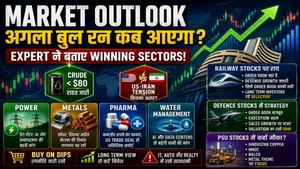 Share Market की तेज़ी बुरा फंसाएगी, बाज़ार में इन Stocks से बना लो दूरी!
 -
 Share Market में जोरदार तेजी, निफ्टी 24,200 के पार; सबसे अधिक किस शेयर में तेजी?
 -
 Trump Warning से Iran-US तनाव बढ़ा, Crude Oil में हलचल: Share Market Panic में क्या करें?
 -
 Share Market: कल की भारी गिरावट के बाद बाजार में लौटी तेजी, Sensex और Nifty में बढ़त के साथ कारोबार; आगे क्या
 -
 South Korea Market Crash: टेक शेयरों की बिकवाली से मचा हड़कंप! Bear Market में क्यों पहुंचा KOSPI?
 -
 Stock Market: शेयर बाजार में आज क्यों आई गिरावट? अमेरिका-ईरान तनाव के अलावा क्या है गिरावट की सबसे बड़ी वजहें
 -
 Sensex Outlook: सेंसेक्स 1 लाख तक पहुंचेगा या 66,000 तक गिरेगा? मॉर्गन स्टेनली ने बताए तीन बड़े अनुमान
 -
 Kalyan Jewellers Share Crash: अच्छे बिजनेस अपडेट के बावजूद 8% क्यों टूटा शेयर? जानिए पूरी वजह
 -
 Stock Market: अचानक क्यों टूटा बाज़ार? Sensex 350 प्वाइंट तो Nifty 24,450 के नीचे! जानिए 4 बड़ी वजहें
 -
 Stock Market Today: सप्ताह के पहले दिन शेयर बाजार में तेजी! आज शेयर बाजार में किसका रहा जलवा?
 -
 Stock Market में आएगा बड़ा ब्रेकआउट? 2026 के 5 सबसे दमदार सेक्टर्स!
 -
 HCL Tech Share Price: AI Deal के दम पर शेयर में 7% की तेजी, क्या आगे भी बढ़ेगा?
 -
 Share Market Today: सेंसेक्स 650 अंक उछला, निवेशकों की दौलत ₹2.43 लाख करोड़ बढ़ी, जानें तेजी की वजह
 -
 Nifty IT में 4% की तूफानी रैली! Infosys, TCS, Wipro में खरीदारी का मौका?
 -
 Vedanta Demerger के बाद धमाका: Oil & Gas में 20% की तेजी, निवेशकों की हुई चांदी
 -
 Nifty Outlook: क्या खत्म होगी गिरावट? 10 साल का Data क्या कहता है, जानें आगे की चाल
-
Block for 8 hours
-
Block for 12 hours
-
Block for 24 hours
-
Don't block

 Sign in with Google
- Male
- Female
- Others
- Under 18
- 18 to 25
- 26 to 35
- 36 to 45
- 45 to 55
- 55+