
 A Oneindia Venture


 Click it and Unblock the Notifications
Hilton Metal Forging Ltd. के अकाउंट के लिये नोट
Mar 31, 2025
n) Provisions and contingencies
The Company recognizes provisions when there is a present obligation (legal or constructive) as a result
of a past event, that probably requires an outflow of resources and reliable estimate can be made of the
amount of the obligation.
A disclosure for contingent liabilities is made where there is possible obligation that arises from past
events and whose existence will be confirmed only by the occurrence or non-occurrence of one or more
uncertain future events not wholly within the control of the entity; or
A present obligation that arises from past events but is not recognized because:
i. It is not probable that an outflow of resources embodying economic benefits will be required to settle
the obligation; or
ii. The amount of the obligation cannot be measured with sufficient reliability.
A contingent asset is a possible asset that arises from past events and whose existence will be confirmed
only by the occurrence or non-occurrence of one or more uncertain future events not wholly within the
control of the entity. Commitments include the amount of purchase order (net of advances) issued to
parties for completion of assets. Provisions, contingent liabilities, contingent assets and commitments are
reviewed at each reporting period. Provisions for onerous contracts are recognized when the expected
benefits to be derived by the Company from a contract are lower than the unavoidable costs of meeting
the future obligations under the contract.
o) Financial instruments
The company enters into foreign exchange forward contracts to manage its foreign exchange rate risk.
Derivatives are initially recognised at fair value at the end of each reporting period. The resulting gain or
loss is recognized in statement of profit and loss immediately.
Financial assets and financial liabilities are recognised when Company becomes a party to the contractual
provisions of the instruments. Financial assets and financial liabilities are initially measured at fair value.
Transaction costs that are directly attributable to the acquisition or issue of financial assets and financial
liabilities (other than financial assets and financial liabilities at fair value through profit or loss) are
added to or deducted from the fair value of the financial assets or financial liabilities, as appropriate, on
initial recognition. Transaction costs directly attributable to the acquisition of financial assets or financial
liabilities at fair value through profit or loss are recognised immediately in Statement of Profit and Loss.
p) Financial assets
i. Recognition and Initial measurement
Financial assets are recognised when the company becomes a party to the contractual provisions of the
instruments. Financial assets other than trade receivables are initially recognised at fair value plus
transaction costs for all financial assets not carried at fair value through profit or loss. Financial assets
carried at fair value through profit or loss is initially recognised at fair value and transaction costs are
expensed in the Statement of Profit and Loss.
ii) Subsequent measurement
Financial assets, other than equity instruments, are subsequently measured at amortised cost, fair
value through other comprehensive income or fair value through profit or loss on the basis of both:
(i) The entityâs business model for managing the financial assets and
(ii) The contractual cash flow characteristics of the financial asset.
iii) Classification of financial assets
Debt Instruments
Debt instruments that meet the following conditions are subsequently measured at amortised cost
(except for debt instruments that are designated at fair value through profit or loss on initial recognition);
(a) The asset is held within a business model whose objective is to hold assets in order to collect
contractual cash flows; and
(b) The contractual terms of the instrument give rise on specified dates to cash flows that are solely
payments of principal and interest on the principal amount outstanding.
Interest income is recognised in Statement of Profit and Loss for FVTOCI debt instruments. For the
purposes of recognising foreign exchange gains and losses, FVTOCI debt instruments are treated as
financial assets measured at amortised cost. Thus, the exchange differences on the amortised cost are
recognised in Statement of Profit and Loss and other changes in the fair value of FVTOCI financial
assets are recognised in other comprehensive income and accumulated under the heading of ''Reserve
for debt instruments through other comprehensive income''. When the investment is disposed of, the
cumulative gain or loss previously accumulated in this reserve is reclassified to Statement of Profit
and Loss. All other financial assets are subsequently measured at fair value.
q) Financial liabilities and equity instruments
i) Classification as debt or equity
Debt and equity instruments issued by a Company entity are classified as either financial liabilities or
as equity in accordance with the substance of the contractual arrangements and the definitions of a
financial liability and an equity instrument.
ii) Equity instruments
An equity instrument is any contract that evidences a residual interest in the assets of an entity after
deducting all of its liabilities. Equity instruments issued by a Company entity are recognised at the
proceeds received, net of direct issue costs. Repurchase of the Company''s own equity instruments is
recognised and deducted directly in equity. No gain or loss is recognised in Statement of Profit and
Loss on the purchase, sale, issue or cancellation of the Company''s own equity instruments.
iii) Financial liabilities
All Financial liabilities are measured at amortized cost using effective interest method or fair value
through profit and loss. However, financial liabilities that arise when a transfer of a financial asset
does not qualify for de-recognition or when the continuing involvement approach applies, financial
guarantee contracts issued by the Company, and commitments issued by the Company to provide a
loan at below-market interest rate are measured in accordance with the specific accounting policies
set out below;
(a) Amortized Cost
Financial liabilities are classified as financial liabilities at amortised cost by default. Interest
expenses calculated using effective interest rate method is recognised in the statement in profit and
loss.
(b) Financial liabilities at FVTPL
Financial liabilities are classified as FVTPL if it is held for trading, or is designated as such on initial
recognition. Changes in fair value and interest expenses on these liabilities are recognised in the
statement of profit and loss
(c) De-recognition of financial liabilities
The Company derecognises financial liabilities when, and only when, the Company''s obligations
when, and only when, the Companyâs obligations are discharged, cancelled or have expired.
c. Term/ Right Attached to Equity Share
The company has only one class of equity shares having a per value of Rs. 10 per share. Each share of Equity
shares is entitled to one vote per share. In the event of liquidation of the company, the holders of equity shares
will be receive remaining assets of the company, after distribution of all preferential amount. The distribution will
be in proportion to the number of equity shares held by the shareholders.
Money received agianst Share Warrants represents amounts received towards share warrants which entitles the
warrant holders the option to apply for and be allotted equivalent number of equity shares of the face value of
Rs. 10/ each.
During financial year, the Company has converted 24,00,000 share warrant into equity shares of face value
Rs. 10/- each to certain parties under preferential allotment as approved by the shareholders in accordance with
Chapter V of the Securities and Exchange Board of India (issue of Capital and Disclosure Requirements)
Regulations, 2018. The Equity Shares were issued @ Rs. 55/- per Equity Share (including a share premium of
Rs. 45/- per share).
Based on the guiding principles given in Ind AS 108 on ''Operating Segments'', the Company''s business activity falls
within a single operating segment, namely Manufacturing of Steel Forgings, Flanges and Forged Fittings for oil &
gas industry, Petrochemicals and refineries industry. Accordingly, the disclosure requirements of Ind AS Railways
108 are not applicable.
Note 32 - Gratuity
The company operates one-defined plans, viz., gratuity Under the gratuity plan, every employee who has
completed atleast five years of service gets a gratuity on departure @ 15 out of 26 days of salary for year of
service. The gross obligation toward the gratuity at the end of the year on is Rs.103.92 Lacs (previous year, Rs.
93.50 Lacs).
Foreign currency exposure that are not hedge by derivative instruments as on 31st March, 2025 is USD $ 2,46,637
& Euro (â¬) 62,689 [previous year USD $ 349,563 & Euro (â¬) 55,250]. The unhedged exposure are naturally
hedged by foreign currency earings and earnings linked to foreign currency.
Note 37 - Financial Risk Management Objectives And Policies
The Company''s principal financial assets include trade & other receivables, and cash & cash equivalents that
derives directly from its operations. The Company''s principal financial liabilities comprise trade & other payables
and short term borrowings. The main purpose of majority of these financial liabilities is to manage working
capital of the Company.
The Company is exposed to credit risk, market risk and liquidity risk. The Company''s senior management
oversees the management of these risks. The Company''s financial risk activities are governed by appropriate
policies and procedures and financial risks are identified, measured and managed in accordance with the
Company''s policies and risk objectives. The below note explains the sources of risk which the Company is exposed
to and how the entity manage the risk :
A) Credit Risk
Credit risk is the risk that counterparty will not meet its obligations under a financial instrument or customer
contract, leading to a financial loss. The Company is exposed to credit risk from its operating activities
(primarily trade receivables) and from its investing activities, primarily cash & cash equivalents.
i) Trade receivables
Customer credit risk is managed in accordance with the Company''s established policy, procedures and
controls relating to customer credit risk management. Credit quality of a customer is assessed based on
individual credit limits are defined in accordance with this assessment. Outstanding customer receivables
are regularly monitored through credit lock and release effectively manage the exposure.
An impairment analysis is performed at each reporting date on an individual basis for major customers. In
addition,a large number of minor receivables are grouped into homogenous groups and assessed for
impairment collectively. The calculation is based on historical data. The Company does not hold any
collateral as security. The Company evaluates the concentration of risk with respect to trade receivables as
low, as most of its external customers are established players in their industry.
The Company determines the allowance for credit losses based on historical loss experience adjusted to
reflect current and estimated future economic conditions. The Company considered current and
anticipated future economic conditions relating to industries the Company deals with and the countries
where it operates. In calculating expected credit loss, the Company has also considered related credit
information for its customer, that''s available in public domain to estimate the probability of default in
future and has taken into account estimates of possible effect from the global situations.
ii) Cash and Cash equivalents and Other financial assets
Credit risk from balances with banks is managed by the Board of Directors in accordance with the Company''s
policy. Investment of surplus funds are made for short-term in deposit with banks. Investments and Bank
deposits are reviewed by the Board of Directors on a quarterly basis. Credit risk arising from short term liquid
fund, cash and cash equivalents and other balances with banks is limited and no collaterals are held against
these because the counterparties are banks.
Other financial assets mainly include security deposits & other receivables. There are no indications that
defaults in payment obligations would occur in respect of these financial assets.
B) Market Risk
Market risk is the risk that the fair value of future cash flows of a financial instrument will fluctuate because of
changes in market prices. The Company is exposed to different types of market risks. For the Company, the
market risk is the possibility of changes in foreign currency exchange rates and commodity prices which may
affect the value of the Company''s financial assets, liabilities or expected future cash flows.
i) Commodity Risk
Commodity risk for the Company is mainly related to fluctuations in steel prices which drives the prices of
billet, steel bars, and tubes. Since, steel is the primary input materials for making of forging, which are
used in manufacturing the final products, any fluctuation in steel prices can lead to drop in operating
margin. Most of these input materials are procured from approved vendors and subject to price
negotiations. In order to mitigate the risk associated with raw material and components prices, the
Company manages its procurement through productivity improvements, expanding vendor base and
constant pricing negotiation with vendors. The Company renegotiates the prices with its customers in case
there is more than normal deviation in the prices of its major raw materials. Additionally, the processes
and policies related to such risks are reviewed and controlled by senior management team.
ii) Foreign currency risk
Foreign currency risk is the risk that the fair value or future cash flows of an exposure will fluctuate
because of changes in foreign exchange rates. The risk of fluctuations in foreign currency exchange rates
on its financial liabilities including trade and other payables etc., which are mainly in US Dollars are
mitigated through the natural hedge alignment, as Company''s export sales are predominantly in US dollars
and such economic exposure through trade and other receivables in US dollars provide natural alignment.
Hence, a reasonable variation in the Foreign exchange rate would not have much impact on the profit or
loss / equity of the Company. Net foreign currency exposure also reviewed by the Board of Directors on a
quarterly basis.
Foreign currency sensitivity analysis
The Company is exposed to the currencies USD & EURO on account of outstanding receivables ( ) and
payables (-). The Company''s net exposure to foreign currency risk at the end of the reporting period
expressed in respective currencies given below;
Foreign currency exposure that are not hedge by derivative instruments as on 31st March, 2025 is
USD $ 1,20,172.63 & Euro (â¬) 55,249 [previous year USD $ 349,563 & Euro (â¬) 55,250]. The unhedged
exposure are naturally hedged by foreign currency earings and earnings linked to foreign currency.
C) Liquidity risk
Liquidity risk is defined as a risk that the Company will not be able to meet its obligations on time or at a
reasonable price. An effective liquidity risk management takes into consideration in maintaining optimum
level of cash and cash equivalents and the availability of funding through an credit facilities at a reasonable
cost to meet the obligation when due. Additionally, the processes and policies related to such risks are
reviewed and controlled by senior management team. Management continuously reviews the actual cash flows
and forecasts the expected cash flows to monitor the liquidity position. All the current financial liabilities of
the Company are due to be paid with in twelve months from the date from the Balance sheet date. All
non-current financial liabilities are due to be paid in more than twelve months from the Balance sheet date.
However the interest component of all the non-current financial liabilities if any will be payable as and when
due, which may be with in twelve months from the date of Balance sheet date.
Note 39 - Details of dues to micro, small and medium enterprises as defined under the MSMED Act, 2006
Dues to micro, small and medium enterprises as defined under MSMED Act, 2006, the company has not made
interest provision on late payment to creditors, due to the negotiation on the accepted date, under the said act as
per the applicable provisions of the law in respect to the extent of such parties have been identified on the basis of
information collected by the Management. Further the company has not received intimation from every
"suppliers" regarding their status under the Micro, Small and Medium Enterprises Development Act, 2006 and
hence disclosure, if any, relating to amounts unpaid as at the year end together with interest paid/payable as
required under the said Act have not been given.
Note 40 - Deferred tax
Deferred tax is calculated in temporary differences between accounting and tax values as well as any tax losses
carried forward at the year-end. Net deferred tax assets are recognized only to the extent that it is probable they
will be utilized against future taxable profits.
Note 41 - Out of the total debtors of Rs.4882.01 Lakhs As at March 31, 2025, Rs.961.95 Lakhs has more than one
year at the year end. For this the management is in discussion with these debtors to expedite the recoverability of
the above aforesaid outstanding amounts and believes that the entire amount is fully recoverable. In view of the
forgoing, no provision is considered necessary in these financial statements in this regard.
Note 42 - Other Statutory Information
a. The Company does not have any Benami property, where any proceeding has been initiated or pending
against the Group for holding any Benami property.
b. The Company does not have any transactions with struck off companies.
c. The Company has not traded or invested in Crypto currency or Virtual Currency during the financial year.
d. The Company does not have any such transaction which is not recorded in the books of accounts that has
been surrendered or disclosed as income during the year in the tax assessments under the Income Tax Act,
1961 (such as, search or survey or any other relevant provisions of the Income Tax Act, 1961.
e. The Company has not been declared wilful defaulter by any bank or financial institution or government or
any government authority
f. The Company has complied with the number of layers prescribed under the Companies Act, 2013.
Note 43 - The figures for the corresponding previous year have been regrouped/ reclassified wherever necessary,
to make them comparable.
As per our report of even date For and on Behalf of Board of
For: Anil Bansal & Associates Hilton Metal Forging Limited
Chartered Accountants
Firm registration number:100421W
Anil Bansal Yuvraj Malhotra Mohak Malhotra
Partner Chairman/Managing Director CFO
Membership no. 043918 (DIN-00225156) (DIQPM6990E)
Place : Mumbai Richa Pankaj Shah
Date : 30-05-2024 Company Secretary
(DERPS1049D)
Mar 31, 2024
c. Term/ Right Attached to Equity Share
The company has only one class of equity shares having a per value of Rs. 10 per share. Each share of Equity shares is entitled to one vote per share. In the event of liquidation of the company, the holders of equity shares will be receive remaining assets of the company, after distribution of all preferential amount. The distribution will be in proportion to the number of equity shares held by the shareholders.
Money received agianst Share Warrants represents amounts received towards share warrants which entitles the warrant holders the option to apply for and be allotted equivalent number of equity shares of the face value of Rs. 10/ each.
During the financial year, the Company has issued on preferential basis 2,700,000 share warrants at a price of Rs. 55.00 each entitling them for subscription of equivalent number of Equity Shares of Rs. 10/- each (including premium of Rs. 45/- each Share) under Regulation 28(1) of the SEBI (LODR) Regulations, 2015. The holder of the share warrants would need to exercise the option to subscribe to equity shares before the expiry of 18 months from the date of allotment made on 04th April, 2023 upon payment of the balance 75% of the consideration of share warrants.
Further during the year the Group has not excercised the option to convert the warrants into equity shares.
In previous year 2022-23, total 2556984 share warrants converted into 2,556,984 equity shares.
e. Issue of shares under right issue
F.Y.2023-24
During the financial year The Company has not issued equity shares under right issues.
F.Y.2022-23
The Company had, issued 60,00,000 equity shares of face value of Rs. 10/- each (''Rights Equity Sharesâ) to the Eligible Equity Shareholders at an issue price of Rs. 55 per Rights Equity Share (including premium of Rs. 45 per Rights Equity Share). The rights were offered in ratio of 2:5.
Based on the guiding principles given in Ind AS 108 on ''Operating Segments'', the Company''s business activity falls within a single operating segment, namely Manufacturing of Steel Forgings, Flanges and Forged Fittings for oil & gas industry, Petrochemicals and refineries industry. Accordingly, the disclosure requirements of Ind AS 108 are not applicable.
The company operates one-defined plans, viz., gratuity Under the gratuity plan, every employee who has completed atleast five years of service gets a gratuity on departure @ 15 out of 26 days of salary for year of service. The gross obligation toward the gratuity at the end of the year on is Rs.93.50 Lacs (previous year, Rs. 86.33 Lacs).
The benefits are governed by the companys Leave Policy. The gross obligation toward the Leave Benefit at the end of the year on is Rs. 6.90 Lacs (previous year, Rs. 6.90 Lacs).
Foreign currency exposure that are not hedge by derivative instruments as on 31st March, 2024 is USD $ 349,563 & Euro (â¬) 55,250 [previous year USD $ 1,056,502 & Euro (â¬) Nil]. The unhedged exposure are naturally hedged by foreign currency earings and earnings linked to foreign currency.
The management has assessed that the carrying values of the Financial Assets and Liabilities at amortised cost approximate their fair value largely due to their short-term maturities of these instruments.
Note 38 - Financial Risk Management Objectives And Policies
The Company''s principal financial assets include trade & other receivables, and cash & cash equivalents that derives directly from its operations. The Company''s principal financial liabilities comprise trade & other payables and short term borrowings. The main purpose of majority of these financial liabilities is to manage working capital of the Company.
The Company is exposed to credit risk, market risk and liquidity risk. The Company''s senior management oversees the management of these risks. The Company''s financial risk activities are governed by appropriate policies and procedures and financial risks are identified, measured and managed in accordance with the Company''s policies and risk objectives. The below note explains the sources of risk which the Company is exposed to and how the entity manage the risk :
Credit risk is the risk that counterparty will not meet its obligations under a financial instrument or customer contract, leading to a financial loss. The Company is exposed to credit risk from its operating activities (primarily trade receivables) and from its investing activities, primarily cash & cash equivalents.
Customer credit risk is managed in accordance with the Company''s established policy, procedures and controls relating to customer credit risk management. Credit quality of a customer is assessed based on individual credit limits are defined in accordance with this assessment. Outstanding customer receivables are regularly monitored through credit lock and release effectively manage the exposure.
An impairment analysis is performed at each reporting date on an individual basis for major customers. In addition, a large number of minor receivables are grouped into homogenous groups and assessed for impairment collectively. The calculation is based on historical data. The Company does not hold any collateral as security. The Company evaluates the concentration of risk with respect to trade receivables as low, as most of its external customers are established players in their industry.
The Company determines the allowance for credit losses based on historical loss experience adjusted to reflect current and estimated future economic conditions. The Company considered current and anticipated future economic conditions relating to industries the Company deals with and the countries where it operates. In calculating expected credit loss, the Company has also considered related credit information for its customer, that''s available in public domain to estimate the probability of default in future and has taken into account estimates of possible effect from the global situations.
ii) Cash and Cash equivalents and Other financial assets
Credit risk from balances with banks is managed by the Board of Directors in accordance with the Company''s policy. Investment of surplus funds are made for short-term in deposit with banks. Investments and Bank deposits are reviewed by the Board of Directors on a quarterly basis. Credit risk arising from short term liquid fund, cash and cash equivalents and other balances with banks is limited and no collaterals are held against these because the counterparties are banks.
Other financial assets mainly include security deposits & other receivables. There are no indications that defaults in payment obligations would occur in respect of these financial assets.
Market risk is the risk that the fair value of future cash flows of a financial instrument will fluctuate because of changes in market prices. The Company is exposed to different types of market risks. For the Company, the market risk is the possibility of changes in foreign currency exchange rates and commodity prices which may affect the value of the Company''s financial assets, liabilities or expected future cash flows.
Commodity risk for the Company is mainly related to fluctuations in steel prices which drives the prices of billet, steel bars, and tubes. Since, steel is the primary input materials for making of forging, which are used in manufacturing the final products, any fluctuation in steel prices can lead to drop in operating margin. Most of these input materials are procured from approved vendors and subject to price negotiations. In order to mitigate the risk associated with raw material and components prices, the Company manages its procurement through productivity improvements, expanding vendor base and constant pricing negotiation with vendors. The Company renegotiates the prices with its customers in case there is more than normal deviation in the prices of its major raw materials. Additionally, the processes and policies related to such risks are reviewed and controlled by senior management team.
Foreign currency risk is the risk that the fair value or future cash flows of an exposure will fluctuate because of changes in foreign exchange rates. The risk of fluctuations in foreign currency exchange rates on its financial liabilities including trade and other payables etc., which are mainly in US Dollars are mitigated through the natural hedge alignment, as Company''s export sales are predominantly in US dollars and such economic exposure through trade and other receivables in US dollars provide natural alignment. Hence, a reasonable variation in the Foreign exchange rate would not have much impact on the profit or loss / equity of the Company. Net foreign currency exposure also reviewed by the Board of Directors on a quarterly basis.
Foreign currency sensitivity analysis
The Company is exposed to the currencies USD & EURO on account of outstanding receivables ( ) and payables (-). The Company''s net exposure to foreign currency risk at the end of the reporting period expressed in respective currencies given below;
Foreign currency exposure that are not hedge by derivative instruments as on 31st March, 2024 is USD $ 349,563 & Euro (â¬) 55,250 [previous year USD $ 1,056,502 & Euro (â¬) Nil]. The unhedged exposure are naturally hedged by foreign currency earings and earnings linked to foreign currency.
Liquidity risk is defined as a risk that the Company will not be able to meet its obligations on time or at a reasonable price. An effective liquidity risk management takes into consideration in maintaining optimum level of cash and cash equivalents and the availability of funding through an credit facilities at a reasonable cost to meet the obligation when due. Additionally, the processes and policies related to such risks are reviewed and controlled by senior management team. Management continuously reviews the actual cash flows and forecasts the expected cash flows to monitor the liquidity position. All the current financial liabilities of the Company are due to be paid with in twelve months from the date from the Balance sheet date. All non-current financial liabilities are due to be paid in more than twelve months from the Balance sheet date. However the interest component of all the non-current financial liabilities if any will be payable as and when due, which may be with in twelve months from the date of Balance sheet date.
Note 40 - Details of dues to micro and small enterprises as defined under the MSMED Act, 2006
Dues to micro and small enterprises as defined under MSMED Act, 2006, the company has not made interest provision on late payment to creditors, due to the negotiation on the accepted date, under the said act as per the applicable provisions of the law in respect to the extent of such parties have been identified on the basis of information collected by the Management. Further the company has not received intimation from every "suppliers" regarding their status under the Micro, Small and Medium Enterprises Development Act, 2006 and hence disclosure, if any, relating to amounts unpaid as at the year end together with interest paid/payable as required under the said Act have not been given.
Deferred tax is calculated in temporary differences between accounting and tax values as well as any tax losses carried forward at the year-end. Net deferred tax assets are recognized only to the extent that it is probable they will be utilized against future taxable profits.
Note 42 - Out of the total debtors of Rs. 3215.53 Lakhs as at March 31, 2024, Rs.500.48 Lakhs has more than one year at the year end. For this the management is in discussion with these debtors to expedite the recoverability of the above aforesaid outstanding amounts and believes that the entire amount is fully recoverable. In view of the forgoing, no provision is considered necessary in these financial statements in this regard.
Note 43 - Other Statutory Information
a. The Company does not have any Benami property, where any proceeding has been initiated or pending against the Group for holding any Benami property.
b. The Company does not have any transactions with struck off companies.
c. The Company has not traded or invested in Crypto currency or Virtual Currency during the financial year.
d. The Company does not have any such transaction which is not recorded in the books of accounts that has been surrendered or disclosed as income during the year in the tax assessments under the Income Tax Act, 1961 (such as, search or survey or any other relevant provisions of the Income Tax Act, 1961.
e. The Company has not been declared wilful defaulter by any bank or financial institution or government or any government authority
f. The Company has complied with the number of layers prescribed under the Companies Act, 2013.
Note 44 - The balance appearing under the head Trade receivable, trade payable, loans & advances and outstanding balance are subject to confirmation and reconciliation and consequent adjustment, if any, will be accounted for in the year of confirmation and / or reconciliation. However, the Management does not expect any material variation in the financial results.
Note 45 - The figures for the corresponding previous year have been regrouped/ reclassified wherever necessary, to make them comparable.
Mar 31, 2014
1 Corporate information
Hilton Metal Forging Limited established in 2005 is a manufacturer of
iron and steel forging, recognized export house, presently catering to
the needs of Oil and Gas, Refineries and pharmaceutical industries. The
company has its plant at Village Ghonsai, Taluka Wada, Dist Thane and
Corporate office at 701 Palm Spring, Link Road, Malad West, Mumbai
400064, Maharashtra.
NOTE 2 :Contingent Liabilities and commitments ( to the extent not
provided for)
(i) Contingent Liability
(a) Claims against the company not
acknowledge as debt 409.86 409.86
MSEDCL has raised assessment
bill for Rs 4,09,86,435/-
U/s 135 of Electricity Act,
2003 alleging tampering with
meter, which has been challenged
in MSED Court Thane.
The Honorable court while
admitting the petition, ordered
to Deposit of Rs 50 Lacs,
pending disposal of petition.
(ii) Commitments
Discloser required under Section
22 of the Micro, Small and Medium
enterprises Development Act
None
(dues to Micro and Small
Enterprises could not be
determined for wants
of sufficient information to
the extent such parties can be
categorized /identified of its
stature.
Disclosure as per Clause 32 of
the Listing Agreement with Stock
Exchanges:
Loans and advances in nature of
loans given to subsidiaries,
associates and others and
investment in shares of the
company by such parties:
Nil
Note : 3 Segment Information
The Company identifies primary segments based on the dominant source,
nature of risks and returns and the internal organization and
management structure. The operating segments are the segments for which
separate financial information is available and for which operating
profit/loss amounts are evaluated regularly by the executive Management
in deciding how to allocate resources and in assessing performance.
The Company is mainly engaged in Manufacturing of Steel Forgings and
Flanges and Forged Fittings for oil & gas industry, Petrochemicals and
refineries, which in the context of Accounting standard (AS) 17
"Segment Reporting is considered to be the only business segment
Mar 31, 2013
1 Corporate information
The company established in 2005 is manufacturer of iron and steel
forging and recognized export house presently catering to the needs of
Oil and Gas, Refineries and pharmaceutical industries. The company has
its plant at Village Ghonsai, Taluka Wada, Dist Thane and Corporate
office at 701 Palm Spring, Link Road, Malad West, Mumbai 400064,
Maharashtra.
Note : 2 Segment Information
The Company identifies primary segments based on the dominant source,
nature of risks and returns and the internal organization and
management structure. The operating segments are the segments for which
separate financial information is available and for which operating
profit/loss amounts are evaluated regularly by the executive Management
in deciding how to allocate resources and in assessing performance.
The Company is mainly engaged in Manufacturing of Steel Forgings and
Flanges and Forged Fittings is considered as only one segment as such
in the context of Accounting standard (AS) 17 "Segment Reporting".
Note : 3 Related party Transactions
Key Management Personnel Mr Yuvraj Malhotra
Mr Navraj Malhotra
Relatives to KMP Mrs Diksha Malhotra
Miss Yashika Malhotra
Mar 31, 2012
1 Corporate information
The company esatablished in 2005 is manufacturer of iron and steel
forging and recognised export house presently catering to the needs of
Oil and Gas, Refinanries and pharmaceautical industries. The company
has its plant at Village Ghonsai, Taluka Wada, Dist Thane and Corporate
office at 701 Palm Spring, Link Road, Malad West, Mumbai 400064,
Maharashtra.
2.23 Derivative contracts
The Company uses foreign currency forward contracts to hedge its risks
associated with foreign currency fluctuations relating to highly
probable forecast transactions. The Company designates such forward
contracts in a cash flow hedging relationship by applying the hedge
accounting principles set out in "Accounting Standard 30 Financial
Instruments: Recognition and Measurement". These forward contracts are
stated at fair value at each reporting date. Hedge accounting is
discontinued when the hedging instrument expires or is sold,
terminated, or exercised, or no longer qualifies for hedge accounting.
If the forecasted transaction is no longer expected to occur, the net
cumulative gain or loss recognised in "Hedging reserve account" is
immediately transferred to the Statement of Profit and Loss.
2.24 Share issues expenses
Share issue expenses and re-operative expenses are written off and
charged to profit and loss account The balance to the extent not
written off is carried as an asset and is amortised over a period of 10
years
2.25 Insurance claims
Insurance claims are accounted for on the basis of claims admitted /
expected to be admitted and to the extent that there is no uncertainty
in receiving the claims.
2.26 Service tax input credit
Service tax input credit is accounted for in the books in the period in
which the underlying service received is accounted and when there is no
uncertainty in availing / utilising the credits.
Contingent Liabilities and commitments (to the extent not provided
for)
(i) Contingent Liability
Claims against the company not acknowledge as debt
(b) Guarantees the company has not issued to as an other person or third
party other money for which the company is contingently liable Material
cleared under Bond UT-1 and CT
Details of derivatives instruments and unheeded foreign currency
exposures.
The following derivative position are open as at 31st March 2012. these
transactions have been under taken to act as economic hedges for the
company's exposes to various risks in foreign exchange markets and may
/may not qualify or to be designated as hedging instruments .the
accounting of theses transactions is stated in
note 2.11 and 2.26
Forward Exchange contracts and options (being derivative instruments)
which are not intended for trading or speculative purpose but for hedge
purposes to establish the amount of reporting currency required or
available at the statement date of certain payable or receivable.
The Company identifies primary segments based on the dominant source,
nature of risks and returns and the internal organisation and
management structure. The operating segments are the segments for which
spear financial information is available and for which operating
profit/loss amounts are evaluated regularly by the executive Management
in deciding how to allocate resources and in assessing performance
The Company is mainly engaged in Manufacturing of Steel Forgings and
Flanges and Forged Fittings for oil & gas industry, Petrochemicals and
refineries, which in the context of Accounting standard (AS) 17
"Segment Reporting" is considered to be the only business segment
Mar 31, 2011
Amount Rs in Lacs
Description 31st March 2011 31stMarch 2010
Amount Amount
1 Contingent Liability Not
Provided For
1. Bank Guarantee Issued 213.76 124.82
2. Materials Cleared-
UT-landCT-1 141.95 0.00
2 The company is covered under the provisions of Minimum Alternative
Tax (MAT) and has provided income tax in the books as per section 115JB
of the Income Tax Act, 1961.
3. The company has duly complied with the Accounting Standards
referred in sub-section 3(c) of section 211 of the Companies Act 1956.
4. Fixed Assets:
The plot No 21, 25,26, 28,29 and 30 situated at wada, are still
standing in the name of one of the director Mr Yuvraj Malhotra for want
of mutation process to be completed for revenue records. Necessary
steps are being taken to get the same mutated in the name of the
company.
5. Current Assets:
In the Opinion of the Board of Directors of the Company, all items of
the current assets including Loans and Advances continue to have a
realizable value of at least the amount at which they are stated on the
Balance Sheet.
Mar 31, 2010
1. Secured Loans
Term Loans from Banks are secured by way of first charge against
mortgage of Companys immoveable assets at Wada, Dist Thane,
Maharashtra, and through subsisting pari-passu second charge over
Companys all moveable assets both present and future and guaranteed by
CMD.
2. Working Capital facilities from the banks (included in Schedule
III) are secured by way of hypothecation of stocks and book debts. The
said facilities are also secured by way of second and subservient
charges against mortgage of Companys immoveable assets at Wada, Dist
Thane, Maharashtra and guaranteed by CMD.
3. Fixed Assets:
The plot No 21, 25, 26, 28, 29 and 30 situated at wada, are still
standing in the name of one of the director Mr Yuvraj Malhotra for want
of mutation process to be completed for revenue records. Necessary
steps are being taken to get the same mutated in the name of the
company.
4. Current Assets:
In the Opinion of the Board of Directors of the Company, all items of
the current assets including Loans and Advances continue to have a
realizable value of at least the amount at which they are stated on the
Balance Sheet.
5. Contingent Liabilities not provided for
Guarantee given by the company Rs 124.82 Lacs (Rs121.83 Lacs)
6. At the closure of the year, the company has valued and accounted an
amount of Rs 221.20 Lacs (Rs. 352.55 Lacs-) as export incentives being
the benefit on account of entitlement to import duty-free materials
under Entitlement Pass-book Scheme, as detailed in Accounting Policies
A (5) (ii)
7. During the year, Material Worth Rs 235.16 Lacs (previous Year Rs.
148.14 Lacs) were called back due to radioactive contamination was
noticed in material exported from India. Out of this material worth Rs
341,85449/ - have been re-exported after thorough checking during the
year . The Balance worth Rs 41,45,664/-is under process of checking and
will be re-exported in due course.
8. (A) Closing Stock of Raw material Include:
Goods Lying with Third Party
(b) Closing stock of Semi finished goods (WIP) includes" Goods lying
with third party Nil (Nil)
9. The company has only one segment namely forgings, hence no separate
disclosure of segment wise information has been made as required by
accounting Standard 17 on "Segment Reporting" as issued by The
Institute of Chartered Accountant of India.
10 Related Party Disclosures:
Names of related parties and description of relationship:
1. Key Management Personal Mr. Yuvraj Malhotra.
Mr. Navraj Malhotra
2. Relatives of Key Management Personal. Mrs. Diksha Malhotra
M/S. Yuvraj Malhotra HUF.
3. Enterprises significantly
influenced by Hilton Steel Forging Pvt.Ltd
key Management personal and Relatives. M/S. Delta Cut Tools
11. Public Issue Expenses and Preliminary expenses are amortized over
a period of ten years.
12. Previous years figures have been regrouped and rearranged where
ever necessary.
Disclaimer: This is 3rd Party content/feed, viewers are requested to use their discretion and conduct proper diligence before investing, GoodReturns does not take any liability on the genuineness and correctness of the information in this article
Hilton Metal Forging Ltd. पर और जानकारी
-
Hilton Metal Forging Ltd. टूल
- बल्क डील
-
Hilton Metal Forging Ltd. कंपनी का विवरण
- कंपनी का प्रोफाइल
- कंपनी का इतिहास
- मैनेजमेंट टीम
- पूंजी ढांचा
- प्रॉडक्ट मिक्स
- बैंकर/ऑडीटर/रजिस्ट्रार
-
कंपनी का इतिहास
- अधिकार
- बीएसई मूल्य इतिहास
- एनएसई मूल्य इतिहास
-
Hilton Metal Forging Ltd. मुख्य वित्तीय अनुपात
- अनुपात
-
Hilton Metal Forging Ltd. परिणाम
- तिमाही परिणाम
- छहमाही परिणाम
- नौ महीने के परिणम
- वार्षिक परिणाम
-
Hilton Metal Forging Ltd. Financial Data
- ऑडिट के परिणाम
- नकदी प्रवाह
- बैलेंस शीट
-
Hilton Metal Forging Ltd. की रिपोर्ट
- लेखा नीति
- ऑडीटर की रिपोर्ट
- निदेशक की रिपोर्ट
- खाते के लिये नोट
-
Hilton Metal Forging Ltd. कॉर्पोरेट घोषणाएं
- बुक क्लोज़र
- लाभांश
- बोर्ड की मीटिंग
-
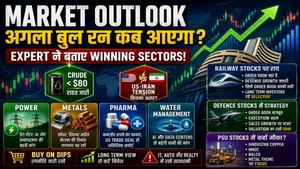 Share Market की तेज़ी बुरा फंसाएगी, बाज़ार में इन Stocks से बना लो दूरी!
 -
 Share Market में जोरदार तेजी, निफ्टी 24,200 के पार; सबसे अधिक किस शेयर में तेजी?
 -
 Trump Warning से Iran-US तनाव बढ़ा, Crude Oil में हलचल: Share Market Panic में क्या करें?
 -
 Share Market: कल की भारी गिरावट के बाद बाजार में लौटी तेजी, Sensex और Nifty में बढ़त के साथ कारोबार; आगे क्या
 -
 South Korea Market Crash: टेक शेयरों की बिकवाली से मचा हड़कंप! Bear Market में क्यों पहुंचा KOSPI?
 -
 Stock Market: शेयर बाजार में आज क्यों आई गिरावट? अमेरिका-ईरान तनाव के अलावा क्या है गिरावट की सबसे बड़ी वजहें
 -
 Sensex Outlook: सेंसेक्स 1 लाख तक पहुंचेगा या 66,000 तक गिरेगा? मॉर्गन स्टेनली ने बताए तीन बड़े अनुमान
 -
 Kalyan Jewellers Share Crash: अच्छे बिजनेस अपडेट के बावजूद 8% क्यों टूटा शेयर? जानिए पूरी वजह
 -
 Stock Market: अचानक क्यों टूटा बाज़ार? Sensex 350 प्वाइंट तो Nifty 24,450 के नीचे! जानिए 4 बड़ी वजहें
 -
 Stock Market Today: सप्ताह के पहले दिन शेयर बाजार में तेजी! आज शेयर बाजार में किसका रहा जलवा?
 -
 Stock Market में आएगा बड़ा ब्रेकआउट? 2026 के 5 सबसे दमदार सेक्टर्स!
 -
 HCL Tech Share Price: AI Deal के दम पर शेयर में 7% की तेजी, क्या आगे भी बढ़ेगा?
 -
 Share Market Today: सेंसेक्स 650 अंक उछला, निवेशकों की दौलत ₹2.43 लाख करोड़ बढ़ी, जानें तेजी की वजह
 -
 Nifty IT में 4% की तूफानी रैली! Infosys, TCS, Wipro में खरीदारी का मौका?
 -
 Vedanta Demerger के बाद धमाका: Oil & Gas में 20% की तेजी, निवेशकों की हुई चांदी
 -
 Nifty Outlook: क्या खत्म होगी गिरावट? 10 साल का Data क्या कहता है, जानें आगे की चाल
-
Block for 8 hours
-
Block for 12 hours
-
Block for 24 hours
-
Don't block

 Sign in with Google
- Male
- Female
- Others
- Under 18
- 18 to 25
- 26 to 35
- 36 to 45
- 45 to 55
- 55+